
The Future of AI in Business – Insights from Dr. Ayesha Khanna
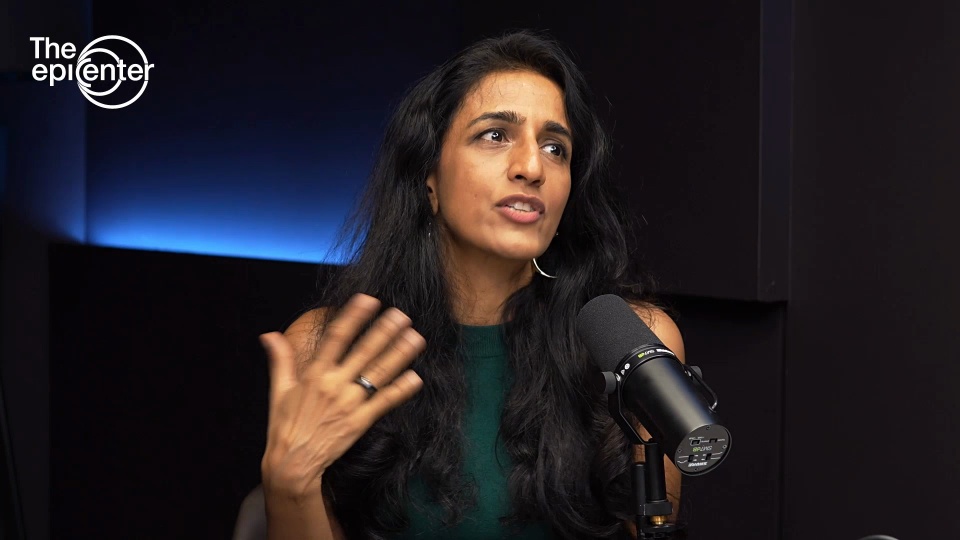
Dr. Ayesha Khanna
0:00
0:00
Featuring

Dr. Ayesha Khanna
AI strategist, data & governance expert, board advisor, founder & advocate for women in tech

Episode summary
In this episode of Epicenter, Ronen Mense sits down with Dr. Ayesha Kahana in Singapore to explore what it really takes for organizations to succeed with AI. Moving beyond hype, they unpack why AI adoption fails without strong data foundations, clear business use cases, and—most importantly—user trust and operationalization. From Wall Street to smart cities to enterprise healthcare systems, Dr. Kahana shares how AI must be treated as a product, not a magic tool.
The conversation dives deep into AI governance, ethical risk management, vendor selection, and real-world case studies—particularly how large healthcare providers are using AI to improve patient outcomes, reduce costs, and shift toward value-based care. The episode closes with a powerful discussion on AI as a leveler and amplifier, the future of women in tech, and how leaders must rethink upskilling, unlearning, and trust in an AI-driven world.
Key highlights
On why AI fails without data discipline:
“People get excited about AI, but they don’t realize how dependent it is on how well their data is organized, accessible, and governed.”
On adoption over execution:
“You can build the most amazing AI system, but if people don’t trust it or won’t use it, it’s just a research project.”
On AI as a growth lever, not a threat:
“AI liberates people from the mundane. You don’t replace them—you empower them to do higher-value work.”
Episode Timestamps:
*(00:00) Recording in Singapore & introduction to Dr. Ayesha Kahana
*(01:15) From economics to computer science to AI leadership
*(03:48) The biggest misconception companies have about AI adoption
*(05:15) Why AI success depends on data readiness and use-case clarity
*(06:00) Adoption vs execution: why great AI products fail internally
*(07:00) Operationalizing AI in real business workflows
*(08:45) AI in manufacturing, field service & repair use cases
*(10:00) Hunting for value in “boring” everyday processes
*(11:00) A practical AI strategy framework for enterprises
*(13:00) Prioritization, governance, and risk management
*(14:15) Choosing AI vendors: build vs buy decisions
*(16:45) Fine-tuning models for domain-specific intelligence
*(18:15) Data clean rooms, privacy clouds & ethical data access
*(21:00) AI governance, NIST frameworks & managing bias
*(24:15) Disclosure, AI agents & human–AI interaction ethics
*(27:00) Healthcare case study: AI-driven patient outcomes
*(30:00) Data platforms, cloud migration & AI-powered workflows
*(33:00) Proving ROI, timelines & low-hanging wins
*(35:15) Dr. Kahana’s mission: women, AI & mid-career empowerment
*(38:00) AI as a leveler and amplifier of human potential
*(40:10) Quick-fire round: books, leaders & governance
*(46:00) Upskilling vs unlearning in the age of AI
Transcript
[00:00:00] Ronen: We are here in Singapore at Pod Studio where we are doing an offsite recording [00:00:15] of Epicenter, and I’m here with Dr. Aye Sha Kahana. Hello, how are you?
[00:00:21] Dr. Ayesha: Hey, it’s great to be here, Ron. Thanks for having me. It’s
[00:00:23] Ronen: so great to see you again. Today we’re gonna talk about the future of AI in business. And, um, yeah, I can’t [00:00:30] think of anyone better to, uh, to talk about than that, than Dr.
[00:00:34] Aisha. Um, I’m gonna do a quick intro about you, but you’re gonna have to fill in a lot of blanks because, I mean, your background is completely amazing. Um, [00:00:45] self-proclaimed, data geek. You’ve had roles in, or still have roles in government and, um, your board member on many organizations, including nim, which I’m sure people are quite, uh, uh, infatuated with.
[00:00:58] Maybe one of your most [00:01:00] important things is being a staunch, uh, advocate of women in tech. And, uh, is it fair to say that you are an AI maximalist as well? Yeah.
[00:01:10] Dr. Ayesha: We can talk about that.
[00:01:11] Ronen: Yeah. So I mean, how did you design your career path that I [00:01:15] think any parent would be super proud of?
[00:01:17] Dr. Ayesha: Well, you know when, when I started in college, I had gone to study economics and then I moved into computer science and technology and I started off on Wall Street as.[00:01:30]
[00:01:30] Kind of a software engineer. Mm-hmm. And my family at that time was super disappointed ’cause they didn’t understand why I had become like a back office engineer. Um, when they had sent me and I had gotten a scholarship and gone all the way to Harvard, [00:01:45] but. I had just fallen in love with the creative potential of technology, and I could see firsthand how traders and risk managers and wealth managers were using it to serve their customers better, to predict how their [00:02:00] portfolios would do and to frankly be more productive.
[00:02:03] And that’s. Really how it started from there, I wanted to explore not just in financial services. Mm-hmm. But then I moved into smart cities. I did my PhD in information [00:02:15] infrastructures using AI for smart cities. When was that? And, um, that was in, in 2012 to 2018. Wow. But they were
[00:02:22] Ronen: already like talking AI then?
[00:02:24] Dr. Ayesha: Oh, absolutely. AI’s been around Yeah. For so long.
[00:02:28] Ronen: But
[00:02:28] Dr. Ayesha: it wasn’t that, [00:02:30] um, you know. It didn’t have that tinge of being cool at that time. Yeah. But, uh, and then, and then I started off launching my own firm in Singapore. Mm-hmm. Because I just saw this gap that whether it was Europe or America or [00:02:45] Asia, there were just not enough people who understood how to have an AI strategy, how to build the data platforms and data connectivity so that the AI can work.
[00:02:57] Mm-hmm. And then how to govern it. And that’s [00:03:00] how I got involved in Neon subsidiary Autonomous, or the public boards in the US or the uk or even the government agency boards here, because it’s always two sides that you need to look at. You need to [00:03:15] use AI for its full potential, but you have to be very aware of its risks and govern them also, and that’s how you maintain not only compliance with the law, but also consumer trust.
[00:03:24] Ronen: Mm-hmm. That is such a fascinating background. And, and I think today what we wanna do is kind of [00:03:30] take a, a dive into how businesses today should be thinking about ai. Um, you know, uh. What would you say is, is today the bus biggest misconception that actually businesses, [00:03:45] companies, organizations, have when it comes to adopting ai?
[00:03:48] Dr. Ayesha: I think the most important thing people don’t realize is that, um, it actually has a lot to do with their data.
[00:03:55] Ronen: Mm-hmm.
[00:03:56] Dr. Ayesha: So they begin to get excited about AI and they want to [00:04:00] launch into it, but they don’t realize that AI has a huge dependency. On how they’ve organized the data, how accessible, useful, and usable that data is.
[00:04:11] Hmm. And actually, so there’s a precursor event they [00:04:15] need to participate in, which is to understand and organize your data. Now there’s a precursor to that as well. Which is they need to prioritize their business use cases. Mm-hmm. And businesses tend to have very [00:04:30] vague business use cases. Like, I want to improve customer experience.
[00:04:33] Mm-hmm. I want to have more operational efficiency, but the, is this. Systematic process of taking what the CEO may say or the market may want, and translating that one [00:04:45] line into 20 to 30 business use cases. Mm-hmm. Each one of them is very measurable. For example, for customer service, I want to reduce the amount of time it takes to answer a query by 20%.
[00:04:57] Mm-hmm. Or from 15 minutes to [00:05:00] two minutes. And this is how I will measure it, and this is the data that’s required for it. And then you get to what is the AI we’ll use for it.
[00:05:07] Ronen: Mm-hmm.
[00:05:08] Dr. Ayesha: Um, and the last thing people focus on this is as tech people, we are all guilty of this, is that it’s [00:05:15] so exciting to build something, having done all this, that you kind of forget that it’s not about execution, it’s about adoption.
[00:05:23] Ronen: Mm-hmm.
[00:05:23] Dr. Ayesha: So you’ve built a great ai, you’ve got all your data sorted out, you have the business sponsorship, but let’s say you built [00:05:30] something that was gonna make the life of doctors easier. The CEO loves it. The board loves it. The tech people did everything, but the doctors won’t use the, the app.
[00:05:39] Ronen: Mm-hmm.
[00:05:39] Dr. Ayesha: Because they are not used to it. They don’t trust it, they feel uncomfortable. And then, what is [00:05:45] it? It’s just a research project. So I always say that at the end, having a product mindset. Mm-hmm. Everything that I’ve talked about is about having a product mindset, which is how would you build a product.
[00:05:56] Ronen: Mm-hmm.
[00:05:56] Dr. Ayesha: And people don’t look at AI as a product. They think of it [00:06:00] just as a, like a magical thing. And I think that that’s what we need to change.
[00:06:04] Ronen: Yeah. I think that this is probably one of the, uh, the, the big. Things that have, uh, surfaced recently as you look at, like, for example, open ai. Mm-hmm. A lot of people are using it.
[00:06:14] I think it’s like [00:06:15] 250 million. Yeah. Close to 300 million people have already signed up and using open ai. But the engagement on it, yeah. Meaning like how often they come back is, is, is not what. You’d expect [00:06:30] a, uh, a product of that caliber to be doing. And I think exactly what you said is that the adoption aspect is so critical.
[00:06:36] How do you ingrain it into the workflow, into the, the day-to-day operation, into how you think and, uh, start to change the way that you [00:06:45] operate?
[00:06:45] Dr. Ayesha: A hundred percent. That’s why. In it, we call it operationalization,
[00:06:49] Ronen: operational. It’s a terrible, it’s
[00:06:51] Dr. Ayesha: a terrible, boring kind of word, but actually what it means is that you gotta operationalize and you need to turn the key so it becomes part of the process.[00:07:00]
[00:07:00] And when you think about businesses, it’s easier to think about when you think about B2C. Mm-hmm. It’s a little bit more about personalization, about attracting them to reclick. And of course meta is a genius at that, right? Yes. [00:07:15] They have. Tiktoks a genius of that. Oh, they know how to keep making you come back by using a attention factory.
[00:07:21] Yes. But I think for a lot of the businesses, if they’re doing, for example, supply chain management or for example, if you’re a manufacturing [00:07:30] firm or, or just a, and you have manufactured a lot of. Engines or something else for buildings all over the world. Now you send your repair people there. Mm-hmm.
[00:07:40] Because sometimes there are always issues. Those repair people go and [00:07:45] they can have a knowledge assistant. That knowledge assistant, you can take a picture of the issue. That knowledge assistant can go into all the manuals and tell you what it looks like, and then you can verbally, as you’re fixing it, ask it questions.
[00:07:58] Now, if they don’t use it, if they [00:08:00] don’t adopt it. Then it’s useless. Mm-hmm. But if they do use it, we have found that it massively reduces the time it takes for them to do it, and increases the amount of satisfaction these repairmen have from their jobs. And it [00:08:15] allows the firm to grow. Mm-hmm. Because now you have better customer satisfaction.
[00:08:19] So it’s a win-win win. Mm-hmm. For the tech team, it’s extremely important that the summaries they’re getting, the advice they’re getting, the AI is well governed. Because last thing you want is it tells you [00:08:30] something. The repairman kind of trusts it. Mm-hmm. Makes a mistake and it leads to catastrophe. So there’s that angle of opera operationalization, but it requires the end users to trust the system.
[00:08:41] Mm-hmm. And that is why the system must be very trustworthy and [00:08:45] governed properly.
[00:08:45] Ronen: Yeah. This is super interesting because I’ve, I’ve just learned, uh. Of how AI is, is now applied in the auto world, in, in auto repairs, basically. That’s exactly, yeah. You can take a picture or a video or listen to the [00:09:00] problem.
[00:09:00] Yes. And then, I mean, how many mechanics, or even us, we’ve never read our auto manual. Right. Why would we? Right. And, and it helps to diagnose the problem much faster. And, and, you know, even with, uh, accident, uh, like. Acce Assessing. [00:09:15] Yeah. Assessing the, um, how much it’s gonna cost to repair something. I mean, it’s so fascinating.
[00:09:21] There’s so many great stories that are coming out and uh, I think companies really need to learn. How to ingrain this into the process.
[00:09:29] Dr. Ayesha: I mean, I [00:09:30] call it hunting for value. Mm-hmm. So moving away from things that are considered cool or sexy and really focusing sometimes on the mundane, actually the most returns are actually your everyday processes.
[00:09:42] If you just looked instead of always looking for [00:09:45] cool innovation projects. Mm-hmm. Just go and look at your everyday processes and know that AI can liberate you. From the mundane activities. Mm. And actually you don’t let go of people when that happens. ’cause they A, you can [00:10:00] expand the number of customers you can serve, so you should grow as a company.
[00:10:03] Sure. Yeah. And then I like that IKEA actually, when they had customer service agents and they started having AI answered the questions, they started upskilling them by training them in interior design [00:10:15] because of course they know the product, they know the company, they’re loyal to the brand, they understand the customers.
[00:10:19] Why would you hire outside?
[00:10:21] Ronen: Mm-hmm. It
[00:10:21] Dr. Ayesha: doesn’t make, and it doesn’t make any business sense, to be honest at all. Mm-hmm. So I really believe that a strategic company uses [00:10:30] AI and then that productivity burst gives you time, extra time that every employee has, use it smartly, train them, lead them, and you see exponential growth in your revenue.
[00:10:41] Ronen: So now we’re gonna ask you to put on your Harvard Business [00:10:45] School hat. Um. Companies need a strategic framework on, on how they should look at these things, and I’m sure you’re working with companies like mm-hmm. Day in and day out, how do they actually use AI effectively [00:11:00] into their operations? Like what, what’s the, you know, kind of like a, B, C or 1, 2, 3, that companies should be looking at?
[00:11:08] Dr. Ayesha: Well, they always have to start with their big picture. So they have, might have a 2030 plan or whatever they have. Mm-hmm. And they [00:11:15] need to kind of divide it. So if you’re a healthcare company mm-hmm. Um, one of the largest providers of hospital systems, for example, then you would say, I want to have, um, you know, improved operational efficiency.
[00:11:27] That may be from your machines, that may be [00:11:30] optimizing your space usage. That may be how your staff optimization. Um, that’s one thing. Mm-hmm. The second thing is you say, well, I want to have. Get better customer experience. That starts from the moment somebody walks in the door and they’re [00:11:45] scheduled to meet a doctor to when they’re sitting and the doctor is taking, uh, notes or early, the AI is taking notes to the point that you’re automatically reminded.
[00:11:55] And because the AI’s predicting if you’re gonna have a heart attack or a stroke before you have it. [00:12:00] Mm-hmm. All the way till the end where you are giving scheduling your next appointment or have a care circle. And then after that you have improved clinical outcomes, which is of course very important, which is.
[00:12:13] Is your diagnostics good? [00:12:15] Um, are your doctors receiving the support? They do. Can they look things up? The pharmaceutical companies? Do they understand the research and, um, more and more companies and also looking at genetics and doing, using AI for that. The reason I pointed it [00:12:30] out is ’cause you can see that every company should only have like.
[00:12:32] Three, two to three goals that they’re really broadly looking at. And then you dig down in them and you find those use cases process by process. So then you have an AI registry. [00:12:45] So the first thing you do is you have your vision. Mm-hmm. You should be clear what don’t have 10, 15 buckets.
[00:12:50] Ronen: Mm-hmm.
[00:12:51] Dr. Ayesha: I think the mind cannot hold more than three to five big things.
[00:12:53] Yeah, exactly. And then drill down on the use cases. And once you do that, then the place where [00:13:00] people get stuck is they just cannot prioritize it.
[00:13:03] Ronen: Mm-hmm.
[00:13:03] Dr. Ayesha: Because everybody, every team has its own priorities and that’s when you need a facilitator, which is why companies like us often come in, or you might have your C-suite like really [00:13:15] facilitated.
[00:13:16] Um, once you’ve prioritized it, then you can work on getting the data that you need. And implementing the use case. And when you’re implementing it, that’s where the risk management comes in. So how do you make sure the [00:13:30] wrong diagnosis is not given? How do you make sure that the ambulance bed wa was available when it’s supposed to be?
[00:13:35] How do you make sure that when somebody comes, the AI is not being racist or misogynist or abusive in a customer service chat? [00:13:45] And that’s very important, the whole set of. Frameworks, like the NIST AI governance framework for that. Mm-hmm. And then finally, it’s exactly what we talked about earlier, which is operationalization.
[00:13:54] Mm-hmm. Make sure that the people, the employees who are using it are comfortable with [00:14:00] it and are excited about it. And that’s change management. So like I said, there are just four things. Your business goals, your use case prioritization and registry, your risk governance mm-hmm. As you implemented, and then your operationalization and.[00:14:15]
[00:14:15] Ronen: And when you’re talking about like adoption of AI tools, right? Yeah. I mean. It seems like every day there’s something new that’s coming out or one of the, the, you know, open AI and Claude and, and just [00:14:30] everything is changing and the pace of change is so fast. How do you decide like, which 1:00 AM I gonna use?
[00:14:36] ’cause it could be relevant today and then tomorrow, like. The better version comes out.
[00:14:41] Dr. Ayesha: That’s a great question, and that’s a lot of what we also work on. [00:14:45] I think one of the things that most people are concerned about and should be is their data security.
[00:14:50] Ronen: Absolutely.
[00:14:50] Dr. Ayesha: So when you start like. You know, with corporate data, right?
[00:14:55] Personal data, people make their own choices. Mm-hmm. We are always talking at a personal contractual [00:15:00] level with those companies, but our clients tend to trust well-known cloud providers. Mm-hmm. Like Amazon and Google and um, obviously Microsoft Snowflake or highly funded. Startups mm-hmm. That have been funded by well-known [00:15:15] VCs like Andreessen Horowitz.
[00:15:17] Mm-hmm. Or Felices. Like Claude. Yes. Or philanthropic like others. And the third thing is they come from countries where they’re regulated. Mm-hmm. So for example, they could come from the uk like DeepMind, uh, they have something on protein [00:15:30] folding now. Or you could have Misra, which is from France, uh, or a defense contracting company, AI company from Germany.
[00:15:37] And of course all the Americans. Those are the three criteria on which large companies base the [00:15:45] choosing of vendors. Mm-hmm. Because it’s just too much at stake.
[00:15:48] Ronen: Mm-hmm.
[00:15:48] Dr. Ayesha: Then the question becomes how much should you build or how much do you buy?
[00:15:51] Ronen: Mm-hmm.
[00:15:52] Dr. Ayesha: Well, in my opinion, uh, you should try to use whatever is out there, uh, if it’s good and, and [00:16:00] do it in a modular fashion.
[00:16:01] Ronen: Mm-hmm.
[00:16:02] Dr. Ayesha: So that your dependency is not so much. Mm-hmm. So you always need these AI integrators. So there used to be something called system integrators that were software engineers Yes. That would kind of tie your system together. We are AI native. Mm-hmm. So we are [00:16:15] AI integrators and data integrators. Our job is to create interfaces between systems, AI systems, so that it seamlessly gives you the prowess you need.
[00:16:27] But you are not so dependent on it. [00:16:30] So for example, you may decide to use Claude one day at the backend mm-hmm. And try to use OpenAI another day. Um, and then you might use Misra another day, or Lama another day. Mm-hmm. So it depends on what the reason is. But you should try to use [00:16:45] things where people have invested literally billions of dollars.
[00:16:47] ’cause you can’t afford to do that. Yeah. But then where you should really stand out is you’re fine tuning. So for example, if you look at GPT, it’s like a high school graduate or like now they say like a PhD.
[00:16:58] Ronen: 90 [00:17:00] percentile. Yes. Or PhD. Try. Yeah.
[00:17:01] Dr. Ayesha: But when you fine tune it on medical lingo or whatever your hospital has or anything else.
[00:17:09] It doesn’t say things like, I have high blood pressure, it says I have hypertension.
[00:17:13] Ronen: Mm-hmm.
[00:17:13] Dr. Ayesha: These are small [00:17:15] things that separate a PhD in medicine versus a PhD in like geography. Mm-hmm. And so when you fine tune it, you make it relevant to your domain and your customers, that’s something you should do yourself.
[00:17:26] Mm-hmm. Um, because there are no. Maybe one day there will be platforms for [00:17:30] it, but keep a lookout for that. But do it. Um, if you’re trying to make an AI use case registry, that’s something you should do yourself or, um, you know, you could use some of the vendors like Collibra or Cred AI out there. So I think one has to have quite an open mind.
[00:17:43] Depends on your [00:17:45] budget. Mm-hmm. Uh, I always advise people don’t build something which is so hard, and unless that’s your unique ip mm-hmm. Which somebody’s already spent hundreds of millions of dollars building, they’ll be good at it. Mm-hmm. Look for your unique advantage. And that unique [00:18:00] advantage means you integrate your little AI or your data with the bigger AI pod out there somehow.
[00:18:05] Mm-hmm. But that requires thought. Yes. How do you do it in a risk managed way?
[00:18:10] Ronen: Yeah. Actually this, uh, this kind of reminds me, I mean, we as a [00:18:15] company, um, we’ve been thinking about this like, ’cause we we’re operating in the digital marketing space for the past 10 years, 12 years, and, um. The way data has been shared across this industry mm-hmm.
[00:18:27] Is, you know, it’s not [00:18:30] sustainable privacy regulations, um, everything that is compliance, uh, that is coming into place. Um, so one of the things that we’ve been thinking about with, uh. Our data, clean room and the privacy cloud mm-hmm. [00:18:45] Is rather than sending data everywhere to third party actually to create this marketplace where if you’re a company and, and you want to allow some third party, let’s say a new AI startup, I’m not gonna send you my data, but you can [00:19:00] access.
[00:19:00] By building on top of yes, uh, this cloud platform, but never actually take control of the data because today, like the data compliance is security. You can’t send the data anywhere and you need to, to let it [00:19:15] reside in a trusted third party environment, right? A hundred percent. And so this is how we’ve been thinking about this and, and it’s also how we hope to.
[00:19:23] Actually activate a lot of like AI startups out there, the ones that aren’t like few hundred, you [00:19:30] know, million dollar funded, right? Because how, how else will the small guys grow? Right? Um, we may end up with, again, like the magnificent seven in ai.
[00:19:39] Dr. Ayesha: And we don’t want that. Right. I actually think that’s such a good point.
[00:19:43] And I’m so glad your app [00:19:45] is doing that. Because even if you look at Nvidia, and I’m a fan of Jensen won, like who isn’t right?
[00:19:50] Ronen: Yeah.
[00:19:50] Dr. Ayesha: But we do need, I didn’t wear
[00:19:52] Ronen: my leather jacket. That’s
[00:19:54] Dr. Ayesha: right. Um, bit hot in
[00:19:56] Ronen: Singapore for that.
[00:19:57] Dr. Ayesha: I think that we need to have more [00:20:00] competitors in the market. So Cerebros is just gonna do an IPO.
[00:20:02] We know Grok is there. We know there are these hardware companies that are producing chips that are optimized for AI processing. Mm-hmm. And we need more of that. We don’t just need like five companies that do large language [00:20:15] models. It would be good to have others as well, but it’s hard for them to immediately compete because of the huge amount of money they need.
[00:20:22] Uh, if they’re building foundation models that, if they’re startups that are doing applications on top of that, because generative [00:20:30] ai, for example, is 80% cheaper mm-hmm. Than it was 16 months ago. Actually, the world has never been better. Um, and then of course, as you said, that leaves the question of data.
[00:20:39] Ronen: Mm-hmm.
[00:20:40] Dr. Ayesha: And a lot of these applications, um, you know, need access to data, which [00:20:45] is, which they can get. Not like these other companies just took it, but in a more ethical and responsible manner.
[00:20:51] Ronen: Yeah. So that actually, uh, brings up, uh, an interesting part is about the ethical aspect of it. Yes. Um, [00:21:00] you know, how do companies, how should they approach AI governance to ensure the ethical use?
[00:21:05] How do you make sure that. You know, the, the partners that you are working with aren’t actually taking advantage of your data and, and keeping it for themselves [00:21:15] or using that to build their own product and solution. Yeah. Like what, what, what’s the approach to that?
[00:21:21] Dr. Ayesha: Well, I really believe the first thing you have to do is manage your internal risk when you looking at your own data.
[00:21:28] And I like following the NIST. [00:21:30] Framework. Mm-hmm. NIST. Mm-hmm. It’s an AI governance framework in the United States. You can also follow the European Union framework. Mm-hmm. But it really talks about how you should go about identifying and managing AI risks.
[00:21:43] Ronen: Mm-hmm.
[00:21:44] Dr. Ayesha: Um, I teach a [00:21:45] class on generative AI for business executives, and I was just talking to everybody.
[00:21:48] I said, I hope you didn’t find it too boring, but I, I need you to realize mm-hmm. That these are systems. It’s not a very always exciting thing. Yeah. It’s actually, if you follow the system, you don’t need to be a [00:22:00] hardcore techie. You can be a business leader that makes sure that’s governed properly. So for example, if you’re going to have something that, how are you gonna make sure that an attack like prompt injections mm-hmm. Where you just start saying [00:22:15] really horrible things to generative ai mm-hmm. And then it gets trained in it. There’s a way to prevent that from happening. Um, so whether it’s traditional AI or it’s generative ai, there are. Set of well known measures that you [00:22:30] can take. Mm-hmm. And there is a system and a framework for them, then I recommend everybody do that.
[00:22:35] Um, for example, if your AI is biased and is, you know, doing something that’s against the best interest of [00:22:45] minorities or women mm-hmm. Then you can find out why it’s doing that by looking at the data that’s feeding the ai. And so part of that system that you have to follow is called data exploration.
[00:22:56] Mm-hmm. And looking for anti fairness, applying an [00:23:00] like anti fairness in the data and then applying fairness metrics to it. So I think that’s very, very important. People don’t realize that this is not, um. It’s a problem, but it’s a manageable problem.
[00:23:14] Ronen: Mm-hmm.
[00:23:14] Dr. Ayesha: And I think it’s [00:23:15] very important to realize. It’s different when you think about all the hacking attacks that are happening. That’s a much more aggressive, oh my God. Like it’s between the good guys and the bad guys. Mm-hmm. There’s a race going on. Yes. In the dark web. But in terms of [00:23:30] making good decisions when you’re building ai, there are well known ways to do it.
[00:23:34] We just don’t find enough people doing it because it’s been called AI ethics and ethics. People think it’s like a subjective thing or I’m being a good person. It’s really not about that. Risk management [00:23:45] is now increasingly about compliance, and boards are demanding it because the cost is too high.
[00:23:51] Whether you’re fined by the government or whether something happens, in which case you are frankly, lose the trust of customers.
[00:23:58] Ronen: So [00:24:00] an interesting thought is like this, like for example, in customer service, right? Yeah. Today a lot of it is, is augmented in some way, shape, or form. Is there like a guideline?
[00:24:14] Let’s [00:24:15] say if it’s 75% human and 25% ai, do you have to disclose that it’s human or it’s ai or. Flip it around, if it’s 75% AI and 25% human, do you say [00:24:30] like, oh, you’re talking to an AI bot? Like what, what’s the ethic around that one?
[00:24:33] Dr. Ayesha: So the, so that is ethics. ’cause that’s kind of subjective. It’s not in the law at the moment.
[00:24:38] Mm-hmm. But I believe it should be disclosed as an AI and it, and now we know that there’s characters. Mm-hmm. So AI [00:24:45] characters like character.ai mm-hmm. Which Google bought Yes. Uh, or licensed back had an acqui hire. People were chatting two to three hours a day with these AI characters. Mm-hmm. That’s how much time people used to spend on TikTok or Facebook, that the level of engagement is so [00:25:00] high.
[00:25:00] Ronen: Mm-hmm.
[00:25:01] Dr. Ayesha: And when you have somebody like that, and Sherry Turkel from MIT has that, that when we have even an inanimate or something that’s not real synthetic. Um, person, robot agent, we can’t help as [00:25:15] human beings, but when they to, but to, you know, be empathetic with them, to develop a relationship with them once they start to exhibit social signs.
[00:25:25] So the chances of that character, um. Manipulating [00:25:30] us is very, very high. Mm-hmm. And we know that a lot of people are now having friends and lovers and colleagues and forming all kinds of relationships with AI agents. And we can’t tell if they’re AI or not. But, um, so then I do believe at some point in, in, in [00:25:45] more countries, it will become regulation that you have to say you’re an ai.
[00:25:48] Ronen: It’s kind of like the organic food label.
[00:25:50] Dr. Ayesha: Yeah, totally. Right, right. I mean, at some
[00:25:53] Ronen: point it’s gonna reach that Yes. You know,
[00:25:56] Dr. Ayesha: what co, what constitutes
[00:25:57] Ronen: AI and what doesn’t. Yes. What constitutes organic, what [00:26:00] doesn’t?
[00:26:00] Dr. Ayesha: And people don’t mind. Like, I don’t have a problem. Yeah. If you told me I’m like going to, you know, talk to an AI for some time, I’m fine with it.
[00:26:08] Yeah. I don’t have, but should I know that it’s an AI s. Yeah, I should know it. I, and I think [00:26:15] you’d find that young people, they won’t have a problem with it, but it’s the same thing. It’s not unhealthy for you. What they will have a problem with is if it’s been bought into their space and somebody hasn’t checked that, it’s by a company that’s [00:26:30] regulated.
[00:26:30] Mm-hmm. It’s a large public company that that is under scrutiny, or it’s been funded by very thoughtful investors. Mm-hmm. And those are the criteria that I think should apply Before you let. Anyone in your house Sure. Including an AI agent.
[00:26:44] Ronen: Sure. [00:26:45] Yeah. So, um, now we, now we get to the fun part. Yeah. I. I’d love to hear a case study Yes.
[00:26:54] Of a company coming to you and you don’t obviously need to talk about the company itself, but, [00:27:00] um, coming to you with a problem. Yes. And how you help to address the challenge that they’re facing the problem and turn it, turn that into the opportunity and how AI is being leveraged.
[00:27:12] Dr. Ayesha: Yeah, absolutely. Yeah. Um, I [00:27:15] can talk about healthcare ’cause that’s.
[00:27:16] It’s the AI decade for healthcare Awesome. At the moment. Awesome. Will you? It’s good.
[00:27:20] Ronen: Good chance for us to, yes. A little bit longer I think. I
[00:27:22] Dr. Ayesha: mean, we work in logistics and financial services and pharma and healthcare, but I’ll talk about healthcare. So a very large [00:27:30] string of hospitals. Mm-hmm. Uh, provider came to us and said, we want to serve.
[00:27:36] Are patients better?
[00:27:38] Ronen: Mm-hmm.
[00:27:39] Dr. Ayesha: And they are often frustrated because they are waiting in line for a long time for an [00:27:45] appointment. They find our doctors are burdened. But more importantly than that, they have chronic diseases and they are always. Struggling with managing them, um, where this was coming from.
[00:27:59] So it’s very [00:28:00] interesting for me to understand, um, why are the boards concerned, and in this case, as a movement in countries like the US for value-based healthcare. In other words, insurance companies will pay to keep [00:28:15] you Ronan healthy, but if you get sick, then the hospital will have to pay for it ’cause they didn’t keep you healthy.
[00:28:20] Mm-hmm. So they’re changing the incentive structure. Mm-hmm. And so a lot of hospitals are now incentivized to keep you healthy. Um, and so to give you healthy, you need to [00:28:30] have data on Ronan, his activities, his blood work and everything else so that I can warn you in time. Yeah. And, but their data was all over the place.
[00:28:41] So we, the first thing you do is an AI strategy, [00:28:45] which means, now that I understand what your goal is, I need to understand those buckets in which I can achieve this goal. So how do people feel when they come inside your hospital? How do p you. Pro forecast. Mm-hmm. When [00:29:00] somebody’s gonna be sick or not sick so that you can bring them in through virtual or physical means.
[00:29:04] And what is the general experience of interacting with you? Mm-hmm. With the loyalty they have because you serve them so well. And once we had an AI strategy [00:29:15] that includes two parts, one is. A roadmap of how we’re gonna tackle this and report to investors on the board every quarter of what was achieved.
[00:29:24] And number two, your data foundation. Mm-hmm. So the House of ai, if you don’t like any [00:29:30] house, if it does not have a strong foundation, it just crumbles. Mm-hmm. You’ll have like. Nice shiny innovation pilots that you can show people, but you can only serve one or two or a hundred people to serve hundreds of thousands of people like our client.
[00:29:44] [00:29:45] You actually need a very strong data backbone. So we built them what is called a modern data architecture. Mm-hmm. Modern data platform where we were able to connect the data. Clean it, organize it, and then start powering this [00:30:00] roadmap of different, different use cases. Is it,
[00:30:02] Ronen: and, and would you guys like help to take what from on-premises to cloud or?
[00:30:07] Yes,
[00:30:07] Dr. Ayesha: exactly. So from on-premises to cloud, for example. So when that happens, you immediately drop your cost, right? Because you’ve had so [00:30:15] many things and you’ve had all these people managing on-premise. Yeah. That’s one thing on the cloud. Then, uh, doing what is the plumbing of data called data engineering.
[00:30:24] Yeah. Which is connecting all the data. Your favorite thing. Yes. My favorite thing I totally love. It’s not [00:30:30] everybody’s cup of tea. You’re a data plumber. I love it. I totally love it. And so, um, and then applying use case by use case, right? So we could predict if somebody’s gonna have chronic heart failure
[00:30:40] Ronen: mm-hmm.
[00:30:40] Dr. Ayesha: Um, before they would have it. So then what is the automated way? And somebody [00:30:45] reaches out to them, what are the tests? How do you do behavioral nudges? And so, uh, when they come in, then how do you. Deal with that. If there’s a care circle, how do you let people know as they’re aging? Depending on the, then you do, you know, just like Amazon does customer [00:31:00] segmentation, you do patient segmentation.
[00:31:02] Mm-hmm. By age, by behavior. So now you’re really personalizing their experience even though they walk in, they feel like you’re really looking at them. And then what is the experience when they’re in the doctor’s office And we work with [00:31:15] well-known, uh, AI startups to actually, so transcription could be done as the AI was.
[00:31:20] As a doctor was talking to the patient, all privacy was maintained that a summary was generated. The doctor’s always in the loop and checks it, corrects it, [00:31:30] which further trains ci. Mm-hmm. And then it, it, their, immediately, their promoter net promoter scores went up because now the experience of meeting a doctor is somebody who’s looking at you, not somebody who’s taking notes at the same time.
[00:31:41] So these are. So many use cases when they come in and use [00:31:45] a bed, how do you make sure that they’re not overspending or underspending the time required to treat them? Mm-hmm. Because if you, they overspend the time in a bed, then there’s a longer queue, which leads to frustration, there’s an underspending, then they’re not being treated [00:32:00] the best they can, and AI helps in all of these things.
[00:32:04] And they’ve immediately seen like better results. Um, their customers have grown, their patients are coming back more. They have lower rates of [00:32:15] certain kinds of chronic diseases. Of course, it’s a work in progress, but you can pretty quickly see. Some of these things when they start working, create revenue growth and re reduce the amount of customer dissatisfaction.
[00:32:29] So for [00:32:30] us, that’s been one of several really great use cases that we mm-hmm. Like case studies that we have on how we took a very large company and we were able to really pivot it into a data. Driven company, which is very different mm-hmm. Than just [00:32:45] digital transformation. Yeah. This is digital transformation that’s powered by AI and, and the whole, if you wanna do it this way, it’s like you go in like every process I’m gonna put it in.
[00:32:55] Mm-hmm. I’m just gonna hunt for value everywhere. So you’re literally like hunting for [00:33:00] value
[00:33:01] Ronen: all the time. And how long does. Some process like this take, I mean, I can imagine like a hospital, a, a very old type of institution where probably even the, the hospital records might be on paper and not [00:33:15] digital.
[00:33:15] Dr. Ayesha: Well, I mean, so this, there’s not one hospital, right, the hundreds that, in this case, that are owned by one company. But it can take like. 18 months, something like that to get your, all your data and everything in order. But the way you start doing the data is within six [00:33:30] months you start rolling out the ai.
[00:33:31] Mm-hmm. So let’s say you have a process of your AI strategy and data strategy, which does a assessment of where you are right now and where you need to be. Um, and that can take like, uh, three months. Then you take three months to do your [00:33:45] setup, which is your modern data platform. And then after that, you continue to modernize.
[00:33:50] But you must start showing value. Nobody waits for more than four to six months. That’s the maximum. Somebody’s willing to wait. Mm-hmm. And should wait in this day and age.
[00:33:59] Ronen: Yeah.
[00:33:59] Dr. Ayesha: Till you [00:34:00] start showing value. And I’m talking about traditional companies. If you’re a younger company, it should happen within eight weeks.
[00:34:05] Ronen: Yeah. And this is like you, you, you also have to identify the low hanging fruit. Right? A
[00:34:09] Dr. Ayesha: hundred percent. Yeah. I
[00:34:10] Ronen: think it’s, its. You, you look at like, what’s the, the lowest con, [00:34:15] common denominator where we can make immediate impact. And a lot of companies actually start like at the front line, right? Yes.
[00:34:21] This is, this is, this is the easy wins. Right? And then what you’re describing is it’s, it’s a multi-tiered process.
[00:34:29] Dr. Ayesha: [00:34:30] Yes. Um, um, I think, I think that’s really what you said is the key. I always say go for the low hanging fruit. Prove value.
[00:34:37] Ronen: Yeah.
[00:34:38] Dr. Ayesha: Otherwise, it’s an investment, by the way. It’s a return on investment that you need to look at.
[00:34:42] It’s everything is a business. If you [00:34:45] look at it as a research or a cool thing, actually that discipline of having a business approach to it, mm-hmm. Is actually very useful. It’s not cold. It’s useful because then you make sure things are on time, on budget, and are customer focused. [00:35:00]
[00:35:00] Ronen: So rolling back to, you know, just.
[00:35:04] Your background and, and everything that you’ve been doing from data to championing, you know, uh, women in tech and and ai. Have you thought about [00:35:15] your own legacy and what you want that to be?
[00:35:18] Dr. Ayesha: Well, I mean, for me. One of the most important things for me is to make sure that there’s a lot more diversity in ai.
[00:35:26] And particularly, I grew up always [00:35:30] seeing that girls and women were really kind of left out of STEM and then computer science. Yeah. And so I spent 10 years running a charity called 21st Century Girls here in Singapore, where we taught girls and young [00:35:45] teenagers and women in their early twenties ai. And it was.
[00:35:47] Really successful in terms of influencing them, inspiring them. And then I realized that now more women are enrolling anyway in computer science all over the world. [00:36:00] And so I shifted my focus because more and more women, um. Started off in tech and left tech, and this is called the broken rung problem on the corporate ladder.
[00:36:11] Like what happens, what happens [00:36:15] 10 years into your role, age, years into a role to woman that she leaves? What, what is, are they not role models? She doesn’t get the price parity that she wants in her salary. Um, she has kids or she doesn’t have kids, she has elderly parents to care for. Mm-hmm. Just wants a [00:36:30] sabbatical or a mental health break.
[00:36:31] Mm-hmm. Why does she feel like she needs to keep all the balls juggling? And if she lets it go, she loses confidence. And also our companies not taking her back at the same level.
[00:36:43] Ronen: Mm-hmm.
[00:36:43] Dr. Ayesha: And so now my [00:36:45] focus is for mid-career women. It’s called Amplify, and I’m focusing only on mid-career women to educate them.
[00:36:52] On ai, on digitization, how to work with co-pilots so that they’re prepared and they have the confidence to [00:37:00] lead the flexibility that every woman needs. Frankly, we don’t, we never talk about men go through many things. Mm-hmm. But women, just from going through. You know, puberty to pregnancy. Yeah. To perimenopause, to menopause.
[00:37:13] I mean, these are things we have to deal [00:37:15] with. Um, and so this platform is really to provide women the digital skills they need to excel in that world. And so what I’m interested in is that women from young girls. And there should be no ageism all the way till they’re very [00:37:30] senior. Yes. Should just be powerful change makers in this world.
[00:37:34] The beauty of AI is it should hopefully kill ageism for God’s sake. It’s ridiculous. Like women in their sixties, seventies, they can do great stuff. Why not so can men? [00:37:45] So I think I want to be able to provide that right now is for women in their thirties and forties, mid-career women, but over time, really from when they’re like six all the way to their 70 or more, they should be able to have productive, meaningful lives as [00:38:00] economic agents in society because AI gives them that opportunities.
[00:38:04] To do whatever they want to do.
[00:38:06] Ronen: It. Just like AI is leveling the playing field, right? Yes,
[00:38:09] Dr. Ayesha: it is. 100%. And the mistake people make is you see the people who are afraid of it are the people [00:38:15] who have some position they don’t wanna let go of. Mm-hmm. And they realize that, you know, as everybody else gets level, they’ll have to step up their game.
[00:38:23] Mm-hmm. But in Asia, that’s not the case. In Asia, people are mostly excited about it because it’s, it is [00:38:30] a leveler, but that means look at it. All those people who will go up the mobility ladder, and for me as a mom, I’m like, wow. Right now there may be thousands of people who could be co-founders with my kids.
[00:38:42] Now there’ll be millions. Hey, can’t get better than that. [00:38:45] Now suddenly you have this awesome pool of peers. Each one of them is now being taught in a personalized manner by ai. Each one of them is more empowered so that it’s a win-win. Mm-hmm. For everyone. Solve more [00:39:00] problems, make more money, have more fun.
[00:39:02] Ronen: Well, I, I, I like the, you, you say that a ai is, is a leveler. I actually like to think of it as an amplifier. Yes. Right? Yes. It, it, it brings out the skills that we have, um, and augments the [00:39:15] skills that we don’t, right? Yeah. I mean, uh, it’s just like, think of, of AI as akin to like having spreadsheets, right?
[00:39:23] How it just changed the way that you do calculations and, and business models and [00:39:30] remove error and error detection, and it’s just like such a powerful. Such a powerful tool. Right? It just, but you have to have some foundation of knowledge to start with it. But with that, it, it just amplifies people.
[00:39:43] Dr. Ayesha: It does.
[00:39:43] That’s why my, my new [00:39:45] project is called Amplify. I know. And I love that. It
[00:39:48] Ronen: I love that. Yeah. It’s so cool. Um, look, uh. Before we wrap and uh, I think we, we could probably talk for another hour or two because, uh, you have, your knowledge is so [00:40:00] depth, uh, depth and breadth, uh, in, in AI and what’s going on in tech and data is just fascinating.
[00:40:06] But I want to do a quick fire round with you. Yes, you Are you down with that? I
[00:40:09] Dr. Ayesha: totally am. Okay.
[00:40:10] Ronen: So these are questions that you just give a quick answer or whatever [00:40:15] must read business book and why.
[00:40:17] Dr. Ayesha: Ah, okay. Okay. I think I really love, um, instead of business books, our book, book actually yes. I don’t even, I wanna talk about magazines that I read a lot.
[00:40:28] Oh, okay. So I [00:40:30] love the information. Okay. I think that’s a great source of cutting Edge Insider news and Silicon Valley and other places. I also love, um, reading Bloomberg, ’cause I think it’s more global. And how it approaches [00:40:45] it. Um, and of course, uh, the Wall Street Journal and the real case studies and interviews they do with CIOs.
[00:40:53] I think books are great. It’s just things are moving so fast that, um, to be [00:41:00] in touch with what’s happening. It’s important to read some magazines that are thoughtful in their journalism, written by great journalists, great insiders, and telling us all about trends that are happening.
[00:41:12] Ronen: Mm-hmm. If you could host dinner [00:41:15] with any three people, who would they be and why?
[00:41:19] Dr. Ayesha: I love to have, um, three women that I admire. Mm-hmm. A great deal in ai, of course one is, uh, Fefe Lee. Mm-hmm. She’s a, a [00:41:30] professor at Stanford. She is the woman who. Really, um, was responsible for a huge boost in facial recognition and image recognition, and now she’s launched a new company called [00:41:45] Worlds Labs and just raised like a ton of money for that.
[00:41:48] So she’s amazing. She’s called the grandmother of, uh, uh, of ai. She’s very young, but it’s, that’s how famous she is. Um, I would love to have, um, [00:42:00] actually the Jeffrey Hinton who just won the Nobel Prize and is considered really the father of deep learning.
[00:42:07] Ronen: Mm-hmm.
[00:42:08] Dr. Ayesha: He’s the person who really came up with deep learning and um, really.
[00:42:14] Is [00:42:15] the architecture, which led to all of these humongous breakthroughs in generative ai. And then I would love to have Josephine Taylor, she’s the minister over here in Singapore. Mm-hmm. Because I feel Singapore [00:42:30] takes great entrepreneurs and innovators and academics. You know, who are between entrepreneurship and academia like fefe, like um, Hinton, and create an a country where they [00:42:45] can come, they can innovate with responsibility.
[00:42:48] And she has been working on our roadmap for generative ai. For ai, and without having somebody who does governance. I don’t, I don’t think we’d have a [00:43:00] conversation about ai. Mm-hmm. You can have the academic, you can have the entrepreneur, but you must have somebody whose job it is to govern it and to hold these two accountable.
[00:43:10] Mm-hmm. And so that’s the trifecta that I love. And so there’s one man in there, but that’s [00:43:15] okay.
[00:43:15] Ronen: That’s okay. Now a very important question. Where would you host that dinner?
[00:43:21] Dr. Ayesha: In Singapore.
[00:43:22] Ronen: In Singapore. Any particular restaurant?
[00:43:24] Dr. Ayesha: Um, no. I think I would kind of do it at East Coast Park. Mm-hmm. [00:43:30] It’s beautiful.
[00:43:31] It’s really at the National Art Gallery, has some restaurants right on top. Um, I love art. I think one of the reasons I wanna think about nature or art is because it’s very important for me to not live in a tech. Infused [00:43:45] world. Mm-hmm. Um, so I love trees and nature, so it could be at the park and we could have a picnic and that would be great.
[00:43:51] We often do that as a family in Singapore, or we could see an art exhibit at the National Gallery. Mm-hmm. And then go to the cafe there. [00:44:00] It reminds us and anchors us in who we really are is not just about the tech, it’s about tech to lead a beautiful, meaningful life.
[00:44:10] Ronen: So profound, upskill or unskilled?
[00:44:13] What’s more relevant right now? [00:44:15]
[00:44:16] Dr. Ayesha: Both. Totally. That’s a great question. I, I really feel that we talk about upskilling a lot. Yes, certainly. I talk about upskilling all the time, but I myself was recently thinking about the fact that we need to. Make room, right? Mm-hmm. [00:44:30] In our heads. Mm-hmm. Yeah. And, and, um, and unskilled is also important.
[00:44:34] Like it’s not a bad habit, but this is a habit. Mm-hmm. And I actually came to this Ronan because I read about this study that was done in Sweden where women did not [00:44:45] take up tools like chat GBT as much as men. Mm-hmm. And they said, maybe it’s what one of the researchers called the good Girl syndrome. The good girl syndrome is where you think you’re cheating or you feel bad.
[00:44:56] And really you are leaning on old ways of doing [00:45:00] things. Um, and really what you need to do is un unlearn those. Mm-hmm. You need to now work with the AI and um, that requires you to let go of old habits. And so I think that it’s a combination of both. And that’s what I [00:45:15] said. It’s like human ingenuity plus artificial intelligence comes together.
[00:45:19] Not if you’re trying to fill your head with all these things. It’s a new world. It’s a new way of working and only, and it is that whole cycle constantly of [00:45:30] adapting and letting go of things that are not working anymore.
[00:45:33] Ronen: Empty that trash can. Totally, yeah.
[00:45:35] Dr. Ayesha: Let’s do that.
[00:45:36] Ronen: Do you have a favorite quote?
[00:45:38] Dr. Ayesha: Um. I have a favorite quote.
[00:45:42] Yes, I do. It’s actually by [00:45:45] Robin Arzon. She teaches Peloton classes. Oh, I love Peloton. Nice. And she said at a recent class I was taking, she said, it’s not that it was too hard, it’s just that you thought it would be easy. [00:46:00] And I really like that because I think that whether it’s our own passion project that we start, or it’s a huge company that’s undergoing a transformation or it’s a startup when you’re using AI [00:46:15] or whether you’re doing something for yourself.
[00:46:17] Uh, it req, it’s a process, it’s a practice. Uh, it’s a daily investment that you make. It doesn’t have to be excruciating, but it’s certainly, there’s no shortcut to it. [00:46:30] That’s very different from saying agility. Mm-hmm. I’m still saying you should get something done in four weeks, but follow the process. And if you do that, then, then you can rinse and repeat and scale.
[00:46:39] So I love that. Like, it’s, it’s, you know, don’t think it’s gonna be so easy. Mm-hmm. Um, that. [00:46:45] And the fact that it’s hard is good because that’s what makes you com gives you a competitive advantage for God’s sake, if you know. So that’s the beauty of it. If you put it in the work, you are gonna lead with AI where other companies are sitting and watching and not doing it.
[00:46:59] Ronen: [00:47:00] I love that. And this has been. Just an amazing, uh, discussion together. Thank you so much, so appreciative of, of your time and your knowledge and, uh, I’m sure people are gonna enjoy this podcast, uh, immensely.
[00:47:12] Dr. Ayesha: Oh, thank you so much, Ron. I had so much fun. Thanks [00:47:15] everyone.
[00:47:15] Ronen: Thanks.
Meet our host

Ronen Mense
President & Managing Director, APAC @AppsFlyer
Ronen Mense is a growth strategist and host known for thoughtful conversations at the intersection of technology, business, and human potential.
Explore more resources
Uncover AppFlyer’s wealth of expertise and in-depth resources, to empower your growth and success in today’s dynamic market.


