
The Power of Founder Coaching, with Paul Meyers
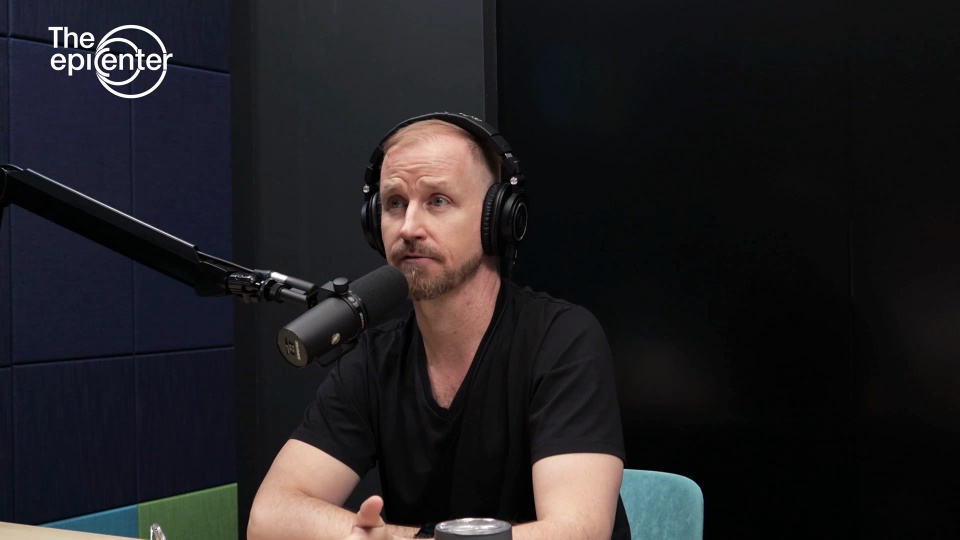
Paul Meyers
0:00
0:00
Featuring

Paul Meyers
Founder Coach | Former Mobile Content Pioneer | Startup Mentor


Episode summary
Paul Myers has lived multiple startup lifetimes before most founders ship their first MVP. In this episode of Epicenter, Paul sits down with Ronen Mense to trace his unconventional journey—from documentary filmmaker and early Silicon Valley technologist to one of Southeast Asia’s earliest mobile content entrepreneurs, and now a trusted coach for founders navigating leadership, burnout, and growth. Along the way, Paul shares firsthand stories from the pre-App Store era, scaling a NASDAQ-listed company during the dot-com boom, and building the largest mobile games distribution network in Southeast Asia before SMS billing was mainstream.
The conversation goes deeper into Paul’s current work as a founder coach, where he helps CEOs and startup leaders tackle the issues that don’t show up on pitch decks: co-founder conflict, isolation, mental health, and the emotional toll of leadership—especially in Asian cultural contexts where asking for help is still stigmatized. Paul explains the difference between mentoring and coaching, why discomfort is often a sign of growth, and how creating safe spaces like Founder Circle allows founders to finally say the things they’ve been carrying alone.
Key highlights
On mentoring vs. coaching:
“Mentoring is finite—you solve a specific problem. Coaching is longer-term and less prescriptive. It’s about helping founders understand what’s really going on inside them and learn how to solve problems on their own.”
On founder mental health:
“Being a startup founder is hard, lonely, and scary. At two or three in the morning, who do you talk to? You can’t talk to your investors, your family’s tired of hearing it—and that’s when things can get really dark.”
Episode Timestamps:
*(01:21) Paul’s path from filmmaking to Asia
*(03:09) From big screen to desktop to mobile
*(05:00) Streaming TV news before the internet
*(06:00) Scaling a NASDAQ-listed internet company
*(08:11) Entering the pre-App Store mobile content era
*(09:51) How SMS billing and carrier integration worked
*(12:52) Exiting the mobile games business
*(14:15) Transitioning into startup mentoring and accelerators
*(16:30) Working with Telstra, SOSV, and ADB Ventures
*(18:00) Mentoring vs. coaching founders
*(23:00) The emotional side of founder leadership
*(37:15) Founder mental health in Asia
*(43:30) Founder Circle and building safe founder spaces
*(45:45) Rapid-fire round
Transcript
[00:00:00] Ronen Mense: Ladies and gentlemen, boys and girls, welcome back to another exciting episode of [00:00:15] Epicenter, where we feature industry influencers and entrepreneurs from around the region who have something really interesting to say. Today we have something, someone super interesting. Paul Myers. Hi, how are you? Hey. [00:00:30] Hey.
[00:00:30] I’ve known you for a long time. Yeah. And, uh, welcome to eCenter. Thank you. Thank you. So, I, I, I kind of, um, I wanna introduce you as, as best and as worst as possible. Okay. Let’s start with the worst. So, yeah. Let, [00:00:45] so you’re from Chicago? Yeah. You used to live in a teepee. Yes. Uh, you were a fireman. Yes. You served kosher food between fire drills?
[00:00:56] Yes. Um, you are a big wig TV [00:01:00] executive and you’re the real OG mobile guy, mobile content guy. Some of this is true, some of this may not be true. I don’t know, but you gotta stick around today to find out. [00:01:15] Um, so Paul. Tell us who is Paul and how the hell did you come to Asia?
[00:01:21] Paul Meyers: How the hell did I come to with that kind of background?
[00:01:23] Let’s see, so, um. I studied film in university [00:01:30] documentary and I made documentaries. Um, but when I graduated, way back when, when dinosaurs, we, we got dinosaurs. Roamed earth. Yeah, exactly. Um, there was no cable tv, so nobody was making money, making documentaries. So I did different things. I worked in [00:01:45] news. I started to do a lot of corporate work.
[00:01:47] I did, I made science documentaries for the US Congress. Mm-hmm. I got to do. You know, all sorts of cool stuff like that. But I, I went to California and I fell in love with Cal, with Northern California, so they’re gonna move here. So I moved to San Francisco in the early eighties and, [00:02:00] uh, worked for a long time, uh, in the Valley with um, uh, tech companies.
[00:02:06] Apple and I, BM and HP and a lot of mainframe companies that don’t exist anymore. And they started sending me to Asia and I’m like, oh, I really like this. So I [00:02:15] wrote my first business plan and uh, I had a production company at that point in the Bay Area and I wrote my first business plan to extend it to Asia.
[00:02:21] Um, and I raised the money and. Uh, looked at Hong Kong and looked at Singapore, and Singapore was dangling some tax incentive. I drank [00:02:30] the Kool-Aid. Mm-hmm. And I’ve kind of been there ever since. And that was like, what, the 1990, right? Wow.
[00:02:34] Ronen Mense: Yeah. Yeah. So you’ve been in Asia in 1990 till now. So 30 plus years.
[00:02:40] 30, 30 plus years. I know. It’s crazy. And most of it in Singapore, 30 years in Singapore, which is astounding to me. [00:02:45] But you’ve been, I mean, you, you’ve. Toured Asia. Yes. I mean, I, when we met originally, I think it was here in Bangkok. Right,
[00:02:53] Paul Meyers: right. I had a, so that was the mo the, the mobile space. Yeah. Uh, we’ll jump forwards, uh, we’ll skip [00:03:00] internet for the time being.
[00:03:00] We
[00:03:00] Ronen Mense: skip internet. Well, we skipping internet. You went from. The big screen. Right To the little screen. Exactly.
[00:03:09] Paul Meyers: And progressively smaller screen.
[00:03:10] Ronen Mense: I
[00:03:10] Paul Meyers: is how I look at it. Take,
[00:03:11] Ronen Mense: take, take us through that, uh, screen minimization,
[00:03:14] Paul Meyers: uh, uh, [00:03:15] class. Okay. So I used to make documentaries. Right. Um, which was great. Um, but then kind of got bored with the, with the corporate mm-hmm.
[00:03:23] Videos I made a lot of, I made a lot of tapes and programs about ethernet and hard [00:03:30] drives and that. You know, ethernet. Ethernet, yeah. I, ethernet. Ethernet would probably be pretty popular right now. Yeah. Yeah. I could tell you a lot about ethernet. Um, I, I, I made a music video about the history of, uh, eunuch once.
[00:03:41] Mm-hmm. Uh, which was actually my final, my, I bowed [00:03:45] out on the rock music video history of eunuch and, uh, moved on to different kinds of things. So I did kids educational CD ROMs. I, uh, produced inter CD rom.
[00:03:55] Ronen Mense: Remember to insert a picture of a CD ROM here. Yeah, yeah, yeah. Most people [00:04:00] won’t know what that is. I know.
[00:04:01] Paul Meyers: This is before there was an internet, if you remember the Magic School bus. Maybe some of our audience grew up with the Magic School bus, so I helped do the artwork for that. And in Vietnam, I was hired to do, uh, to set up a animation facility doing artwork for, [00:04:15] uh, educational CD ROMs. So he did that for a while, produced a few on my own.
[00:04:19] Um, eventually made it to sing the, uh, that didn’t work out so well though the funders. Pulled the plug. I, I moved to Singapore and I worked with um, so
[00:04:28] Ronen Mense: you actually did live in Vietnam for a while? Yeah, [00:04:30] I lived in Vietnam for a year and a half.
[00:04:31] Paul Meyers: Oh, cool. Yeah, 94 and 95. Wow. Right. Um, in Ho Chi Minh City. Uh, and I was there when they turned the traffic lights back on and I was there when the first escalators showed up.
[00:04:39] I mean, it was a very different place than it is now. Right. Um. But I still, I have a very [00:04:45] fond, fond memory and good friends who’ve lived there still. Mm-hmm. And I was just there recently and it’s just amazing how it’s changed. But, um, I moved back to Singapore and I worked for what is now CNBC Asia, back then it was Asia Business News.
[00:04:57] Mm-hmm. Again, pre-internet. I was, uh, [00:05:00] head of multimedia. Okay. And we did a, we did a radical thing. We did streaming television news to your computer. No way. Yeah, yeah. Yeah. Pre-internet. Right. We did the, we did this technology through the vertical blanking interval and we made this thing, we had a databases [00:05:15] so you could file stories and set it up.
[00:05:16] It was very cool. And I got to, um, raise money. That’s when I first did the whole venture thing. They were like, you know, 15 venture capital companies in Asia, and I met them all and pitched them all. We raised like $5 million mm-hmm. To do this [00:05:30] product called a BN on demand. And this was
[00:05:32] Ronen Mense: in early
[00:05:34] Paul Meyers: nineties, 96, 96.
[00:05:35] Ronen Mense: Wow.
[00:05:36] Paul Meyers: Yeah. Wow. Yeah. 96 raising 5,000,096 for 97. Yeah. Yeah, yeah, yeah. Well it wasn’t exactly a tech startup. I mean, we were half owned by Dow [00:05:45] Jones. Right. But still pretty, we raised pretty
[00:05:46] Ronen Mense: impressive.
[00:05:47] Paul Meyers: Yeah, it was pretty cool. Um, they, however, Dow Jones since. Sold to CNBC to M-S-N-B-C and because they had a, uh, an interactive arm, we were all let go.
[00:05:57] So worked with a co couple of [00:06:00] friends to start an internet company. Mm-hmm. It was four of us started this company, which in two and a half years grew to 650 people in eight countries and a NASDAQ listing. So what we did was we brought, um, Western media brands to the Asian internet. Space. Mm-hmm. So, cnet, we brought [00:06:15] CNET to Asia.
[00:06:16] Um, I founded MTV asia.com. I did the joint venture deal with Viacom in New York to start that. Uh, we did e online, we did double click. We did sports.com. Uh, one of my favorites was, uh, fashion tv. Uhhuh, uh, [00:06:30] brought fashion TV to the Asian Wonder why. Um, and then also simultaneously raised, I, I raised money for that and set up the entities, um, around.
[00:06:40] Around, you know, so in Taiwan and in China and in Hong Kong and in [00:06:45] India and in Japan. So we set up entities and local editorial and sales teams, and boom. Uh, so 650 people. We went public, as it turns out, on the second worst day still in the history of Nasdaq. We went out the same day that, uh, Krispy Kreme donuts went [00:07:00] out.
[00:07:00] Wow. So Krispy Kreme went north. We did not go north. We were a wealthy for us. Six hours. Um, but it was cool. I mean, we had trading floor at Goldman Sachs. I got to be Nasdaq, you know, have the thing going around and it was heady and exciting. Um, and I learned a lot [00:07:15] Uhhuh. Um, but the company was gone very soon thereafter as most double, as most, uh, early internet startups did.
[00:07:21] Mm-hmm. You know, pop that was that.
[00:07:24] Ronen Mense: So you are big screen producing shows for tv, then you’re going. [00:07:30] Kind of computer desktop. Yes. Streaming before people even know how to spell streaming, right? Correct. It was double with a P. Yeah. Streaming. Yeah. Yeah. P and um, still dial up. Yeah. Yeah. Wow. A DSL. [00:07:45] Yeah,
[00:07:45] Paul Meyers: exactly.
[00:07:45] A DSL was a big deal. We got a DSL that was like, yeah, man. Could like fiber. Fiber. What? Fiber. Fiber. Yeah.
[00:07:54] Ronen Mense: You know? Yes. And then, so this is where we, uh, kind of [00:08:00] started to intersect yes. That we move into
[00:08:02] Paul Meyers: mobile. We
[00:08:02] Ronen Mense: move into
[00:08:03] Paul Meyers: mobile. So now you’re on the small screen. Now I’m on the smaller screen. So that company, I left that company, had a couple kids, was still in Singapore, figuring out what to do next.
[00:08:11] Mm-hmm. Um, I started to see mobile games show up and, [00:08:15] um. There was no app store then there was no iPhone then. Right? Right. So people had Java phones. Right. And the way that you got a game or your content. ’cause I sold other things then too. I sold ringtones. Mm-hmm. And screensavers, you remember screensaver, all that kind of stuff.
[00:08:27] Um, I sold, uh, text subscription [00:08:30] services, um, dating services, that kind of stuff. So basically I said, uh, uh, let me try this out. And I was one of the very first people on LinkedIn as it turns out. And I built my entire business on LinkedIn from like my bedroom.
[00:08:41] Ronen Mense: You remember when you joined LinkedIn?
[00:08:43] Paul Meyers: No, but I’m pretty [00:08:45] early.
[00:08:45] I mean, the number is like five digits or something like that. Wow. Yeah, it’s pretty early. Um, and so, uh, I found game developers all over the world. I just wrote them notes and said, Hey, you know, have you, are you distributing in Southeast Asia? And of course none of them were. So let, I said, let me be that guy.[00:09:00]
[00:09:00] And so pretty quickly I built this company where I was, uh, distributing the mobile games for virtually every major developer in the world. Into Southeast Asia. I raised some money around that we built on our own platform so we could do it. And then we mm-hmm. Had a micro bill. We built [00:09:15] a micro billing platform and we integrated with the billing systems of 17 carriers in Southeast Asia.
[00:09:20] So, um, afs. After four or five years, we became the biggest distributor of mobile games in Southeast Asia. Um, distributed everybody except Disney. I was connected [00:09:30] to, you know, you name a carrier and we Right, and, and some of them I was running their games deck. So you would go to buy a game, you’d go to DTAC or True, or, or.
[00:09:38] Singtel or tel or globe or whomever, right? And you’d go to their deck and they’d have games there and you’d download it. [00:09:45] So we are powering a lot of that. Plus we had our own direct to consumer one too, but we had the billing systems all integrated. Um, so
[00:09:51] Ronen Mense: for those people that like. This predates some, some people, like how, how did you actually deliver [00:10:00] and bill content?
[00:10:01] Wow.
[00:10:02] Paul Meyers: So we had to integrate our system mm-hmm. With the billing system of a. Telco Telco. Yes. Which, you know, if, if you don’t know telcos, the, the billing system is kind of, it’s mm-hmm. That’s that, that’s [00:10:15] the heart and lungs. Right? Right. Uh, so they’re very protective about it. And you have to go through all sorts of protocol and testing and this and that, because you don’t wanna mess it up or screw it up.
[00:10:24] Right. But eventually. I mean, the ones in the Philippines, they took 16 to 18 months to go through that whole process to [00:10:30] finally integrate and get up and running. It took a long, long time. Um, so we did that and, uh, we built a, a, a process that you would send a message, yes, I want X game. Mm-hmm. And X game would then trigger this, this.
[00:10:43] This call to [00:10:45] Bill. Mm-hmm. And that would happen here. And they go and check your, do you have enough money on your card? You know? ’cause it was all your prepaid. There was prepaid or postpaid. You do that and then eventually, oh yeah. Ronen has enough money to download the Britney Spears ringtone. So down comes Britney [00:11:00] Spears.
[00:11:00] Right. And that’s how it worked. And we do all that delivery and then we track it and we then send monthly reports out to all the different rights holders.
[00:11:09] Ronen Mense: Sounds very familiar. Yeah. I think I was doing the same thing. This was, uh, yeah. You were
[00:11:13] Paul Meyers: doing kind of the same thing, right? [00:11:15] I was doing the same thing.
[00:11:15] I
[00:11:15] Ronen Mense: gotta admit Paul. So that’s where Paul and I met. Yes. So we met in the intersection of mobile content. We were basically selling digital junk to people. Yeah, yeah. Ringtone, screensavers, astrology, reading. Did you do astrology reading? Man, I did
[00:11:28] Paul Meyers: it all. I did, I did dating [00:11:30] tips, I did sex tips, I did everything, you know.
[00:11:31] Wow. Jokes. Yeah. Jokes the whole bit. And, uh, yeah, it was fun. And, you know, often the, the, the, the text subscription services mm-hmm. Were the ones that made the most money because it is very easily, easily consumed. Right. Yeah.
[00:11:44] Ronen Mense: And, um, [00:11:45] yeah, a lot of us remember those, those days, but I think that that’s pretty important because it was like, for me.
[00:11:52] Mm-hmm. Yeah. That’s how I learned how to mo to monetize digital content on mobile. Yeah. [00:12:00] Yes. And I think that if you, if you think about it today, you know, everyone does everything through their mobile phones, right? But we’re talking about 15. It’s 17, 20 years ago. Mm-hmm. Where people didn’t even know that you could buy stuff through your mobile [00:12:15] phone.
[00:12:15] Paul Meyers: Right. It was SMS billing. Right. S was W Billing. Billing. Remember WAP billing wa billing short codes. Yeah. Uh, I had my own short codes. I was like, I, I was a dude. I was the only one, you know, with this own short code. Like you remember
[00:12:26] Ronen Mense: when we tried
[00:12:26] Paul Meyers: to buy you? Yeah. Yeah, I do that.
[00:12:29] Ronen Mense: That [00:12:30] was pretty funny. Yes.
[00:12:30] I think, uh, what, what happened there? Did we offer you something? Uh, I think you offered
[00:12:34] Paul Meyers: me like a peanut butter sandwich or something like that. Yeah. What’s wrong
[00:12:37] Ronen Mense: with
[00:12:37] Paul Meyers: peanut butter sandwiches? We, it had no jelly. It had no, no mayo. It didn’t have any, you know, no
[00:12:41] Ronen Mense: bacon, so we didn’t, no bacon and peanut butter.
[00:12:44] So, [00:12:45] uh, yeah, that, that kind of, uh, turned down. But you, you luckily. Exited from that business. Yes. What was it? 2008,
[00:12:52] Paul Meyers: 2009. Two eight 2009. Um, a Mexican company bought US Uhhuh actually, um, which was a bit of a surprise, but they had [00:13:00] a, they had a, a plan to use the platform. Uh, they had a methodology that was working really well in Latin America, and they basically took that and, and used that in the major markets here.
[00:13:08] So here in the Philippines, a little bit in Indonesia. It did very well. But we They bought, you, they got immediate access
[00:13:14] Ronen Mense: [00:13:15] to Yeah,
[00:13:15] Paul Meyers: basically they got immediate
[00:13:17] Ronen Mense: billing access. Yeah. Yeah. Those short code. Um, contracts are very, very difficult. Yes. A lot of relationship, a lot of negotiation. Yes. With operators, ting.
[00:13:28] Lot of patience. Patience, patience. [00:13:30] Oh my god. Patience Philippines. Yes. Yes. 16, 18 months. I remember you told me. Uh, yes. It was good luck getting in the Philippines. You know how long I spent there. I was like, ah, we can do it ourselves. Don’t worry. And then, uh, you’re still trying. We’re still trying today.
[00:13:43] Uh, [00:13:45] yeah. So, so you sold the company, you sold the company, uh, and, and then you’re like sitting here, what the hell do I do next? Right,
[00:13:53] Paul Meyers: right, right. Well then I was, then I was like a single dad with three young kids. Okay. So I took, I took the better part of that [00:14:00] decade to raise the kids. You know, I was doing that.
[00:14:02] I was doing some, some consulting work here and there. Mm-hmm. Mostly in the telco space. Mm-hmm. So did some work for Vodafone, did some work for Xox, did some, you know, projects like for Microsoft and this and that. Mm-hmm. But I kind of. Splashed around, continued there, but I, um. [00:14:15] When I raised money and when we started those companies, the, the venture capital world was very different than it is today.
[00:14:22] Mm-hmm. So, as you know, like 10, 12 years ago, uh, we started seeing more local VCs starting, you know mm-hmm. Call it 12, [00:14:30] 15 years ago and started in Singapore. The Singapore government put a lot of money into creating a venture community, and that’s kind of spread around here in Thailand. It’s mostly, mostly corporates, you know, CVCs, corporate venture capital, but it started springing up around the region.
[00:14:44] Um, so you [00:14:45] started to have more startups who have a startup, was glorious, right? Mm-hmm. And, uh, I started helping startups, right? I did a little advising, I did a little mentoring, I did a little this, a little that, you know, I, I worked with them to help raise [00:15:00] money or to how to make this crazy thing work.
[00:15:03] Eventually I became, uh, I was offered, uh, uh, entrepreneur in residence. Role mm-hmm. With, uh, mocks the mobile only accelerator part of SOSV [00:15:15] and our friend William, William Ba Bean. And so I did that for a year and that was great. Um, got to help mobile startups around the region. Uh. F just, just learn the ropes.
[00:15:26] Mm. And kind of get a leg up and try to get going and stuff. And, [00:15:30] um, so that was pretty, that was pretty fun and I learned a lot then. And, um, then I was recruited to run, uh, an accelerator program for Telstra, the mm-hmm. The Australian Telco, which is called Moru D. Mm-hmm. Um, and did that for a [00:15:45] year. Uh, and that was really terrific.
[00:15:48] Mm-hmm. Uh, we, we were. I’d say the top three accelerators in Asia at that point. Wow. Yeah. We did really, really well and it was great and had a great team and, um, had some really great [00:16:00] startups. One of them is very, very big in Bangladesh now. Mm-hmm. Uh, one of the near unicorns in Bangladesh came through our program, company called Shop Up.
[00:16:08] Uh, and, and we did, we did great job. And, uh, unfortunately Telstra was not doing great business then. And so they, [00:16:15] they, they. Pulled the plug on us, the program. Yeah. Unfortunately. Um, I then went on to the Asian Development Bank, a DB, and helped them start their first venture fund. Mm-hmm. Uh, which is an impact fund for emerging markets in Asia called a DB [00:16:30] Ventures.
[00:16:30] Mm-hmm. And, uh, uh. Yeah, so did 18 months kind of in and out of the Philippines doing that, and also working on a lot of little projects that a DB was touching and funding. So got to go to, oh gosh, you know, Papa Mc Guinea, and spent a [00:16:45] lot of time in Myanmar and got to Kazakhstan.
[00:16:47] Ronen Mense: Have you been to every city
[00:16:49] Paul Meyers: in Asia?
[00:16:50] Or every
[00:16:51] Ronen Mense: country
[00:16:51] Paul Meyers: basically. I, I was at an, I was at an antler event, Uhhuh, and they asked people, who’s been to which cities? Uhhuh and I won the bottle of champagne.
[00:16:59] Ronen Mense: [00:17:00] Nice. Yeah.
[00:17:01] Paul Meyers: Yeah.
[00:17:01] Ronen Mense: So this is just a, a, a rewind. Our, this is our second intersection, both being mentors at mocks. Right. Mobile only accelerators.
[00:17:12] Exactly. As you would, they looked for mobile [00:17:15] dinosaurs who said like, understood the space, right. Said like. Yeah, let’s pull guys like Paul and Renan Yes. Into the, into the program and, and help our, our founders and, and, uh, and these companies get [00:17:30] off the ground with a mobile only focus. Right. And, um, so we both mentor there, but I think you have a.
[00:17:41] A different passion now. Yes. I mean, mentoring is there and, and this [00:17:45] is something that is, I, I guess, always gonna be there, but you also are, are now spending a lot of time or, or maybe most of your time coaching. Right? Right. Um, what is the difference between mentoring and coaching? S [00:18:00]
[00:18:00] Paul Meyers: great question. If you go online, you’ll see 40,000 different answers to this.
[00:18:04] My, oh, you were gonna say $40,000? I, I wish. Yeah. Um, my, my view, and it differs from some people’s view, Uhhuh. Okay. So mentoring. In [00:18:15] general to me mm-hmm. Means that you have a specific, uh, problem that you needs solved. Mm-hmm. Okay. Whether, you know, I need, how, how, how do I build this, this SaaS database, how do I connect, how do I measure these kinds of things?
[00:18:27] So you go to experts in those specific [00:18:30] areas who can help you do those things. Mm-hmm. Uh, it’s finite. Mm-hmm. Uh, to me, mentoring is a, is a finite, uh, activity. And you want to learn how to do X. And once you’ve done that. That’s, to me, that should end. Mm-hmm. At that point, [00:18:45] um, different accelerator programs, different mentorship programs, different funders have different views of it, but to me that’s it, it’s a very discreet defined activity.
[00:18:54] Okay. Generally free. Generally free. Generally free. Or maybe a bit of sweat. A bit of sweat. Right. [00:19:00] Yeah. And, and maybe this, some equity and maybe there’s, you know. Uh, it depends on the deal, but generally it’s free. And that’s in the startup community. If you’re in, if you’re in a big company, mentoring is a little different where you have, uh, more experienced people helping younger people.
[00:19:13] Yes. Learn how to do different [00:19:15] kinds of things in the, in the corporate sense, but also in the actual skill-based sense too. Okay. But with startups, it’s solving a problem. Right, right. That’s how I see it. Specific problem. Right. Coaching. To me is, is a little bit longer term, [00:19:30] little less prescriptive. Mm-hmm.
[00:19:32] Um, more helping the f in my, in my case founders. Mm-hmm. Um, discover their strengths and understand what’s going on within them and how to solve problems on their own. It’s not [00:19:45] prescriptive at all. Mm-hmm. It’s, uh. Together we’ll explore these kinds of issues or problems. And you come up with the answers.
[00:19:52] I kind, I, I guide you. Mm-hmm. Right. But I’m not telling you this is what’s going on. Right. And that can be open-ended. Um, [00:20:00] uh, my typical engagement is three months. Mm-hmm. But it can extend, we right together decide whether or not to extend it. But, um, uh, it, it’s three months, but it could be open-ended mm-hmm.
[00:20:12] As well.
[00:20:12] Ronen Mense: And like being a, being a [00:20:15] coach, I, I assume that, that there’s some principles that you have as a coach or, or just how you run things, right? What, what, like what are the, the principles for you as, as being a coach and, you know, coaching founder CEOs, [00:20:30] kind of what, how do, how do you determine between a potential founder if you’re the right fit?
[00:20:35] Mm. What are the things that you do? Sure. Good question. So.
[00:20:42] Paul Meyers: Initially we will [00:20:45] have a, a conversation. Mm-hmm. A free conversation. Right? There’s no check. Kinda like this. It’d be like this. Yeah. Half an hour, an hour, whatever, where you tell me what you wanna be. Figuring out. Right. I wanna be a podcaster. There you go.
[00:20:59] Okay. There you go. [00:21:00] And I’ll say, I’ll, I’ll try to dissuade you from doing that. Okay. Right.
[00:21:04] Ronen Mense: But, all right, let’s stop.
[00:21:06] Paul Meyers: There you go. That Then here’s my bill. Um,
[00:21:09] Ronen Mense: that was the best coaching.
[00:21:11] Paul Meyers: That was pretty easy. The, so. [00:21:15] Then I’ll come back and af based on that conversation, I’ll say this, this is what I think we should do.
[00:21:19] And generally it’s, you know, the, my, this general package is about three months and talk every, every other week for an hour, hour and a half, whatever homework you work [00:21:30] on, go away and work on things. You, you’re, if you’re a founder or a CEO or a C-suite, you’re busy. You don’t Right. You know, you, you don’t have time to do a lot of homework on this.
[00:21:37] Mm-hmm. But you, they’re important. Issues, right? Yeah. Uh, so come back in two weeks and we’ll go through maybe the homework or [00:21:45] discussions and, um. I forgot a major, major part here that mm-hmm. After, after we’ve decided to Yes. Work together. Yes. I’ll do a 90 minute, two hour, sometimes that’s a three hour kind of intro session, Uhhuh, to really dig deep to find out what’s going on.
[00:21:59] Ronen Mense: Do you need to [00:22:00] meet face to face now? No, actually.
[00:22:02] Paul Meyers: Um. When I started coaching, everyone said, don’t use zoom, you gotta do face-to-face. Mm-hmm. So I started coaching during COVID. Uhhuh. Right. And I’ve done very, very, [00:22:15] very few face-to-face. Mm-hmm. I, I like it. Um, and, you know, doing coaching while walking is great.
[00:22:20] Yes. You know, uh, you know, outdoors. Doing, doing those kinds of experiential ones I found are really effective, but it’s not viable all the time. Mm-hmm. Either a living in Singapore or. [00:22:30] Speed during COVID or, or both? Right. So a lot of this happens remotely and via Zoom. I, I, and I think a lot, a lot of people are much more comfortable about mm-hmm.
[00:22:38] Communicating openly on Zoom. Right. Um, as sort of a. A screen in front of you. Yeah. Yeah. I [00:22:45] think from, from my chair, I miss a lot of the visual, physical, visual cues. Mm-hmm. Right. But, okay, then you figure them out other ways. So, so we do this intro session, and often what we find is that, um, the things that [00:23:00] we, you told me you wanted to work on mm-hmm.
[00:23:03] When we had the, the, the initial conversation are not the ones that are really. The core things to be talking about. Ah, okay. They may have been symptoms, they may have been outward manifestations [00:23:15] of larger, larger issues that you need to resolve. And so at the end of that intro to our intro call, we, we, we generally say, here are the three things that we wanna be talking about for the next three months.
[00:23:25] And we, we start to work on those. Okay. And, [00:23:30] uh, yeah. And at the end of three months, generally we’ve covered those, those topics mm-hmm. Sufficiently that the coachee says, yeah, this is good. I, I feel better about that. I, I’ve learned these new skills, I have these new [00:23:45] ways of, of dealing with these problems.
[00:23:47] I have templates to use, I have frameworks to use. Mm-hmm. Um, I understand that me feeling these things is a result of that. So I should be, instead of acting out and being angry, maybe I should look [00:24:00] inside and look at these kinds of issues going on. It’s a little bit more understanding. Uh, it goes deep.
[00:24:05] Mm-hmm. Uh, what I find is that for my coaching with founders specifically, there’s, there’s a, a, a kind of a continuum. Mm-hmm. And on one side is the. [00:24:15] Uh, the actual operational things. Mm-hmm. Right? How do I hire a co-founder? How do I get a CEO mm-hmm. Or a CFO. How do I raise money? How do we expand in, you know, 17 countries?
[00:24:25] Those kinds of things. Um, and over here are the more [00:24:30] emotional, uh, internal things. Do people like me? Mm-hmm. Do they trust me? Can, am I a good leader? Mm-hmm. Um, how can I, how can I balance my work life situation? Mm-hmm. Because as a founder, those get really complicated. [00:24:45] Uh, you know, does, does my family respect me if I’m not making a lot of money?
[00:24:49] Those, those kinds of issues. Yeah. So, uh, founders tend to be on multiple places on that spectrum simultaneously, and I think that for me, having the operational experience, that’s [00:25:00] what I can help. Bring to the table here is I know what it’s like to be scared about running outta money or Yes. Or going into a market that I know nothing about, or being forced by a client to do something that’s, that you might not be comfortable doing.
[00:25:13] So I, I know those kinds of things and I can, [00:25:15] I hope, bring a little bit of wisdom to doing that as well.
[00:25:17] Ronen Mense: Mm-hmm. And it, and it comes because you have this experience of having walked those paths once, twice, many a times. Right. Yeah. But, and bumped my heads many times too, right? Yeah. I mean, uh, scars to, to show for it.
[00:25:29] [00:25:30] Um. Is it. When you are a coach, is there a specific, like, you know, you, you mentioned that there’s three things that you normally focus on and, and are these the defined outcomes and you kind of [00:25:45] tick the three boxes and say, okay, we’re done, or that’s up to if you were, if you were my client,
[00:25:51] Paul Meyers: if you were my coachee, that would be up to you to say yes.
[00:25:53] I’m feeling like,
[00:25:54] Ronen Mense: how do you know that when someone says Yes, I’m, I’m. Yeah. Yeah, I’ve got it. Right. How do you know that [00:26:00] Yes. Is an authentic yes, I’ve actually progressed, or, mm-hmm. Yes. Good question. I’m, I’m, I’m just trying to get you off my back or, or just trying to help myself feel more secure that I’ve said yes to, to you, but really, like, [00:26:15] maybe I made progress on this, maybe I didn’t, but like, can you sense?
[00:26:19] Paul Meyers: Yeah. Yeah. Often I can sense Uhhuh because we’ve spent, we have at that point, spent some. Time together. Mm-hmm. Deep time. Yes. Intimate talking [00:26:30] about issues. So if you’re, if you’re giving me a line, right. Uh, you’re pulling my leg, generally I can tell. Mm-hmm. Right. Or pe pe you can tell what pe after a while.
[00:26:43] Yeah. Knowing people, you can kind of tell when [00:26:45] they’re telling the truth or mm-hmm. Or covering things up. Mm-hmm. Or avoiding. Right. Right. Uh, one thing that has been really. That I have found becoming a coach is I’m a much better listener now. Mm-hmm. Okay. And I’ve spent time and classes [00:27:00] learning to shut up mm-hmm.
[00:27:01] And listen better and ask better questions, and then I can shut up. Right. And so to help elicit those kinds of responses from you, um, the better question and better listening are two tools that I use.
[00:27:14] Ronen Mense: Mm-hmm. [00:27:15] I, I actually, uh. I had my first coach during COVID as well, and um, she was awesome. And every time I tried to shrug her off by saying, yes, yes, yeah, I got it.
[00:27:29] She would be like, [00:27:30] no, you didn’t. Yeah. And she would put me through this pain funnel and I, I told her at the end of one session, you know. I feel like you’ve ripped me a new [00:27:45] one and I enjoyed every minute of it. Yeah. Right. Because you realize that you can’t, if you try to just kind of get through it because you felt like you just had to get through the other end and and end, end the session, [00:28:00] you weren’t really kind of dedicating yourself to the progress.
[00:28:04] Correct. And in order to get the progress, you first have to go through this pain funnel.
[00:28:11] Paul Meyers: Yeah.
[00:28:11] Ronen Mense: And. I did feel a lot of pain. [00:28:15] Right. And I think that it, a lot of probably the, the people that you work with, you have uncomfortable moments, right. You do have uncomfortable moments.
[00:28:22] Paul Meyers: So that’s kind of my job.
[00:28:23] Right, right. As a coach, um, not to beat you up with them or to keep pressing that button. Yeah. But it’s part of the path [00:28:30] that we take as, so when we get to that point, you, you, you see them and you feel them, and then you think about what that means and how you react and maybe how you can react differently mm-hmm.
[00:28:40] Or not react. Right. But you need to, you need to. Turn the light on and [00:28:45] see what’s going on in that room. Yeah.
[00:28:47] Ronen Mense: Like you see people wiggling in their chairs and I think like, you know, whether it’s coaching or, or even managing, it’s, people need to be, especially now, get comfortable being uncomfortable.
[00:28:59] Paul Meyers: Yeah.
[00:28:59] Ronen Mense: [00:29:00] Right. Yeah. And because when you’re uncomfortable, then you’re trying, you, you need to find your way to, to find that comfort in. Your work and your
[00:29:10] Paul Meyers: life and, and everything. Exactly. Exactly. And that’s, that’s, you know, I [00:29:15] kind of see my role as, as helping with that.
[00:29:20] Let, let’s step back for a second. Uh, the way I became a coach mm-hmm. Was I finished with a DB with Asian Development Bank and, uh, I thought [00:29:30] I’d take a couple of months off and figure out what I was gonna do, and then COVID hit. So what I was gonna do was. Didn’t matter. Mm-hmm. ’cause it wasn’t gonna happen.
[00:29:37] So I, I took that time to think about what’s the next 10 years looking like. Mm-hmm. Okay. This is an inflection point, kind of enforced inflection point. What [00:29:45] thinking really is going in the cave and thinking what’s, what’s gonna happen? So, um, I love startups and I love working on startups, and I think, uh, I, I think.
[00:29:55] If we survive as a human race mm-hmm. That a lot of the solutions come out of [00:30:00] entrepreneurs and startups, and I, I’m a real big supporter of that, whether it’s food or other, other kinds of science mm-hmm. Or whatever that, that’s where it’s gonna be. I don’t have another startup in me. Mm-hmm. You know, I’m just of that age and Right.
[00:30:12] The seven to 10 years of intensity that it’s required, I don’t [00:30:15] have in it, but I can help other founders. Right. I can help you or other founders achieve those great goals because based on what I, I’ve experienced and, and you know, some of. Some of my insight hopefully can be a contributor. So that’s when I became a coach.
[00:30:29] Ronen Mense: [00:30:30] What, what do you feel when one of the people that you’ve coached becomes successful or, or does something extraordinary? How do, how is, is
[00:30:39] Paul Meyers: that why you do this? No, because actually it was a real surprise. Okay. Like, what they don’t teach you in, [00:30:45] in coach school. Mm-hmm. Um, is how good you feel when that happens and when you, you know, if you and I are talking and we really vibe, we, you can tell when you’re.
[00:30:54] In sync with somebody. You have a really good, good, deep. Are we in sync? We’re getting there. Okay. We’re getting there. Yeah. I need more [00:31:00] eye contact. Okay. Uh, okay. That, uh. Uh, you, you can tell when you’re going that you’re in, in sync and being effective and having a substantial conversation mm-hmm. [00:31:15] And that the other person is responding well to it and gaining something from it.
[00:31:19] So, I, as a coach mm-hmm. Come away well.
[00:31:22] Ronen Mense: Woohoo.
[00:31:22] Paul Meyers: Mm-hmm. You know, you really feel it. That was not advertised as one of the benefits of coaching, but that’s what I find. It’s kind of [00:31:30] that you can feel it. It’s a real, I come out, charged up, I’m energized. My kids think I’m crazy. I come out of the coaching session.
[00:31:36] Woohoo. You
[00:31:37] Ronen Mense: know, Ellen and hopping around. Yeah, it’s good. Has someone like after, I mean since you haven’t been, I mean you’ve been, I assume you’ve been doing [00:31:45] coaching for what, three. More, probably more than three years, right? Yeah. Two
[00:31:49] Paul Meyers: and a half, three years. Yeah,
[00:31:50] Ronen Mense: I’m in there. Yeah. Okay. So you haven’t gotten to like a moment where someone calls you up and, and says, Hey, Paul.
[00:31:59] Like [00:32:00] I, I just want you to know that because of what we did together, I was able to do X, Y, Z or accomplish something. That I wouldn’t have been able to accomplish yet. On smaller skills? Yes. Smaller skills. Yeah. So small [00:32:15] wins. Small wins. That
[00:32:16] Paul Meyers: big win is coming, but, but, or it’s not about that to me. It’s not about that having a small win so that you, you are comfortable making a hard choice.
[00:32:25] Mm-hmm. Common issue is co-founder. Co-founder. Issues are huge, right? I mean, [00:32:30] it’s very common, you know, how do you resolve this thing? Are you gonna go through the seven to 10 years of intensity with somebody that it turns out you don’t like, or you don’t trust you, you don’t respect? Like, what are you gonna do?
[00:32:40] Right? You can’t do it. It doesn’t, it doesn’t work. And you can pretend for a while, but it’s not gonna work. [00:32:45] So. So, so how, as we say in Singapore, what are you gonna do? So how, a lot, so how, um, whether it is, um, splitting up or realigning your conversations or your responsibilities or doing, [00:33:00] doing coaching together, or therapy together or whatever, those kind.
[00:33:02] Things to make that work. Those are big and those are important because if that’s not working, the company’s not gonna work and all that other, you could, you could have a great solution to solving a food problem or a disease problem, but if the [00:33:15] co-founders are like warring, it doesn’t matter. It doesn’t that, that, that productive stuff that mm-hmm.
[00:33:20] Potentially can do. It doesn’t matter if you guys can’t or you, the two of you can’t work it out. So that’s really important and very common. I
[00:33:29] Ronen Mense: [00:33:30] is, is choosing a co-founder, like choosing a wife or even more, uh, like in depth than
[00:33:37] Paul Meyers: that? It depends who you talk to. Okay. Right. Um, it can be Uhhuh, it can be, uh, uh, and how you [00:33:45] choose a co-founder.
[00:33:46] Uh, there’s. In in the industry. The startup industry has kind of gone full circle. At first it was solo entrepreneurs is a big thing. I was a solo entrepreneur. Yeah, right. Uh, and [00:34:00] then for a while, mul co-founders was, were important. And in fact some VCs and many VCs. Uh, investors would not fund you if you didn’t have a co-founder.
[00:34:10] Mm-hmm. And then co-founders became, oh, I think I wanna work with Ronan. I’ll [00:34:15] make him a co-founder. Mm-hmm. Right. Even though you may not have a, a, a, any pedigree or anything Yeah. Or, or a, um. The same amount of value it may be as I would as the actual founder or one of the, the initial engineers did, but because I need a [00:34:30] co-founder, uh, it could be cool.
[00:34:31] Let’s get a couple co-founders. And so it became a little superfluous for a while. Not, not so serious. So now what’s happening is we’re starting to come back to the solopreneur again. Mm-hmm. Um, and. Different investors are, are okay. Mm-hmm. With [00:34:45] funding solopreneurs. I think doing it with, with somebody who has a skillset set that’s complimentary mm-hmm.
[00:34:51] To you is important. Mm-hmm. I’m not a tech guy, you know? Uh, uh, I, I can talk up to a certain point and maybe it’s. Step or two over and get myself into [00:35:00] trouble. But I can’t build those things. I can’t solve those problems. I can’t get under the hood. Um, I think that would be important for me to have as a co-founder or somebody who, who knows, who knows sales better than I do, or marketing better than I do.
[00:35:13] That would be very helpful. As a [00:35:15] co-founder, everybody has a different strengths and weaknesses. Um, but you know, the personalities can be very different, right? And so that’s where the clashes come. I mm-hmm. You can know I’m like, yak, yak, yak, yak, yak. But some, uh, you know, software engineers, they, they, they, they [00:35:30] say that many words in like an afternoon, right?
[00:35:32] And all sorts of assumptions can be made based on that, even though it’s just your style, right? You’re a little more introverted and quiet and thoughtful, and I’m like, yak, yak, yak, right? And so, uh, the potential [00:35:45] for that going south is huge. Mm-hmm.
[00:35:48] Ronen Mense: So, uh, I mean, uh, my, my, my experience with a co-founder is actually looking at the, the two co-founders of the company that I work for.
[00:35:55] Ops Flyer, right? Mm-hmm. They’ve been best friends for, since I don’t know how [00:36:00] long, high school or something. Wow. You know, just went to school together and, and even till today, they do like a week together. Nice. They just drop everything and tell their wives and kids, Hey, we’re, we’re doing our co-founder thing.
[00:36:14] [00:36:15] And, you know, kind of spend that important time mm-hmm. As co-founders building the relationship and strengthening, but also I’m sure they strategize and, and think about the future together. So I think that’s pretty important. Um, but that’s rare. I got, I, I, I have to project [00:36:30] here. Probably. Probably. It is, it’s pretty rare.
[00:36:31] Yeah, probably it is. And I think you have to be really, I mean. Yeah, I guess you gotta be good friends and also good partners, right?
[00:36:40] Paul Meyers: And like a marriage. Yes. Uh, you have to work on it. Yeah. It’s, it’s not all roses. Yes. It’s [00:36:45] not all, you know, first date nights. You know, there’s stuff that goes wrong and you have differences of opinions and you can have fights and major disagreements, and you need to work on that relationship.
[00:36:54] Just, just like you would a, a marriage or other kind of, you know, romantic or family relationship. It, it [00:37:00] takes time and energy and often we don’t think that it does. Mm-hmm. Because it’s, it’s just your co-founder or it’s, but, but it’s, it’s more than that. Right. You need to really make sure that that’s a strong relationship and that it works.
[00:37:14] Ronen Mense: I wanna [00:37:15] move to something else that you’re really, um. Vocal about, and this is mental health of founders. Mm. Right. Because I think you, you’ve kind of framed this already being a founder and, and in a, [00:37:30] whether it’s in a singular sense or or a, with a co-founder, it can be lonely. Yeah. Right. And being a, a founder in Asia, an Asian society.
[00:37:44] A lot [00:37:45] comes with that. A lot of, you know, weight on, on your shoulders. Yeah. Talk to me about that and some of your thoughts and experience. Sure.
[00:37:53] Paul Meyers: Uh, I think this is a. This important topic’s getting a lot more attention and [00:38:00] light now, which is good because it is important. Uh, but being a startup founder is not always glorious.
[00:38:07] It’s hard, it’s lonely, it’s scary. Uh, a lot of founders, uh. Don’t eat [00:38:15] well, don’t sleep well, don’t exercise. Uh, their personal relationships suffer. Mm-hmm. Uh, and that’s pretty common. Right. But then it can get really even hairier than that. Mm-hmm. Right. And this is, you know, where it can get dark and, and there’s self-harm and [00:38:30] mm-hmm.
[00:38:30] The, the unfortunate incident that that took me to the next step was I had a founder friend who actually took his own life. Oh no, sorry. Yeah. Who was an investor. In one of my companies that I was an investor in his, and I knew him pretty well, but complete surprise. But that was the thing that, [00:38:45] that really motivated me to say, Hey, let’s take a look at this.
[00:38:47] ’cause it was, it was a surprise. I didn’t expect it. Right. And in talking to other founders, you start to see they’re dark moments, man. You know, I think you’ve probably had dark moments too. It’s two or three in the morning. And who are you gonna talk to? [00:39:00] You’re gonna talk to your, your, your. Your spouse, you know, your life partner.
[00:39:04] They’re already tired of talking about this stuff, man. You know, I don’t wanna hear it. I don’t wanna hear anybody, especially at three in the morning, right? Yeah. Um, your co-founder may not be, may be the problem, may you [00:39:15] know, may not be that kind of person who you can communicate with. I. I can’t talk to your investors ’cause you’re scared that the investors are gonna pull the plug.
[00:39:22] Right. Um, so all of a sudden there you are and you have, you have crisis of confidence. Mm-hmm. Or, uh, [00:39:30] big problems that you don’t know how to solve yourself in Asia, I think. I think everywhere this is true, but I think it’s more true in Asia in my experience
[00:39:37] Ronen Mense: mm-hmm.
[00:39:38] Paul Meyers: Is that there’s, there’s raising your hand and saying, I need help mm-hmm.
[00:39:42] Is not quite as accepted as it is in our [00:39:45] western culture. Right. And so, because the fear of failure is mm-hmm. Very high and public failure is still. You know, we’ve come a long ways with, with startups and, and you know, 7 out of 10 startups fail and Right. People understand that. But it’s still, there is still a stigma [00:40:00] attached to it.
[00:40:00] And if you are a founder, um, saying, Hey, I need help. I’m scared this isn’t working right. Saying that publicly is a, is a major step, uh. I see it more in younger founders now. Mm-hmm. That they’re okay doing it right. [00:40:15] But there’s still a lot of pain That’s, and, and unnecessary suffering because people are a little scared of looking weak or looking, uh, like, like failure.
[00:40:26] Right where actually this, this is the time to talk through things and to [00:40:30] reach out and either work with, with a coach, or work with other founders, or work with, uh, you know, talk to your investors, talk to your, your circle of friends, right? Because you’re probably not, if you’re in that place as a founder, you’re, you’re probably isolating.
[00:40:44] [00:40:45] And, uh, all those norm, normal situational kinds of support mechanisms that we have as, as humans, friends and buddies, and sports and family and kids and parents and all that. You know, we tend to isolate as we get into the founder [00:41:00] area, and then as it gets more intense, block it off even further.
[00:41:06] Ronen Mense: And, and here in Asia, I, I, I mean, I’ve seen, I’ve talked to quite a few founders here on, on, on the epicenter, but I, I mean.[00:41:15]
[00:41:15] There is a lot of the founders actually are coming from money. Right. And a lot of them are probably first time founders. And, and you have, I [00:41:30] mean we, we, we talked about this, there’s, there’s a lot of, um, what is it called? Like social norms around this? Yeah. And, and, and family. Uh. Family shame.
[00:41:42] Paul Meyers: Yeah. Yes. I’ve seen this before.
[00:41:44] Yes. [00:41:45] Um, your, your sister’s a doctor, your brother’s a lawyer. Uhhuh, what are you, what are you doing this crazy business for? Right. Freaking founder. Right. Right. What, what, what do you do again and how come it’s not successful and it’s gonna take how many years? Just you start making money. Right. There’s a lot of pressure from parents.
[00:41:59] Mm-hmm. Like [00:42:00] that. Um, and if you come from a well-to-do family, which most founders do in general, certainly in the west. Mm-hmm. And in my experience. In Asia as well across Southeast Asia. Um. Uh, there’s an [00:42:15] expectation that of, of, of succeeding and, uh, and, and not showing the weakness or not showing failure.
[00:42:22] Right. And, and so that kind of adds into, it’s kind of stirs the, it may not be the, it may not be the motivating factor in and of [00:42:30] itself mm-hmm. But it, it stirs into the mix and makes it a lot harder for somebody to reach out. And that’s what I, I’m there for. Mm-hmm. I mean, I want to be that kind of person that you could say, yes, it’s a safe, safe, um.
[00:42:43] Uh, call to make. Mm-hmm. You know, better [00:42:45] call Paul. Like, that’s also better
[00:42:46] Ronen Mense: call Paul. That’s my
[00:42:47] Paul Meyers: slogan. Right? Don’t call Saul makes, it, makes, it makes it easy to do that because, and it’s acceptable, right? I mean, if, if you look at it in, in Silicon Valley right now, every founder has a coach, like not having a coach right?
[00:42:58] Is the, [00:43:00] is the weird bit here in Asia, it’s very rare still to see founder coaches. I, you know, I hope, I hope to help affect that change and make it a much more commonplace. Not only for myself, but for founders as well. Right. Uh, because I think it’s, I think it’s, I think it’s
[00:43:12] Ronen Mense: important. Right. So what [00:43:15] is this hashtag better call Paul?
[00:43:17] I mean, how does, how does someone find you? Well, that’s a good
[00:43:20] Paul Meyers: way. Yeah. Uh, I’m all over LinkedIn. Uh, I do, I do a lot of social media. I, I write articles. Uh, one thing that I do in Singapore.
[00:43:28] Ronen Mense: Yes,
[00:43:28] Paul Meyers: is I do a monthly [00:43:30] program called Founder Circle. Okay. Which is a mastermind, uh, a three hour free mastermind session for 12 to 15 founders.
[00:43:37] Mm-hmm. We get together once a month, uh, lock the door and talk amongst ourselves. So founders issues, you know, uh. Uh, very, [00:43:45] nothing leaves, nothing leaves the room. Mm-hmm. But, um, it’s important for founders, kind of like a illuminati. Uh, yeah. We, we secretly plan to take over the world. Wow. Cool. Also, while, while we’re working through our problems, Uhhuh, uh, but, uh, you know, having founders [00:44:00] here, other founders.
[00:44:02] Say the things that they’re thinking and feeling is very powerful. Mm-hmm. And it really helps. And, uh, setting up a situation where that’s possible is what founder circle’s about. So I don’t have an [00:44:15] agenda going in. Right. It’s kind of this Petri dish where every month is a little different and it comes up, but it’s, it’s, it’s one fascinating.
[00:44:21] Two, I learn a lot. And three, I think it’s very helpful for the founders to do it. Mm-hmm. So I try to do those kinds of things and, and outreach as much as possible. That’s
[00:44:29] Ronen Mense: [00:44:30] awesome. I think that’s super important and I, and you provide that outlet for, you know, for founders to share? Yeah. Because I think that the hardest thing is to get people in into the same room that wouldn’t normally [00:44:45] do that.
[00:44:45] Right? Yeah. And you being a catalyst of that, just saying, Hey. He come on in. Right, right.
[00:44:53] Paul Meyers: Come on in. It’s, uh, and, and kind of stirring it up a little bit to can happen. Yeah. But it’s really, it’s, I, I, I just find it’s fascinating that that [00:45:00] light bulbs go on sometimes amongst founders to say, oh yeah, that’s what I’m feeling too.
[00:45:04] But they’ve never said it, they’ve never heard anybody else say it. Right. Because. We all tend to keep things inside and just having an opportunity to hear it and see it. And sometimes there’s [00:45:15] tears, sometimes there, people do business together. I mean, everything between the two, uh, is fabulous. I just think it’s really, it’s cool, you know, it’s like really fun to do too.
[00:45:23] Yeah.
[00:45:24] Ronen Mense: Yeah. I love that. Yeah. That’s awesome. Um, this is super fun. [00:45:30] Yeah. And, um. You know, I, I, I hate to end these sessions because I think that, uh, we could probably go on and talk for two hours. Yeah. More. Um, but I do want to, uh, go into a rapid [00:45:45] fire round. Ooh, okay. This is one of my favorite, uh, oh. Am I prepared for this?
[00:45:49] I’ve tried to, I’ve tried to pull out some, uh, some saucy, uh, uh, questions for you. Alright. Um, I. [00:46:00] Mr. Paul, what is your favorite city in the world and why? Uh, yo. You can’t say Singapore.
[00:46:09] Paul Meyers: Uh, you know, I’m a sucker for Paris still. You know, like I, I just really enjoy Paris. It’s [00:46:15] kind of a western city, um, to walk in.
[00:46:17] I’d love to walk. Uh, I could walk all day in Paris and go to museums and, and just be, you know, by myself and have a completely fabulous day. Right. To me, that, that’s a great day.
[00:46:29] Ronen Mense: So all [00:46:30] in Paris? All in Paris. Hashtag Right? Exactly. So. Back to your, uh, roots of being in the movies. What’s your favorite movie or TV series of all time?
[00:46:38] Ah, yo. My favorite movie.
[00:46:42] Paul Meyers: Besides the Big Lebowski. [00:46:45] It’s The Big Lebowski. Yes. You, you know, I was a film major. You should never ask a film major what their favorite movie is because they, they have 12 fa favorite movies. Oh, okay. Okay. So I like Western, I like westerns. I grew up watching westerns. I love watching [00:47:00] westerns, Uhhuh.
[00:47:00] Um, I love watching movies that are based on the same themes as Westerns. So any of the old John Ford movies or you know, even some Clint Eastwood ones, I, you know, I can watch those. Time and time again, you know, endlessly. I love those. Awesome. Yeah.
[00:47:13] Ronen Mense: Awesome. [00:47:15] Um, last meal on Earth, you have the choice between an adobo, a kraal humus, or peanut butter sandwich.[00:47:30]
[00:47:32] Paul Meyers: Kau Kau. Yeah. I had a really good reau yesterday. Did you? Yes. It was like, okay, I remember. You know a really good one.
[00:47:40] Ronen Mense: Welcome back to Kte Hanon and yeah. Other, yes. [00:47:45] 72 characters in that. Uh, yeah. Just down
[00:47:47] Paul Meyers: the
[00:47:47] Ronen Mense: street, man. There it was. You know, you are,
[00:47:49] Paul Meyers: it’s hot and the fans are on, and I had this splendid, you know, epiphany of a meal for like, you know, 150 bot.
[00:47:56] Right. It’s awesome. Yeah.
[00:47:58] Ronen Mense: That’s great. [00:48:00] Um, who is the most inspirational person to you and why? Wow.
[00:48:09] Paul Meyers: You know, of late this changes. It’s, it’s a moving target. Mm-hmm. Okay. Of late, I’ve been thinking a lot about, [00:48:15] uh, William Gibson, the author. Uh, I don’t know if you’ve read any William Gibson. I have not, unfortunately. So cyberpunk is a term of a mm-hmm. Uh, a genre that mm-hmm. That, uh, he. Willingly [00:48:30] or unwillingly is, is kind of father of right Uhhuh, but he was, he’s able to, in his novels, it’s not quite sci-fi, but it’s a few years out in the future, uh, he’s able to, to define and pull on some threads of future technology and [00:48:45] behavior that tend to come true very quickly.
[00:48:48] Like a lot of the internet, uh. He talked about in Neuro Men, some of his early books. And so a lot of this now that he writes about now is, is about artificial intelligence [00:49:00] and, and who, who owns the data and where’s the data going and how does that affect our lives and, and free choice and all. They’re quite readable.
[00:49:07] There’s not, it’s not hardcore sci-fi a lot of people mm-hmm. Shy away because it’s a hardcore sci-fi. But, um, they’re [00:49:15] great novels. Mm-hmm. Um. And they’re smart and they’re kind of funny and they’re very accessible. So probably not today. That’s my answer.
[00:49:25] Ronen Mense: Sticking to that theme, what is your bold [00:49:30] prediction for a technology, um, that will shape.
[00:49:37] The world in the next five years.
[00:49:39] Wow.
[00:49:39] Paul Meyers: Wow, wow, wow, wow, wow. I’m, I’m really interested in food tech. Mm-hmm. Okay. I mean, if, [00:49:45] let’s assume we do become 9 billion people on this planet. Mm-hmm. Um, we’re not gonna eat burgers anymore. That’s, that’s not viable. It’s not gonna happen. The, you can’t fish and the fish will be gone.
[00:49:56] Right. So what are we gonna do to feed people? Um, [00:50:00] so I think different, different food technologies. Mm-hmm. And, uh. Different methodologies for delivering food. Mm-hmm. And making sure that the existing food supply is, is more equitable and isn’t so wasteful. Um, that’s [00:50:15] kind of where it’s at for me because if, if we don’t have any food, none of the rest of it really matters.
[00:50:19] So thank you for not saying, uh, chat GPT. No. Okay. No, but I did write that using chat GPT before I came. Oh, right. Okay. That’s
[00:50:28] Ronen Mense: good to know. Yeah.
[00:50:29] Paul Meyers: Well, at [00:50:30] least chat GPT can help you. There you go. Answer questions to podcasts.
[00:50:33] Ronen Mense: Yeah. Invent the future. Yeah, exactly. And, uh, what do you miss the most about the two thousands?
[00:50:41] Besides your Nokia feature phone.
[00:50:43] Paul Meyers: Yeah, I was gonna say like ring [00:50:45] tones just ringtone. So I, I changed my ringtone all the time on my phone.
[00:50:48] Ronen Mense: Did you change your ringtone on your phone? Of course we had to. That was
[00:50:51] Paul Meyers: like, do you do it now? No. Do you do it
[00:50:53] Ronen Mense: now? Yes.
[00:50:54] Paul Meyers: Really? Yeah. What’s, what’s your ringtone right now?
[00:50:57] Uh, remember Tubular bells from the [00:51:00] Exorcist? The theme for the Exorcist? Oh God. Yeah. I use that. Mine’s a dog barking. I’m looking for either a Philip Glass Uhhuh. There’s a Philip Glass piece I really like called op opening. Um, and then there’s also the theme song to a, [00:51:15] uh, a, a cult game called Kaari dama.
[00:51:19] And I really like the theme song for that, but I can’t find a ring turn for that. Do do you have an iPhone or an Android? I have an iPhone.
[00:51:25] Ronen Mense: You can pick music as your ringtone.
[00:51:27] Paul Meyers: Yeah, I know. I know. I haven’t. Of [00:51:30] course. You know, it’s
[00:51:31] Ronen Mense: like, uh,
[00:51:31] Paul Meyers: you
[00:51:32] Ronen Mense: know, of course you know, my teenagers are too, too busy to like help me, right?
[00:51:35] Yeah. We teach them. Dude, this has been super awesome. Yeah, this has been fun. Thank you so much. Thank I appreciate you coming on epicenter and uh, yeah. There, there’s Paul, and, uh, your [00:51:45] website is, what is it again? It’s called Asia. Founder Coaching. Asia. Founder. Founder Coaching. Coaching. If you wanna talk to Paul, you better call Paul.
[00:51:52] Better call Paul Asia, founder Coaching. That’s awesome. Right. Thanks. So thank you so much. Thank you, Ronan. All right. All right. [00:52:00] Cheers.
Meet our host

Ronen Mense
President & Managing Director, APAC @AppsFlyer
Ronen Mense is a growth strategist and host known for thoughtful conversations at the intersection of technology, business, and human potential.
Explore more resources
Uncover AppFlyer’s wealth of expertise and in-depth resources, to empower your growth and success in today’s dynamic market.


