
How To Overcome Fear of Failure and Escaping the 9-to-5 Treadmill with Simon Squibb
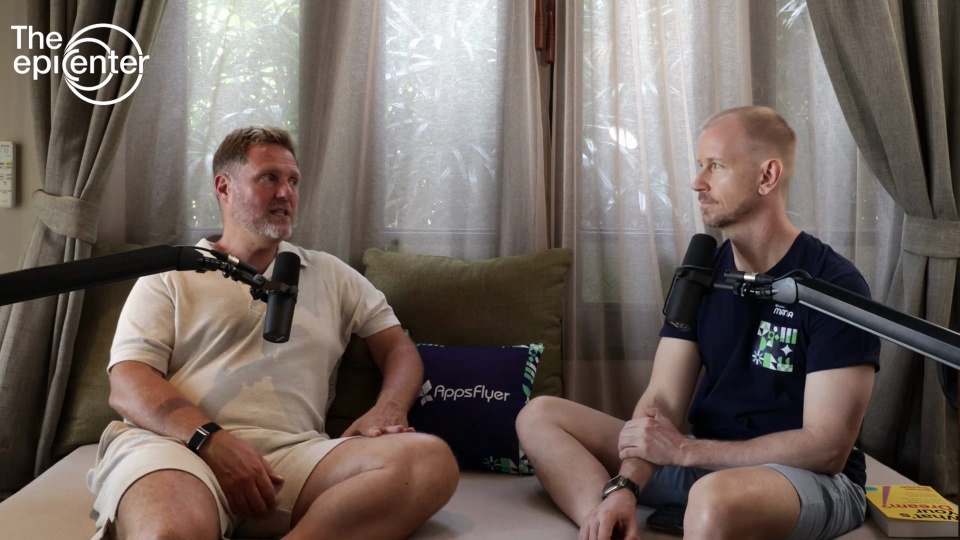
Simon Squibb
0:00
0:00
Featuring
Simon Squibb
Entrepreneur, Investor, Founder of the “Dream Factory”

Episode summary
Simon Squibb joins the podcast to explore how technology—especially AI—can empower everyday people to stop waiting and start building. Rather than predicting the future, Simon argues that the real opportunity lies in using the tools already available today. From no-code app builders to social platforms like TikTok, he shares how experimentation, curiosity, and self-discipline unlock momentum far faster than waiting for perfect conditions.
Throughout the conversation, Simon reflects on purpose, legacy, and why dreams don’t have to be original to matter. He explains how people can bring their ambitions into existing missions, learn by doing, and avoid being left behind by fear of new technology. The episode closes with a powerful discussion on legacy—what it means to build systems that outlive you and give future generations access to knowledge, community, and capital.
Key highlights
On using AI and technology as tools, not threats:
“There’s tools in the toolbox that people are not using… people need to research and figure out what tools are in the toolbox that can help them achieve their dreams.”
On learning by doing:
“Don’t be scared of the AI tools out there. Learn how they work by just doing something silly… go and use them.”
Episode Timestamps:
*(00:10) How technology and AI can help people act on their dreams
*(03:49) Why no one can truly predict the future of technology
*(07:28) Learning new platforms by doing (and pioneering business on TikTok)
*(12:33) The “Dream Factory” and integrating personal dreams into a shared mission
*(23:30) Purpose, work, and building mission-driven teams
*(34:30) Legacy, fatherhood, and creating systems that outlive you
Transcript
[00:00:00]
[00:00:04]
[00:00:07] Ronen: All right. Today we’re gonna talk about what’s stopping you from dreaming, and, uh, I’m here with Simon Squibb. Hey, [00:00:15] Simon. How are you? Good. It’s, uh, it’s amazing to, uh, reconnect with you. Um, everyone has a dream, but actually not everyone acts on it, um, let alone even pursue it. So, Simon Squibb, I mean, you’ve built businesses, you’ve sold businesses, [00:00:30] you’ve mentored thousands of people.
[00:00:32] Um, you’ve basically dedicated your life to helping total strangers dream.
[00:00:36] Simon_Part-1: dream.
[00:00:37] Ronen: Um, I wanna start this by asking very, very, uh, simple, and yet maybe a very [00:00:45] big question. What is stopping you from dreaming? That’s not you, per se, but it’s, I just wanna take it back a little bit, maybe a little bit of context for the audience.
[00:00:55] Around 23 years ago, you and I met in Hong Kong. [00:01:00] We had our dreams. We were, uh, young aspiring entrepreneurs. And, um, you know, we, we, as I strolled up the steps to your office in, uh, what is it? Dudley Lane
[00:01:10] Simon_Part-1: P Pact. Lane Pact
[00:01:11] Ronen: Pact Lane. And, um, yeah, it was, uh, [00:01:15] you know, we met and, and, and we talked, uh, for the very first time.
[00:01:18] And today, two decades later, we’re sitting here in ko and you’ve just delivered one of the most amazing keynote presentations that we’ve had, uh, we’ve ever heard. And, uh, you know, it, it [00:01:30] was truly, truly amazing. And, um, you know, I’m, I’m in total awe of what you’ve accomplished, but I wanna ask you that question. What is stopping people from dreaming?
[00:01:40] Simon_Part-1: It’s a very good question. And you know, you said in the intro of this that, you know, everyone’s got a dream. It’s [00:01:45] not true. They have, they just don’t know it. So there’s a lot of people that don’t actually have a dream, but there is one there and there’s a lot of complex reasons why it’s not coming out.
[00:01:55] But I would probably start by saying most people are caught in fight [00:02:00] or flight. And they don’t even realize it. So fight or flight, if you are worrying about paying the bills, you’re worrying about getting to the end of the month, you’re worrying about the health wellbeing of your family or the safety of your family, or where you’re gonna sleep tonight, then you can’t access the creative part of your brain [00:02:15] in fight or flight.
[00:02:15] It’s just about survival, right? Running as fast as you can to get away from the lion. You’re not thinking about anything else except making sure the lion doesn’t eat you. And so what you need to do is come out fight or flight, and I would say half the world is caught in fight or flight. [00:02:30] So their dream is not accessible right now.
[00:02:31] Because even if they said to themselves as they’re listening to this, what is my dream? Their brain will instantly say,
[00:02:37] “Oh, I’ve got to pay the bills and provide for my family.” And they’ll say that their dream, dream is to provide for their family. But that’s not a, that’s not the [00:02:45] dream that you, that’s gonna aspire you, that’s gonna the dream that’s potentially gonna drive you into the ground.
[00:02:48] Ronen: It’s like an obligation.
[00:02:50] Simon_Part-1: obligation. And if you’re not providing for your family, you feel valueless You start to devalue yourself and then you don’t charge properly for your work and you start to be desperate for [00:03:00] the income and therefore you don’t have in sales what we call posturing. Mm-hmm.
[00:03:03] You’re too busy desperately trying to like make a living. And I’ve been there myself, so I know what it looks like. Sheer desperation just to survive. Yeah. And it’s not a, an operation model. You want to, you want to, you wanna [00:03:15] build your life upon because you’ll end up doing anything to survive. And that means doing a job you hate.
[00:03:19] Mm-hmm. That means doing two jobs you hate sometimes just to get through. And so what you want to do is come out fight or flight and for half of the people listening, they won’t be in fight or flight. [00:03:30] They’ll have a dream and they maybe don’t have the skills or the knowledge, which maybe in this podcast we could try to give them to actually go and execute on their dream. But the 50% listening right now will say, I dunno what my dream is. And it’s because they have not come outta fight or flight and they need to come outta fight or flight. [00:03:45] And there is a hack to come outta fight.
[00:03:47] Ronen: Well, we, we definitely are gonna get there, but, um, let, let’s start with what was your very first dream and what made you act upon it?
[00:03:55] Simon_Part-1: So, yeah, I mean, I think a dream is an evolving thing. When I was 15 years [00:04:00] old, I was homeless and my dream was to have a safe place to sleep. Mm-hmm. And my dream was to, uh, be able to sustain myself, literally just be able to eat and have somewhere to sleep. And then through luck and [00:04:15] chance, I managed to, um, get myself out that situation.
[00:04:19] Um, I was actually only homeless for about eight weeks. Mm-hmm. And I got myself outta
[00:04:22] that
[00:04:22] situation.
[00:04:22] Ronen: That’s, that’s eight weeks. Not
[00:04:24] Simon_Part-1: it was still a
[00:04:25] Ronen: even been homeless for a
[00:04:26] day.
[00:04:26] Simon_Part-1: Yeah. And it was, it was a, a crazy experience, [00:04:30] but I think when I got myself, I had no choice but to start a company. I didn’t want to start a company.
[00:04:35] I wanted to get a job. I was 15 and I couldn’t get a job. I was too young, no company would hire me. So I had to start a business. And so I was a reluctant entrepreneur. I was not trained [00:04:45] in school to be an entrepreneur. I was trained in school to get a job. Mm-hmm. So, uh, I, I think that, you know, I was in fight or flight in that in those days and I just, I started a gardening company, cut a long story short, and that gardening company managed to take me out of [00:05:00] poverty and managed to get me to a point where I had somewhere to sleep and food.
[00:05:04] Um, but that gardening company then failed. ’cause in England there’s a winter. Mm-hmm. I didn’t really plan for that. So, uh, the gardening company failed. Um, which, you know, changed, changed my life again. ’cause [00:05:15] then I realized, oh, okay. I know how to start a business now though. And I didn’t know I knew how to start a business because they didn’t teach it to me at school, which is why now my dream is to fix the education system.
[00:05:22] So my dream has evolved. When I first started out, it was survival.
[00:05:25] Today, 35 years later, I want to fix the bloody education system that caused the very problem [00:05:30] for me at 15 years old. I still feel is there today for young people, which is, they’re not given the knowledge to go and live their dream.
[00:05:35] They’re not even asked what their dream is. Mm-hmm. And therefore, most people end up in fight or flight or in a life they don’t love.
[00:05:40] Ronen: Well, we’re gonna talk about that in a, in a little bit, but I think [00:05:45] it’s also important to know what, was there ever a moment that you actually stopped dreaming? No.
[00:05:53] Simon_Part-1: dreaming? No. I, I, I think from the age of 15, I always had to imagine a better world than the one I was in. Mm-hmm. So that’s [00:06:00] why I say pain gives you purpose. You, you need to have some pain to reset what matters. If you have nothing, you have nothing to lose. Right. But you have to have nothing to realize that.
[00:06:09] And so those that have something, sometimes have something to lose and don’t take risk. And if you don’t take risk, you can’t get luck. And [00:06:15] without luck, you’re not gonna be successful. So. I think I have always dreamed from the age of 15, I’ve always dreamed of a better place to live, a better, better food, better environment around me.
[00:06:28] You know, less [00:06:30] poverty, less pain. Mm-hmm. And so I think that meant I’ve always dreamed of something better. And so when I got to a point of 40 where I was financially independent and sold my company fluid to PwC, that’s it. I don’t need to work anymore. And it was at that moment [00:06:45] that a new dream arrived, which was to fix the education system that had let the 15-year-old me down and hadn’t been fixed.
[00:06:51] I mean, if it had been fixed, I wouldn’t have this dream. I would’ve said, okay, 15-year-old me was taught to get a job. WaS taught to think about what I’m gonna do when I grow up, instead of what problem do [00:07:00] I wanna solve. And now it’s fixed. So I don’t need to fix that problem. It wouldn’t have been my dream.
[00:07:04] But it hasn’t been fixed. It is broken, hideously broken. Even now with ai, it’s horrendous how bad the education system is. Um, it was bad when Google was invented for half the memorization stuff that school PIs onto people’s [00:07:15] heads, makes them remember things that they don’t need.
[00:07:17] Simon Squibb: was,
[00:07:17] Simon_Part-1: had already made that obvious.
[00:07:19] We didn’t need that. Now ai, it’s even more obvious. So, um, now that’s my new dream, I guess, but I’ve always dreamed to answer your question.
[00:07:25] So Simon, you, you, you’ve mentioned something really interesting and, and you’ve talked about [00:07:30] technology and how it can enable, enable people. And specifically with ai, it, it can become a tool to help people to manifest their own dreams. And also you, from a technology perspective, you’re gonna be releasing your own app soon, and I’m sure that will help [00:07:45] people to amplify their own thoughts.
[00:07:46] Ronen: What, how does, how do you see technology in, in being able to, uh, further people’s, uh, dreams and action upon it?
[00:07:52] Simon_Part-1: Yeah. So I think a lot of people are predicting the future right now, and they’re saying what technology is going to do.
[00:07:57] The truth is no one knows what’s actually gonna happen in the future, [00:08:00] but I would say that there’s tools in the toolbox that people are not using. Mm-hmm. And so there are some brilliant products out there that allow you to create an app. By voicing what you want the app to do. And there are brilliant products out there that will help you start your business that people aren’t using.[00:08:15]
[00:08:15] So I think people need to be more aware. They need to research and figure out what tools are in the toolbox that can help them achieve their dreams. And so a lot of that is self-discipline to go and apply yourself to learn these new things. One of the things I pride myself on is I, I’m a [00:08:30] marketing guy.
[00:08:30] I love marketing. It’s just been an obsession of mine my whole life. Yeah, the psychology of marketing. And so when TikTok really hit the mainstream, although I was a business person who didn’t dance and didn’t lip sync to music, I went on TikTok and I used it. And so that’s how I learned [00:08:45] how it works. And actually, I’m one of the people that pioneered business on TikTok.
[00:08:49] So I was one of the first people that actually was talking business on TikTok. And now there’s lots of people doing it, but I was one of the first, because everyone’s like, well, tiktoks a music app. You know, people that dancing on it. I’m like, yeah, sure, but why [00:09:00] can’t you go on there and teach people? business So that’s one of why I’m one of the biggest, uh, business creators on the platform.
[00:09:05] And I think what I’m trying to get to apart from flexing a bit there for a second is like, you know, go and learn these things
[00:09:10] by doing it. Yeah. Use these tools. Don’t be scared of the AI tools out [00:09:15] there. Learn how they can work even by just doing something silly as I did. I went on TikTok, my first ever TikTok still up.
[00:09:21] I went on TikTok, I went to London Zoo and I did basically voiceovers and music and funny little animations of me and my son at the zoo. It wasn’t even initially any business content. Mm-hmm. You know, I [00:09:30] just played around with it. I have never deleted those videos ’cause I want people to see where I started.
[00:09:33] It got 22 views. Right. It doesn’t, so you gotta understand like there’s tools out there, go and use them. We dunno what the future is. Everyone will predict and everyone can tell you what they think, but if you know how to use these tools, at [00:09:45] least you can be part of it and you won’t get left behind.
[00:09:47] Ronen: well, it’s also about, you know, what you mentioned is, is keeping, whether you see that as a failure or a progression, right? It’s part of the history. It’s part of the journey that people have to take in order to, to start somewhere, [00:10:00] right? And one would argue that the most difficult part of this whole process is just to start.
[00:10:07] I agree. That’s
[00:10:09] Simon_Part-1: why I’m, I, I used to focus on people that have businesses and helping them make them better. And I’m, I shifted to helping [00:10:15] people start. I Have a deep knowledge of business so I can help people that are struggling with their businesses, make them work.
[00:10:20] That’s kind of what Fluid did, right. Where we met. I had an agency and that’s what we did. We helped people’s businesses that were already up and running do better. Right. Better branding, better communications, better [00:10:30] website, whatever it was. Right. That I have deep, deep knowledge in that. But the really exciting bit is this, get people the knowledge they need to start.
[00:10:38] ’cause that is the biggest problem. If we want a unicorn in every major country in the world to be born next week. Mm-hmm. We need more people to start a business [00:10:45] next week. It’s a numbers game. You need more people to start. Most people are focusing on the, someone started, let’s get them an angel investor or VC funding.
[00:10:53] And nobody’s really focusing on generating enough excitement and noise for those to get started to do it, to have a community. That’s why I built [00:11:00] Help Bank. So you can start and you have a community, you’re not on your own starting. You have accountability and you have the knowledge and potentially access to funding. Now what’s your excuse for not starting? ’cause it is the hardest thing. It’s just, just
[00:11:11] Ronen: go
[00:11:12] and do it.
[00:11:12] Simon_Part-1: it.
[00:11:13] Ronen: So [00:11:15] in, uh, on Epicenter podcast, we actually have a lot of people from the tech world who, who tune into this uh, and a lot of them would be CEOs and founders, but a lot of them are not.
[00:11:26] What
[00:11:26] is the framework for someone who has a [00:11:30] dream and wants to start, but doesn’t know what the first step is, what is the framework that you work with people on, or how do you get them take that first step?
[00:11:41] Simon_Part-1: Yeah, there’s a lot of nuance to this because I have a general framework [00:11:45] of how to do it, and
[00:11:47] Simon Squibb: It
[00:11:47] Simon_Part-1: it does depend on personal circumstances. Mm-hmm. So, and I say this very carefully so I don’t get canceled on the internet, but like, if you have a kid, you have a responsibility to that human.
[00:11:57] It definitely is harder to start a [00:12:00] business because you’ve got the responsibility for that child, but if you don’t have a kid, I have different advice. Like, it’s just you, you’ve kind of got nothing to lose. Go for it. While you don’t have that responsibility, and I think, I think go for it. Steps are different if you’ve got a kid or you haven’t got a kid.[00:12:15]
[00:12:15] If, if you’ve, generally speaking, I think if you have a business idea, and let’s say it’s a very big idea.
[00:12:21] Let’s say it’s build an app. . I would say, what are the things you can do without having the app initially? So can you create a Discord channel or a WhatsApp [00:12:30] group that can do some of the functionality that app will eventually do on a MVP basis, a
[00:12:34] minimum viable
[00:12:35] product basis. So what can existing technology can you use to at least test out the theory of this idea before you go and spend millions building something?
[00:12:43] Now, of course, [00:12:45] even having the money to go and spend millions doing something will stop a lot of people from doing it. A lot of people, actually, ironically, their dream is too big, too quick, right?
[00:12:51] You wanna try and start small and grow, and even I do this, even I’ve got unlimited resources. I still start small because it actually allows you to understand what your customers actually need. [00:13:00] I had a theory that people wanted to help each other on an app, right? So what did I do? I didn’t actually go and build the app straight away.
[00:13:06] Initially I built a Discord group, 19,000 entrepreneurs. In that group, I said, right, what are the problems? People said the problems. Who in this group could help with those problems? People put [00:13:15] their hand up, alright, there’s a match here. A market fit, right? People have the knowledge and people have the lack of knowledge and there’s two parts of the ecosystem that are willing to help each other.
[00:13:22] So I know it’s gonna be a good product when I build the app. So then I built the app and then I load that community into the app. But the initial Discord channel cost me nothing.[00:13:30]
[00:13:30] Ronen: discourse, so you, you mentioned something interesting as well about the long game and I think in this day and age, people are too short term minded. Not enough people think about what the long game is [00:13:45] and sometimes they set some sort of KPI, uh, or some goal that is not ambitious enough.
[00:13:52] Right. They didn’t dream big enough. And that can also be a limiting factor. Yes.
[00:13:57] How do you help people? What is your [00:14:00] recommendation to actually make people dream much bigger, but to understand, to get there, they have to go on a very, very long journey. I mean, I, I experienced this myself in my own business being in, in, in this now 11 [00:14:15] years at, at this company and every day is an achievement, but the goal is, is almost non-tangible
[00:14:23] Simon_Part-1: still.
[00:14:24] Simon Squibb: Yeah, I
[00:14:24] Simon_Part-1: I think there’s a, lot of people that will talk about when you build a business, you know, you’ve gotta have a vision. [00:14:30] Totally true. So mine is to fix the education system, but then you need little stepping stones of day-to-day achievements and month to month achievements like KPIs. You know, you, you need something that you can hang your hat on.
[00:14:40] So maybe in the first month it’s get one client. One client that pays you [00:14:45] to do whatever it is you wanna do. Let’s say a service business, right? You wanna build a web developing company, okay? You got one client paying you, done achievement. Make sure you celebrate it. One of the, I built 19 companies and one of the things I’ve always made sure we do is when we get to like zero, in other words, our income matches our cost, [00:15:00] we have a big party.
[00:15:01] Simon Squibb: but then,
[00:15:01] Simon_Part-1: then, you know, it’s a sustainable thing. And so it is important to remember the milestones aren’t just, oh, we’re a billion dollar company now and never celebrate until you are a billion dollar company, right? I just think you probably won’t get there and you need to have little [00:15:15] wins each day. I, I actually wake up every day and I enjoy what I do.
[00:15:19] I count that as a win in my day. At the end I have this thing with my son. My son is seven. Yeah. At the end of the day we always say like rose and thorn. So watch your rose and watch your thorn. And so what, what did you learn from the day? What was the win [00:15:30] today and what was the thing that you would like not to happen more often?
[00:15:32] Right? If you do prick by thorn, you don’t want that to happen again, right? So, and I always find it fascinating what he finds to be his rose and what he finds to be his fawn. And I think people should do this to the, for themselves. If you don’t have kids, you can just do it for yourself. Like today, what was the win, [00:15:45] right?
[00:15:45] You got up your, your business hasn’t got made money yet, but you managed to do a 10 K run and you feel good. That’s a win. You know, you managed to look after yourself and your health and your business will get there. But hey, there’s a win today. Like people need to celebrate little wins much more.
[00:15:57] That’ll help them keep going because it [00:16:00] is, like you say, 11 years, right? It’s a long time to build anything of serious. I mean, it’s getting quicker to build things. I think thanks to ai, people are building companies quicker. Yes. I mean, I, I just invested in a company that’s become one of the biggest companies in the world in the space of a very short period of time, but [00:16:15] they, you know, so it does happen, but those are rare cases.
[00:16:18] Yeah. Like even for me, I’ve been building my platform Helpbank for five years. So when people see me on social media and they’re like, oh, I see you everyone on social media. They think I’m like two years into it. No, I’ve been doing it a [00:16:30] long time, and frankly before that I spent 25 years building all the knowledge up for me to do the videos that I do today.
[00:16:35] So the whole thing’s a 30, 35 year experiment. It’s not like I’m suddenly a business guru on the internet that’s famous. I’ve spent 35 years building it up.[00:16:45]
[00:16:45] Ronen: nobody sees the hard work that goes
[00:16:48] Simon_Part-1: right. That’s the old saying. No one, no one wants to do the hard work. Everyone wants the success. But I think that, but to be honest, like I actually don’t feel like I’ve ever done a hard day’s work in my life.
[00:16:56] Mm-hmm. I mean, except for the very early years where the gardening company, I [00:17:00] tried to do the gardening. I wasn’t very good at it. I did a day’s hard work, and then I got someone else in to help me who liked gardening, you know? So I’ve had days where it’s felt like work. Mm-hmm. But I don’t, I love, I love the word work.
[00:17:10] I think it, it’s, it’s being reframed incorrectly in school. You’re gonna have to work one day. [00:17:15] You’re gonna have to work one day. You’re gonna have to like, go and do something you don’t love, but don’t worry, you’ll be able to buy a house.
[00:17:20] Ronen: Right.
[00:17:20] Simon_Part-1: So I think, I think the framing of work is, is another thing. School mucks up.
[00:17:24] You know, I love work. I, I don’t want to retire. Everyone wants to retire. I don’t, [00:17:30] I think retirement is boring. I want to achieve something. I want to feel purposeful. I want to feel useful. I want to feel seen. And I don’t think there’s anything wrong with that. People make me feel guilty, by the way. Like, don’t you wanna retire?
[00:17:40] You’ve got all this money. Why don’t you just get a villa and watch movie and chill? I’ve got a villa and [00:17:45] S right now, and by the way, it’s beautiful, but I’m actually just as happy to be sitting here with you in the hope that five or six people learn something and their life is better than I just sit by my pool in the Villa win
[00:17:56] Ronen: Mm. Well this is a, a a a a jab at [00:18:00] myself. But when you ask, like, on average, how many views or listens do we get on the podcast and, you know, it could range between, uh, a couple hundred to, uh, you know, the maximum has been 1,002 thousand. Um.
[00:18:13] Simon_Part-1: But
[00:18:14] Ronen: for [00:18:15] me, it’s if I’ve helped one person
[00:18:16] Simon_Part-1: Fair. That
[00:18:17] Ronen: that is already enough to, to, uh, to say that I’ve helped one
[00:18:21] Simon_Part-1: and And I think that’s totally back to the small wins. Yeah, that’s exactly right. When you first start out, you’ve got to think that way. Because if you make a video and it gets, I see this thing on [00:18:30] TikTok all the time, stuck in 200 View Jail, they call it.
[00:18:32] Right? And everyone complains. They’re stuck in 200 View Jail. And I, and I always think like. They’ve helped 200 people. Can you imagine you can help 200 people? One video, you’re not stuck in any jail. You know, that’s, that’s amazing. Right? [00:18:45] But I will say yes, there comes a point where that is no longer a good excuse for not executing properly.
[00:18:50] Correct. So I think that it’s nice to say that, and it can keep you motivated. We helped one person with this video. If this video gets a thousand views, you probably helped a hundred people properly helped a hundred [00:19:00] people.
[00:19:00] Definitely a win.
[00:19:01] However, to make this video, it’s just as much work. If you get 1 million views, that’s true too.
[00:19:06] So why not do it? Right? And actually all it is, is a formula. I mean, we’re talking off camera about this, right? Yeah. I was telling your team this is a formula. You, you, you, you [00:19:15] have a, a way to get millions of views. If I’m on a podcast, if it’s framed properly, it will get million views. I have 13 million views on my business knowledge on YouTube, on one video.
[00:19:26] It’s one of the most popular business videos in the world. [00:19:30] And so why, if I’m on here giving business knowledge, shouldn’t this podcast get the same amount of views And it will be because of the editing and it will be because of the host and the questions.
[00:19:38] And it’ll
[00:19:38] be,
[00:19:39] maybe I’m tired and I don’t
[00:19:40] perform ’cause I’m jet lagged.
[00:19:41] And, and it, and it will be, it will be the framing of the video. It’ll be [00:19:45] the thumbnail that you put up and the tagging that you put on the video. And if you don’t do all of those things right, I don’t perform. You don’t perform. The tagging isn’t right. The framing isn’t right. Then the video will get a thousand views.
[00:19:54] But if you learn
[00:19:54] how to do it and you frame it properly, you can have an even bigger impact. So I think that’s the thing [00:20:00] about step-by-step building a business I, I totally have bought into and live this way. You start small and you build up.
[00:20:06] but
[00:20:07] don’t forget to build up. ’cause a lot of people get lazy.
[00:20:09] They’re like, oh, a thousand views is okay. No it’s not. I mean, the cost of this room, [00:20:15] people don’t know. Behind here, there’s four people full-time and me and you
[00:20:19] and
[00:20:19] this
[00:20:19] filler.
[00:20:20] There’s probably. My guess is 10,000 US dollars to put this podcast together. That’s
[00:20:25] Ronen_Part-1: That’s
[00:20:26] Simon_Part-1: I
[00:20:26] Ronen: would guess.
[00:20:26] Simon_Part-1: Right. So,
[00:20:27] Ronen: So, hell,
[00:20:27] man, let’s make
[00:20:28] Simon_Part-1: sure it gets millions of views.
[00:20:29] Ronen: [00:20:30] Hey, help us get a few million views from Well, I mean, I’m, I’m still in awe how you captivated 13 million people for two hours and 26 minutes in your video. That’s, That’s, that’s keeping attention. Right? And, [00:20:45] and we know in, in, in this day and age, and you have attention factory, uh, right up there, uh, shooting us, uh, in TikTok live, and, and that’s where you don’t keep any attention, but you’ve
[00:20:54] Simon_Part-1: managed mm-hmm.
[00:20:55] Ronen: How do you do that?
[00:20:57] Simon_Part-1: Well, I
[00:20:58] think it’s it’s a combination of things. [00:21:00] I think first of all, you have to bring real value to the table, right? So a lot of people aren’t bringing real value to the table. They think they are, but they’re trying to upsell and sell a course, or they’re trying to sell something on the side so they’re not in it to bring true value.
[00:21:13] They’re in it to sell. something [00:21:15] So I think in, in that case, that video, I was just in it to give people the knowledge that I had in part because I have thousands of dms every single week that I don’t reply to because they, I can’t. Yeah. But the questions that people ask me, I can answer. So I actually sat down with [00:21:30] one intent to give people all the knowledge I have so that they can get it, and I don’t have to individually reply to the dms, right?
[00:21:37] What I didn’t do was say, right, I wanna make hundreds of thousands of pounds, dollars, whatever, from a video, and I wanted to get 13 million [00:21:45] views. No, that was not my intent. My intent was bring deep knowledge into a video. Now, when I put that video up, everybody said to me, take it down, cut it into slices, and sell it as a course.
[00:21:54] I can make 20, 30 million US dollars selling that as a course over the next three years, right? And I’m like, no, that’s not my mission. [00:22:00] My mission is if people need knowledge, there it is. And I think it’s intent. I think a lot of content success should be about intent. People that sustain and live long on social media, in my opinion, are purpose driven, not money driven.
[00:22:14] And so [00:22:15] that video, first of all, intent, I intended to put something out regardless of views, regardless of income that would help people based on data, which was the questions that people were asking me that I had the answers to. And I made it and I delivered it. When we put that video up, by the way, [00:22:30] internally, I have a YouTube team, right?
[00:22:31] Very clever bunch of people that understand YouTube. We all said it’s probably gonna get 10,000 views ’cause it’s too long. But this is where data is interesting. ’cause data said, don’t make a video longer than 10 minutes on YouTube. Data was only being [00:22:45] skewed by the very fact that no one had done a video business content-wise, longer than 10 minutes.
[00:22:51] Simon Squibb: That was good. So
[00:22:54] Simon_Part-1: the data was wrong. You know, we, we put the video, we created a trend. By the way, if you go now and see there’s [00:23:00] all the top creators in business now have done all my knowledge in one hour, 41 minutes, or all my knowledge in 72 minutes, whatever it is, right? They’ve copied us and that’s great.
[00:23:08] I love, I love it. Um, ’cause I want the knowledge to get to people, but the, the point I’m making is that, back to your question, the video was [00:23:15] done
[00:23:15] with an intent to help. Mm-hmm. That’s one reason it did well. The second reason it did well is deep knowledge, like not bullshit. The thumbnail, the text I delivered on what I said in those things, we were clicked on it.
[00:23:24] They went, oh my god, this actually is what it said in the thumbnail. This video is now something [00:23:30] people save. They rewatch, schools are sharing it with pupils. You know, like, it becomes like a benchmark on business and how to do it. And I think that then there’s an element of technical capability. So a nice thumbnail.
[00:23:43] Good title and testing [00:23:45] those things, which we did do, we tested them. So I think having the ability to also technically understand how YouTube works alongside intent, alongside deep knowledge, and then a video will do well in
[00:23:55] Ronen: most
[00:23:55] Simon_Part-1: cases,
[00:23:57] That
[00:23:57] Ronen: That
[00:23:57] is, that is [00:24:00] so cool. And, and I, I’m actually, uh, you’re so generous, right? And, and, and I don’t think people understand how generous you are with what you’re giving and, and. Your time and, and the, the amount of, uh, [00:24:15] information that you are so freely sharing because you, I I, I just like, I’ve known you for a long time and I’ve never known how generous you are as a person, and I’m, I’m, I’m really, uh, fascinated by this, but I also wanna, like, there are skeptics
[00:24:29] Simon_Part-1: out there, right?
[00:24:29] Ronen: [00:24:30] The ones who say that, you know, is
[00:24:33] Simon_Part-1: is
[00:24:34] Ronen: a privilege that, you know, you’ve been, become successful, right? You’ve made it, and now you can be afforded this luxury of, of, of talking about dreaming.
[00:24:44] Simon_Part-1: What do you [00:24:45] say to that? Yeah, I mean, there’s always skeptics, isn’t there?
[00:24:48] I, and I,
[00:24:49] Ronen: I don’t mind it.
[00:24:49] Simon_Part-1: it.
[00:24:50] Ronen: Mm-hmm. I actually don’t
[00:24:50] Simon_Part-1: call them skeptics. I call them undecided voters or I
[00:24:54] Ronen: dreamers undecided. voters. ’cause I think a lot of people have [00:25:00] been brainwashed by the school system or the way the world works in their mind. And you know, if you go back a hundred years and you, you speak to a cowboy and you tell the cowboy that one day there’s gonna be things flying in the sky, horses are gonna be for the privilege for you.
[00:25:14] Simon_Part-1: [00:25:15] You, you know, people won’t be riding around the roads on horses. There’ll be this electric thing. And also, by the way, there’ll be this thing called the internet. Mm-hmm. And they’ll have a little magical device. The only way you can get into the internet for this magical device. But there’s all these communications going on around you, you won’t be able to see them.
[00:25:26] Their heads would explode. So I think there’s always, there’s always people that [00:25:30] are also not in touch with where the world is going. And my belief is the world is going in in the direction of like, we better help each other. ’cause AI’s coming and if we don’t help each other, it’s like aliens coming to earth, If aliens were coming
[00:25:43] Simon Squibb: earth today,
[00:25:44] Simon_Part-1: there would [00:25:45] be no Russia and Africa and America, we’d have to be like, oh my God, this all work together to so save ourselves.
[00:25:50] And so
[00:25:51] we’d have to unite, right? I think the aliens are ai very
[00:25:57] Ronen: so. I, I was listening to a, uh, another podcast the other [00:26:00] day and, and, uh, this, this godfather of ai, I can’t remember his name, but he says We’re all going to become chickens. Right
[00:26:06] Right, That, um, that the ai, it, it’s basically like imagine us talking to our, our dog. Right. We’re talking [00:26:15] and, and like does the dog understand besides some of the basic commands? Right. And
[00:26:22] Simon_Part-1: I
[00:26:22] see it. I agree. Are you afraid of that? No, I’m not. If we talk about it and we can come up with a solution again, uh, some chickens are happy and some aren’t, right? [00:26:30] Mm-hmm. Some dogs are happy and some aren’t. Some dog, some dogs have nice owners and some don’t. So I wouldn’t mind being my dog. I’ve got a lovely dog and she’s very happy.
[00:26:37] She gets to go walking. She gets all the food she needs. I pick up her poo. Um, I’m a pretty good ai, you know, overlord, I think, I think, I [00:26:45] think I’m not scared. I, I think it’s more like I’m, I’m a little bit scared for
[00:26:48] my son. Mm-hmm. Um, ’cause I can’t quite see that far ahead. I mean, if I live another 40 years, I think I’m gonna be all right.
[00:26:54] But I don’t know where it’s gonna go for our children. And I think that’s why, for me, back to the point of like [00:27:00] skeptics, there’s a lot of people that are skeptical. I, I, I was saying five years ago that cars are gonna drive themselves. So what a delivery driver’s gonna do. People are like, cars won’t drive themselves.
[00:27:08] I was in LA last week in a cyber truck. Press a button, it drives you around, you know, like, I can’t tell you how many people I did a post. Actually, I got so [00:27:15] much hate on LinkedIn. About it when I said, get ready, you know, delivery drivers and they’re all gonna lose their jobs. People are like, no, they won’t.
[00:27:21] You’re just scaremongering. I’m not a scaremongering. I’m, I’m making people aware of what I think is gonna happen so that we can retrain those delivery drivers and give them a purpose that [00:27:30] isn’t delivery driving anymore. So we’re gonna liberate humans, we’re gonna free them from slavery. We’re gonna, they don’t have to do that job.
[00:27:35] That isn’t even a job. They,
[00:27:37] Simon Squibb: they’re capable of
[00:27:37] Simon_Part-1: more.
[00:27:38] Mm-hmm. Right.
[00:27:39] So we’re gonna free these people. It’s exciting, but the online people hated me. Like, you’re just scaremongering, [00:27:45] you’re trying to re fear. It is not gonna happen. Insurance companies will never let it happen. Governments will never let it happen.
[00:27:49] Infrastructure isn’t good enough. I’m like, it’s not true. It’s gonna happen. So I think
[00:27:53] as long as we’re
[00:27:53] honest and we, we predict as much as we can, what’s gonna happen, then we prepare for it. So if we are gonna become the [00:28:00] chickens, let’s make sure that we’re in protective cages, whatever that means, metaphorically.
[00:28:04] But we we’re in an environment where we’re protected and maybe earth is our protection. We have our boundaries, we have our, they let us live wherever these beings end up being. Our overlords, they let us be. But I think we have to [00:28:15] think about this stuff, you know? And I, and I think that’s back to the skeptics question.
[00:28:18] It actually winds me up because I hear people all the time saying, oh, you know, it’s, people can’t dream, they’ve gotta work. I’m like, well that’s the whole exciting thing about ai. Maybe it can take away that shit job that person’s not enjoying and give someone the chance [00:28:30] to think about what their dream is, come out of fight or flight and think about it.
[00:28:33] We have to prepare people for that. I mean, one thing with COVID, which was interesting, you know, people just suddenly didn’t have to work and they were sitting at home. People knew what retirement looked
[00:28:41] like Quite early.
[00:28:42] Ronen: Yeah.
[00:28:42] Preview. Yeah. they don’t want
[00:28:43] it.
[00:28:44] Mental [00:28:45] health went through the roof. Humans need something to do. Right. To use your chicken analogy. We need something to do. We need to peck something. Yes. Right. So what is it that’s gonna excite you to peck? Right. And it, maybe it is dog walking. Maybe it is a cat cafe. Maybe it is [00:29:00] launching rockets into space. Whatever it is. Get ready ’cause you’re gonna be able to do it.
[00:29:04] But not if you’re not prepared. Not if your mind isn’t prepared. So you’re gonna be a chicken with no brain being told what to do by ai or you are a chicken with knowledge of how to leverage AI so you can keep up without overlords. [00:29:15] I just made that up. It’s a pretty good analogy. I’m keeping your chicken analogy alive.
[00:29:18] Leave it with me. keep that chicken alive. I’m keeping your chicken analogy
[00:29:21] No, KFC here. But I
[00:29:22] Simon_Part-1: get what I mean. You know, you can either be a smart chicken or you can be a dumb chicken.
[00:29:26] You can be a chicken with a purpose. You know, like what’s the name of the, I’m gonna go off the
[00:29:29] Ronen_Part-1: Chicken [00:29:30]
[00:29:30] Simon_Part-1: Wallace and Grommet. Is it? Well, the chickens are all stuck in the, there’s one clever chicken that wants to get out of the thing and go live in the real world, right? It’s like you wanna be the chicken that wants to escape. Right? And how are you gonna escape? You’re gonna learn what AI know.
[00:29:41] You’re gonna learn to use AI to outsmart ai. Otherwise you are gonna [00:29:45] have a boss, a new boss. Right now a lot of people already have a boss. Yeah, you’re gonna have a new boss. So you’re gonna have a new chicken farmer. I
[00:29:51] Ronen: I wanna shift back to dreaming for a second. There’s a
[00:29:55] lot of
[00:29:56] dreamers out there, right?
[00:29:58] Simon_Part-1: out,
[00:29:58] Ronen: dreamers need builders [00:30:00] along their side. What do you say to those people that don’t have a dream of their own, but are happy being the co architect of someone else’s dream?
[00:30:10] Simon_Part-1: that a
[00:30:11] dream? So it’s a very complex question you’re asking. It doesn’t sound complex, but it’s actually quite a [00:30:15] complex question.
[00:30:15] Ronen: it’s very,
[00:30:16] it’s
[00:30:16] Simon_Part-1: very close to me as well. I know, I know. And I kind of get what you’re asking. Yeah. I’m gonna try and answer it in a way that, uh, helps. So I, I have personally have no problem with someone working for someone else. Mm-hmm. But [00:30:30] I want ’em to have informed, consent. Right. Informed consent means they understand
[00:30:34] Simon Squibb: money
[00:30:35] Simon_Part-1: works. They have financial literacy, so they understand if they’re selling time, they understand that that is a limited upside.
[00:30:41] Right. I want people to be informed. [00:30:45] If people understand that scale comes from owning equity in a business, right? Not waiting for an IPO, and maybe you’ll get some share options, maybe you won’t, none of that. Like you own equity in the company, you know your upside. That’s it. As long as people understand if they don’t have equity, the upside is [00:31:00] less and you could end up getting fired and you have nothing for your 11 years of work.
[00:31:04] Right. So I think that, you know, informed consent, that’s the, that’s the first thing. I think it’s important that we let people know the truth and if they know the truth and they decide they still wanna stay in that job, wonderful. [00:31:15] What I feel right now happens is the school system doesn’t teach financial literacy so that people are not informed and they spend 10, 15, 20 years working for someone and end up on a small pension and having less of an experience that they could have had if someone had just taught them the UN and understood equity [00:31:30] as a, as a one example, right?
[00:31:31] There’s loads of different examples in financial literacy, but understood how that works. That’s one thing. The second thing is. A lot of people are deliberately put into the gladiator arena so they’re distracted. Right. So they’re told own a house will make you happy. So that’s what people do. They go and buy a house, but [00:31:45] now they’re locked into that debt.
[00:31:46] And
[00:31:46] Simon Squibb: so
[00:31:47] Simon_Part-1: this is partly financial literacy, but this is also partly the system trapping you into buying things
[00:31:52] Simon Squibb: you don’t
[00:31:52] Simon_Part-1: need to them monthly cost pile up. Mm-hmm. And, and then you have to do something that you don’t love or worse do something [00:32:00] you don’t mind doing but isn’t exciting. Right. So, and then the third thing I’ll
[00:32:05] Simon Squibb: about
[00:32:05] Simon_Part-1: it is
[00:32:07] Simon Squibb: I
[00:32:08] Simon_Part-1: help people understand that if you are on the treadmill, your brain won’t allow you to dream.
[00:32:14] [00:32:15] And then the treadmill
[00:32:16] will just keep
[00:32:16] you busy. ’cause people are scared to fall off the treadmill. They have to stay focused on the treadmill. So I wanna make sure, and it’s one reason I wrote my book, what’s your dream? I want people to understand
[00:32:26] Simon Squibb: there
[00:32:26] are
[00:32:26] Simon_Part-1: other
[00:32:26] options other than that treadmill. Right.
[00:32:29] Ronen: Shameless [00:32:30] plug,
[00:32:30] Simon_Part-1: plug. Uh, but, but what I’m trying to make sure I’m, I’m really clear on here is like, people think I’m anti getting a job. Mm-hmm. I’m not anti getting a job. I’m anti people not being informed of the downsides of having a job [00:32:45] because everyone’s sold that a job is safe and working for yourself isn’t.
[00:32:48] And that’s a lie because right now you can get fired. You can spend 11 years building a company. They can just fire you. they can.
[00:32:55] Mm-hmm.
[00:32:56] But if you’ve built the company and you own it, only person can fire you is [00:33:00] you. So it’s safer to run your own business, but that’s not the narrative. People to talk from day one.
[00:33:06] Everybody thinks working for someone else is safer than working for yourself. And that is a lie. Now, as long as people have that knowledge and they truly understand the [00:33:15] truth, but then they decide to work for someone else,
[00:33:17] Ronen: I’m happy. with their choice. If you are informed as you said, then it’s okay.
[00:33:23] Simon_Part-1: by the way,
[00:33:23] Ronen: I, I don’t think I told you this,
[00:33:28] Simon_Part-1: that
[00:33:28] Ronen: that I was working for [00:33:30] when I met you did that exact thing to me. They promised me shares, promise me equity. And then when it came time to actually fulfilling on what they said, they said, no, we actually didn’t promise that.
[00:33:42] And PS you’re fired. Yep. And [00:33:45] that
[00:33:45] Simon_Part-1: I didn’t
[00:33:45] Ronen: to me. Amazing. And, and that happened to me. And, and, and because of that, and sometimes you have to learn the lesson more than once, which I did. I think
[00:33:52] Simon_Part-1: that, uh,
[00:33:53] Ronen: it becomes
[00:33:54] really
[00:33:54] ingrained in
[00:33:55] you that. When you’re on a mission and if it is someone else’s [00:34:00] dream, you need to make sure that you are part of that dream.
[00:34:03] Yes. And that dream is part of you. Right. And that, that dream does not let you behind. Right. And so, like I said, I’ve been working here in, in this company for 11 years, but [00:34:15] thankfully those previous lessons of getting my hands burned has taught me to make sure that I’m very, very well vested in the, in this future success and the current success of the company.
[00:34:24] Simon_Part-1: Yeah. And more importantly, and this is what a lot of idiot bosses don’t realize, that they also are [00:34:30] investing in their own business by giving equity to their people. See, this is the crazy thing. A lot of pe, a lot of entrepreneurs hate me. Mm-hmm. And, and when I dig into why, it’s because I’m educating their employees not to think like employees.
[00:34:41] And what I tell them is, it’s the old analogy of like, you know, if I train my [00:34:45] staff and they leave, what do I do? Or if you don’t train them and they stay, it’s worse. Yeah. So like there are people like, oh, well if I give equity and they leave, I’m like, well, if you don’t give equity, they’re more likely to leave.
[00:34:54] And if you don’t give equity, then I believe I’d rather have 5% of a really successful company [00:35:00] than a hundred percent of a company that’s hard to keep staff. It’s not growing. It’s not fun to run where I’m the only person who really cares. What is this greed all about? Now? Greed makes a lot of people miserable, and I have discovered also the hard way in my [00:35:15] early companies, I didn’t give equity.
[00:35:16] Yeah. I also learned the hard way. I’m not saying, you know, I’m not saying I’ve always given equity, but I’ve realized through experience that giving equity to people feels good. And the company doubles every time I give someone a little bit of [00:35:30] equity. So if it doubles, I, I, I lose, let’s say 1% like Dudley, my cameraman, I’ve given percentage of my company.
[00:35:35] Mm-hmm. Right? He owns a percentage of help bank. And, you know, i, I believe all my heart that that has meant the company is [00:35:45] more successful because he’s a shareholder now. Yes, he could leave and yes, he’d had that equity, but oh my God, there’s someone not even working on the company anymore that has equity.
[00:35:54] Alright? But you know, that’s the risk you take in general. But it hasn’t happened by the way. [00:36:00] So this is one of the first companies I’ve run. We were 41 full-time people and three people have left in five years. Mm-hmm. Now we fired a few people. That’s a different situation. But what I’m saying is like, as far as people leaving is concerned, not many people have left. And so, [00:36:15] um, it’s just part of
[00:36:15] parcel. And by the way, I fired people that have equity and they took the equity with them. Yeah. So it is part of it, you know, like I think it’s okay. And I, I think if someone puts the effort into, into a company and at some point it doesn’t work anymore, both parties don’t feel like it’s working anymore and [00:36:30] you fire them or they leave, they still earn their equity.
[00:36:33] But that’s, that’s again, another mistake a lot of founders make. They think that they need to retain the equity and only those working in the company have equity. Well, a lot of VCs put money into companies and they don’t help at all. Right. So it’s just not a smart way to think about your [00:36:45] business. I would rather ha a member of my team who’s, who is helping build the business, has equity than a VC who generally pretends to help and just puts money.
[00:36:54] Ronen: Well, I, I think we’re very much aligned on that principle because everybody in [00:37:00] our company has equity from the, uh, the, the secretary at the front door to, uh, you know, to the most senior execs to both of them sitting here behind cameras I know I did my research. I know,
[00:37:10] Simon_Part-1: I know, and I
[00:37:11] Ronen: I like it. And I think, and I, and I think it’s very important because I think that, you know, [00:37:15] build, building at least someone else’s dream that makes it as much your dream as it’s possible to make someone
[00:37:23] Simon_Part-1: ass. And I do think, by the way, like I, I honestly believe all of my team have the [00:37:30] same dream as me.
[00:37:30] Mm-hmm. So I wanna fix the education systems. We wanna free humanity so they can do what they love. Right. All of my team feel the same way. So when you asked this question earlier, if I don’t have a dream, what should I do? One thing I do suggest to people is go work with someone who’s got a dream and maybe their dream can become your dream.
[00:37:43] You don’t have to have an [00:37:45] original dream. Like, it is not like it’s an original factory. There’s no original idea. There’s no necessary original idea or dream. So I think you can go and work with someone who has a mission to do something you believe in. And as long as you get equity and you have informed consent [00:38:00] around how business works, and you don’t lose by caring about that dream, I think it’s no problem.
[00:38:05] You don’t have to go build your own thing. I mean, like Katie, who’s my ea, uh, she has, uh, her own version of what we’re doing. You know, she, she has her own part dream. [00:38:15] We can integrate it into what we’re doing. It doesn’t have to be a separate thing from us. She can go do it on her own or we can make it part of what we’re doing as a whole.
[00:38:22] Right. People can bring their dreams into the dream factory. Mm-hmm. And the dream factory just gets better. It does not. Simon Squibb wants to fix the education system and no [00:38:30] one else in the organization cares about that. They only care about money and getting equity. No. It all connects, right? People have joined this company because they believe in the mission.
[00:38:38] Most of the people that are actually working for me today have come to me and said, I love your mission. This is my skill. Can I please work there?
[00:38:44] Ronen: [00:38:45] I love it. Simon, you said, the purpose of life is a life of purpose. And, uh, it relates very much
[00:38:56] Simon_Part-1: to, a question that I
[00:38:57] Ronen: uh, most guests here on the [00:39:00] podcast.
[00:39:00] Simon_Part-1: What do you want your
[00:39:01] Ronen: legacy to be?
[00:39:02] Simon_Part-1: I think there’s a couple of things. I would like my son to think I was a good father, and that despite working hard and being away from him, like I’m, I’m in,
[00:39:12] Simon Squibb: mm-hmm. Come
[00:39:12] Simon_Part-1: away from him. Um, [00:39:15] I hope he grows up to realize that. I love him so much and I’m doing partly what I’m doing today to make the world a better place for him later, and that he thinks I’m a good father.
[00:39:25] That that would mean the world to me as a legacy. I think I would [00:39:30] like to leave a system behind that gives the 15-year-old me access to knowledge, community and capital so that that 15-year-old me doesn’t ever suffer the new 15-year-old me. Um, and I, and I’d like to leave behind a [00:39:45] system, which I think I’m almost there that will live without me.
[00:39:48] And that system will always be there to give people without a catch the knowledge they need capital where it’s possible and support to make a dream a reality. And so if I can leave a system behind that, [00:40:00] does that, which either replaces the education system or eventually gets integrated into it, I don’t mind which one so that this, this world is a better place so that people are living, you know, their dream and people are working and enjoying.
[00:40:11] People feel purposeful and get out of bed every day, excited about going to work. [00:40:15] Um, and so that would be, that would, that would be a legacy. I’d like to leave those two things.
[00:40:19] Ronen: be a, well, I think you’re well on your way to, uh, to fulfilling that legacy. And, um, you know, you, you, what you’re doing, I is truly amazing. And, you know, I’m so [00:40:30] appreciative to hand this, have this time with you and, uh, of course share with as many people, uh, who will tune in to listen.
[00:40:37] Um, I like to end with a, uh, quick fire round. Are you down with that? Let’s go. Let’s go
[00:40:42] simoN, what is your favorite book [00:40:45] that you recommend to others to read? Simon.
[00:40:47] Simon Squibb: So there’s this absolutely brilliant book called What’s Your Dream? By Simon Squibb. Um, so here’s the thing, I’m actually dyslexic. Uh, I You too. Yeah. Yeah. So I, I, I basically, [00:41:00] um, only recently started listening to audio books, but I tend to not actually consume books. Mm-hmm. Um, I understand how powerful they are, how useful they are, just because of my disorder, I guess, or my superpower, depending on how you look at it.
[00:41:11] Um, I, I don’t read, uh, but I have read a few books in my [00:41:15] life. I really like, uh, how it sorts pour your heart into it. Which is the story of Starbucks. Mm-hmm. And how he built that, that that brand. Um, this was, I read this book maybe 15 years ago, uh, when I actually really liked Starbucks. They came to Hong Kong.
[00:41:28] Yes. I remember when they came to Hong Kong. I just, I [00:41:30] admired the brand back then. I’m less admiring them these days. Uh, but I really enjoyed that, that insight because of the way I learned how, uh, corporates can be good. And back then they, they were the first company to ever give healthcare benefits to part-time staff.
[00:41:44] In America when [00:41:45] they didn’t legally need to do it. So they, they Howard Sort instigated giving medical care to, to his part-time workers, which was a differential, right? Because, because McDonald’s and the others guys were not doing that. And so that gave a lot of security to their staff that at least they would [00:42:00] have their medical bills taken care of even though they were part-time.
[00:42:03] And that made Starbucks service much better. ’cause they attracted the best people. And so in the book he talks about how it’s, it was 70 million US dollars a year and everyone told him he was nuts. You legally don’t have to do it. You don’t have to provide medical care to [00:42:15] part-time people. But they did it because it was the right thing to do and it also helped reduce turnover.
[00:42:19] And so I, I, I took a lot from that book in the early days of like purpose and doing things the right way and, you know, investing in your people. I think Starbucks has gone the wrong way since, but that’s a different story. But that [00:42:30] particular book at the time struck a chord with me. Do Good in your
[00:42:32] Ronen: That’s another book, right? The, the, the Wrong Direction of Starbucks. More, more sugar than caffeine.
[00:42:38] Simon Squibb: yeah. Well, avoiding Tax in the uk. Just lots of bad decision. Lots of bad decisions that are not good for a brand, I
[00:42:43] Ronen: actually. Come to think of it, you are [00:42:45] the sixth person who I’ve interviewed who’s written a book. Oh, Yeah.
[00:42:50] Simon Squibb: I thought I was original. I thought I was the only person had written a
[00:42:52] Ronen: no. no. We’re gonna get more, we’re gonna get Katie’s book one day.
[00:42:55] Simon Squibb: Yeah. All. No, the behind the scenes with Simon Squi be, will be a nightmare, wouldn’t it?[00:43:00]
[00:43:00] Ronen: If you could shadow any CEO for a day, who would that be and why?
[00:43:04] Simon Squibb: Wow. Uh, Elon Musk. I know he is very unpopular at the moment. Mm-hmm. I know it.
[00:43:09] Uh, but I still think the way he operates is pretty fascinating. Yeah.
[00:43:14] Ronen: One habit or [00:43:15] mindset shift that changed your life.
[00:43:17] Simon Squibb: over profit
[00:43:19] Ronen: What haven’t you dreamed of yet?
[00:43:22] Simon Squibb: haven’t a planet full of entrepreneurs that are fixing all the world’s problems. Just for that now. So there we go.
[00:43:29] Ronen: [00:43:30] What advice would you give your 18-year-old self or your 15-year-old son when he becomes 15?
[00:43:35] Simon Squibb: 18-year-old self or 15-year-old son. one? start with your 18-year-old self, first
[00:43:38] 18-year-old self, I’d probably say don’t worry, it’s gonna work out. Uhhuh.
[00:43:41] This pain is there for a reason. It’s gonna help you.
[00:43:44] Ronen: And your [00:43:45] 15-year-old son.
[00:43:45] Simon Squibb: Uh, 15-year-old son. No, I’m not buying you a Porsche. Go and earn it yourself.
[00:43:50] Ronen: All right. Fish and chips or fish and cucumbers. chips. Fish and chips. I quite like cucumbers, fish, and chips with cucumber on the
[00:43:57] Simon Squibb: side. So if you could, like, if you could have a, [00:44:00] uh, Hong Kong Cha fan or a, uh, Thai chicken, rice, which one would it be?
[00:44:04] chicken. Chicken thai rice. Probably
[00:44:06] Ronen: Chicken rice? Thai chicken rice’s pretty special. Yeah. But that, that being said, if you said to me, seal on B Uhhuh or uh, chicken fried rice, I go with [00:44:15] seal on B.
[00:44:15] Simon Squibb: So it’s very much depends on what the dish is. Yeah. Where the dish is served and who you’re eating with. I need more context. you have a favorite restaurant in Hong Kong? Yeah.
[00:44:23] uh, well my favorite restaurant is Hutong. Okay. But my favorite, favorite, like Everyday Place is, is [00:44:30] Crystal Jade. So now we’re coming into a restaurant review business,
[00:44:33] Ronen: now we’re going into want any advice on where to eat in Hong Kong or London, lemme know.
[00:44:37] Well, on that note, Simon, it’s just been, um, an absolute pleasure to, to have this time with you and, and reminding, [00:44:45] you know, people that. You know, they can dream and, and it’s not naive, it’s necessary. And, um, you know, I, I think this is a, a treasure trove already of knowledge and inspiration that, uh, hopefully it’ll touch one or, or a million people and, and [00:45:00] whichever one it is, it’s, uh, it’s truly a gift that, uh, you’ve given us.
[00:45:03] And, uh, thank you so much for being on the podcast.
[00:45:05] Simon Squibb: Absolute pleasure. And likewise, thank you so much for inviting me here, letting me be a part of your event here, which I’ve really enjoyed and being on the podcast. Appreciate it.
[00:45:12] Ronen: Yeah. cheers. [00:45:15] Cheers.
[00:45:15]
Meet our host

Ronen Mense
President & Managing Director, APAC @AppsFlyer
Ronen Mense is a growth strategist and host known for thoughtful conversations at the intersection of technology, business, and human potential.
Explore more resources
Uncover AppFlyer’s wealth of expertise and in-depth resources, to empower your growth and success in today’s dynamic market.


