

Hybrid monetization +39% Rise in Hypercasual, +24% in RPG
Day 30 retention peaks at 7.5% when UGC is used in creatives
CPI jumped 48% on Android as iOS saw 17% drop
Redefining monetization:
Mobile gaming’s hybrid future?
On the hybridization front, we saw Mid-Core games – traditionally reliant on in-app purchases – beginning to embrace advertising more openly. In parallel from the other side of the spectrum, Hypercasual games, once the bastion of ad-based revenue, started flirting with in-app purchases.
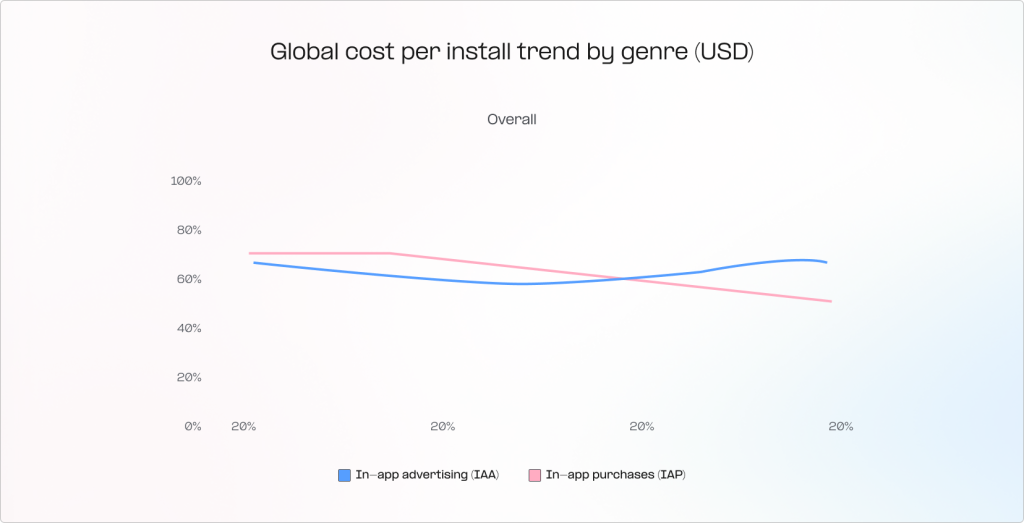
Overall, the adoption of hybrid models surged by 20% across the industry, in what we’re calling a “two-sided trend”. This dual approach has redrawn the boundaries between Hypercasuals and Mid-Cores, creating a more nuanced and adaptable market. This isn’t just a niche trend; it’s a meaningful shift affecting the entire mobile gaming ecosystem.
Meanwhile, Casual games climbed across most categories, contrasted against the mixed performance of Mid-Core and Hypercasual games. This steady increase, both in installs and ad spend, highlights the ongoing appeal and success of Casual games in that evolving market.
As we navigate this evolving landscape, we encounter buzzwords like “Casualization” and “Hybridization.” But do these terms describe gameplay mechanics or monetization strategies? Our analysis focuses primarily on the latter. By understanding these dynamics, we can better prepare for the future of mobile gaming.
* All results are based on fully anonymous and aggregated data. To ensure statistical validity, we follow strict volume thresholds and methodologies and only present data when these conditions are met. When normalized data is presented, the share of each month out of the total for the entire time frame is shown to create a trend.


A two-sided
revenue dance
The mobile gaming landscape continued its march toward hybrid revenue models in 2024. The adoption of hybrid models by Hypercasual games jumped from 19% to 26% (+37%) in just nine months. Mid-Core games weren’t far behind, with RPGs increasing from 41% to 51% (+24%), Strategy games from 59% to 66% (+11%), and Shooting games from 66% to 73% (+10%). Overall, the industry’s embrace of this dual approach surged from 36% to 43%. RPGs saw an IAA hike and an IAP dip, while Android Hypercasuals saw IAP decline as IAA rose.
So, what’s driving this change? For Hypercasuals, Apple’s App Tracking Transparency (ATT) has made it tough to turn a profit in this slim margin genre due to reduced data availability. In the privacy era, it’s harder to identify and activate high-value users, or “whales,” which has contributed to a general decline in user acquisition efficiency.
Mid-Cores are also moving towards hybrid models for several reasons. In-app purchases (IAP) growth has stagnated over the past two and a half years, prompting developers to diversify revenue sources. Plus, improved ad formats and practices have made ads less intrusive and more acceptable to players, no longer posing a significant hurdle to retention.


Casual games lead the pack
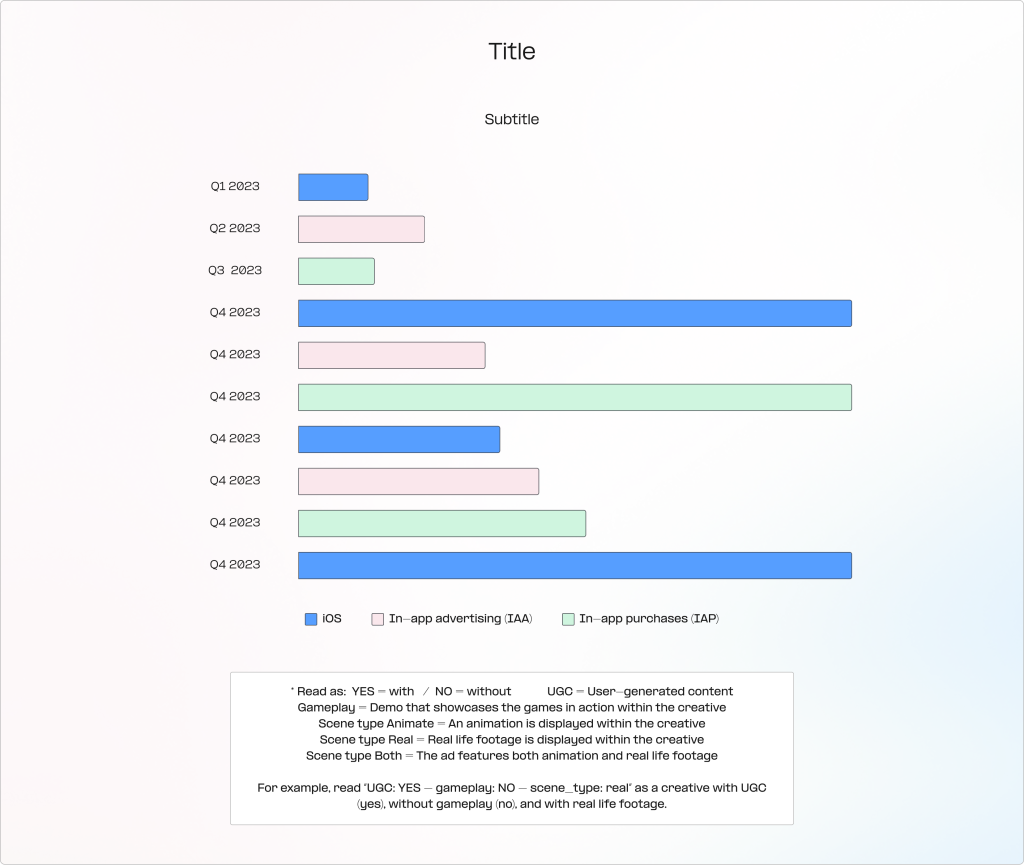
Let’s set the scene: Non-organic installs (NOI) for Casual games are climbing across most categories. Meanwhile, Hypercasualand Mid-Core NOI is declining, with the former seeing a 5% YoY dip on Android in H1 and a 15% drop on iOS. RPG, Strategy, and Shooting games also faced notable year-over-year declines on both platforms.
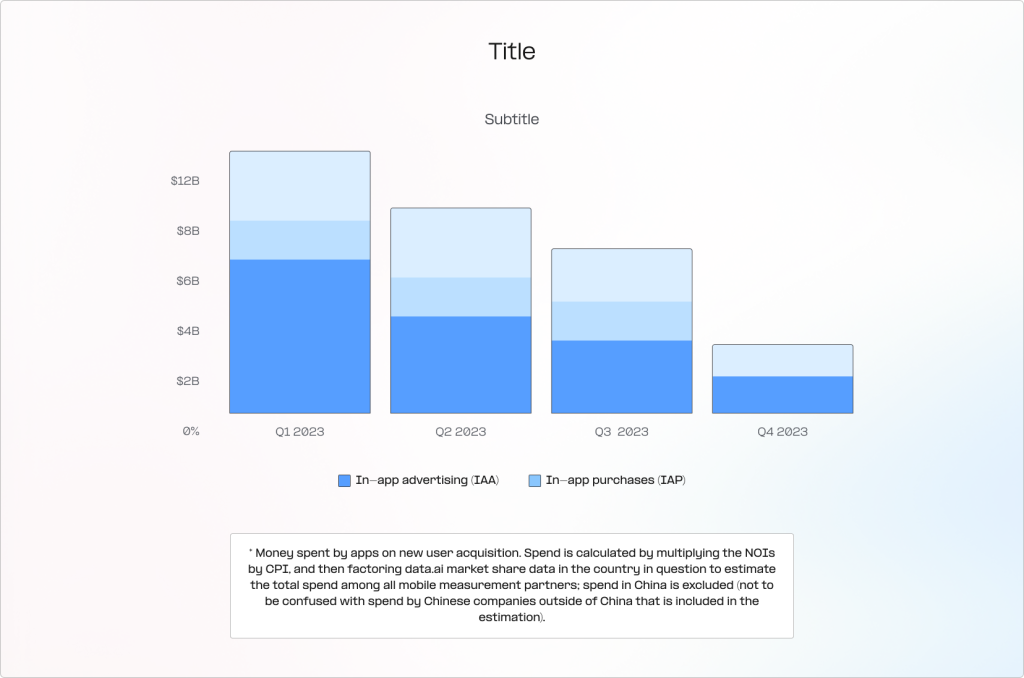
Ad spend trends reinforce this. Investment in casual games rose, with cross-platform gains in categories like Match (13% on Android), Action (18% on iOS), Simulation (25% on Android), and Tabletop (29% on iOS). iOS-specific categories like Sports and Puzzle games also saw substantial increases. Conversely, Hypercasual and Mid-Core games saw decreased ad spend, especially on iOS, where Hypercasuals saw a 34% YoY drop, and Mid-Core genres like RPGs plunged 35%.
The lagging performance of Hypercasual games compared with their Casual counterparts suggests a shift toward more engaging and complex casual gaming experiences. This evolving landscape is driven by the rise of a potential new category of hybrid casual games, which blend elements from both Casual and Mid-Core genres. These games strike a “middle ground,” appealing to broader audiences by combining the simplicity of Casual games with the depth of Mid-Core games. Experts suggest this trend points to a fragmentation in game categorization, driven by diverse gameplay and monetization strategies.


- How does the flexible pricing model work for mobile app attribution?
- Our flexible pricing adapts to your needs, with conversion-based pricing that aligns costs with performance. You only pay based on the value created through successful conversions, and we offer adaptive pricing options to accommodate unique requirements, ensuring that you get the best value as your campaigns scale.
- How does the flexible pricing model work for mobile app attribution?
- Our flexible pricing adapts to your needs, with conversion-based pricing that aligns costs with performance. You only pay based on the value created through successful conversions, and we offer adaptive pricing options to accommodate unique requirements, ensuring that you get the best value as your campaigns scale.
- How does the flexible pricing model work for mobile app attribution?
- Our flexible pricing adapts to your needs, with conversion-based pricing that aligns costs with performance. You only pay based on the value created through successful conversions, and we offer adaptive pricing options to accommodate unique requirements, ensuring that you get the best value as your campaigns scale.
- Now does the flexible pricing model work for mobile app attribution?
- Our flexible pricing adapts to your needs, with conversion-based pricing that aligns costs with performance. You only pay based on the value created through successful conversions, and we offer adaptive pricing options to accommodate unique requirements, ensuring that you get the best value as your campaigns scale.
- Now does the flexible pricing model work for mobile app attribution?
- Our flexible pricing adapts to your needs, with conversion-based pricing that aligns costs with performance. You only pay based on the value created through successful conversions, and we offer adaptive pricing options to accommodate unique requirements, ensuring that you get the best value as your campaigns scale.
- Now does the flexible pricing model work for mobile app attribution?
- Our flexible pricing adapts to your needs, with conversion-based pricing that aligns costs with performance. You only pay based on the value created through successful conversions, and we offer adaptive pricing options to accommodate unique requirements, ensuring that you get the best value as your campaigns scale.
- Wow does the flexible pricing model work for mobile app attribution?
- Our flexible pricing adapts to your needs, with conversion-based pricing that aligns costs with performance. You only pay based on the value created through successful conversions, and we offer adaptive pricing options to accommodate unique requirements, ensuring that you get the best value as your campaigns scale.
- Wow does the flexible pricing model work for mobile app attribution?
- Our flexible pricing adapts to your needs, with conversion-based pricing that aligns costs with performance. You only pay based on the value created through successful conversions, and we offer adaptive pricing options to accommodate unique requirements, ensuring that you get the best value as your campaigns scale.
- Wow does the flexible pricing model work for mobile app attribution?
- Our flexible pricing adapts to your needs, with conversion-based pricing that aligns costs with performance. You only pay based on the value created through successful conversions, and we offer adaptive pricing options to accommodate unique requirements, ensuring that you get the best value as your campaigns scale.

The shifts in monetization strategies towards the use of IAA and IAP suggest this path should be considered due to its success.

With CPI down on iOS, now’s a good time to adjust or even increase your media spend. Lower media costs, driven by better ad targeting efficiency, present an opportunity to maximize reach and ROI.

Android has posted positive results across several key performance indicators. With installs and NOI rising across major markets, it’s important to maintain or boost your ad spend on Android to capitalize on this growth.

While UGC can boost retention, understanding and using the right mix of creative elements is essential for maximizing ad effectiveness.

The share of whale spenders varies by region and can range from 2% to 10% of total users. Define what percentage constitutes a whale for your strategy and adjust your budget accordingly to target these high-value users effectively.
About the authors