
Hypercasual games hit an IPM of 48 on ad networks
6% day 30 retention for ads with combo of scene types
30% better retention rate for longer video ads
AI-driven Mad Men: ad creatives in 2024
Welcome to the AI age of the ad creative. Recent years have seen the role of creatives in advertising evolve significantly, blending their traditional value from the “Mad Men” era with Generative AI. This fusion has transformed ideation, concept development, and design, making AI vital to every touchpoint in the process.
Yet, the realm of hyper-granular creative measurement and optimization represents another major development in the advances of AI. It can, for example, identify specific scenes and elements within thousands of creatives, automatically dissecting everything from user-generated content (UGC) to gameplay snippets, and animation. This granular level of analysis allows marketers to correlate specific creative components with performance metrics, unlocking insights into what combinations emerge as creative winners.
Another level of granularity is offered on the creative engagement level. Platforms like TikTok, YouTube, and Meta are also adapting by offering enriched engagement metrics. AppsFlyer’s own standard of Enriched Engagement Types (EET) also offers deeper insights into campaign engagement beyond just views and clicks, marking a pivotal shift in how campaigns are measured and attributed.
With privacy concerns narrowing down-funnel data availability, there’s now a greater focus on top-of-the-funnel creative measurement. Ad content now plays a vital role, acting as essential first-party data for the ad platforms themselves in a privacy-focused ad landscape.
* All results are based on fully anonymous and aggregated data. To ensure statistical validity, we follow strict volume thresholds and methodologies and only present data when these conditions are met
** Powered by AppsFlyer’s AI-powered creative optimization solution; a min. of $50 in ad spend per creative per month was applied
The 50-variant chase: hunting for creative winners
Let’s start with a striking number: Just 2% of creative variations consume 68% of ad budgets. What’s more, nearly 90% of spend goes to just 10% of creative variations, as media platforms focus heavily on the best-performing variants while ignoring underperformers. This underscores a sobering reality: scoring just one successful ad may require a whopping 50 ad variants.
This scenario frames a relentless numbers game, compelling marketers to mass-produce variations. The factors underpinning the success of top-performing ads are often unknown, and results vary across platforms. Given banner blindness and inevitable ad fatigue, an ever-expanding arsenal of creative concepts—at least 10 per campaign—is often needed. It’s a never-ending cycle. AI has become an invaluable ally in generating this content at scale, signaling a significant shift in creative strategies.
This is why the role of creative strategists has also become indispensable to manage the magnitude of such a massive production. Just a few years ago, it was virtually nonexistent; its inception over the last couple of years marks a significant paradigm shift.
Share of cost by % of creative variations
The IPM equation: engagement vs cost
A cornerstone metric, installs per mille (IPM) gauges ad creative performance, indicating ad effectiveness and influencing the cost per install (CPI). High IPM signifies strong performance, reflecting the strength of the creative and resulting in lower CPIs, whereas a lower IPM might suit high-revenue models that can tolerate higher CPIs.
Hypercasual games lead in IPM on ad networks with 47.6, surpassing the more specialized RPGs at 3.1 IPM. However, high IPMs may not tell the entire picture; hypercasuals often face monetization challenges post-install, necessitating the lower CPI. In contrast, niche genres like casino and strategy RPGs target a smaller, more profitable audience, accepting lower IPMs for higher revenue per install, thus affording higher CPIs.
IPM’s effectiveness varies across media, with ad networks typically offering better performance for games due to contextual relevance. Outside gaming, Generative AI apps attract attention with a 5.1 IPM, while photo and video apps also perform well due to their creative ad potential. Entertainment apps, however, tend to lag in IPM figures, facing a more challenging environment.
IPM by category and media type
Few ads getting all the attention
The distribution of IPM by creative closely aligns with distribution of cost: Only 2% of gaming and non-gaming ads hit an IPM above 80. Conversely, half of all ads barely make a mark.
In other words, only a select few creatives can captivate audiences enough to command significant attention and spend, making IPM an indicator of an ad’s resonance. From a pure performance perspective, a higher IPM is often beneficial for advertisers, media, and users, optimizing both user engagement and ad spend.
We see a big contrast in IPM distribution between gaming and non-gaming. The winner takes all in non-gaming: There’s a sharp divide between the high performers and the rest. The distribution of IPM scores for games is smoother, as gaming marketers often produce and test a vast array of ad variations. This approach, emphasizing continuous iteration and testing, helps even out IPM performance across the board, which means more creative winners, underscoring the gaming industry’s expertise in refining ad effectiveness.
IPM distribution by % of creative variations
CPI: Balancing volume vs. value
Cost per install (CPI) stands out as a highly sensitive metric for marketers. A variety of factors, including geographic location, ad type, category, media platform and many others, can make a big difference. This level of complexity means marketers need to take a deep dive into super-granular data (see table below). In general, a lower CPI often correlates with a higher IPM.
But a low CPI isn’t always purely positive. For high monetization games that feature a higher average revenue per user (ARPU), adopting a higher CPI is not only acceptable, but strategic. Midcore games, for instance, will prioritize attracting a niche, highly engaged audience, emphasizing quality of user acquisition over volume. In contrast, hypercasual games, known for their wide appeal and ease of access, aim to attract a broad audience. These games typically see a lower CPI as they aim for volume, banking on the sheer number of installs to drive revenue.
For example, we can see in the chart below that midcore game marketers pay significant sums of money to acquire their users with videos ads on ad networks.
CPI of video ads on ad networks (USD)
Download table: CPI by country, category, platform, media type, and ad type *
Scene success varies heavily by context
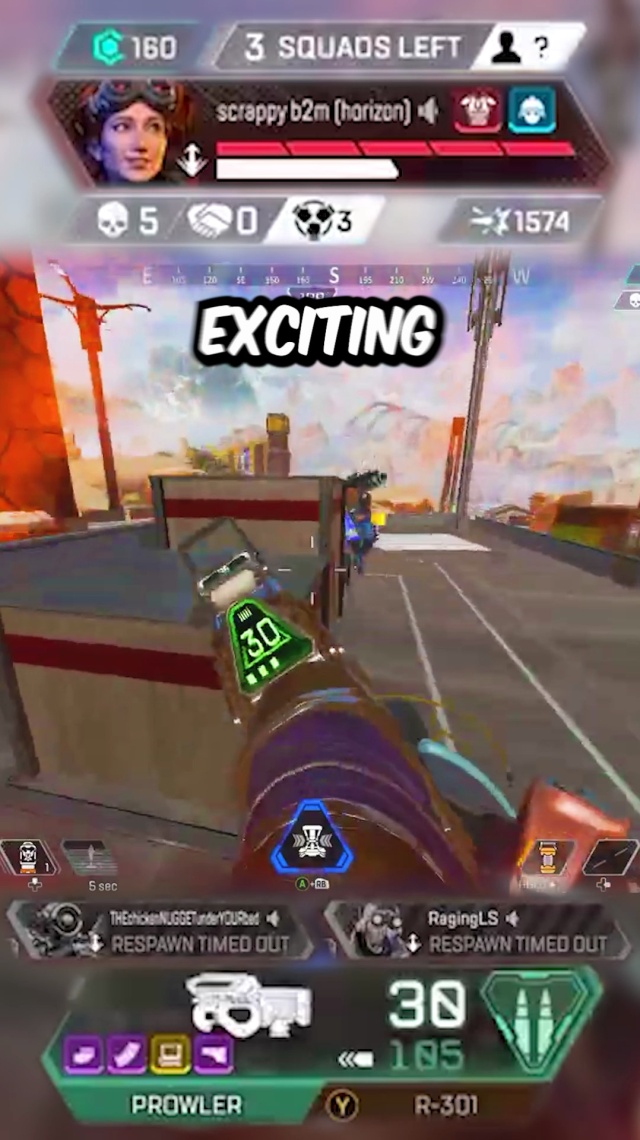
Ad creatives don’t perform similarly across platforms. Our AI-driven analysis of over 220,000 video ads across media environments highlights the varying effectiveness of “scenes” within a creative such as user-generated content (UGC), gameplay demos which apply to both gaming and non-gaming, animations, and real life scenes (see the examples under the charts).
When measuring IPM, video ads for games without UGC perform 20% better on average compared to ads with UGC (+25% on ad networks, and +15% in DSPs). Use of animation is also highly effective in games at 26% higher IPM compared to ads without animation (on average across media types).
UGC finds its niche on social networks, an environment where this content is native, with UGC ads outperforming non-UGC ads by 12% in gaming, and even more so in non-gaming at 22% higher IPM. Use of real-life footage also yields better results in non-gaming, with a 15% higher IPM than animated ads.
No one scene type will excel uniformly across all platforms. Marketers must therefore align their content to each channel’s unique audience and context.
As AI reveals optimal strategies for different contexts, remember that each product is distinct, and success may stem from diverse approaches. Marketers often experiment with a range of scene types within media platforms at a broad scale to enhance reach and increase the likelihood of success among varied audiences.
Gaming (left chart) and non-gaming IPM by media type: AI-powered scene breakdowns
Example of scene types

Scene combinations reveal top performers
Because creatives often use a mixture of scene types, it’s interesting to see which combinations drive the best performance. In the context of ad networks, the data shows that game creatives should probably put less emphasis on UGC and more on animated characters within the same ad. The highest IPM is when gameplay is also added to the mix: a clear signal users want to see what the game/app is like before engaging into a download.
This makes sense as UGC doesn’t work as well in a non-social context, but when you are playing a game, you’re most likely to engage with an ad that shows gameplay and uses animated characters, which reflect virtual gaming environments. All other combos trail far behind.
On social platforms, gaming apps should experiment by combining animated and real life videos and put less emphasis on gameplay; adding UGC will deliver a slightly higher edge at the top of IPM performance. Interestingly, gaming and non-gaming apps have the same top two combos.
In DSP settings, the data suggests that game ads should lean towards animated characters over UGC. Showcasing gameplay didn’t match animation but came in a close second in terms of IPM.
Once again, a reminder that while AI unveils what works best in each context, keep in mind that each product is unique, and success can be found through various paths. Therefore, experimentation is vital to pinpoint the best combinations.
IPM by media type: Combined AI-powered scene breakdowns
Scene combo examples



Download table: Country-level IPM scene breakdown combos
Ads that stick: The retention formula
Different channels and contexts affect retention for variants. While high IPM can attract users, it might also increase churn due to varying engagement levels over time. On ad networks, a mix of UGC, and animated plus real life footage emerges as the top performer for Day 30 retention in games, reaching an impressive 6.01%.
When isolating only UGC on ad networks for games, retention is higher when not using this type of creative. For DSPs, blending UGC and real-life footage without gameplay optimizes post-install user retention for games.
In fact, UGC as part of the mix improves retention rates across the board. Social media platforms drive increased retention in games with gameplay and the use of animated plus real-life footage, while ads for non-games benefit most by combining UGC and gameplay.
Balancing IPM with user retention is crucial for maximizing ROAS. Although high IPM can reduce CPI, it may also lead to higher user churn. The challenge lies in finding the sweet spot that attracts users efficiently but fosters lasting engagement. That’s why it’s vital to have full funnel analytics for the whole picture, and not stick to important but incomplete intermediary metrics like CTR, IPM or CPI.
Gaming and non-gaming day 30 retention rate by media type: AI-powered scene breakdowns
Day 30 retention rate by media type: Combined AI-powered scene breakdowns
Download table: Country-level day 30 retention scene breakdown combos
15+ second videos work better on social
Video length is another key metric to measure user engagement. We can see that gaming creatives above 15 seconds (long) perform well in social platforms with a 30% higher day 30 retention rate, and 9% higher in ad networks.
In non-gaming, social performs similarly in direction with a 12% higher retention from long videos, but in ad networks and DSPs the reverse is true: shorter videos under 15 seconds perform far better at no less than 50% and 80%, respectively. e reach and increase the likelihood of success among varied audiences.
Day 30 retention rate by length of video ad: AI-powered breakdowns

Creating numerous variations—a common strategy—is essential to the success of your campaign because only 1 of 50 is a winner. Scoring a winning ad can have a significant impact, but as ad fatigue sets in, the cycle of needing fresh winners refresh indefinitely.

AI advances are unprecedented and will allow you to dissect elements and scenes and connect to performance, enabling the testing of thousands of variations, giving you a true edge.

Be realistic about your vertical: Fintech won’t have the creative impact of hypercasual games, for instance. Look at engagement patterns in comparable sectors and set realistic IPM expectations.

Mind the difference between IPM and retention, as increasing retention could potentially decrease IPM. IPM and CPI have an inverse relationship, whereas retention is key to monetization. To maximize ROAS, consider blending strategies that deploy both low and high CPI/ARPU ads on different channels to find that sweet spot. Non-gaming niche markets, for example, tend to feature low IPM but high retention.

Pay attention to placement and type; effectiveness varies across platforms. Social media favors UGC, while gaming platforms suit gameplay and animated ads. Differences even within social media (like reels versus feeds) requires AI to optimize placement. An ad underperforming in one context could thrive in another, emphasizing the need to match ads with the right medium and setting. Using only one ad type restricts potential.