


Where Do We Go From Here? At MAMA San Francisco 2026, Mobile & App Marketing Leaders Navigated What Comes Next

TL;DR
- The theme was “Where Do We Go From Here?” — and the answer wasn’t a single destination. It was about how to measure, where to invest, what to automate, and what to protect.
- The day’s central tension: AI is changing how consumers discover, research, and buy — but the brands with the strongest owned customer relationships (especially through apps) are the ones best positioned to thrive through the disruption.
- Sessions spanned the full spectrum from Fortune 500 strategy to a 14-day AI app-building experiment, with practitioners from KFC, Snap, Home Depot, Moloco, TickPick, Fubo, Reddit, Soundcloud, Hopper, Poshmark, Mistplay, and more sharing real frameworks and real numbers.
- Five themes emerged across the day: apps as economic infrastructure, the shift toward incrementality, AI that removes friction vs. AI as theater, creative as a strategic lever, and the evolution of the marketer’s career itself.
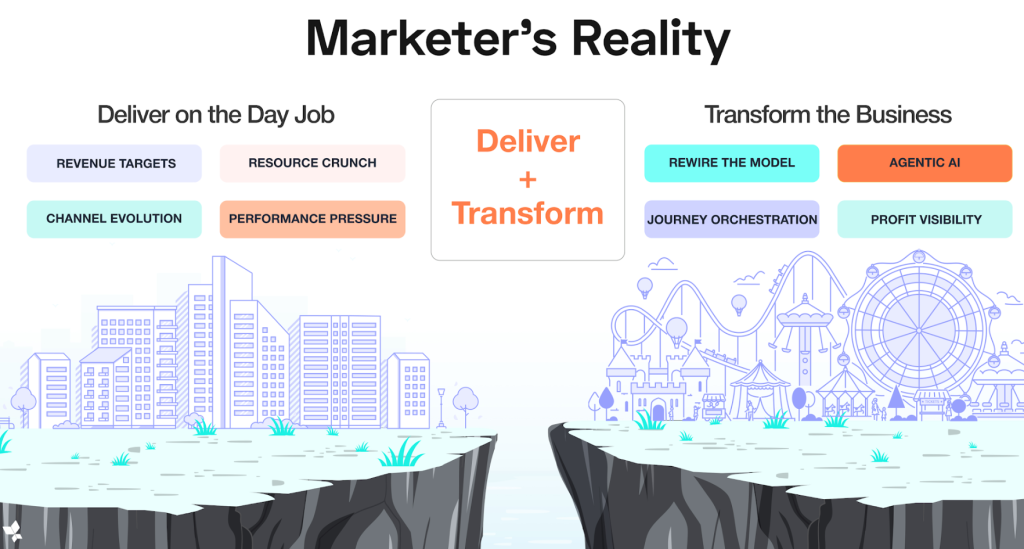
The role of “mobile marketer” is evolving in real time. At MAMA SF 2026, the practitioners managing multi-million dollar budgets came together to work through what it all means — and what to do about it.
The theme this year was Where Do We Go From Here? A question that felt particularly pressing with AI reshaping how consumers discover and buy, measurement models evolving rapidly, and the marketer’s role itself in transition. Here’s what emerged.
The Bottleneck Has Moved
Brian Quinn, AppsFlyer’s President and GM of North America, opened with a framing that set the tone for the entire day.
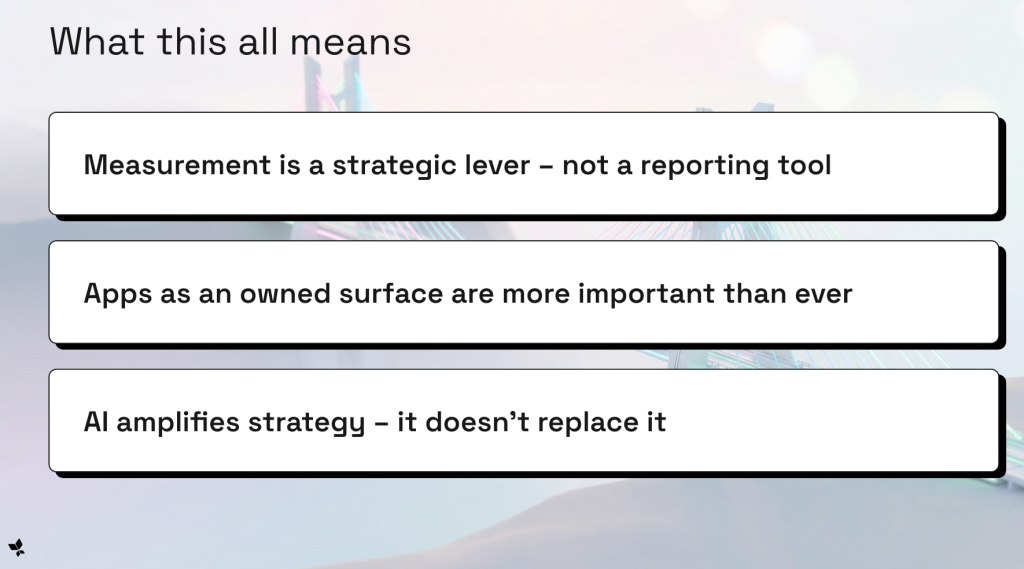
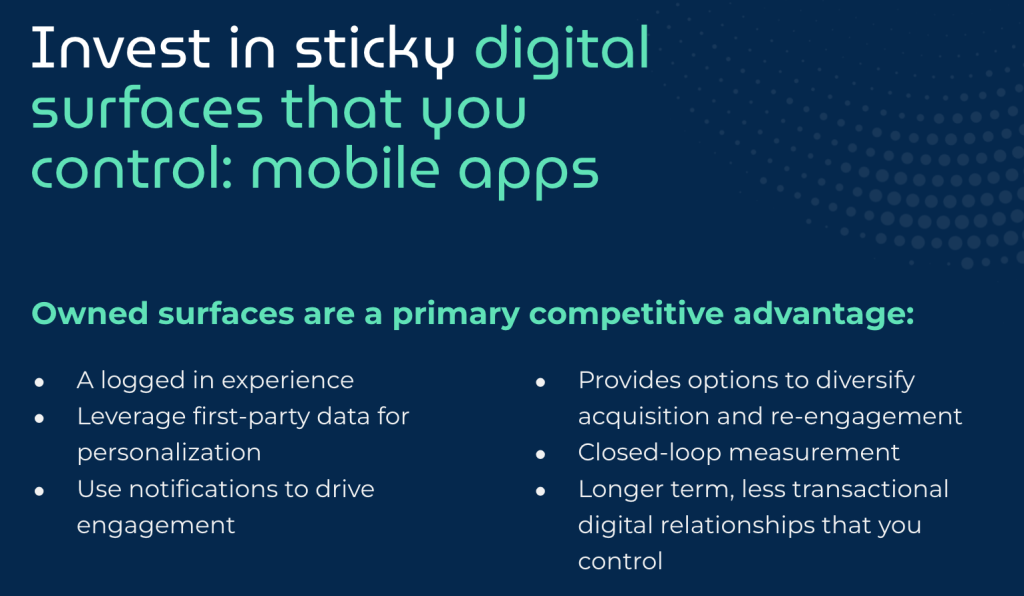
As marketing continues proliferating across more surfaces — growth strategies on mobile, web, CTV, retail media, and now answer engines and LLM interfaces — Quinn argued that apps are the one property brands truly control: logged-in, consent-rich, and where identity, loyalty, and personalization converge. In that fragmented world, the quality of your measurement layer determines whether you’re set up for success or failure.
And as AI agents begin making autonomous budget decisions (reallocating spend, adjusting bids, rotating creative), the integrity of that measurement layer becomes existential.
“The future of marketing will not be defined by who generates the most impressions,” Quinn told the room. “It will be defined by who allocates capital most intelligently across fragmented environments.”
The integrity of your measurement layer, he argued, becomes the difference between scaling intelligence and scaling mistakes throughout your organization. That framing (apps as owned infrastructure, measurement as strategic lever, AI as amplifier) became the connective tissue for the entire day.
Four Themes That Defined the Day
1. Your App Is Economic Infrastructure, Not a Channel
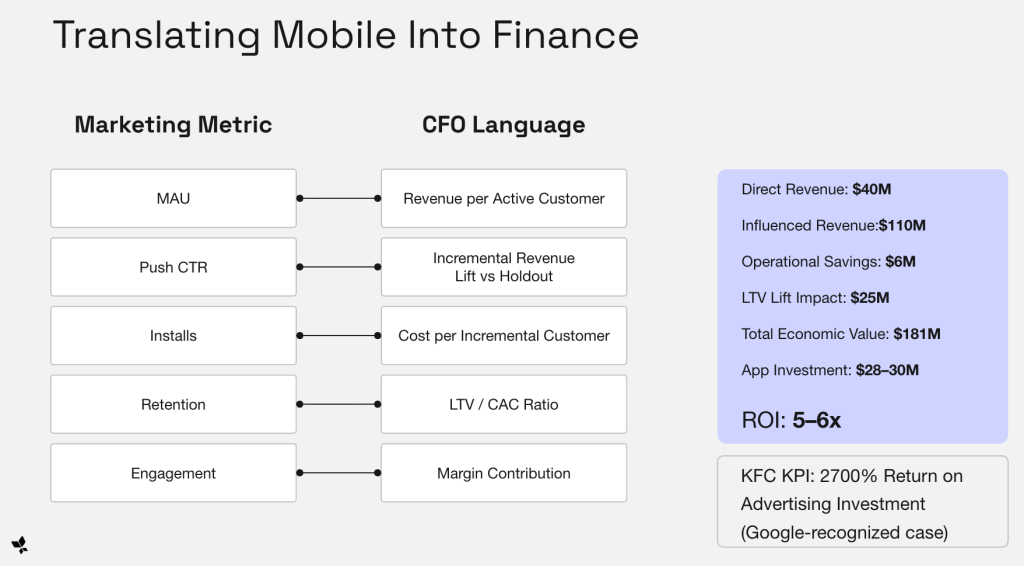
Stephane Godoy, Head of Digitalization and E-Commerce at KFC, showed how his team grew to over 7 million active loyal users in less than a year and demonstrated that most companies capture only a fraction of their app’s economic impact when they measure direct revenue alone.
His framework broke total app value into four components: direct revenue, influenced revenue, operational savings, and lifetime value lift, with influenced revenue often running 2–4x the direct number.
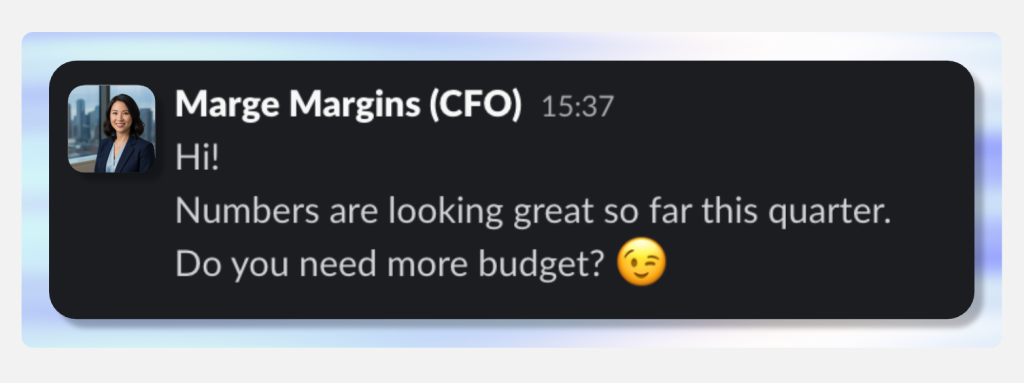
“Translating into the CFO’s language is so important,” Godoy said. “Language determines funding.” (More insights and frameworks from Godoy are incorporated into this strategic playbook.)
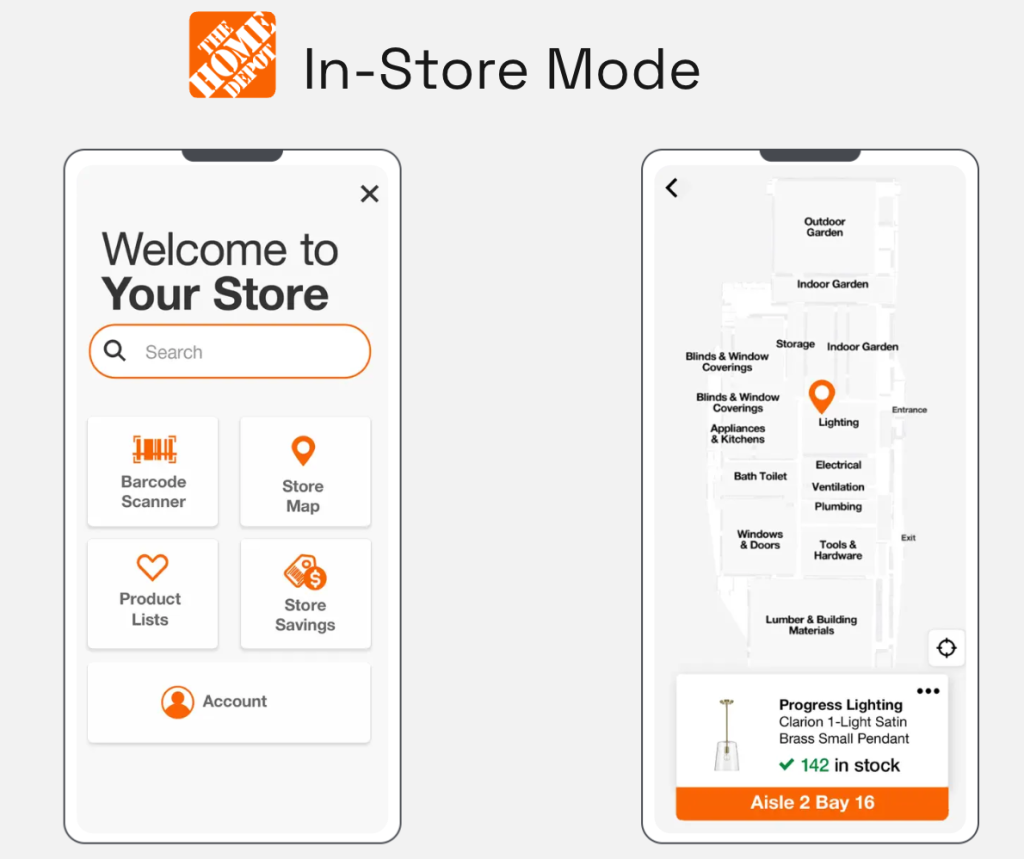
Karissa Corbitt from Home Depot reinforced this, showing how their app has become the biggest driver of momentum in how customers engage and shop, from in-store navigation to room visualization to loyalty.
Beth Berger of Moloco, presenting the AI Disruption Index developed with BCG, arrived at the same conclusion from a different angle: customer relationships are the durable asset of the AI future, and the mobile app is where those relationships live.
2. Measurement Is Evolving, and the Leaders Are Pulling Ahead
Sam Mulinder, Head of Marketing Science at Snap, presented a framework that resonated across the room: the Three E’s: Execution (daily optimization), Experimentation (incrementality testing), and Evaluation (longitudinal models like MMM). His point: no single methodology tells the full story, and the teams combining multiple measurement approaches are the ones making smarter allocation decisions.
He illustrated the stakes with a memorable analogy: giving a new channel 3% of your budget and declaring it ineffective is like giving Timothée Chalamet five minutes of screen time in Interstellar and deciding he can’t act. (He checked: Chalamet’s screen time was exactly 3%.)
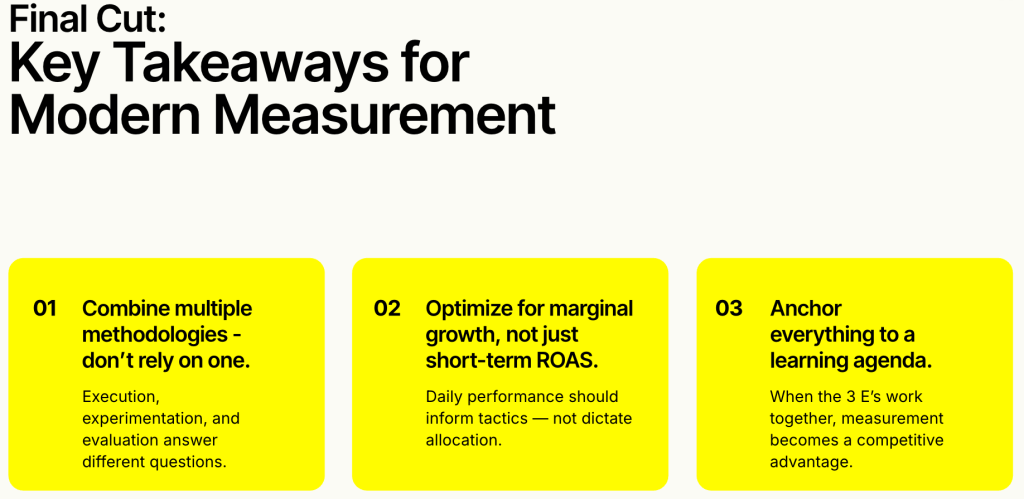
Eran Dunsky, AppsFlyer’s Head of Product for North America, shared data showing that across hundreds of advertisers, 30% of campaigns are being significantly undervalued by last-touch models, in some cases by up to 10x. His exercise comparing two campaigns where last-touch and incrementality told opposite stories drew visible nods.
The takeaway: “Stop asking for budget. Start proving you’ve earned it.”
3. AI That Works vs. AI as Demo
Berger’s keynote reframed the app’s role for an AI-disrupted world. Presenting joint research with BCG, she made the case that as search becomes commoditized by AI overviews and brand discovery shifts to LLM interfaces, apps are uniquely positioned as a brand’s primary competitive advantage — the one surface that delivers a logged-in experience, leverages first-party data for personalization, and provides paths to diversify acquisition away from increasingly volatile search and web channels.
Her data backed it up: the Moloco/BCG research found that a third of US adults now discover brands through personal AI agents, 80% of AI-powered Google searches end without a click, and 45% of consumers already feel comfortable letting AI make purchases for them. The implication was clear: the channels being disrupted are the ones you don’t own.
But the most visceral AI demonstration came from Bobby Sayers, who built, launched, and marketed a mobile game called Quack the Planet using AI tools in 14 days, from Cursor for development to AI agents running campaign checks every three hours via AppsFlyer’s MCP. It went from concept to ROI-positive in under two weeks.
Other presenters complemented this with real daily workflows: natural language data queries replacing SQL, creative QA tools catching errors before launch, and autonomous agents flagging broken events in Slack. The throughline: AI is most powerful when it removes friction from work practitioners already do.

4. The Marketer’s Role Is Evolving Fast
Atif Rafiq, who was the first Chief Digital Officer at McDonald’s before becoming a C-suite operator at Volvo, MGM Resorts, and beyond, delivered the day’s most personal keynote. His message to the room: stop delivering tasks and start owning recommendations.
“Human contribution, alongside AI, is going to be here for a long time,” Rafiq said. “Future jobs are based on the ability to make recommendations work end to end.”
Susan Ho echoed this from the founder’s side, sharing her path from $50 in the bank to a multi-million dollar exit to Hopper, complete with a “resume of failures” that earned one of the most candid applauses of the day.
What Sports Taught the Room About Marketing Moments
The sports marketing panel featuring Matt Ferrel (TickPick), Vincent Eterlet (Fubo), and DJ Capobianco (Reddit) became a masterclass in capitalizing on cultural tentpole moments. Ferrel delivered a memorable line about how he advises his marketing team to capitalize on mainstream trends: “It’s easier to ride a wave than to create one,” describing how gold medal hockey immediately spiked NHL ticket sales and how TickPick talks to fans through the lens of a fan.
Capobianco revealed how 20,000 Reddit communities were actively discussing the Super Bowl on game day and takeaways for brands eager to participate in those conversations. Eterlet described real-time campaign monitoring in 30-minute increments during high-profile moments, with the 2026 World Cup as Fubo’s next major opportunity.
The broader takeaway: find the human moments of connection in your category, and market to them on a human level.

The Afternoon: Where Theory Became Practice
Attendees chose their own path across Growth Showcases, Leadership Circles, and Innovation Labs.
Highlights included Mistplay’s Brett Jones presenting a channel-by-channel creative playbook showing that the same creative attribute can drive 3x lift on one network and fail on another.
Poshmark’s Eric Kovalkoski shared how his team moved from reactive silos to a systemized omnichannel model with podded teams and shared signal dashboards. Mackenzie Quinn argued that most retention outcomes are shaped before lifecycle marketing begins, and that aligning acquisition to high-intent behaviors lifted value per install by more than 6x for one client.
The Leadership Circles, meanwhile, tackled topics that rarely make it onto conference stages: career evolution frameworks with Atif Rafiq, loyalty through discovery-led experiences with Ian Dewar from Anthropologie and The North Face, gaming marketing insights with Jen Donahue of Deconstructor of Fun, and fandom marketing playbooks with Jonathan Yantz of M&C Saatchi, with fresh insights from AppsFlyer’s latest report with Sensor Tower and Saatchi: “Scoring Big: The Complete Marketer’s Guide to the World’s Top Soccer Event.”
The Session Nobody Expected to Be Their Favorite
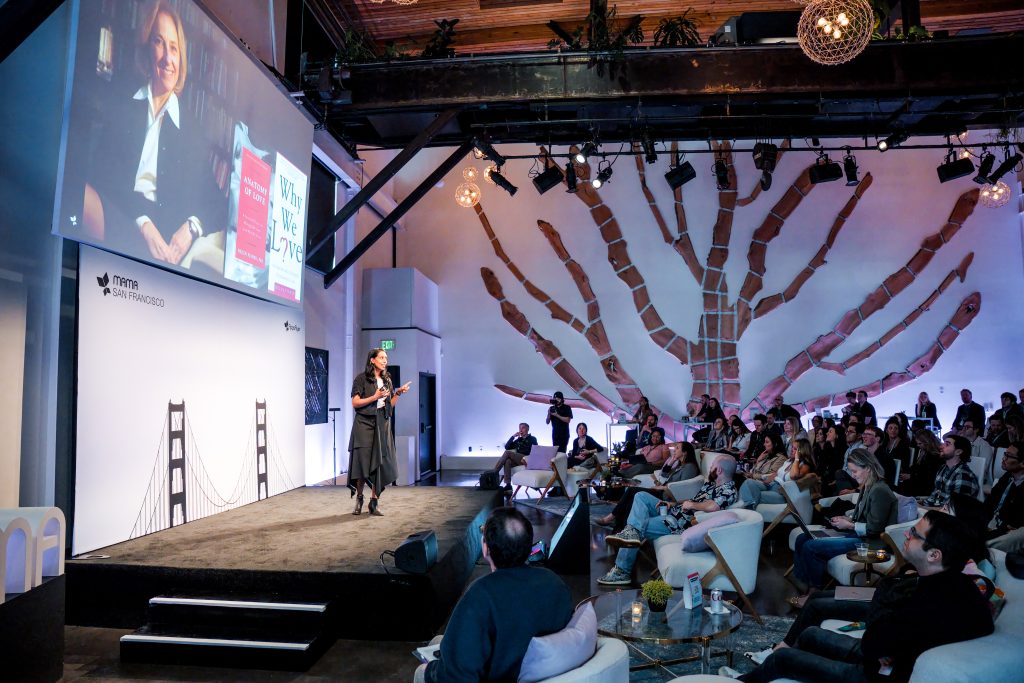
Lakshmi Rengarajan studies dating culture, an unusual choice for a mobile marketing event.
But her research on how we form first impressions hit a nerve. We’ve replaced the language of realization and development with the language of consumerism, she argued: we swipe, filter, and optimize in dating and in professional relationships alike.
Her interactive exercise had attendees pair up and share three names: someone who shaped them professionally, someone they grew to like over time, and a childhood crush. The room transformed. As Rengarajan put it: “They started to look different to me.”
Her closing question, “Who do you need to date?” landed as a challenge about professional relationships we underinvest in.
Four Takeaways Worth Keeping
- The marketer’s role is expanding. The practitioners pulling ahead are the ones who own recommendations end-to-end, speak the CFO’s language, and treat their career trajectory as something they design, not something that happens to them
- Your app isn’t a channel — it’s economic infrastructure. Brands are proving a 5–6x ROI when they measure total app value beyond direct revenue alone.
- Measurement is the new competitive advantage. 30% of campaigns are being significantly undervalued by last-touch, and the teams combining incrementality with modern attribution frameworks are making smarter allocation decisions.
- AI’s edge right now is eliminating the gap between knowing and doing. From natural language data queries replacing SQL, to a mobile game built and marketed to ROI-positive in 14 days, the biggest AI wins at MAMA were about accelerating your capabilities and collapsing the distance between insights and actions.
MAMA will be coming to other destinations around the world in 2026.