I Built, Shipped, and Marketed a Mobile Game in 14 Days Using Only AI. Here’s What Actually Happened.

TL;DR
- The challenge: one person, infinite AI tooling, 14 days. Build, ship, and market a mobile game from scratch, and try to reach ROAS positive.
- MCP (Model Context Protocol) was the single most important tool decision of the whole build.
- An AI agent named CLAW ran user acquisition, powered by the AppsFlyer MCP and Data Locker streaming into BigQuery.
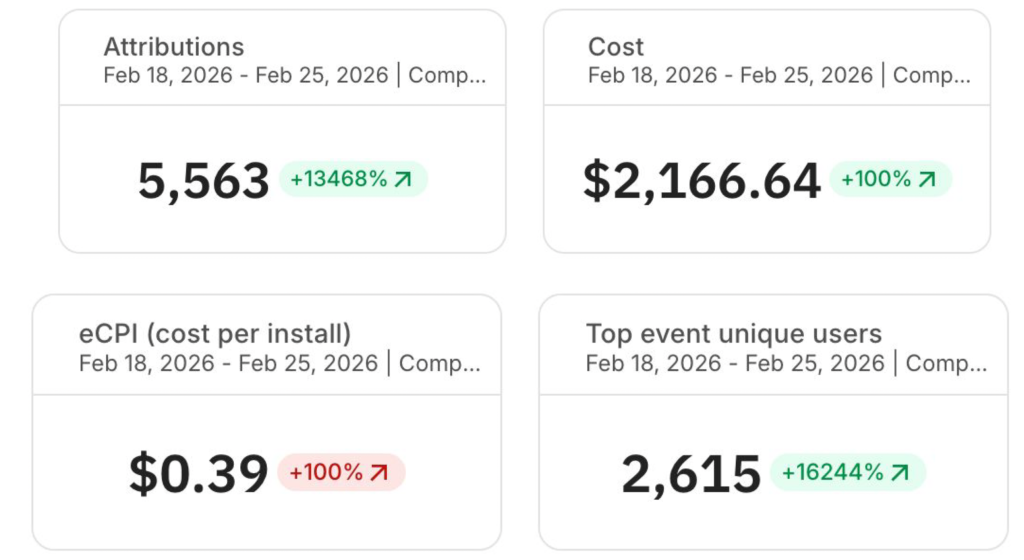
- The result: 5,563 installs at $0.39 eCPI on roughly $2,200 of spend. Whether that’s a victory or a cautionary tale is up to you.
Intro
WARNING: No AI was used in the crafting of this post. It contains unsmoothed human brain thoughts.
“Okay, well, what’s the worst case scenario here?” my wife supportively poses to me from across the kitchen island, as I groan my despair into the cold unconcerned granite.
She’s already been introduced to CLAW (my OpenClaw AI agent turned UA Manager new best friend), she’s already gotten used to me going to bed long after she’s closed her eyes for the day at a much more human-friendly time, she already knows I’m entirely screwed if I can’t manage to get at least ONE of the main two app stores to show me mercy and let my game in. But she’s trying to scrape my spirits back into a manageable human-esque shape for the greater good.
I lift my head and look towards her, but not actually at her:
“If at least Google Play doesn’t let me in, I’m entirely screwed, this is all screwed. Let’s not even think about worst case. It’s bad…”
How did I end up here? The usual way: a casual “so, got any good ideas for an AI talk??” challenge from the AppsFlyer marketing team, of course.
One Human, Infinite AI Tooling, 14 Days: Is it possible to build, ship, advertise, and reach ROAS positive?
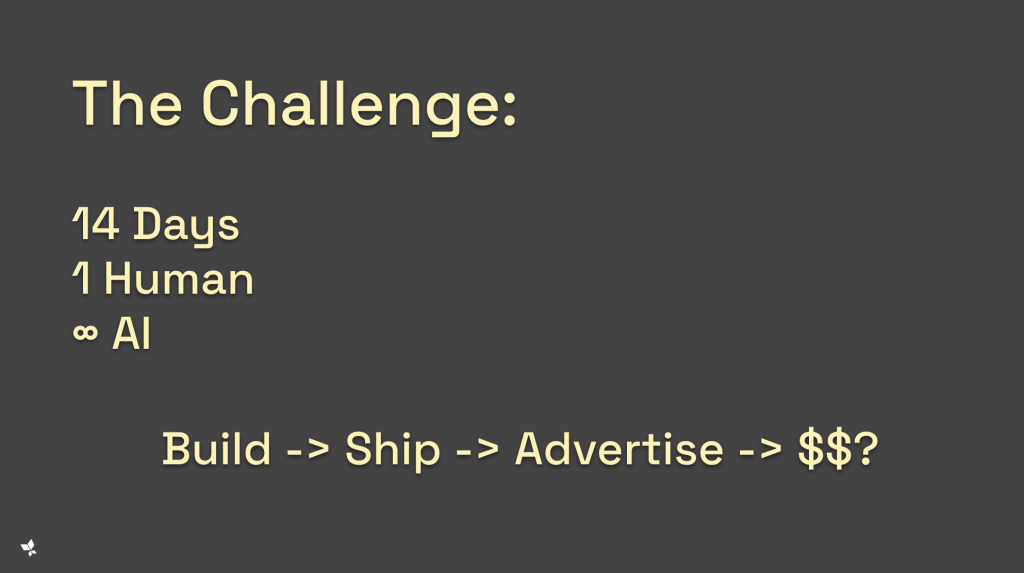
Watch the actual session from MAMA (and MAU 2026) to get the full scoop.
Yes, indeed! I lived through the onslaught and have dragged back tales of both glory and mind-numbing speed to share with the mobile app marketing-folk of the lands!
Stay awhile, and listen… (if you get this reference, we can be friends).
PIECE ONE: MCP, and Then MCP Some More
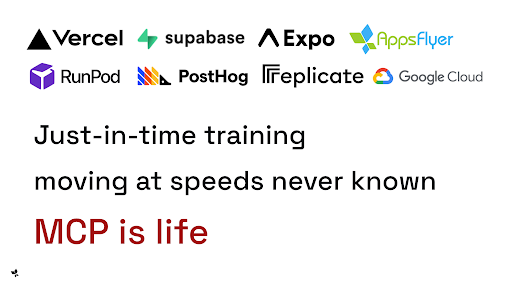
Firstly, and semi-obviously: I had to build a whole lot of stuff in order to smell the hot stink of checkered flag for this challenge.
Not only did I have to build an app (or multiple apps?), but you can’t just rocket a mobile app into the store and expect to reap the sweet succulent juices of reward without an additional supporting cast of other things that must be spellcasted into being through code and might. Things like a website, SQL, documentation, or even images and videos.
And so this story starts where all great things start: a place to make love into code.
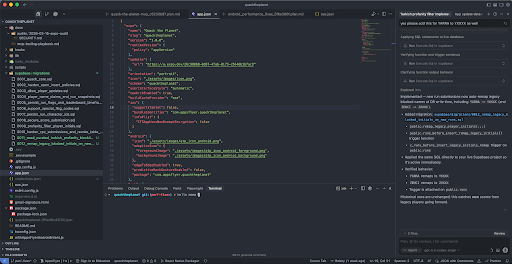
The above screenshot is of Cursor, but I also have a strong fondness for Codex [CLI], and yes even occasionally cross paths with Claude and his Code. I have an open heart for as much AI-generated code as the world can blast into it, and so I remain agentically promiscuous.
Although I’ve been known to agent hop, there’s one thing I keep consistent across all AI friends.
Whether it’s general agentic engineering (most will probably be more familiar with its more light-hearted cousin, “vibe coding”), scaffolding your website (I used Next.js and Vercel), checking your actual in-game data (my BaaS was Supabase), or checking your ever important mobile marketing campaign performance (the AppsFlyer MCP came in super clutch), MCPs are the quickest bang for your proverbial buck possible, and all of these vendors offered one. If they had not had an MCP at the ready, they would not have been considered to join my all-star cast of SaaSketeers.
During this project, I had no time to lollygag, and if I’m being honest, after living life in the fast lane of Agents + MCPs for many moons, I have no patience for working without them anymore. Tight deadlines or not.
(Note: Yes, I know Skills + CLI tools can be faster and more token-efficient than using MCPs. I know! But let’s just pretend we’re focusing on the mainstream here, pal.)
(Second note: For the sake of my artistic integrity, I just wanted to call out that I didn’t actually need to leverage the AppsFlyer MCP in this project. Nobody would have been giving me a stern, disapproving eye if I worked around it rather than with it. But I gotta say, it’s just damn useful.)
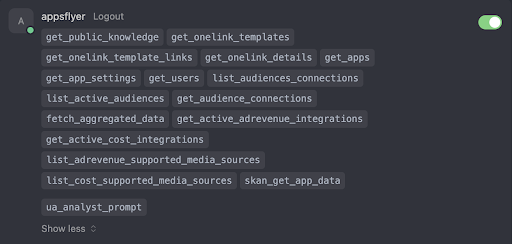
If you’re curious how exactly I used the AppsFlyer MCP, or maybe WHO exactly used the AF MCP in this project, well… hold that thought, we’ll get there.
For now, all you need to know is that AppsFlyer has an MCP, and if you’re an AppsFlyer customer who doesn’t enjoy spending more time than necessary distilling out insights from within AF’s hallowed halls of attribution, make sure you get and use the dang MCP.
Anyway, as you can probably guess, I built an app (well, my agents built an app), and then I built a website (well, my agents built a website), and then I integrated the AppsFlyer SDK (well, my… you get the idea), and then I was ready to submit to the stores!
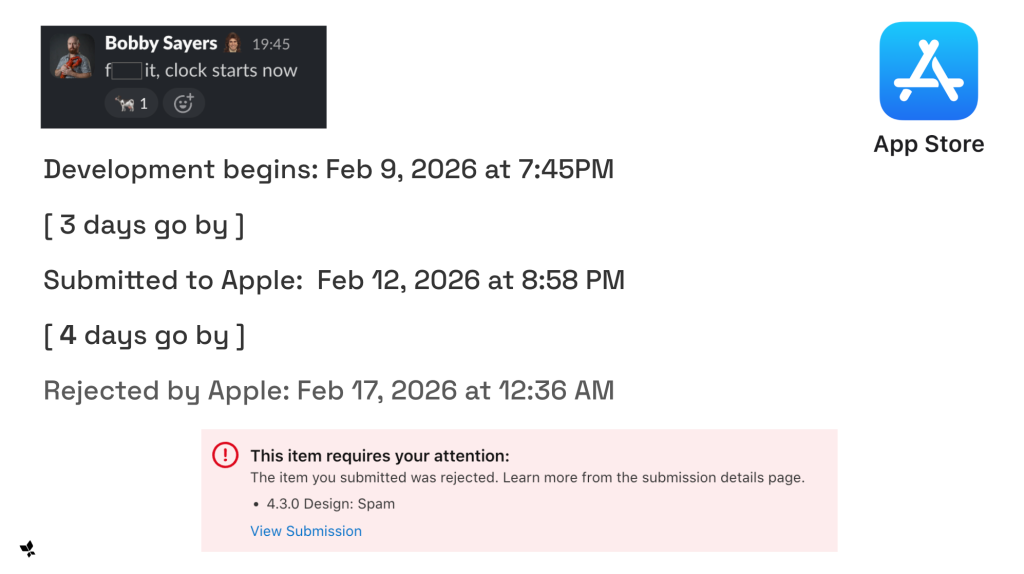
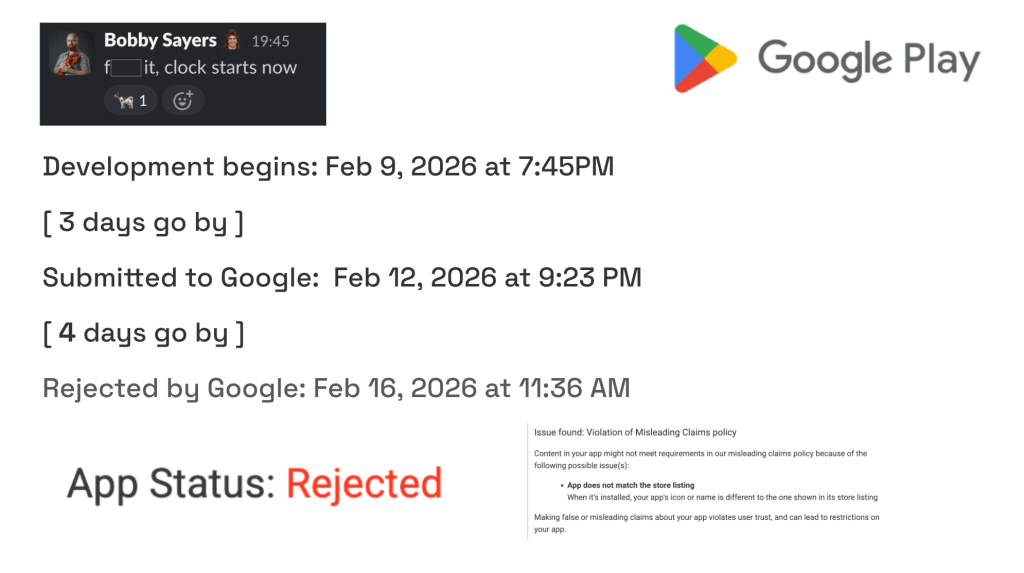
That’s right, your eyes doth not deceive you: IT TOOK MORE TIME TO SIT AROUND WAITING FOR THE APP STORES TO REVIEW AND REJECT ME THAN IT TOOK TO MAKE THE APPS THEMSELVES.
Now I know what you’re thinking: but Bob, you probably made just a big ole bucket of spaghetti AI slop, that’s why you got rejected of course!
No. No and then no again.
For iOS, they didn’t like how similar my app was to existing apps (I’ll let you draw your own conclusions here, though I still feel uneasy about this reasoning).
For Android, it was only a small technical issue: my store icon didn’t match my app icon, which was entirely fixable, and which I did fix.
SO THERE! I TOLD YOU I MADE A GREAT APP!
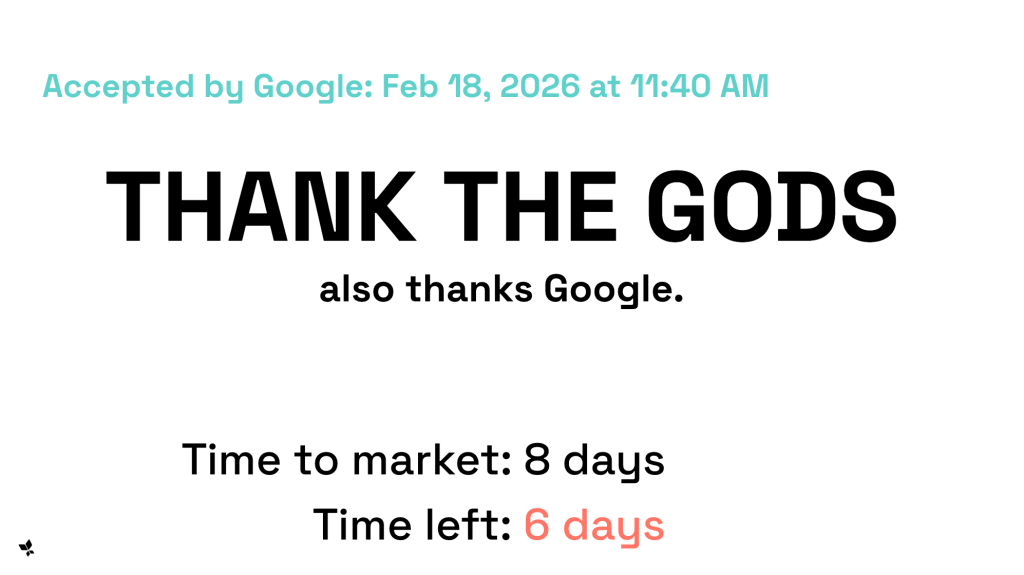
Boom. Catharsis and joy are two words that don’t even come close to the relief I felt when I finally got into Google Play! Phew!
Okay well, we have an app in a store, but now what? Well, it’s time to get to mobile app marketing, hot and heavy!
Like any sane individual (not), my next thought was: “welp, I don’t actually know how to do this whole mobile app marketing thing… so I need to create someone who does, someone that I can teach and who can teach me back.” And, let’s be honest, I was looking to spice things up a bit in terms of my overall “deep on the grind” quality of life, but also the presentation. That’s when my brain+eyes combo began to lock into the idea of OpenClaw.
PIECE TWO: Enter the Lobster
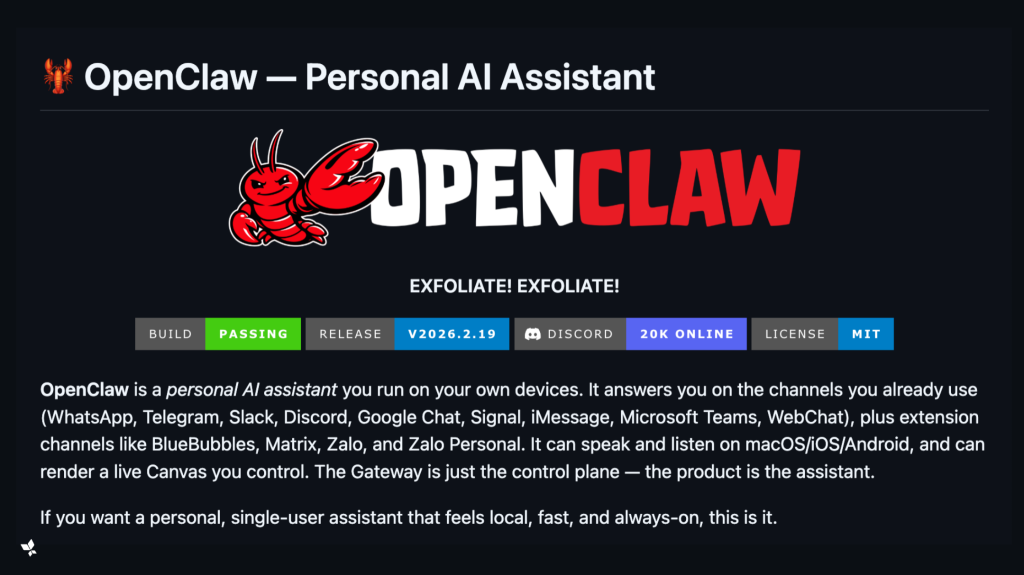
For those who have been living very comfortably under a rock for the last few [or many?] months (it’s hard to keep track of wall clock time in AI progress world), OpenClaw is the viral personal assistant / open source self-hosted agent solution that swept the internet and world by storm. I’ll spare you by stopping myself from going into excruciating fan-boy detail around all of its more intoxicating features, because much has already been said about OpenClaw, and most of you have probably already heard of it. A quick Google search will lead you to everything you need to know. That being said, I did very much enjoy playing around with OpenClaw, and I would suggest anybody who thinks they have the prerequisite technical chops do so in a suitably secure way.
“We fear that which we do not understand” is probably the best way to describe OpenClaw, in regard to public sentiment among anyone who hasn’t actually first-hand stood one up of their own. There’s definitely a lot of value to be leveraged, but if you’ve never spun up an internet-facing service before, it’s natural to have security concerns. Honestly, there’s nothing out of the ordinary to worry about. Just do your research, stay sharp, and—if needed—ask your local [friendly] nerd for a hand. OpenClaw is constantly improving its automated security checks, so at the very worst, it’s there to help you from getting into trouble.
This is where the AppsFlyer MCP really began to shine, because after I had spawned my new best friend, who I lovingly named “CLAW,” I equipped him with the AppsFlyer MCP, connected it up to my AppsFlyer account, and then proceeded to fill his brains with as much information about mobile gaming UA as possible via the vast trove of mangled beauty that is the world wide web.
Beyond the AppsFlyer MCP, I also gave him the ability to connect to BigQuery, just in case we needed any raw data, as the AppsFlyer MCP really focuses around aggregate data. And the very core, beating, burning, beautiful heart of my raw data pipeline was the almighty Data Locker.
Here is a short list of things that CLAW was able to help me with during this project, after, truthfully, really not that much effort on my side to get him up and primed on the task:
- Checking my campaign performance on the fly via scheduled tasks that he set up on his own
- Checking my campaign performance multiple times a day because I live in a world of both paranoia and fear that keeps me both sharp and also emotionally unstable
- Researching and ingesting all of the credible information that could be found about the hypercasual gaming space so that way he could help me put my spend in the right places smartly
- Helping me understand that there are other countries outside of America, where people live and spend their money, where they speak languages that aren’t American, and who have different spending habits and price expectations
- Allowing me to low-key flex on everyone who hasn’t set up OpenClaw yet, making me seem tech-savvy-superior in as many ways as I can reasonably get away with
Now let’s medium-jank segue (is this even the right word?) into talking about data.
PIECE THREE: The Almighty Data Locker
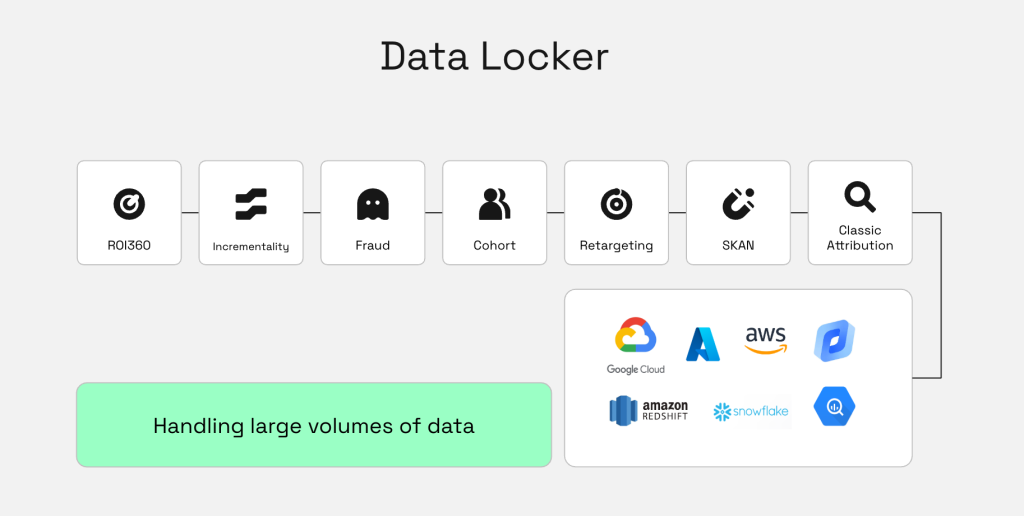
Data Locker is the supreme premium pedal-to-the-metal data solution that AppsFlyer offers. It constantly streams pre-configured data to your cloud provider of choice, in my case directly into my BigQuery, which was absolutely amazing (with the BigQuery MCP; I told you that MCP was huge here). Now not only could I do very quick text-to-SQL queries in BigQuery, but CLAW could also do them for me.
That’s right. While lying on my couch, covered in pretzel rod shrapnel, a wide, smug smile on my face, I was able to simply ask my AI lobster to run advanced data analysis — directly over Telegram. 2026: what a time to be alive.
But let me not distract us from my, let’s be honest, almost religious-like fervor for the shining beacon of light that is Data Locker.
I mean, if you don’t have Data Locker, I don’t really know what you’re doing (this is where I laughed out loud at my desk; yes, I realize this is a decisive POV, but I will die on this hill). When I started this project, I considered it basically non-negotiable that I had to have it. And once Data Locker was in place and happily streaming all of the possible AppsFlyer information that the gods have graced us with directly into BigQuery, the one-two punch of the AF MCP plus BQ MCP was a fast track to the butter zone (sorry for any butter references, CLAW, touchy subject).
While we’re on the topic of ranting, I mean, while we’re on the topic of data…
I would love to go into detail about my journey in connecting up to all the different networks (pure pain) and making creatives using AI (pain but fun) and running campaigns (thanks CLAW!), but unfortunately that’s kind of a lot to go over right now. Maybe we’ll do a future blog post about that. You let us know. Either way, I’m gonna have to just kind of hop, skip, and jump my way over to the fine print around the campaign: performance-y by the numbers type stuff.
PIECE FOUR: Revenue, and the Thing That Takes It Away
ROI 360. What is ROI 360 you might ask? Well, that’s a great question, random internet person.
When I mentioned earlier my deep, profound, and probably uncomfortable love for Data Locker, I mentioned the importance of having the data, but I didn’t get explicit about what kind of data.
In the world of campaign performance, there are two things that will be quite important to your life, so I’m told and have lived: Revenue, and then the thing that takes your revenue away, which most people call Cost.
Well, what does this mean in practice? Great question again, random internet person!
It means that when CLAW goes to get information about my campaigns, either in the aggregate data or in the raw data, when I have ROI 360, I already have all of the cost data tied together automatically. It also means that in the dashboards and in the aggregate data, many of the metrics you’d care about, like eCPI or ROAS, are already pre-calculated.
If you’re the kind of person who has a budget and tends to worry about it, you’re probably thinking to yourself, “Hey, this is a whole lot of premium products you’re pitching here, Jack.”
And you’re absolutely right (although I haven’t even begun to stop flogging premium products, believe me, there’s still one more), but at the same time the benefits here are obvious.
We’re saving time, we’re saving effort, we’re getting to what you need faster.
If you need to justify buying something, these are the products that you can point to and say, “This is why I need them, look at the time saved.” Try life without them. You will slow down, and you will slow down drastically. In the age of AI speed, it’s not a tradeoff I make often anymore.
Let’s swing back to something I said I wasn’t going to talk so much about, because this is my blog post, I can do whatever the heck I want, man!
PIECE FIVE: The Creative Plot Twist
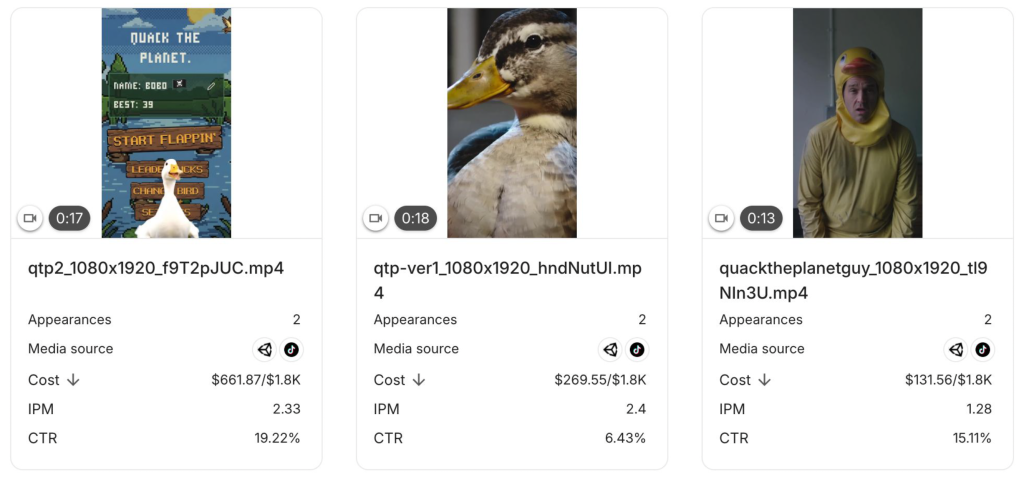
Making creatives is a lot of fun. It’s also a lot of work, but it’s a lot of fun. One of the more interesting parts of this, besides being able to get very, very weird with my video creative strategies, was that I really didn’t understand how the performance of these was tied directly into my campaigns. In fact, it really is the campaign and also how these were measured. Forget about trying to surface the better ones, because I didn’t even really know what better meant. I had a lot to learn; and learn I did.
This all changed when my good friend and beautiful soul of a human, Max Weintraub from our sales team, sat down with me and looked through my creative performance using our Creative Optimization tool. Once I realized how important creatives were, I knew how important the Creative Optimization tool was going to be. If there’s probably one tool that surprised me the most in terms of its usefulness out of everything I’ve discussed so far, the Creative Optimization tool is it.
I knew it was good, and I knew that we have some of our best AI product people working behind the scenes on it, so I knew it was a dead solid product, but I hadn’t ever felt it before first hand, for my own needs. Once we started clicking around and I was able to see some of the AI insights working their magic, it made everything so very clear as to what was working and what wasn’t.
Just the base-level ability to align and surface insights across the creatives was super super useful and really eye-opening, letting me quickly know which videos were working better than others in ways that I honestly didn’t have the transparency into before.
PIECE SIX: What Actually Happened?
Here’s the honest scoreboard (and the part you’ve all been scrolling for): 5,563 humans downloaded my duck game. At thirty-nine cents a head ($0.39 eCPI). On roughly $2,200 of spend.
Now, is that good? Is that bad? Is that a triumphant victory lap or a cautionary tale wearing a victory lap costume? I’ll be honest with you: I’m still not entirely sure, and I’ve had a lot of time to think about it. What I am sure of is that one human, in fourteen days, with no team and no marketing experience, got a real game into real hands at a cost-per-install that a lot of seasoned UA folks would not be mad about. The duck reached people. Make of that what you will, and please do, loudly, in the comments.
So there you have it: a man versus the world, versus himself, versus time, versus logic, versus himself (again). Fourteen days of both beauty and beast, with the end result being an app that I truly am proud of in so many ways.
I’ve had a number of people that I’ve talked to about this project, basically or actually to my face, call it AI slop. Let me tell you right now, none of those people seem like they know what the hell they’re doing when it comes to moving at this kind of speed or quality (subjective sure, but prove me wrong). The people that I respect, the people that I see also doing amazing things, none of them had that kind of reaction, because they get it. They understand that you can create beautiful, crazy things with AI at remarkable speed, but still never lose a grip on your voice and your intent.
PIECE SEVEN: What This Means for You
I hope this project and this blog post leave you feeling enabled rather than threatened. Inspired rather than overwhelmed. Motivated to seek out new ways and strategies and angles to tackle the things you need to tackle in your day-to-day.
If you’re going to build and/or market an app, and you’re aiming to do it extremely efficiently, there’s not a doubt in my mind that many of the tools I discussed today are going to be game changers. But hey, don’t take my word for it: go out and experiment. Do some research on your own and show me where I’m wrong, or take advantage of what I’ve already learned the hard way. It’s up to you.
For those of you who have actually made it this far down and read everything:
- We could probably be friends.
- Get back to work already.
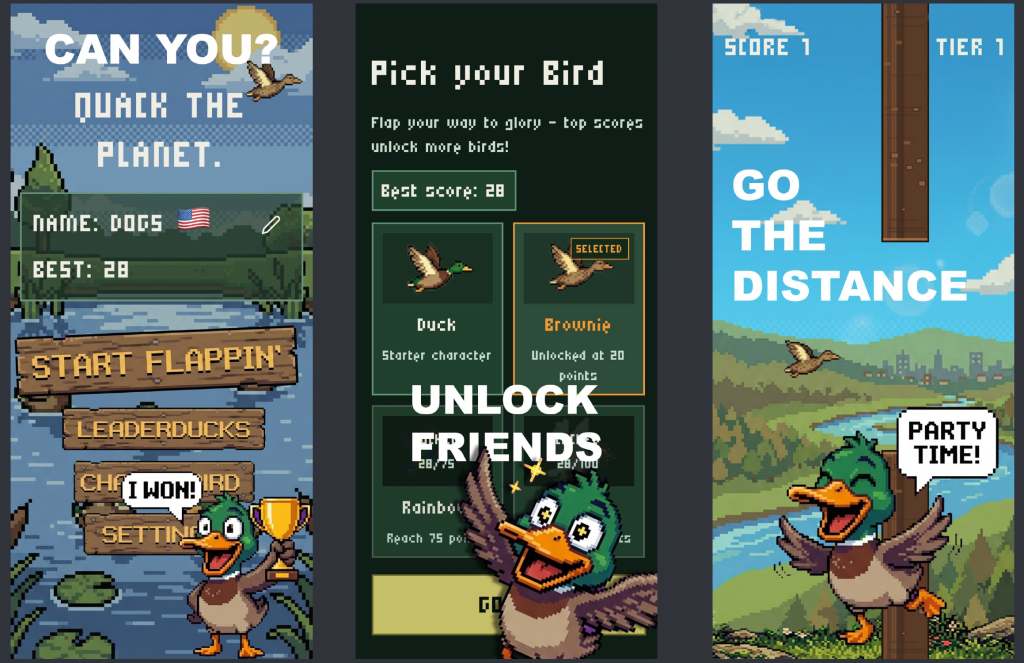
Quack the Planet.
Available on Google Play and on iOS in the App Store.
Key takeaways
- If your vendors don’t offer MCPs, reconsider your vendors. In an agentic workflow, slow data access is the same as no data access.
- “Vibe coding” is the fun name. Agentic engineering is the real one. Output quality depends on the infrastructure around the agent, not just the prompt.
- A measurement stack matters even more when you are the whole team. Data Locker, ROI 360, and Creative Optimization were the difference between flying blind and flying fast.
- The best output is still human plus AI. CLAW did not replace me. It extended me.
FAQ
MCP (Model Context Protocol) is a standard that lets AI agents connect directly to your data and tools through natural language, with no dashboards, manual exports, or engineering support required. For marketers building agentic workflows, it is the difference between an AI that can act and one that can only advise. Learn how the AppsFlyer MCP works here.
Yes. It is live on Google Play and the iOS App Store. Go download it, leave a review, and tell Bobby what you think.
Yes. One person, AI tooling, and an AI agent named CLAW running user acquisition. The full story, including the app store rejections, is above.