


Fix the Foundation: Marketing’s Signal Problem in the AI Era


TL;DR
- Marketers have always paid a “fragmentation tax” — bad signals scattered across platforms, channels, funnels, and tech stacks erode confidence and waste budget.
- AI doesn’t solve fragmentation; it amplifies it. Corrupted or incomplete signals fed into AI systems produce faster, more confident wrong decisions.
- CMOs are caught in a double bind: AI has made the marketing environment noisier and more complex, while leadership expects AI to have already solved the measurement problem.
- The fix isn’t more AI tools — it’s the foundation: governed signals, AI-ready data architecture, and mobile-grade measurement applied across all channels.
- Marketers who get the foundation right will turn AI into a compounding advantage; those who don’t will keep paying an ever-growing tax.
Introduction
In 1966, The Beatles had an earworm for the ages: “There’s one for you, nineteen for me.” George Harrison wrote Taxman in a fury: the idea that simply existing cost you something felt absurd, even offensive. Your street, your seat, your heat, your feet. All taxed.
When I talk to fellow CMOs today, that song keeps coming back. Because in 2026, marketers are paying a tax on everything too. Every platform, channel, tool silo, and, most expensively, every wrong decision made on fragmented data.
We’ve been living with this fragmentation tax for years. But something changed recently: the bill just got a lot bigger.
The reason is AI.
Fragmentation creates and amplifies bad data signals
At the core of every marketing decision is a signal: an impression, a click, a purchase, an identity match, a fraud flag. As AI removes abstraction layers, signals themselves become the product yet most are still bad at the source: self-reported, fraud-contaminated, incomplete, and restricted by walled gardens.
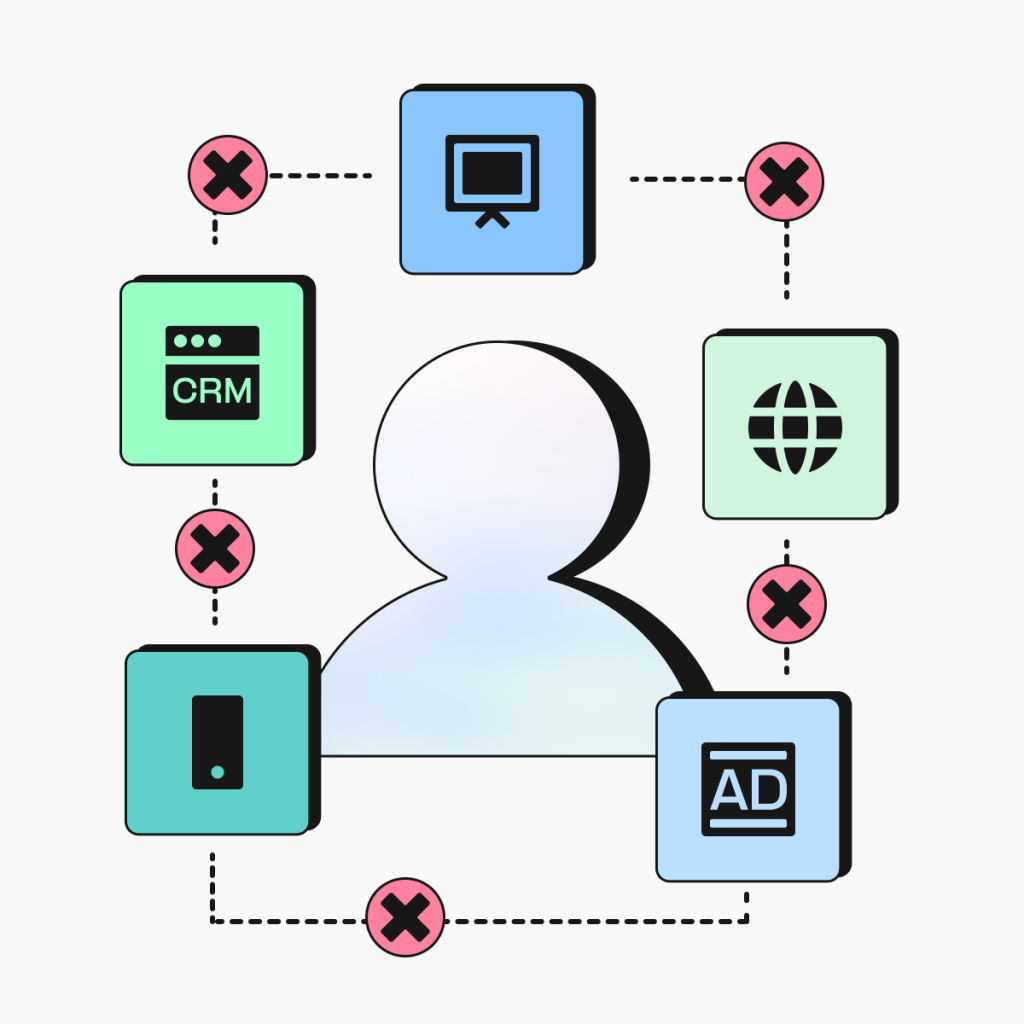
Fragmentation makes it worse. Bad signals flow through siloed systems, inconsistent taxonomies, and unreconciled identities and never reach the decision layer intact across four dimensions:
- Across platforms: mobile app, web, CTV, PC, console, DOOH. Each with its own measurement logic, schema, and latency. The same customer behaves differently on each, and your tools rarely agree on who they are.
- Across channels: owned and paid media operate on fundamentally different rules. Paid platforms self-report inflated numbers. Walled gardens restrict data. Traditional marketing clouds were never designed to reconcile journeys across both.
- Across the funnel: brand, performance, and product teams measure separately. A single customer journey is often split across three systems, three teams, and three definitions of success.
- Across the tech stack: measurement is disconnected from activation. First-party data can’t reach platforms. Platform data can’t enrich internal systems. There’s no unified foundation.
Each gap costs you time, confidence, and budget.
Why AI made the fragmentation tax soar
Here’s the uncomfortable truth: AI doesn’t fix bad signals or fragmentation. It amplifies both.
AI needs data, and when it’s fragmented, it doesn’t unify it, optimizing on whatever signals are easiest to access. It doesn’t distinguish clean from corrupted signals, and amplifies whichever is loudest.
Garbage in, garbage out. On steroids.
The consequences are concrete:
Across platforms: AI can’t reconcile identity systems or attribution models. It treats the same customer as multiple users, double-counts conversions, and optimizes toward the fastest, not most accurate, signals.
Across channels: Paid media AI attributes everything to ads, while CRM AI attributes everything to email. Both optimize on incomplete data, with no arbiter.
Across the funnel: Separate AI systems for brand, performance, and product can end up working against each other.
At the same time, a growing share of decisions now happens before anything measurable: in brand perception, communities, and LLMs where influence is shaped by narrative, not clicks. By the time a user enters the measurable funnel, much of the decision is already made.
This isn’t theoretical. According to the IAB’s State of Data 2025, 62% of marketers cite data quality and fragmentation as a top barrier to AI success.
The double bind CMOs are in
Two forces are pulling in opposite directions.
On one hand, AI has made marketing noisier. Content is now infinite, but attention is not. The bottleneck has shifted from production to attention. With more noise, more bias, and autonomous recommendations flying in from every direction, confidence erodes fast.
The Harvard Business Review studied 200 employees over eight months and found AI didn’t reduce work but intensified it. HubSpot reports 73% of marketers have seen increased workload since adopting AI.
On the other hand, leadership expects more: more speed, more efficiency, more precision and tighter accountability on every dollar. As far as the board is concerned, AI has already solved your measurement problem. Now prove it.
The issue isn’t AI. It’s the foundation.
AI is genuinely transformative. The problem isn’t the model, it’s what the model is trained on.
Most marketing organizations are feeding AI systems data built on web-era assumptions, designed for a simpler world. That foundation was built for reporting, not autonomous decision-making.
To reduce the fragmentation tax in the AI era, we need to rebuild from three directions.
The right signals. At the core of every decision is a signal: an impression, a click, a purchase, an identity match. But not all signals are equal. A fraud-filtered, deduplicated conversion tied to a real identity is fundamentally more valuable than a platform-reported event with no cross-device validation. Measurement doesn’t just report — it validates and structures signals into something AI can act on. When signals are governed, AI compounds advantage. When they’re not, it compounds error.
The signals that matter most span mobile and web, connect creative performance to attribution, and tie purchase behavior to acquisition data. And because the best signals span the full funnel — from acquisition to remarketing — they enable connected customer experiences that convert over time, not just acquire.
AI-ready data architecture. “AI-ready” isn’t a label, it’s a set of properties: governed (traceable, validated, privacy-compliant), structured (consistent definitions across sources), contextual (complete journeys, not fragments), comprehensive (full coverage across platforms and channels), and consent-aware. Most marketing data today fails several of these. That’s not just a measurement problem, it’s an AI readiness problem.
Mobile-grade measurement, applied everywhere. Mobile set the highest bar for signal governance, out of necessity. It had to solve privacy constraints before the web did, fragmentation across iOS and Android, sophisticated fraud schemes , and identity resolution without cookies using several measurement frameworks. The takeaway isn’t to treat mobile as one channel among many. It’s to apply mobile-grade measurement as the standard across all channels: web, CTV, PC, console, and whatever comes next.
Why this is actually the golden age of marketing
It may not feel like it, but moments like this create resets and resets create new leaders.
Marketers are uniquely positioned for what comes next, not because they’re the fastest adopters or the loudest voices, but because they already understand the full equation: people and behavior, brand and narrative, data and experimentation, and how execution connects to revenue. No other function in the business owns all of that together.
AI hasn’t made that combination obsolete. It’s made it more valuable because someone still needs to know when the system is right, and when it’s compounding an error.
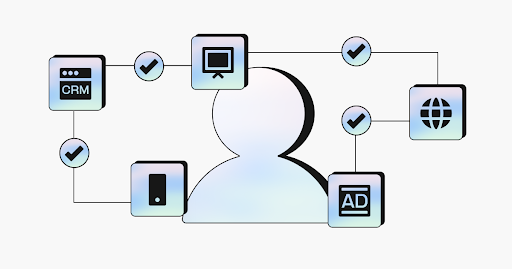
But knowing isn’t enough on its own. To actually get to the golden age, marketers need a foundation that brings measurement, data collaboration, and AI together in one place: trusted, privacy-first, and built for the complexity of today’s customer journeys. That’s what Modern Marketing is all about.
Here comes the sun
Three years after Taxman, George Harrison wrote Here Comes the Sun — sitting in a friend’s garden after a long, brutal winter, guitar in hand, feeling the relief of something difficult finally lifting. “It’s alright,” he kept repeating. Not because the hard part hadn’t happened. Because it was over.
That’s where marketing is heading, if we do this right.
The fragmentation tax of the AI era is real. AI amplifies the problem when the foundation is weak. But the path forward isn’t to fear AI or stack more tools on top of broken infrastructure. It’s to fix what’s underneath: trusted measurement, AI-ready data, and real visibility across a fragmented reality where others are still flying blind.
Fix the foundation, and AI becomes an advantage – not a liability.
Then, finally, it’s alright.