
The Art of Prompting: Why AI Literacy Is the Skill Leaders Can't Afford to Skip
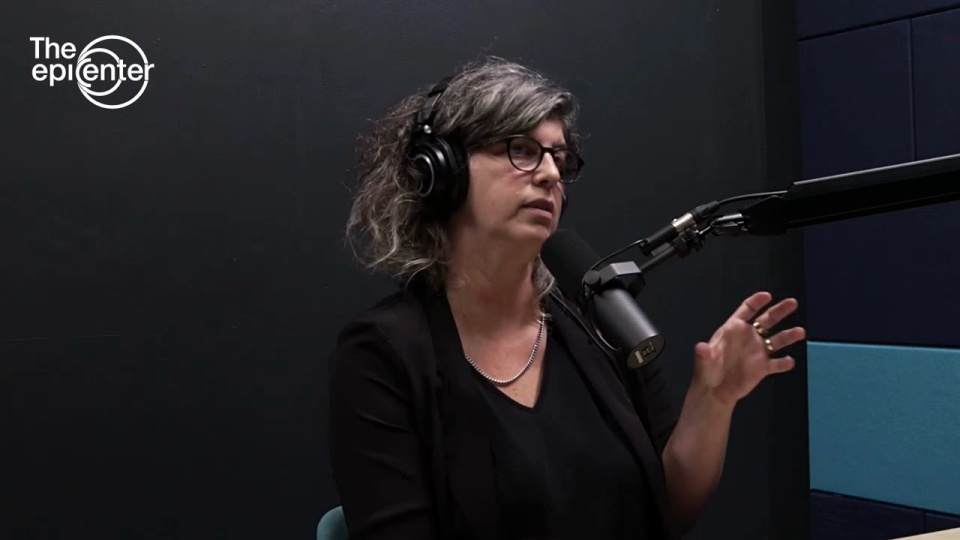
Galit Galperin
Featuring


Episode summary
Galit Galperin has spent over eight years building conversational AI products and the last two working with global companies on AI adoption — not as a theoretical exercise, but inside real workflows, with real teams facing real resistance. In this episode, she breaks down the single most common mistake people make when using LLMs: approaching them like a Google search or a human conversation, which they are neither.
Galit walks through the mechanics of prompting — from zero-shot basics to few-shot examples and chain-of-thought techniques — and explains exactly why vague, short prompts produce hallucinations while structured, context-rich prompts produce reliable output. She also addresses the data side: what makes enterprise data “digestible” for an LLM, why RAG (retrieval-augmented generation) matters, and how custom GPTs can serve as role-specific productivity tools when built correctly.
The conversation also covers what leaders specifically should be doing right now. Galit is direct: AI literacy and prompting are not optional skills for professionals anymore. Companies whose leaders learn to use AI as a strategic thought partner — not just a writing assistant — will outpace those who don’t. She explains the difference between forcing adoption and showing real value through role-based training, and why the window to get ahead of this curve is narrow.
Key highlights
On why prompting is different from search:
“If you don’t really understand how the machine works behind the scenes, you might fall into this kind of rabbit hole. This is not Google and this is not a human-to-human conversation.”
On why leaders must act now:
“Leaders must be the first to do this AI literacy and upskilling. If you learn how to use AI as a thought partner — for board prep, for strategy, for ideation — I don’t remember an opportunity like this for a leader.”
Episode Timestamps:
*(00:00): Introduction to Epicenter Episode 42 and guest Galit Galperin
*(01:36): Galit’s background: 8 years in conversational AI, 2 years advising global enterprises
*(02:20): The #1 mistake people make when using LLMs
*(04:53): Why LLMs and Google search work on fundamentally different logic
*(06:18): Why prompting matters and what it actually means to “speak machine”
*(09:10): Zero-shot vs. few-shot prompting — when to use which
*(12:25): How short, vague prompts lead to hallucinations — and how to prevent them
*(17:15): Enterprise data and why your data must be structured before AI can help
*(21:35): What leaders are actually getting wrong about AI adoption
*(25:45): Should companies mandate AI use? What role-based training looks like
*(29:25): Why showing role-specific value is the key to real adoption
*(33:00): How to use roles, context, and examples to build better prompts
*(36:12): Galit’s 200+ custom GPTs — how she organizes AI tools by workflow
*(37:30): Google NotebookLM: what it is, who it’s for, and how to use it
*(41:00): How to pick the right AI model for your use case
*(43:45): Key takeaways: what professionals and leaders must do right now
*(47:45): Galit’s legacy: responsible AI literacy, not just capability
*(49:32): Quickfire round: favorite app, must-read book, dinner with Steve Jobs
Transcript
[00:00:00] Galit: Here we are. Welcome again to another episode of Epicenter where we feature, [00:00:15] we have in-depth conversations with business leaders and industry shapers who are. Basically defining today’s digital economy. Gri, welcome to Epicenter.
[00:00:28] Galit (2): Thank you. Very nice to be here. [00:00:30]
[00:00:30] Galit: I’m so excited to have you here because we’re gonna talk about some really cool things like AI and prompting the prompt.
[00:00:38] But this is also something very special because this is episode 42.
[00:00:44] Galit (2): Oh [00:00:45] my God.
[00:00:45] Galit: Oh my God. 42. 42 is very famously referenced in, oh my God. His hikers guide to the Galax Galaxy. That’s right. And how cool is it, because basically this episode or [00:01:00] 42 is the purpose is to reveal and answer the ultimate question in life.
[00:01:08] The universe and of course everything. That’s why we’re here. And of course with, with [00:01:15] Gali, uh, goin, who is an AI product advisor, with over 20 years of experience in building products, leading teams, UX teams, you specialize in integrating AI technology into corporate [00:01:30] ecosystems. Is that correct? Yes, it’s correct.
[00:01:33] Kali, tell us about yourself. Come on.
[00:01:36] Galit (2): Okay. So indeed I’m coming from, uh, a product management background. Uh, in the past, I think, uh, eight years I’ve been dealing with conversational [00:01:45] AI products. Mm-hmm. Maybe how to build products or how to speak to technology in a way that will, uh, allow us, uh, to enhance ourselves.
[00:01:55] And in the past two years, I’ve been working with a lot of, um, global, uh, companies. [00:02:00] Mm-hmm. In order to. Adopt ai either in their product as a product feature. Mm-hmm. Or in the process in terms of the workforce. What does it mean, how employees can use this inside their workflows, how a new organization and [00:02:15] that is actually adopting AI looks.
[00:02:16] Mm-hmm. And what it means for leadership teams. Mm-hmm.
[00:02:20] Galit: So, considering that you work with many corporates and, and people, what is the number one mistake that people are doing right now?
[00:02:28] Galit (2): Actually, um, [00:02:30] it’s a very innocent one. Yes. Um, but because basically up until today, um, we were used to talk to, you know, Google.
[00:02:39] Mm-hmm. Mostly, or to search in Google, search in Google, or to speak with one another. Um, [00:02:45] so our conversations, even if they are, you know, via technology mm-hmm. Like, you know, like WhatsApp, like Telegram, we still converse with ourselves. Mm-hmm. And this is exactly the mental model that we usually take when we are approaching, uh, LLMs large [00:03:00] language models.
[00:03:00] Mm-hmm. Like Chachi pt. Yes. So it’s either we are trying to speak in the natural language that we use with people, or we’re trying to search it like we’re searching Google. Mm-hmm. But. This is not Google and this is not a human to human [00:03:15] conversation. Mm-hmm. Um, so that might lead to, you know, some errors, some mistakes, some things that LLMs are doing.
[00:03:23] Um, so if you don’t really understand how the machine works behind the scenes, so you might fall. [00:03:30] This kind of a rabbit hole. Uh, and this is actually very, you know, it’s very logical, but this is, I think, a very common thing to see, uh, when you’re starting to, to just, you know, use the tool.
[00:03:44] Galit: So [00:03:45] when you’re using AI and search, obviously.
[00:03:52] The intended use is different, is it? Correct?
[00:03:56] Galit (2): Yes. Basically, it’s a very interesting question because just now, yes. Uh, we started [00:04:00] to use AI for search, uh, formally, right? Mm-hmm. So, uh, open AI declared that they are going into search and we have tools like propex, the ai, which are, uh, calling themselves the, the answer machine, which, [00:04:15] uh, which is very interesting angle.
[00:04:16] But, but basically before that, okay. Uh. Search was not even part of it. Mm-hmm. So it was not even connected to the internet and people were mistakenly [00:04:30] searching something that is actually a closed database. Like you have the training data. Mm-hmm. It’s, it’s closed, it’s, it’s not going out to the internet.
[00:04:37] Of course, today it’s, it’s already there. But people I think a year ago would not even know. [00:04:45] Um, so actually you are losing the real time thing there. Mm-hmm. Uh, and obviously you are getting a, a, a wrong answer.
[00:04:52] Mm-hmm.
[00:04:53] Galit (2): Um, so. Now these days, if you are searching, uh, ai, [00:05:00] so the, the result mechanism, the algorithm is not even working the same.
[00:05:05] So basically an LLM is something that is a statistical model. Mm-hmm. It searches for the next best word. Mm-hmm. And Google puts it like [00:05:15] into this matrix,
[00:05:15] Galit: right? Yeah. You
[00:05:16] Galit (2): have, you have statistics, you know, what’s the probability. Uh, of the word coming after your, uh, question plus, uh, in large language models, uh, if you are asking a very short [00:05:30] question, okay?
[00:05:30] Mm-hmm. Like, like what is an r and r? Mm-hmm. Eh, you are failing the, the machine. Mm-hmm. It’s not like Google, again, the, the last words the worst outcome. Mm-hmm. So it’s actually not that good to search an AI like you’re searching Google. [00:05:45] So this, uh,
[00:05:46] Galit: this. Brings us to actually the interesting topic of the day, right?
[00:05:50] Because when we talk about searching, we say, oh, well what, what are you searching for? Right? But our, even our language has already changed as we are talking [00:06:00] about how we are using Cat GPT and other types of, uh, AI tools, and we start talking about the prompt. Right. Yeah. I mean, this word has been around for, uh, a super long time, but all of a sudden it’s like probably the most important word [00:06:15] in the vernacular when you’re talking about ai.
[00:06:18] Galit (2): Yeah. Uh, that is important.
[00:06:20] Galit: So why is prompting so important?
[00:06:24] Galit (2): Um, so basically prompting is a way to speak the, the language [00:06:30] machine. Mm-hmm. Okay. So basically it’s like the machine language. It’s a machine language in that sense. So prompting would work with all the large language models mm-hmm. For some.
[00:06:39] Some, it will vary. Mm-hmm. Okay. Uh, for some it will work, uh, better, uh, [00:06:45] worse, some have, uh, you know, specific rules. But mostly if you will learn how to prompt, like in a general, uh, sense, you’ll get better results. And by better results, I mean, you’ll be able to direct the, let’s say the, the brain. Mm-hmm. Or the, or [00:07:00] the, or the model towards what you are.
[00:07:03] Uh, uh, uh. Searching, basically. Mm-hmm. Or what, what is the, like the, the domain or the knowledge that you are after this is one. Mm-hmm. Second, you will probably mitigate [00:07:15] hallucinations. Mm-hmm. When the machine invents things. Mm-hmm. Which we all want to avoid because this is something that as humans, we are not familiar with.
[00:07:22] Mm-hmm. Because we trust automatically. Mm-hmm. You trust Google, you trust Amazon when you search it. You trust Shopify when you search it. Mm-hmm. You, [00:07:30] you have the trust. People are carrying this trust along to large language model. Mm-hmm. Not even familiar with the term hallucinations. Mm-hmm. Um, so this is lying to us basically, if we are not speaking this language
[00:07:43] Galit: and it’s like, uh, [00:07:45] Google search, uh, drunk. Kind of,
[00:07:47] Galit (2): um, yeah, but it’s not like always. Yeah. So that’s, that’s the problem. Yeah. So if I know that someone is drunk, then okay, I’m, I know you’re drunk, but sometimes you’re drunk, sometimes you’re not. This is, yeah, that’s true. [00:08:00] That’s true. This is, you know, very hard to, to, to work with. If you, if we are talking about work.
[00:08:07] So this is something we want to reduce. Mm-hmm. And, and as, uh, Nvidia, CEO said, this is probably going to be, let’s say the, the programming [00:08:15] language of the future, or if I would say that LA large language models will be our os. Mm-hmm. Then, uh, this will be probably the, the, let’s say the, um. The programming mm-hmm.
[00:08:29] For, for us [00:08:30] to leverage this and also to build, because this also allows us, you know, this is democratizing technology in a way. Um, that if I know how to operate this very good and understand how this brain works mm-hmm. Then I can leverage it more, [00:08:45] uh, for my usage and, and, you know. Also my, uh, profession, I can do a lot more.
[00:08:51] Galit: Do we have to unskilled what we know in, in searching and then upskill what we know, what we need to know in AI prompting and, [00:09:00] and like what makes for an effective prompt versus. You know, an ineffective pro per se.
[00:09:10] Galit (2): So the first part is very interesting. I don’t think we need to unlearn. Mm-hmm. Because we will [00:09:15] still have, let’s say, AI tools or search mm-hmm.
[00:09:18] That we will be able to use just like we’re using technology today. Mm-hmm. But you need to upskill Definitely. Um, because I think, um. The more you will [00:09:30] be able to adapt to it, the more options you will get. Mm-hmm. Because usually we have blind spots, so we don’t know what the model is capable of. If we don’t try.
[00:09:42] Um, and a lot of times people are speaking [00:09:45] to it like, you know, like it’s human. Like, uh, you have another mm-hmm. Little robot that is actually yours or human. Um, but that’s actually interfering because this is statistical model. again, this is knowledge. Mm-hmm. And then [00:10:00] this is an adaptation of a language that usually, again, Microsoft for example, they did a research, they said it.
[00:10:08] It’s between 12 to 14 weeks. Mm-hmm. In order for you to, you know, to. Just spi it [00:10:15] like very naturally. Mm-hmm. And not, you know, um, having your, um, your book of prompts. Mm-hmm. This is usually what, what people are doing. Or when I’m, when I’m working with a group, I’m providing them, you know, the prompts that they can use just for them to, [00:10:30] to get the value, right?
[00:10:31] Mm-hmm. So to see what’s in it for me, or how can I leverage this within my role. And only after a few weeks, once you are starting to, to put your, let’s say, expertise in life, [00:10:45] uh, and knowledge. Mm-hmm. then you can start and, and, and embed it. And, and this is basically upscaling towards the, the, let’s say the future skill.
[00:10:54] Galit: So that’s the direction that we. Want to start moving [00:11:00] in is acquiring that skill that is required for us to actually know how to talk to these language models, how to talk in, in a sense of, uh. It’s like this computer language, it’s like coding, but words.
[00:11:14] Galit (2): [00:11:15] It’s like coding, but using our words. Yes.
[00:11:17] Now, I do believe that this technology, first of all, we need to understand it’s very, very young, right? We are a year and a half with these tools. It’s very young, but it’s also, [00:11:30] progressing very, very fast. So I think again, most eventually, this will. Understand our, let’s say, natural intents or natural language in that sense.
[00:11:44] But [00:11:45] if you are working in tech. Definitely, definitely you should, uh, upscale yourself to know how to make mm-hmm. With, with this language, because you can make, you don’t need to be a programmer in order to program. You don’t [00:12:00] need to be a photographer in order to make movies or photos. Mm-hmm.
[00:12:04] Galit: So may, maybe, maybe a side question, because this is a bit on my mind, there’s.
[00:12:11] Prompting and there’s prompting techniques and, and I’ve heard people say [00:12:15] zero shot prompting and few shot prompting. I’m thinking, is this basketball or, um, what is this? Can you explain the difference? Yeah. And why does it matter? And does it impact hallucinations? Or, or what Yeah,
[00:12:25] Galit (2): yeah, yeah. Yeah. So, so first of all, that’s, that’s, let’s say zero shot [00:12:30] prompting.
[00:12:30] Okay. We do have a few techniques. It really depends on the, um, on the, let’s say the platform. Mm-hmm. But in general. Okay. Uh, zero shot means basically what we are. All doing. Mm-hmm. So I’m writing a task. Yes. Okay. I want you to translate [00:12:45] something from, uh, let’s say English to Chinese. Mm-hmm. That’s the prompt.
[00:12:49] That’s basically without any example. Without anything. Mm-hmm. The machine doesn’t know who I am. I’m not giving any mm-hmm. Any examples? This is just directly, [00:13:00] just like I would ask you, can you translate some, what is the time? Yeah. Yeah. Um, and, and a few shot, this is the more advanced mm-hmm. And more interesting because this is basically like training the machine, but in a small sense.
[00:13:14] Mm-hmm. [00:13:15] So if I would ask for something. And I will give an example. Okay. Okay. If I would ask, uh, let’s say I want to build, um, I dunno, uh, marketing collateral. Mm-hmm. Right? So I want it to be a blog post, and then I want [00:13:30] it to be a LinkedIn post. Mm-hmm. And for both, I will probably need my SEOI will have like my brand flavor.
[00:13:39] So if I will just ask, write me a LinkedIn post about. My podcast [00:13:45] with. Mm-hmm. It’ll just write something.
[00:13:48] Galit: Yes.
[00:13:49] Galit (2): Statistically, maybe I will like it, maybe I will not, and then I will try to edit it by wording, which is, by the way, a very TDY task that most of the people are stuck [00:14:00] in. Yeah. Because instead of, you know, editing, you’re trying to basically say, oh, make it, uh, more serious, make it more, uh, shorter or something like this.
[00:14:09] Mm-hmm. But if. From the first place. Mm-hmm. Uh, [00:14:15] I will give an example of previous posts. Mm-hmm. Or of my, uh, brand language or, uh, anything that’s, you know, is very structured and I will basically guardrail the model mm-hmm. To do it like I wanted to do. [00:14:30] So I will basically get, uh, directly what I wanted. So first, uh, the first thing is to shorten the time.
[00:14:37] Mm-hmm. Because again, we are using these models in the context of work for shorten the, the job to be done.
[00:14:44] Mm-hmm.
[00:14:44] Galit (2): [00:14:45] The second thing is that this is also a very good, uh, way to mitigate hallucinations. Mm-hmm. Because the longer. Uh, your conversation. Mm-hmm. Uh, the, let’s say the, the, the more probability that you [00:15:00] will get a model to hallucinate, the model starts to hallucinate when the context gets very big.
[00:15:04] Mm-hmm. And it starts to lose the context. So when you’re too broad, it’s either too broad or very, very long conversation. Mm-hmm. Uh, so it’s not [00:15:15] like a human, uh, you know, that you can sit and speak with, uh, for three hours. Mm-hmm. The model will lose the context. It will not know, uh, everything that you discuss with, it’ll start to hallucinate Sometimes as people we don’t even realize.
[00:15:28] Mm-hmm. That we’re inside an [00:15:30] hallucination. That’s, uh, by the way, why we all need. AI literacy in that sense. Mm-hmm. Um, because you’re trusting it. Mm-hmm. You are feeling to it, but you don’t know that it’s actually lying to you. Now, if you are not in the know, like, if this is not [00:15:45] something that I’m very much familiar with from my, um, profession or, or experience in life.
[00:15:49] Mm-hmm. So, so that’s, that’s the difference. Now we also have a few more. Mm-hmm. Like very, or let’s say more complex. Okay. [00:16:00] Mm-hmm. Like a chain of thoughts, which, which this is more like mimicking. Mm-hmm. Uh. Uh, a thought process between, between humans. So I would probably break it down to a lot of steps mm-hmm.
[00:16:13] To make sure the model [00:16:15] understands and only then I will give it another task and another task. But again, I think that between the zero shot and the few shot, most of the people can find themselves and, just, you know, to start the prompt properly and then, to progress. I like to. [00:16:30] Always say that when you’re using ai, you need to start with the end in mind.
[00:16:35] So if you know why you came then you need to probably direct the model, with your prompt to what you want to, to the outcome that you’re after and not, leave it [00:16:45] open. And
[00:16:47] Galit: how important is it? Two. Provide data and context when you are doing these prompts, right? Um, because a lot of times, like [00:17:00] you can ask questions and, and you don’t know where the data is coming from, right?
[00:17:04] You need to bring data into these LLMs or create your own GPTs, right? So that you can now improve the way that you are [00:17:15] interacting with ai.
[00:17:15] Galit (2): Yeah. So first of all, like I want to distinguish between data that is like your. Your data, your data, like, I mean, uh, proprietary data, enterprise data, uh, you know, even if this is, uh, let’s say my own, [00:17:30] uh, I dunno book.
[00:17:31] I wrote a book. Mm-hmm. I want to put my book. Okay. So I’m splitting between this kind of data and understanding where the data that you are actually receiving coming from. Mm-hmm. So I will start first from, from the enterprise [00:17:45] data because. First of all, I, Matt, if I’m a marketer Okay. Or, or sales, and I want to do some, let’s say, market research or, or, uh, whatever.
[00:17:56] I want to investigate some, some ICP.
[00:17:58] Mm-hmm. [00:18:00]
[00:18:00] Galit (2): If I will just prompt it like this, like the name of my competitor, and I will ask questions. I will get something which is, uh, very, very broad. Mm-hmm. Maybe even casual. And it would definitely not be something that I’m looking for [00:18:15] because people tend to come with like, um, the idea that the model already knows who, who they are, which is not the case, that they, it knows what they mean, which is also not the case because [00:18:30] they are speaking like it’s a human.
[00:18:32] So data for me is a mess. Again, when you are in an enterprise and you have the enterprise tool, then it’s, it’s a bit different. But if now I’m using this for benchmarking mm-hmm. For research perspective, [00:18:45] even to, you know, to prompt my brain. Mm-hmm. So if I want to do like maybe a sales call and I want this to, to, to prep me and I want to have my competitor.
[00:18:54] I definitely need to, to say what is the role that I’m failing? Mm-hmm. What do I [00:19:00] know, what do I know about my customer? Maybe specific data that, that already, you know, that I was already prompting this, uh, prospect with. Mm-hmm. Whatever I did. So I’m again, uh, getting the model to [00:19:15] really understand who, who is speaking now and what are the goals and what I’m interesting in.
[00:19:20] So maybe it’s a very specific feature that I’m at. So the more you will be, again, uh, very, very dedicated, the better. Now if this is my proprietary [00:19:30] data as an enterprise mm-hmm. This is something else because Definitely, and again. According to compliance and legal and everything, definitely this would guardrail mm-hmm.
[00:19:42] The model, uh, to, you know, to, to keep, [00:19:45] uh, using the knowledge base that I’m putting, especially if this is a GPT. Okay. A custom GPT is a GPT that you can actually build and you want it to, to, you know, to speak with your knowledge base. Sometimes it’s, sometimes even not to fetch. Any [00:20:00] other external data? So this is a bit different.
[00:20:02] There are a lot of tools and a lot of companies that are actually, uh, using this mechanism or actually building a mechanism that is, um, that is basically it’s leaning on rug. This is [00:20:15] augmented generation, which means that we are actually taking data, splitting it in a way that an LLM can eat it. Mm-hmm.
[00:20:22] And fetch it for us. So. Unstructured data becomes something that we can converse with. And [00:20:30] that’s a very good solution a lot of times for enterprises. Um, so that’s like the, um, this, uh, let’s say this, uh, part of the, of how, how to put data. Now, the other part [00:20:45] is that if you don’t have data that is like digestible AI will not help you.
[00:20:50] Mm-hmm. So that’s for me, a prerequisite.
[00:20:55] Galit: So what is digestible data?
[00:20:58] Galit (2): So it needs to be [00:21:00] structured. Mm-hmm. Right. It really depends on your goal, but you need to structure. So if you are, you think that you can just, you know, put data that is, you know, for example, like a presentation with a lot of, uh, links inside and images and.
[00:21:14] Uh, it will [00:21:15] be hard for this, uh, let’s say AI to fetch it. Mm-hmm. You need to structure it, you need data analysis to, to prepare everything in order for an AI to crawl, uh, and to, and to give you the, the best result. Mm-hmm. It’s not like searching, uh, [00:21:30] your Gmail for
[00:21:30] Galit: example. Right. Wow. This is, uh, this sounds pretty challenging.
[00:21:35] I mean, and, and if, if we talk about. Basically in business today, leaders are, are, [00:21:45] are facing this daunting task. They’re under pressure to adopt AI technology, and there’s challenges that they’re facing from what. Tool do I use to, how do I organize my [00:22:00] data to, how do I train my people? So there’s so many challenges.
[00:22:04] Galit (2): Yeah. So today leaders are actually, are having a lot of challenges because it’s not only that they need to lead the organization or the team or [00:22:15] the division towards what we call an AI future. Yeah. It’s. First of all, it’s education. Okay? It’s the AI literacy that they need to take care of. Second of all, it’s another big, big topic on their heads.
[00:22:28] Third. There [00:22:30] are a lot of different tools, use cases, also formal. Okay. Let’s say the world. Mm-hmm. Yeah. Because you, you keep hearing, you know, especially if you are, let’s say you are a, a sales professional or, or a marketeer, so you already [00:22:45] have like hundreds. Mm-hmm. So what to do now? A lot of times the situation is different.
[00:22:51] So your employees are walking with a tool that you did, did not, uh, let’s say approve. Mm-hmm. And you don’t really [00:23:00] know. And then you have like the, the NIP problem. Mm-hmm. So from one side, it’s like how to get something inside the corporation that will bring us the, the value that we are after from one side that will.[00:23:15]
[00:23:15] Enhance our people from the other. Mm-hmm. And maybe this is even, you know, to, to replace some of the functions so we can take these people to make things that are like more relevant mm-hmm. For them in terms of, you know, more engaging [00:23:30] things that you need to, you know. It’s to use your brain more. Um, so that’s a lot of pressure.
[00:23:35] And what I’ve actually noticed from, from working and training a lot of these companies is that a lot of times they are like stuck in the middle. [00:23:45] Mm-hmm. Uh, because while their employees are being trained. Uh, they have the pressure, you know, to start to show ROI from using AI to start to be like, very productive.
[00:23:58] Maybe to change [00:24:00] the structure, maybe, you know, to, to do like a go to market offering that is including ai. Mm-hmm. So it’s a lot and not all the time they actually know how to use it for, for themselves. Yeah. Absolutely. Not in terms terms of, you know, they don’t know, [00:24:15] but they are. I mean, they’re using
[00:24:17] Galit: dinosaurs like me.
[00:24:18] I mean, how do we learn ai? Right? I mean, it’s critical that we’re also up to speed so that we can Exactly, exactly. Talk with our teams about AI and prompting and, and outcomes. And
[00:24:29] Galit (2): it’s [00:24:30] not just stock for me, it’s to lead it, it’s to drive, to be the, the, the, the drive to change because people are either.
[00:24:37] Like have the fear
[00:24:38] mm-hmm.
[00:24:39] Galit (2): That it will take their jobs, which is not the case with AI now. No. Or, um, they are [00:24:45] with the fear that their, uh, boss would think that they are, uh, lazy because they’re using ai, which is also not the case. Mm-hmm. Uh, so first of all, it’s to find, uh, in the middle a balance. The balance and, and second, I think the leaders [00:25:00] today.
[00:25:00] Have a unique opportunity in time. Mm-hmm. I, I’m trying to remember when it was like the last time for an opportunity like this and the internet is only like, the only answer that I can think of, right? This is a very big opportunity maybe
[00:25:14] Galit: when, uh, [00:25:15] the internet office came out, uh, Excel. For me, it’s the internet.
[00:25:19] No, you can’t do your work with Excel. You still have to use the calculator.
[00:25:23] Galit (2): Yeah. Yeah,
[00:25:24] Galit: yeah, yeah.
[00:25:25] Galit (2): So you can do your work, but you will be very slow. Yes. Right? I [00:25:30] natural your people, your people will, will be less, let’s say, engaged because everyone are already using it. Right? And, and your business will actually not perform as, as other businesses that incorporated AI already in their product or, or workflow.
[00:25:44] So [00:25:45] for me. For leaders. Mm-hmm. I think that leaders must, must be the first mm-hmm. To, to do this, this AI literacy and upskilling. Mm-hmm. But I think that if leaders will learn how to use AI as [00:26:00] a thought partner mm-hmm. As, as something to think strategically with this is where the magic, like of course you have this say, you know, like this and write me this presentation.
[00:26:11] But I think for leaders, the, the strategic part mm-hmm. [00:26:15] Uh, the ability to, to iterate with ai mm-hmm. On what’s going on, on, on things like, you know, if you have like a board meeting and you want to prepare yourself mm-hmm. If you have like a very important call with a client and you want to be able to think through [00:26:30] what would be the case by fitting it, the history, the data, the things you know, so basically it’s like your little helper.
[00:26:39] But a very smart one because you are actually doing this conversation of, of thoughts, and you [00:26:45] are keeping it also in this, inside its memory. I don’t remember an opportunity like this for a leader. And leaders have a lot of challenges and a lot of like, you know, a lot of things to do. So this is a, an amazing opportunity, not just in the sense of how to write [00:27:00] a better email mm-hmm.
[00:27:01] But how to, to take it to the higher level of ideation.
[00:27:03] Galit: Yeah, just a, a, a thought. Right. Do you think companies and leaders should mandate the use of ai? For example, if you are not [00:27:15] using AI for, let’s say X percent, 30% of your job or 40% of your job, you are going to be replaced. Do you think companies should go as drastic as that or,
[00:27:28] Galit (2): no?
[00:27:29] I think this is [00:27:30] a process. We are in the start of this process. Mm-hmm. So if last year mm-hmm. Was the year of experimenting mm-hmm. This year will be the year of. Proving the ROI. Mm-hmm. And in that sense, you will start to [00:27:45] see, and I think you will start to see it in the teams. Mm-hmm. So if I’m a manager, I will want my people to use AI because we want to be better.
[00:27:53] Mm-hmm. Not because I want to force it on you. Mm-hmm. There are people who will find it more difficult [00:28:00] mm-hmm. To adapt. But I think people mm-hmm. As professionals need to understand that this is coming. Mm-hmm. So basically if tomorrow I will be interviewed. For any role. Mm-hmm. I will need to know AI in six months, [00:28:15] nine months, this will be part of my performance review.
[00:28:19] Yeah. Okay. What, what do I use AI for? Now? It’s not just prompting. Maybe I’m using, you know, some, some tools, but I’m doing my work differently that will affect [00:28:30] each and every part in the organization.
[00:28:34] Galit: No question. Well, adoption is critical, right? Adoption is critical. Yeah. And a lot of times you have starts on things, but you don’t have the follow through or the continues.
[00:28:43] Right? I think that, [00:28:45] uh, I remember some data point about, um, uh, chat, GPT, for example, that oh, probably close to 3 million, 300 million people have downloaded chat, GBT, but their retention or the stickiness is, is, [00:29:00] is, is quite low. How do you make sure that things like this get the right adoption? Because you can start something.
[00:29:12] But like you said, if it’s not part of [00:29:15] a, uh, annual review process or an interview question in, in, in a job application, right? How do you make sure these things stick and, and that there’s follow through on it?
[00:29:25] Galit (2): So, I, I keep saying to managers that I’m working with, so we have a couple of ways [00:29:30] to do this, right?
[00:29:31] So first of all, we don’t want to force anyone, and this is why we need to show the value. So when I’m, for example, coming to. To an enterprise, uh, and I need now to train people or, or let’s say a specific group. Mm-hmm. [00:29:45] Okay. Now I’m training, uh, the sales. This training will be very different. This is why I call it role-based.
[00:29:51] Mm-hmm. So it’ll be very different. I will not be interested to show them how, uh, you know, I’m doing things that are not relevant for them. Mm-hmm. I [00:30:00] want to take their pains and to show them exactly in the workflow, where does this fit. Mm-hmm. So, because an LLM. I treat it as a personal tool. Mm-hmm. So if me and you will go to Google and we will put the same search.[00:30:15]
[00:30:15] Query in Google, we will get the same answer, basically. Mm-hmm. Of course it’ll vary. Uh, if you know I’m in London and you are in Thailand, and it’ll probably vary a bit because of the, the SEO, but let’s assume if we are sitting now here, [00:30:30] it’ll probably give us the same result. But an LLM would give us different result.
[00:30:34] And even for you, if you will put the same prompt, it will give a. Different result each time, because this is generative. This is exactly what it means. So because it’s a [00:30:45] personal thing and because it leans on language mm-hmm. This is basically means that each and every person will adopt it differently.
[00:30:51] So you cannot put some bar to say, okay, uh, me and you would use it the same. And this is why also [00:31:00] that’s leaning very much on our role. On the company that we are at, whether we are global or not, and a a lot of different variables that are actually dependent on this. I believe that each and every person, and I already did it myself [00:31:15] for thousands of people mm-hmm.
[00:31:16] Around the world, when you are showing them the value, the real value. Mm-hmm. And it’s not like, oh, I heard about something like JGPT, I will ask it something without the proper prompting, without, you know, and it fails you. Mm-hmm. Then you will not [00:31:30] go back. This is one thing. Mm-hmm. The second thing that I believe that all these companies are starting to improve the product, and again we need to remember these are startups, right?
[00:31:40] It’s a product with 1-year-old market that [00:31:45] although, you know, this is a product fit that, that no one saw before because it took five days for GGBT to reach million users. Okay? Yeah. So that’s, that’s. As a product. I’m, I’m looking at it. That’s, that’s like overwhelming.
[00:31:57] Yeah.
[00:31:57] Galit (2): So they are now putting things [00:32:00] like the vo voice mode.
[00:32:01] Okay. For everyone to be able to interact in a more natural way. They are allowing features like Canvas, which let’s write it together with ai. Hmm. So they are taking it more towards the, let’s say, the [00:32:15] convenient experience. And they are X of language that will allow us to adopt it better. But I do see this as a responsibility for organizations to, to educate.
[00:32:28] Each and every employer [00:32:30] in, in terms of this role, and not let them just experiment without a responsibility. Because you need to know how this fits you and how to talk to this in a way that, that you will actually not waste more [00:32:45] time, but, but get it to, to the higher level in terms of, uh, the outcome.
[00:32:49] Mm-hmm.
[00:32:51] Galit: So. When you prompt, there’s actually, like, there’s a, a framework that you, you talk about, right? [00:33:00] About how you need to address first. Who am I, right? And then what is my problem statement? And then, you know, yeah, what, what, what, what is this? This framework that you talk about. So it’s
[00:33:14] Galit (2): not [00:33:15] a one framework, it’s like understanding the, the, the options that you have.
[00:33:18] Okay. So maybe this will be like more like, um, um, when to use what Yes. Sort of thing. Because if you are brainstorming, really brainstorming, I, I like to keep it very open. [00:33:30] Mm-hmm. Because you would like the model to be creative. Mm-hmm. And maybe it will lie to you, okay? Mm-hmm. But out of like 10 questions, you will probably get one, which is, you know, which you like really, really much.
[00:33:43] And then you can dive in. [00:33:45] Now when I’m saying to give a role, this is a technique that you are actually, you, you are not saying who you are. Mm-hmm. But basically you are prompting the model. Mm-hmm. Uh, to be some. Someone, or if you want to get to, let’s say, um, [00:34:00] something in the training. Mm-hmm. So if I would like to write a LinkedIn post Yes.
[00:34:05] On this part, but to sound like Steve Jobs, I will tell it to be Steve Jobs and I will get the flavor of this language. Mm-hmm. Okay. [00:34:15] So basically I’m, I’m directing the model, but definitely. A role. Okay. Um, what I call, let’s say a, a task, a command, what I want you to do. Mm-hmm. And then a very long context.
[00:34:28] Mm-hmm. And this context [00:34:30] needs to be either a document that you are putting or just, um, you know, a reference that you are explaining. Mm-hmm. But something that will serve as the baseline. So even if you have an idea, okay. I’m constantly saying to people, [00:34:45] if you have an idea, do not ask for 10 ideas to brainstorm.
[00:34:48] You already have an idea, right? Let’s build on this. Let’s not use the open, let’s give the the specific co context of what I want and maybe I’m stuck. Mm-hmm. So use AI to open this. [00:35:00] Okay. So give the idea as your context and then. Try to, to brainstorm. So the more this will know, the better result you will get.
[00:35:10] Now there are some, in some cases, okay, for, [00:35:15] uh, I think most of them, they have a memory. Mm-hmm. It is still not a memory like I will have. So if I’m working with you, I’m pretty much familiar with everything. And if you are a Google user, they probably know more about you than they, [00:35:30] you. Then, uh, even then Gemini.
[00:35:32] Okay, yes. Um, they are not pushing this context forward, but we’re used to technology knowing us. This is the problem. This technology still doesn’t know us. The memory is very small. It’s for, it’s sporadic. [00:35:45] People need to know that it exists. How to pull or push things. Into this. And then once it knows that you are, you know, the marketer, the CEO, the sales, whatever, and you are basically, if I’m a sale and I’m, I’m a salesperson and [00:36:00] now I want to write a LinkedIn post like Steve Jobs, the outcome will be much better, much faster.
[00:36:06] Galit: Do you have a GPT for each of your roles that you have?
[00:36:12] Galit (2): I actually, I have, uh, more than 200 gpt, [00:36:15] uh, just for my own without my clients. But, uh, it’s because I’m, um, enjoying to, you know, stretch the, the limits and, uh, and check, um, GPT is by the way, the, the, maybe it’s for GPT, but you can also have this in, in clothing projects.
[00:36:29] [00:36:30] Mm-hmm. And, uh, Google has gems again, some of them, some of them are better, some less better. Mm-hmm. But, but. Yes, I do have like my, um, I’m also teaching in the academy. Mm-hmm. So I do have like [00:36:45] an academy persona that is, uh, used for, for, you know, academic paper digestion and my own, uh, business, uh, user, uh, which are different.
[00:36:55] Mm-hmm. But also a lot of things that are streamlining my, uh, you know. [00:37:00] My workflow. Mm-hmm. So I’m actually using this in order to keep, uh, you know, all the context of, you know, my business, what I’m doing. Like all, all the content is there and this is very valuable.
[00:37:12] Galit: Yeah. When I saw your, uh, notebook, uh, [00:37:15] LLM today, I don’t know, you had probably like 200 different tiles there of Yeah.
[00:37:19] And things. Uh, each of them. I mean, how do you, how do you organize that? How do you keep track? Does each one know when you go into it? Does it each, each time it knows the context of you. [00:37:30]
[00:37:30] Galit (2): Uh, so actually no Notebook l lamb for the ones who are not familiar. Yeah. Um, this is a very good product from Google.
[00:37:37] Yes.
[00:37:37] That
[00:37:38] Galit (2): can actually create, originally, by the way, it was for academic research, but it’s. It’s now [00:37:45] exploded to a lot of different cases. Yeah. And you can actually use it for free. Basically it’s a notebook that you can push, uh, information, articles, YouTube videos, links, whatever, and you can get what they call, uh, a notebook [00:38:00] guide, which basically helps you to either digest the content inside or to create like a podcast like mm-hmm.
[00:38:07] Uh, of the information, which is a lot of time very valuable for people that, that like to hear and not to read. You touched [00:38:15] a very, uh, painful, uh, place with, with, for you, with how, with how to find things because I don’t think they realize that, uh, people like me are having hundreds. Yeah. Which is very hard to navigate.
[00:38:26] Yeah. But this is, again, it’s just out of beta. [00:38:30] Mm-hmm. So they worked on it like for two years and it’s, uh, very young and they are, uh, tweaking. So I believe this will come. It’s Google after all. Mm-hmm. I will be able to, you know, to, to, to search and navigate this. Um, but I’m trying to just, uh, put, put it like, uh, [00:38:45] blocks of information, you know, and, and to try to remember to put everything in the same, uh, place.
[00:38:51] But I think this is, uh, like, you know, to have something on LLMs and something on HR and something on product management and [00:39:00] whatever. Yeah. But I think this is a very good tool, even if you are not getting back to it. So basically people who wants to, you know, to learn and, and, and, and to use something they, they can just.
[00:39:12] You know, put one link, one [00:39:15] YouTube link inside and go and, and just understand what the content there, uh, tells you.
[00:39:19] Galit: Yeah. What, what I worry about is that. These, uh, these interfaces start becoming messy like our inbox.
[00:39:28] Galit (2): Correct. And this is [00:39:30] why, by the way, just recently mm-hmm. Uh, tr GPT had, um, published the search mm-hmm.
[00:39:37] Also for Claude. Mm-hmm. So I think it will need to be indexed somehow. [00:39:45] Somehow. Mm-hmm. Because again, it’s a conversational product, you know? So the question is why. Mm-hmm. You want to go back to this conversation? Mm-hmm. How frequent, mm-hmm. How important it is and how [00:40:00] much it’ll move the needle for these companies, which I’m not sure it’s moving.
[00:40:05] Mm-hmm. Maybe we’re wrong to some startup idea. Yeah. Because
[00:40:11] Galit: mm, nobody tell,
[00:40:13] Galit (2): because this is just between you and [00:40:15] me. This is, this is, again, because if I converse with something, this is again related to memory, right? So if it would have like the memory that I’m doing, like this leadership with AI thing, and I already, you know, spoke with it about it because I [00:40:30] had this as a thought partner and now I want to go back.
[00:40:33] And I had like 10 conversation like this, it should remember and it should know how to direct me to this. And I believe this technology will be smart enough to do this. [00:40:45]
[00:40:45] Galit: And just, uh, one more question, uh, related to that, like you mentioned, Claude, um, Gemini Notebook, LLM chat, GPT, how do you pick the right model [00:41:00] or the right.
[00:41:01] Interface for you.
[00:41:04] Galit (2): So for me, I, I love them all.
[00:41:06] Galit: Okay. Well,
[00:41:07] Galit (2): actually not all of them, but it’s a secret. Okay. But I have them all. You have a couple
[00:41:11] Galit: true loves.
[00:41:12] Galit (2): Um, [00:41:15] let’s say I am breaking down the usage pair, the model’s ability, but
[00:41:20] mm-hmm.
[00:41:20] Galit (2): But I’m not the, let’s say the average user. Right. Okay. And this is also my job,
[00:41:25] right?
[00:41:26] Galit (2): So I think for the average one, and again, we need to [00:41:30] split between people who are working with a tool that the mm-hmm. Company provided them.
[00:41:34] Mm-hmm.
[00:41:36] Galit (2): And between, you know, I want to go into ai, I am a leader. Mm-hmm. I want to, to go in now all of these tools are free mm-hmm. To start [00:41:45] with. Okay. Yes. So you can start and you can actually have like a few weeks to see.
[00:41:51] How is it working for you? Why? Because if a lot of your job is repetitive. Then you would probably want to [00:42:00] build something like a project or GPT and you need this functionality. Mm-hmm. If you’re someone that likes to learn or, or grab a lot of content and do you know, uh, analysis, then maybe not em will be enough.
[00:42:13] If you are [00:42:15] basically someone that, uh, that likes, you know, uh, the, the conversation in terms of like, uh, to personify this. Then maybe you would like Google. Mm-hmm. Or even PI ai, which is the emotional partner. Okay. Mm-hmm. It’s not even a, something that you would probably do [00:42:30] to, to speak very emotionally is that if you want an AI friend, PI ai.
[00:42:33] Yeah. Okay. It’s the emotional ai. Nice. It’s a very empath, it’s like a psychologist. That that speaks with you. It’s more like on the personal [00:42:45] level of, okay, I have this memo wheel, let’s say, you know, keep this memo wheel, let’s speak about this memo wheel. It’s more like this. Mm-hmm. So it’s really a matter of, for me, of the job to be done, or how many birds can you kill with one stone?
[00:42:57] Mm-hmm. So if you are someone. [00:43:00] Okay. So for example, I’m saying, okay, I want to do a data analysis, I want to, to streamline in my workflow and to do like some sort of a small, uh, automation with it. Then, uh, you are picking, you know, something that can do this. Most of the people, again, [00:43:15] this is, uh, the market, it’s not me.
[00:43:16] Most of the people are, are going to j PT directly, like, because this is the market leader for now. But I think this is something that you. Everyone should try. Mm-hmm. Like I’m saying, try them all for [00:43:30] like five days, then decide on one. You don’t need five. Yeah. Decide on one according to what you want to do with it.
[00:43:38] Galit: Whew. So we covered a lot. Yeah. How do we memorize [00:43:45] like. Everything that you, you’ve just mentioned, what are the key takeaways that you want people who are listening to this podcast to know about? Prompting?
[00:43:56] Galit (2): It’s not just about prompting, it’s, it’s in general. I think it’s, it’s where we are [00:44:00] standing today with ai.
[00:44:01] I think each and every person should understand that this is an upskill that is a must. Mm-hmm. Today. In terms of especially professionals.
[00:44:09] Yes.
[00:44:10] Galit (2): I think that leaders should understand that prompting. It’s, it’s [00:44:15] not like, uh, a nice to have. Mm-hmm. Okay. Because maybe you can. Take it like for three, four months more, but then you are starting to, to to be late to this party.
[00:44:27] So this is something you must do now [00:44:30] and then even try to jump to, to this, uh, uh, thought leadership along with AI as, as a thinking partner. Uh, it. It’s not scary. Mm-hmm. Okay. Like, uh, lose the zero and [00:44:45] few short prompting. Uh, it’s not scary. It’s a language we need to learn. Mm-hmm. It’s just like we are learning English.
[00:44:51] Yes. Okay. And I think the most important, important thing mm-hmm. I hear a lot of times I’m afraid it’s the technical. It’s [00:45:00] not. Mm-hmm. It’s a conversational product. Mm-hmm. You just need to jump into the water. Mm-hmm. Okay. And if you don’t need, if you don’t want to jump, then dip it toe and just try it out and see, and then, you know, take an expert, [00:45:15] take an advisor, take a course, whatever mm-hmm.
[00:45:17] Fits you because not every leader is, is working the same with it. Or even ask your colleague, you know, or even sit with the team and hear what they are doing with it, or, you know. Try to do like [00:45:30] a really colleague sharing whatever fits you. Mm-hmm. But just do it like in terms of get, get into this now.
[00:45:38] Mm-hmm. This is, I think, the most, um, relevant, interesting because later on or in a couple of, let’s [00:45:45] say months, two months. Three months, you will need to be the one that is deciding on what AI tool to choose for the company or for your division. And you need to be, uh, in this literacy awareness, uh, and, and to start, even [00:46:00] to drive this adoption, uh, in the company itself.
[00:46:02] Mm-hmm.
[00:46:03] Galit: So be that voice of, uh, change and, uh, and adopt and, and adopt. Or, or don’t adopt. Right. It’s uh,
[00:46:13] Galit (2): uh, yeah,
[00:46:13] Galit: it’s kind of, it’s like, [00:46:15] uh, existential, uh, opportunity, not threat.
[00:46:20] Galit (2): Yes. It’s an opportunity
[00:46:21] Galit: and I think that there is so much, uh, that we have yet to know. Right? And, and I think the pace [00:46:30] of innovation that is happening right now is so fast.
[00:46:36] That even some of the skills that we’re learning today could become obsolete. Obsolete. Obsolete from today completely.
[00:46:43] Galit (2): But I think this is the, [00:46:45] this is the challenge.
[00:46:46] Galit: Yeah.
[00:46:47] Galit (2): The challenge is to, to be able to adapt to this kind of changes because. If, for example, okay, you would do like a business plan, like a vision one year from [00:47:00] now.
[00:47:00] Mm-hmm. I think now the fact that we have AI in our lives just changed everything. So the strategy mm-hmm. To one thought you have is not the same strategy now. Mm-hmm. Your competitors are using ai. They can open [00:47:15] markets. They can make a lot of, you know, different calls. They can actually, em embed AI in their teams and you need to, to re-strategize yourself.
[00:47:24] And it’ll probably be in shorter, like, it’ll be like by quarter or two quarters. Mm-hmm. [00:47:30] And not by a year. And everything will become shorter and maybe, probably more, let’s say probable available, optional. So yes, definitely this is a new way of, of. Thinking and, and, and doing your work.
[00:47:44] Galit: Khali, [00:47:45] you’ve been involved in so many different, um, areas of technology from mobile and early days, product.
[00:47:53] Now, ai, this just something that is on my mind that actually I ask, uh, most, uh, [00:48:00] people on this podcast is what do you want your own legacy to be?
[00:48:06] Galit (2): Oh, wow. Um. Actually, I care about people learning.
[00:48:12] Mm-hmm.
[00:48:14] Galit (2): Uh, [00:48:15] but learning responsibly. Mm-hmm. So I wouldn’t want people to hand their brains to the machine.
[00:48:20] Mm-hmm. I think we, we have an amazing opportunity. Mm-hmm. From education to, to medicine to products. Like, [00:48:30] this is all going to change, but I think we need to act very responsibly. Mm-hmm. In our personal use, but also as, as a society, right? So to know where, where are the limits? Hmm. And this is why I think the literacy [00:48:45] is important, the critical thinking.
[00:48:46] And this is why I’m doing what I’m doing because I do believe that we need to uncover as, as many blind spots as, as we can. Um, so, so this is why I’m also, you know, investing a lot of time in teaching this mm-hmm. Logic, [00:49:00] because I believe technology can really improve our lives. Mm. We will do it responsibly and, and, and we’ll be literate and and smart about it.
[00:49:10] Galit: Well, that’s fascinating. Um, yeah, I mean, [00:49:15] so many areas that, uh, you know, and, and your, your knowledge is, uh, the breadth and the depth is, is, is fascinating to me. I think we could thank you. We could talk, uh, about this for, for a much longer time. Um, but I want to, uh, I want [00:49:30] to go into a quickfire round with you.
[00:49:31] Galit (2): Let’s go.
[00:49:32] Galit: Are you down with that? Let’s see. Let’s see. So what is your favorite app?
[00:49:39] Galit (2): My favorite app? Yes, like a mobile app. Mobile app, probably. Uh, [00:49:45] JGPT, voice mode. Voice mode.
[00:49:47] Galit: And do you talk to it All the time? All the time.
[00:49:50] Galit (2): When I’m standing in the car and like in a traffic jam, I’m actually, I’m, uh, reading books.
[00:49:56] So I’m, uh, talking about books. Really? Yeah. Instead of reading them And you’re [00:50:00] discussing a book. Yeah.
[00:50:01] Galit: That brings me to my next question actually. Why a must read business book and why?
[00:50:09] Galit (2): Um,
[00:50:11] Galit: actually a business book, or it could be any book besides [00:50:15] Hitchhiker’s Guide to the Galaxy. Oh.
[00:50:16] Galit (2): Um, so thinking Fast and Slow.
[00:50:19] Galit: Ah. Um, which is a,
[00:50:20] Galit (2): it’s actually Daniel Kaman, right? Yeah, it’s Daniel Kaman. I think this is this. For me. Mm-hmm. Okay. This is a very good place to, you know, [00:50:30] understand how people think or make decisions. Mm-hmm. Uh, it’s a hard book to read
[00:50:36] Galit: very hard,
[00:50:36] Galit (2): uh, and, and it’s not
[00:50:38] Galit: actually, it’s not the advisable to audible it,
[00:50:40] Galit (2): uh, no, but.
[00:50:42] Yeah, but you can actually prompt, [00:50:45] prompt it and, uh, make a conversation that is very, very interesting around it. So if you don’t like to read books and if you, uh, audible is, is indeed. I tried it. I tried it in Audible. It was, uh, very, very hard. Yeah. [00:51:00] Agree. Uh, but speaking with it, um, that’s, um, probably something that most of the audience, uh, didn’t try it.
[00:51:06] So
[00:51:07] Galit: you might have to show me how to do that after this. I will, I will. There’s a famous person that you really wanna take out to dinner. [00:51:15] Who is that person?
[00:51:17] Galit (2): Oh, wow. I would like to take Steve Jobs actually, because I admire the way the products are designed in terms of human psychology. Mm-hmm. And all, all the things that [00:51:30] he built.
[00:51:31] Um. But maybe I will take his, uh, you know, the, the biggest designer like, uh, instead because, eh, ah,
[00:51:40] Galit: you know, yeah. These days you can probably have, uh, dinner with Steve Cloud. Yeah, actually
[00:51:44] Galit (2): I can,
[00:51:44] Galit: [00:51:45] you can, yeah, I’m sure you can actually probably do that tonight.
[00:51:48] Galit (2): Yeah. It’s a company that calls, uh, called the character ai and you can actually find, I think Steve Dale.
[00:51:54] Wow.
[00:51:54] Galit: So what, what is the more important innovation? Is it [00:52:00] mobile? Or is it ai?
[00:52:05] Galit (2): Um, AI has been there before mobile. Okay. Mm-hmm. Like for 50 years. So I will probably say gen ai, but, um, [00:52:15] I think AI eventually will be more important eventually. Mm-hmm. Because mobile allowed us to. To move away from technology in that sense that, that we can take all this technology in our pockets.
[00:52:27] Mm-hmm. But I think AI will [00:52:30] streamlined the world. Mm-hmm. So basically it’ll remove barriers, like language we will speak, you know, to to things. So I think eventually it’ll be bigger.
[00:52:40] Galit: Do you have a favorite quote?
[00:52:43] Galit (2): Start with the end in mind [00:52:45]
[00:52:46] Galit: and we’ve reached the end. Thank you. This has been a beautiful, uh, uh, session together.
[00:52:52] Thank you so much. I’m, I’m, I’m, I’m really fascinated with your knowledge and, um, this is definitely gonna be something that, uh, I believe [00:53:00] the audience will really, uh. Resonate with, um, there’s so much learning here and, and yeah, I’m just very grateful for, uh, for your time.
[00:53:09] Galit (2): Thank you for the invite. It’s a pleasure.
[00:53:11] Galit: Yeah. Thank you so much, GLI. Thanks. And by the way, how does someone find [00:53:15] you if they wanna find you?
[00:53:16] Galit (2): Oh, they, uh, so, uh, gal Galperin on LinkedIn. You are more than welcome or my website. All right. You heard that? Hit her up.
[00:53:25] Galit: And, uh, that’s a wrap. Thanks. [00:53:30] Thanks.[00:00:00]
Meet our host



Explore more resources
Uncover AppFlyer’s wealth of expertise and in-depth resources, to empower your growth and success in today’s dynamic market.


