
How Blockchain Can Actually Solve Real-World Problems with Shoeb Syed
Shoeb Syed
Featuring


Episode summary
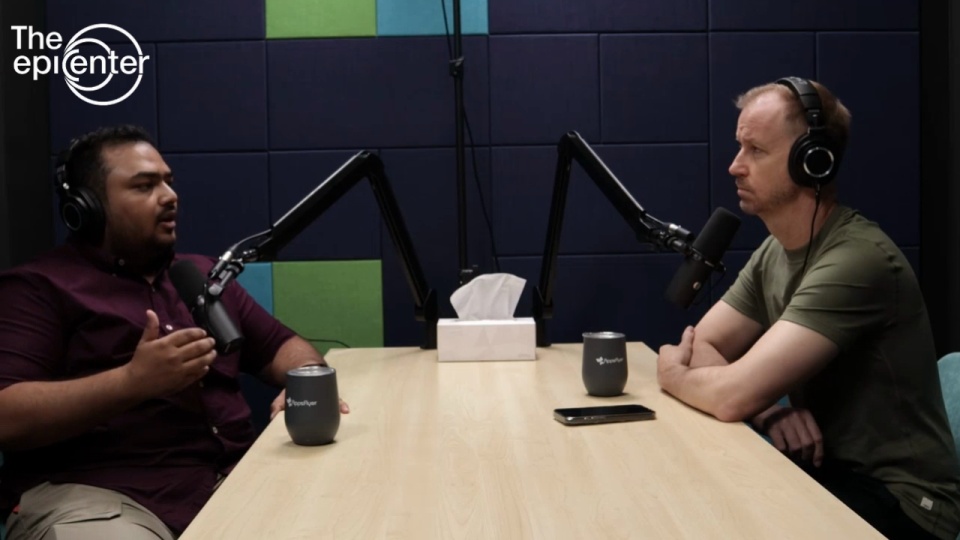
Blockchain has been hailed as everything from the foundation of a new internet to the biggest speculative bubble of our time. In this episode of Epicenter, Ronen Mense sits down with Shoeb Syed, Co-Founder and CEO of Throughput, to cut through the noise and answer the real question: when does blockchain actually make sense — and when is it completely unnecessary? Together, they unpack the myths, the hype cycles, and the uncomfortable truths behind Web3 adoption, tokenization, and why so many blockchain projects fail before ever reaching real users.
Shoeb shares a pragmatic framework built around trust, ownership, and transparency, explaining why industries like finance, gaming, real-world assets, and supply chains benefit from blockchain — while others don’t. The conversation also explores the future of blockchain infrastructure, how AI can complement decentralized systems, why UX is the biggest barrier to adoption, and what it will take for blockchain to quietly power everyday experiences without users even realizing it. This episode is a grounded, honest look at Web3 beyond speculation — and a roadmap for builders who want to focus on real utility.
Key highlights
“If your product doesn’t require trust, ownership, or transparency, you don’t need blockchain. Everything else is just hype.”
“Blockchain wins the day people use it without even knowing it’s there — that’s when adoption truly happens.”
Episode Timestamps:
*(01:26) Is blockchain a solution looking for a problem?
*(02:00) The three principles that actually justify blockchain
*(03:00) Real use cases vs hype-driven implementations
*(05:15) Shoeb’s journey into Web3 and early ICO research
*(08:15) Why most projects choose the wrong blockchain
*(09:30) Introducing Throughput and blockchain infrastructure efficiency
*(12:00) Saudi Arabia’s emerging tech ecosystem
*(14:45) Web2 vs Web3 explained simply
*(17:45) Is decentralization really achievable?
*(18:45) How AI can complement blockchain infrastructure
*(20:15) Blockchain speed, scalability, and gaming use cases
*(21:45) Real-world blockchain examples you already use
*(23:15) Why UX is the biggest barrier to adoption
*(24:40) Tokens, speculation, and why many projects fail
*(27:15) Enterprise checklist: trust, ownership, transparency
*(30:00) NFTs, hype cycles, and lessons learned
*(32:00) Legacy, long-term vision, and building for impact
*(35:00) Rapid-fire round and Shawarma Coin
Transcript
[00:00:00]
[00:00:03]
[00:00:03]
[00:00:07] Ronen Mense: Welcome to another exciting episode of Epicenter Blockchain has been called Everything from the Foundation of New of the New [00:00:15] Internet, of course, to the biggest hyped bubble of time, but somewhere between speculation and of course, utility lies this real question, where does blockchain truly matter?
[00:00:28] And. Where doesn’t it [00:00:30] matter? This episode today is brought to you by Apps Flyer, the world’s leading measurement platform. Harnessing the power of data and AI apps flyer helps brands grow with confidence, optimize every decision, and deliver exceptional customer experiences. [00:00:45] My guest today is Shoeb Syed. We’re gonna call you Syed, right? Uh, he’s the co-founder and CTO of throughput. Um,
[00:00:53] CCEO.
[00:00:55] Shoeb Syed: I’m a technical person.
[00:00:56] Ronen Mense: You’re not a technical person. there we go. So we got the CEO here, the boss, [00:01:00] and you’re gonna unpack some myths, some realities, and of course, uncomfortable truths about the blockchain.
[00:01:06] We’ll explore also whether blockchain is really necessary for every product now, how Web3 is shaping ownership. [00:01:15] And of course, what’s stopping mainstream adoption from truly taking off. How’s that sound?
[00:01:20] Shoeb Syed: Perfect. Sounds good.
[00:01:21] Ronen Mense: You ready to take offside, Syed?
[00:01:23] All right, let’s start with the elephant in the room.
[00:01:25] Shoeb Syed: Yep.
[00:01:26] Ronen Mense: Where is that elephant? Okay. so is blockchain the [00:01:30] solution looking for a problem or do we actually really need it everywhere?
[00:01:36] Shoeb Syed: So to answer the question, straightforward, no. It’s yes and no. Actually, there are,applications that definitely need blockchain and that [00:01:45] does really solve the problem. Whilst being said that there now blockchain has been used as a hype tool that, everyone wants to integrate it just because they want to get on the bandwagon.
[00:01:54] Mm-hmm. It, it has become a fashionable thing to do but,the main core of, [00:02:00] blockchain is to evaluate if you wanna have, if you wanna have blockchain integrated into your product or not. And for that to do, we just have three principles. Mm-hmm. If your product has something to do with trust, ownership, and [00:02:15] assets, You might have. And transparency, of course. Sorry. trust, ownership, and transparency. That’s when you wanna have, you wanna take the blockchain route, otherwise there’s no need for a blockchain. If you’re running a coffee shop, why do you need a blockchain for
[00:02:27] Ronen Mense: Yeah,
[00:02:28] Shoeb Syed: Exactly
[00:02:28] Ronen Mense: So you, you said [00:02:30] something that, uh, fashionable, right? I don’t mean to pick on that word, but we know fashion comes and goes, right? And so. Of course we know that if we relate to fashion, jeans have been here for as long as we’ve been wearing clothes.
[00:02:42] Right? But what are the right use cases? And [00:02:45] just as importantly, what are the wrong ones?
[00:02:47] Shoeb Syed: Yep. So to name a few in terms of right use cases, like I said, the core principles, trust, ownership and transparency. The, all these three things fit into industries like financial services, [00:03:00] verticals where you wanna have your own a hundred percent ownership, like games where you have digital assets that you can own, or even a real estate property.
[00:03:07] Or any RWA asset or, something like that. And even supply chains for transparency, where you wanna know, for example, if it’s a luxury good, you [00:03:15] wanna know the authenticity of every, everything that went into making that luxury product. So where everything is sourced from, you cannot, tamper with blockchain.
[00:03:23] So that’s the beauty of it. That’s why it maintains the transparency and it takes the data right from right through the chain. So that’s where you need it. [00:03:30] When you don’t, where you don’t need is exactly When I’ve actually come across this product where it was more or less like a Indeed platform where you upload CVS for getting a job, something like that, and they were just using blockchains.
[00:03:43] The use case was [00:03:45] you upload, your cv, you get tokens. That’s it. You don’t require that because CV is something very personal to you. you don’t have to, you can edit it because it keeps, editing and, the other, the, recruiter doesn’t have to see if, the CV [00:04:00] is,made today or tomorrow.
[00:04:01] Anyway, it’s gonna be evaluated on the interview, personal interview rounds and the conversations that you have with the person. So that doesn’t make sense there. And people are still using it because it sounds catchy. Mm-hmm. Yeah.
[00:04:12] Ronen Mense: So you’re saying that the use case of like [00:04:15] upload your CV and get a token is
[00:04:17] Shoeb Syed: hundred percent. So
[00:04:19] Ronen Mense: why even have those use cases?
[00:04:22] Shoeb Syed: because of the market trends, there have been, uh, we’ve all been through three, bull cycles at the moment, uh, since I’ve come into the, uh, space actually. [00:04:30] So there was first, in the 2017, then in 2021. So during these bull cycles, everyone wanted to make a quick bug. They wanna put in like $10.
[00:04:37] And get a Lamborghini out of it after a week or so. So that’s what was happening when everyone was throwing money on every token there was coming in, like how the [00:04:45] meme coins are trending right now. Mm-hmm. So that, that was the core, because even, everyone used to call VC themselves, VC back then.
[00:04:53] Everyone who is like putting in $10,000 in a project is also, was, was also calling themselves a vc. So that’s what exactly happened during [00:05:00] 2017 and 2021 bull run as well. And which also led to the crash, by the way. So there are, there were a lot of projects coming in. People just put, kept putting in money.
[00:05:08] Most of these projects didn’t work out because they did not have real utility at all, and they crashed at the end of the day.
[00:05:14] Ronen Mense: Can we [00:05:15] rewind? Because you just mentioned like when you came into this.
[00:05:19] Who is Syed? How did you find yourself? In Web3, what was the path that you took, to get here of course found this company right now, Throughput, right?
[00:05:29] Shoeb Syed: Yep. [00:05:30] So it was all luck. I would say first how I got into this industry, because this is not even my stream. And like I said in the beginning, I’m not a technical person. I did my bachelor’s in mechanical engineering. Okay. Then I did my master’s in France, in [00:05:45] International business management.
[00:05:45] All I knew was how to do marketing, how to build a business or even the financials maybe. But nothing, uh, technical as such. then I worked in Spain for this, gaming company that, had relation, very good relationship [00:06:00] with clubs like Vetas, Barcelona, ffc, et cetera. They were developing fantasy football games and there were sort of sponsors for these clubs as well.
[00:06:07] I was the digital marketing intern when I started my career as such. Then, uh, after some time, I moved back to India, [00:06:15] because I was the only son. I had to stay with my family then, because I had nothing to do, I just, thought, okay, let’s, I had to start everything from scratch when I got back to India.
[00:06:23] So luckily I joined this company that did research on ICOs, because ICOs were returned back then.
[00:06:29] Ronen Mense: so this is what, [00:06:30] 2017? 18? Yeah.
[00:06:32] Shoeb Syed: So post the bull, just after the bull. So back then, I didn’t even know what Bitcoin was. Didn’t even know what blockchain was. Nothing. No clue. I just joined this company. I
[00:06:39] Ronen Mense: you didn’t even own a crypto yet?
[00:06:41] Shoeb Syed: nothing. Zero. Okay. So I just, just joined this company [00:06:45] because they had this digital marketing intern requirement, and I was the first hire of the company. So there were these three co-founders who raised a bit of money and they were, they just started hiring. So I was a first hire being a digital marketing intern.
[00:06:57] I even though, I was a [00:07:00] marketing person. Because it, it was a startup. I got to experience every role. So I was doing research, I was doing articles, I was writing content, I was doing digital marketing, SEO, everything. Mm-hmm. So that’s when I learned everything about blockchain and crypto, [00:07:15] because ICS were the things that I did research on.
[00:07:18] So that’s when I figured, okay, this is the gold mine. This is what will make you money in the future. from the technical perspective, yes. But of course from the financial perspective as well, because you’re a student coming out of college, [00:07:30] you see something. Okay. You see a potential, you recognize it.
[00:07:32] This is gonna be something big in the future.
[00:07:35] Ronen Mense: Mm-hmm.
[00:07:35] Shoeb Syed: Back then, Ethereum was $170. Mm-hmm. No, not even 170. It was around 85, $90 I believe. Yeah. And now it is around [00:07:45] $4,000.
[00:07:45] Ronen Mense: Four. Four or like that. Yeah. As of Exactly.
[00:07:49] Shoeb Syed: I moved couple of jobs, worked with a couple of exchanges, started my own marketing company in 2021. Did at least 65, 70 plus projects, helping them do token launch, go to [00:08:00] market, building communities, everything, around the hype and doing the token launch sort of things.
[00:08:05] And then, one of our clients actually, introduced me to one of this, person who is now my co-founder also. Then we figured, okay, there are a number of blockchains that [00:08:15] are there and hundreds of projects that are there
[00:08:17] Ronen Mense: Mm-hmm.
[00:08:18] Shoeb Syed: and why projects are choosing certain blockchains to build on.
[00:08:22] And what we figured was projects are only choosing certain blockchain because either they’re giving them grants or either they’re giving them a community [00:08:30] support
[00:08:30] But they’re not actually fitting what their product is. Mm-hmm.
[00:08:34] Ronen Mense: Mm-hmm.
[00:08:34] Shoeb Syed: So that’s when, that’s how Throughput came into picture. So we figured, okay, we wanna have a solution that actually serves a product, not, uh, based on some hype or something. to give [00:08:45] you an example, so blockchain’s Throughput capacity. The requirement for online game is entirely different from a payroll solution, product, right? Payroll solution, product. You don’t need high throughput, high speed, et cetera. [00:09:00] And for gaming, if it’s a multiplayer game you have, you need to have highest speed possible. Mm-hmm. Right now, both of them are sitting on the same chain.
[00:09:07] Which is where a lot of value is lost, where blockchains are underutilized or overutilized. And this, at the end of the day, comes down to the [00:09:15] customer as well. End user as well. That’s when user experience goes bad. People start leaving the product, treating it just like financial tool.
[00:09:23] And people drop off the product. So that’s what we exactly wanted to solve. We are now building this product throughput. [00:09:30] it’s not a blockchain, it’s an infra Where anyone can, launch, or deploy their own blockchain in just a few seconds. Euro native, blockchain developer, high, high skilled resource team, or even validator, set up nodes, nothing.
[00:09:42] You just need to understand what [00:09:45] parameters that you wanna have, and you can just launch it via our dashboard.
[00:09:48] Ronen Mense: So like if I was that payroll company, I would come to you and say, I’m a payroll company. What blockchain do I need? And you’d say this one. And if I’m a gaming [00:10:00] company, you’d say that one.
[00:10:00] Is that like what
[00:10:01] Shoeb Syed: So don’t say, so we are like Amazon AWS, Amazon Web Services. So we just give you infra. You need to know what your product requires. Of course we’ll tell you what is the throughput capacity. So the [00:10:15] beauty is, so I’ll just give you an example. So if you’re using an Apple iPhone So you have a iCloud storage, right?
[00:10:21] So even if you are using 10 GB or 20 GB out of 75 GB that you are paying for, you still pay for 75 gb. and [00:10:30] the rest of the GB that you’re not using, that’s a value loss That’s exactly happening on other blockchains as well. Which is exactly what we are trying to solve. So you only use what is required for you and you share the validator network.
[00:10:44] That [00:10:45] way, a lot of value is saved and can be used for multiple projects. So technically speaking, what other projects could do with a hundred validators, our infra could do with 10 validators. So that’s a lot of cost saved [00:11:00] for the end user, for the builder and for the infra as well. And reduced carbon footprint as well.
[00:11:05] Ronen Mense: Okay. So this is actually what you’re doing now is actually you’re describing Throughput.
[00:11:10] Shoeb Syed: Yep, exactly.
[00:11:11] Ronen Mense: you founded Throughput together with co-founder?
[00:11:14] Shoeb Syed: There are a couple [00:11:15] of co-founders that I have. We have Daniel Cooper, who is the, head of security for the protocol. So he is been, chief Security Analyst for UK Defense Forces for about 10 plus years. Work with couple of blockchains on their security. And then we have Assad [00:11:30] who is, who comes from a Web3 gaming background.
[00:11:32] He is a two time, successful founder. Took a couple of, very successful exits from the Web3 games. So yeah,
[00:11:38] Ronen Mense: And I understand that you actually don’t live in India today.
[00:11:41] Shoeb Syed: I do go back to India quite, a lot, but yeah, I’m between [00:11:45] Riyadh and Dubai at the moment.
[00:11:46] Ronen Mense: Riyadh, gonna have to touch on that too.
[00:11:48] Shoeb Syed: a hundred percent, hundred
[00:11:49] Ronen Mense: What’s it like living in Riyadh right now? I mean, the tech ecosystem must be growing like bonkers
[00:11:55] Shoeb Syed: Crazy, crazy. So people still have now, right now, [00:12:00] the myth around Saudi and Mena region is changing a lot and Saudi is right in front of it. So everyone had a different opinion of Saudi,
[00:12:08] Ronen Mense: different
[00:12:09] Shoeb Syed: up until five years ago, I would say. Right now with more, openness and more of everything that is [00:12:15] coming in and Saudi opening the doors for new technology ecosystem is growing like crazy.
[00:12:20] I’ll tell you, I’ll tell you the crazy difference between Saudi and Dubai. So I would, put it in a very simple way that every new thing that is being built in [00:12:30] Dubai, not just on the government front, but on the private sector side, on the industry side. 90% of it is done by expats in Dubai.
[00:12:38] And in Saudi, 90% of it is powered by locals.
[00:12:43] Ronen Mense: Why is that?
[00:12:44] Shoeb Syed: So [00:12:45] Saudi’s youth is right now educated. Mm-hmm. They wanna contribute to their economy. They’re not just educated, they’re skillfully educated, they’re building tech companies, they are building, supply chain companies. You name it, they have hospitality [00:13:00] tech.
[00:13:01] Everything, they have, everything. They’re across the, board.
[00:13:04] Ronen Mense: Is it because it’s such a greenfield out there that, you know, there’s just like, you can take ideas that have worked in Dubai or in the US or in Southeast Asia and just [00:13:15] transplant it there,
[00:13:15] Shoeb Syed: it’s more or less? yeah, the idea stays the same, but the implementation gets different when you get to that point.
[00:13:22] Ronen Mense: Mm-hmm. So
[00:13:23] Shoeb Syed: Yeah, exactly like you pointed out. That’s what is happening and the Saudis are leading that charge right now. and, [00:13:30] most importantly what the difference between Dubai and Southeast Dubai also does support, their own residents, but they do not, I feel they do not have enough motivation.
[00:13:39] Ronen Mense: This might sound a bit controversial. Not everyone is like that. it between us.
[00:13:43] Shoeb Syed: a hundred percent. A hundred I [00:13:45] would say majority of the youth, majority of the, upcoming generation in Saudi is mostly motivated. They wanna do something they don’t wanna Yeah, exactly.
[00:13:53] Ronen Mense: to succeed. Exactly. Yeah. we see this in,in, in Asia as well, I just came back from Vietnam.
[00:13:58] Shoeb Syed: Yeah. And
[00:13:58] Ronen Mense: Yeah. And [00:14:00] the way that people there are approaching business, the relentlessness that have. In wanting to be successful, there’s that desire.
[00:14:11] Shoeb Syed: Exactly
[00:14:12] Ronen Mense: And it sounds like that desire is [00:14:15] there in Saudi as well. That people want to be successful. They have a good foundation
[00:14:20] Shoeb Syed: Yep.
[00:14:21] Ronen Mense: in education and good experience and they wanna bring that home and make a name for themself.
[00:14:26] Shoeb Syed: Right. And be on their own.
[00:14:28] Ronen Mense: Excellent. I love that. [00:14:30] So, uh, Sayed. I wanna shift back to, you know, what we were talking about, people throw around the term like web two, Web3, web 0.2, 2.5 and a half. You know, let’s put it simply, how do you explain [00:14:45] the different, like Web2 Web3? Yeah. Just in, in the most basic way that, you know, my mom would understand.
[00:14:54] Shoeb Syed: So, uh, to put it like that. Web2 is a rental property. [00:15:00] Mm-hmm. Or a rented space. And Web3 is a hundred percent ownership in a true sense. That’s what It was built on, actually. that’s the basic difference.
[00:15:10] So to give you an example for, you upload for your photos on [00:15:15] Facebook, Instagram, or any app that you have on your mobile, you don’t have the control over it. Once you uploaded. App controls all the data. You don’t have any control over how your data is being used or how it is being monetized, or [00:15:30] if it is used for good purpose or bad purpose.
[00:15:32] You, you don’t even have a say about it. You don’t even know what’s going on behind the screens. In Web3, it’s an entirely different, story. The fundamental is that you get to have a hundred percent ownership end to end.
[00:15:43] Ronen Mense: Mm-hmm.
[00:15:44] Shoeb Syed: Be [00:15:45] it asset, be it your data, be it anything that is, so you get authenticity and you get ownership.
[00:15:50] That’s what Web3 is about. And Web 2.5 is somewhere in between where you get the best of both worlds. But technically, it [00:16:00] doesn’t work in web two, 2.5. Web 2.5 is, I would say people have just brought up that term to. Make it sound fashionable. And this whole industry is like, they want to use a lot of jargon so that outsiders cannot understand it easily.
[00:16:14] Mm-hmm. [00:16:15] But if you get into depths of it, it’s very simple as a concept.
[00:16:18] Doesn’t
[00:16:18] Ronen Mense: it mean that we just change the protocol? Because in web two, okay, big tech owns it. And in Web3 we’re talking about just a different protocol there. There’s, the whales, the [00:16:30] gatekeepers. But that end of the day, if you put a picture on Web3 or the blockchain. do you actually control it?
[00:16:37] Because once someone else gets their hands on it, then they can do exactly what they could do in Web3, right? two,
[00:16:42] Shoeb Syed: Yes. Yes. So the idea of [00:16:45] a blockchain is to have a distributed, validator network and a nodes network. So to give you an example throughput, like I said, we are an infra. We are, we’ve just deployed the infra,
[00:16:59] but [00:17:00] to power this infra, we need nodes and validators. Mm-hmm. You can be a node yourself on our infra.
[00:17:06] Someone sitting in Antarctica can also be a node,
[00:17:09] and we don’t even know them in person. They don’t even know us in person. It’s a tech that we trust. [00:17:15] That’s how the blockchain was supposed to be, but it is not a hundred percent possible. It’s ideal case is not a hundred percent achievable, right?
[00:17:22] So you do the best you can. So initially we want to have our own validators, our own notes. Once we expand, there are gonna be people who are gonna join us. [00:17:30] But in web two space, it’s not like that Facebook owns the entirety of all the data centers, all the, networks. All the servers entirely. Even government also do not have a say after a certain point.
[00:17:43] So that’s the difference.[00:17:45]
[00:17:46] Ronen Mense: What is AI doing to blockchain?
[00:17:49] Shoeb Syed: AI is, ai, is going to complement blockchain industry in a true sense if used rightly.
[00:17:55] Ronen Mense: how, because you to run ai, you also need to have your own servers and GPUs and [00:18:00] things like that. you need that infrastructure to be able to power it. Yep. So is it, are we going from a centralized. Decentralized back to centralized right now with the, this whole,massive shift, that AI represents[00:18:15]
[00:18:15] Shoeb Syed: So I would say nothing in a true sense is a hundred percent decentralized for now. At the moment, at least it is. The aim is to be a hundred percent decentralized down the line.
[00:18:23] Ronen Mense: Right now we, it isn’t a hundred percent, we are probably 75 or 80% there, but nothing is a hundred percent [00:18:30] decentralized. The way AI could complement blockchain, it could be on the two fronts.
[00:18:35] Shoeb Syed: You either deploy AI powered products on blockchain, on certain blockchains, or you use AI itself in the blockchain consensus, protocols or [00:18:45] consensus mechanisms, for example. Like I said, the, on our infra, you get a speed exactly what you require. So this right now is hardcoded, but eventually what we are gonna do, it’s gonna be AI powered.
[00:18:59] So we [00:19:00] are going to build an engine that is already going to predict how much speed is going to require at what point of time, based on past behaviors. For example, if it’s a game, so let’s say every day. At 7:00 PM GMT. You got a lot of [00:19:15] users coming in, so you need a lot of capacity. So our infra plan accordingly for all the other products also together.
[00:19:21] Ronen Mense: that’s reserve capacity that when, there’s a heavy loading on system that. Y it’ll support it. [00:19:30] and when you talk about speed, just give us a sense of like, how fast is blockchain able to process right now? Because that was typically the limitation that gaming companies would, would see is, you know, when they’re small and have a few hundred or a few thousand, [00:19:45] maus or DAUs, then it’s okay.
[00:19:46] It’s not a big problem. But when your game gets big.
[00:19:50] Shoeb Syed: Yeah. That’s
[00:19:51] it becomes a
[00:19:51] Ronen Mense: that’s when it becomes a problem. so where’s blockchain in that respect?
[00:19:55] Shoeb Syed: So, uh, speed is never gonna be a problem for a blockchain, to be quite [00:20:00] honest. is pretty scalable.
[00:20:01] Ronen Mense: by transactions per second?
[00:20:03] Yes, exactly. That’s what we call TPS. ts,
[00:20:06] Shoeb Syed: Throughput per second is
[00:20:07] Ronen Mense: and so throughput per second today in the best case on, blockchain is what?
[00:20:11] Shoeb Syed: second, it’s up to 20. We’ve reached up to 25,000 tps.
[00:20:14] Ronen Mense: [00:20:15] 25,000 transactions per second. Yes,
[00:20:17] Shoeb Syed: exactly.
[00:20:18] Ronen Mense: Okay. That seems pretty comparable to, Web2
[00:20:22] Shoeb Syed: A hundred percent. A hundred percent.
[00:20:23] Ronen Mense: So where we’re, like me, for example, as a normal human being, Where do, where is blockchain taking place That I don’t even [00:20:30] know that it’s happening in my everyday life.
[00:20:32] Shoeb Syed: So
[00:20:32] Ronen Mense: Cool.
[00:20:33] Shoeb Syed: when that happens, that, that’s when actually blockchain industry will win.
[00:20:37] Ronen Mense: Okay. So as of today,
[00:20:38] Shoeb Syed: as of today, we do have certain, Places where it is being already used
[00:20:42] Ronen Mense: that you wouldn’t even know that you’re with [00:20:45] blockchain.
[00:20:45] Shoeb Syed: Yeah, exactly. you buy a property in Dubai,
[00:20:48] Ronen Mense: yes,
[00:20:48] Shoeb Syed: I’ve seen this first time, so I’m just giving that example.
[00:20:51] once you put in your Emirates Id,
[00:20:53] you get everything related to that person. Like for example, when did I enter dubai When did I exit [00:21:00] dubai how many traffic fines I have, how many personal fines I have? Where do I work? How many properties do I own? Like everything in Dubai is linked to that Emirates
[00:21:09] ID and that’s on blockchain.
[00:21:11] Ronen Mense: Wow.
[00:21:12] Shoeb Syed: It’s a private blockchain,
[00:21:14] Ronen Mense: and, [00:21:15] but that’s not owned by anyone.
[00:21:16] Shoeb Syed: that’s owned by Dubai government because
[00:21:18] Ronen Mense: it’s a private blockchain.
[00:21:19] Shoeb Syed: they, so blockchain is pretty much a database.
[00:21:23] Ronen Mense: Okay,
[00:21:24] Shoeb Syed: So it can be private, it can be public, it can be somewhere in between as well, that, where banks can use it, [00:21:30] where they can have limited access to certain personnel to add more files on the, server or
[00:21:36] Ronen Mense: or
[00:21:37] Shoeb Syed: complete access for everyone to view what’s on the blockchain, like how the transactions are happening.
[00:21:42] Couldn’t that be done on web two? done? Not really in a, not [00:21:45] in a transparent fashion.
[00:21:46] Ronen Mense: huh.
[00:21:47] Shoeb Syed: Actually, since you bought that app, that’s exactly where, the blockchain industry sprung up from after 2000 nines. Financial crisis. Because what happened back then was lot [00:22:00] of banks and, institutional brokers, they just used Publix money and gave it out as a loans to real estate properties and everyone in us.
[00:22:10] They didn’t even know I had my money in, let’s say, JP Morgan Chase. I didn’t even know where [00:22:15] JP Morgan is lending it to. And when the real estate bubble burst off, that’s when financial crisis in 2009 happened where companies like even and layman do this also had to shut down because end user didn’t know where their money was putting into.
[00:22:28] And that’s where blockchain, [00:22:30] blockchain gives you a transparency of viewing how much of transactions are happening on chain at any point of time. Not who is doing it,
[00:22:35] Ronen Mense: it
[00:22:36] Would you say that the, core difference is the ability to audit history that you cannot change?
[00:22:44] Shoeb Syed: Audit [00:22:45] and view.
[00:22:46] Ronen Mense: Audit and view. And view. So if I wanted to know what was done with my money From 2008, I could go look back and see that string had it been done. Yep. the blockchain, I would’ve seen every day
[00:22:59] Every penny [00:23:00] that someone took, from my, dollar, right? yes, and why I ended up with having to pay for
[00:23:06] in the negative when I didn’t do anything
[00:23:07] Shoeb Syed: right.
[00:23:08] Ronen Mense: right?
[00:23:09] if this is so powerful, why is this not everywhere [00:23:15] today? what’s, what? What’s stopping it?
[00:23:17] Shoeb Syed: I would say UI and ux.
[00:23:19] Ronen Mense: Okay.
[00:23:20] Shoeb Syed: coming back to the previous question that you asked, where am I using the blockchain that I don’t know about? That would be the beauty of it Once. Right now, there are a lot of [00:23:30] jargons in Web3 and blockchain industry. You need to have a wallet. You need to understand how to do the transaction.
[00:23:36] You need to understand how to deploy a blockchain or use a blockchain, which is pretty much like compared to how when Gmail came out. [00:23:45] Right? So initially when Gmail, Google Mail came out. People didn’t know how to use it. Everyone thought this is not gonna fly out. Posting postcard method is the safest and sustainable way.
[00:23:56] But people learned, and if you see the ui, UX of [00:24:00] Gmail back then when it was launched in two thousands and compared to now, you just do a mail on your Apple watch also not even phone. So we need, the blockchain industry is very nascent at the moment. So we need to simplify the ui/ux in a, to [00:24:15] a stage where people don’t even realize it’s on blockchain.
[00:24:18] So that’s when you’ll see a blockchain in every, pretty much everything that you do in a day’s life.
[00:24:23] When
[00:24:24] Ronen Mense: that’s interesting. and so since we’re talking about terminology on Web3, [00:24:30] what’s all this talk about tokens then? ’cause you mentioned it earlier, when do you need a token? What, what’s the purpose of having a token? Do they add value? or are they just kind of like noise, like you said earlier?
[00:24:41] send me your resume and I’ll give you a token. Yeah. It’s like a token. What? it’s [00:24:45] like getting a pin on your, you know, for your shirt.
[00:24:47] Yeah.
[00:24:47] Shoeb Syed: Yep. So they are supposed to be, adding value, but because right now there is no governing authority or a regulatory, aspect to the blockchain and token industry, It is going [00:25:00] haywire at the moment. So people are using it as a fundraising tool. And then,
[00:25:05] Ronen Mense: The
[00:25:06] Shoeb Syed: the problem is that there are not a lot of users for the blockchain as an industry.
[00:25:11] but there are people who want to get into an action when it comes to token [00:25:15] side of things and try to make money. Because everyone loves easy money.
[00:25:18] Ronen Mense: We seen, president Trump do
[00:25:20] Shoeb Syed: Exactly. So she loves money.
[00:25:22] Ronen Mense: loves money.
[00:25:23] Shoeb Syed: Yeah.
[00:25:23] Ronen Mense: Loves
[00:25:23] money Who doesn’t love money? Raise your hand right now.
[00:25:27] Shoeb Syed: so, so that’s what is [00:25:30] happening to the token industry as well.
[00:25:31] So people are, launching tokens just to raise money with no real utility behind those tokens. That’s why the whole industry, right now is being seen as a scam from outside. But [00:25:45] in a true sense, it is changing a lot. From 2017 to 2021 to a build that is expected. Now the industry has gotten a bit mature, so what you see that happened in 2017 didn’t happen in 21.
[00:25:59] [00:26:00] And what happened in both 17 and 21 won’t happen now. yeah.
[00:26:04] so talking, about token tokenization and of course crypto is a token as well. how do you respond to critics out there, because I’m sure you are also a, a crypto maximalist, Hundred percent. And,
[00:26:14] Ronen Mense: so what do you [00:26:15] say to the cryptos who, the people out there who say crypto is a scam? It’s bad for the environment.
[00:26:19] it’s just, you know, people creating this, platform that they can basically trade and make money every day, at, and one day it’s just gonna,
[00:26:27] Shoeb Syed: Yep.
[00:26:28] Ronen Mense: what do you say to [00:26:30] them?
[00:26:30] Shoeb Syed: I would just say you only call it scam if you are affected by it. If you are, if you have, if would have make, if you have made money,
[00:26:36] Ronen Mense: Mm-hmm.
[00:26:36] Shoeb Syed: then you would’ve told, okay, this is the jackpot. That’s the hypocrisy there of the world that we live in right now. So I would just [00:26:45] say, just be calculated in terms of what crypto that you choose and do a proper research if you are taking crypto investment as a business.
[00:26:54] Or a career
[00:26:56] Ronen Mense: So if I am [00:27:00] a company, an enterprise today. And I’m basically evaluating whether blockchain is for me. what do I need to do? do you guys have a checklist of if this, if that, if this, then yes.
[00:27:13] Shoeb Syed: got, yes. Like I said, [00:27:15] again, it falls down into three simple categories.
[00:27:17] Ronen Mense: Okay. Trust.
[00:27:18] Shoeb Syed: ownership and transparency.
[00:27:20] Ronen Mense: Break that like trust.
[00:27:21] Shoeb Syed: down. Yes.
[00:27:23] So when it comes to trust, you need to, for example, if you are running a organic [00:27:30] food store, end user needs to know for sure that your products are a hundred percent organic, That’s when you use a blockchain. You put everyone right from the phase where you procure seeds to plant it in a farm. And [00:27:45] farm it. Take out of it, process it, package it, and then bring it into your store for selling. You can have entire process on chain, and this is something that you can show to your customers.
[00:27:56] Okay. This is a hundred percent organic. [00:28:00] Same goes with every other industry, so every other vertical where it comes to ownership, like I told you before in the games, so a lot of people play Pub G. Or Counterstrike, they have certain assets or they that they own. That they buy. If they want to [00:28:15] shift between two IDs, they cannot use the assets from one account into other account.
[00:28:19] What’s the point of it? You have paid for it. You should be able to use it. You should be able to move it. And that is something that where blockchain comes in, you can, you own your asset a hundred percent, be it whatever [00:28:30] account. You can move it between accounts, you can move it between games.
[00:28:32] There are certain games that lets you do that as well.
[00:28:34] sure. So that’s, that’s another from the ownership, side of things.
[00:28:38] we’ve done trust, ownership, and transparency. Transparency, like I just told you [00:28:45] about the financial crisis. So banks specifically need a lot of transparency, not just banks, even governments.
[00:28:51] So government is taxing people like crazy, but people don’t know how the government funds are being utilized. Government can use a blockchain to [00:29:00] make it transparent. They won’t. But again, it would be a good use case.
[00:29:03] Ronen Mense: carry.
[00:29:05] This is,
[00:29:06] I can think of many reasons why, but I can also see that there’s that amount of hesitation, and [00:29:15] apprehension in doing that. And I think the main thing right now is that while blockchain may be there, companies are now trying to come to grips with ai.
[00:29:25] Shoeb Syed: Yep.
[00:29:26] Ronen Mense: Do you think this is going to distract the industry from, the [00:29:30] blockchain,platforms? Do you think this is gonna distract from the attention that they’ve been receiving in the past years? Because AI is now, that’s every, everything everyone’s talking about.
[00:29:38] Shoeb Syed: Yep. See, it’s a trend that runs for every few years. in early two thousands it was all [00:29:45] about internet. Then something else came up, stocks, IPOs, financial tools came up. Then blockchain came up. Now it’s ai.
[00:29:53] Ronen Mense: But when the dust settles, only the products that actually solve end user’s problem are gonna be the ones that are [00:30:00] standing.
[00:30:00] Shoeb Syed: Rest would go down with the dust. Be it blockchain, be it whatever technology that you ‘
[00:30:06] Ronen Mense: cause technology always gets disrupted. Exactly. and.
[00:30:09] Shoeb Syed: this every day there, there’s new things that’s also gonna come on top of ai.
[00:30:13] Ronen Mense: Yeah.
[00:30:14] [00:30:15] I mean, look, I was one of the guys buying NFTs, right?
[00:30:18] Shoeb Syed: Now the NFTs are nowhere to be seen.
[00:30:20] Ronen Mense: Nowhere to be seen, and I don’t even know how to find the NFTs Yeah. That I bought because I can’t even access the account that I had on. And so I lost that. I bought, I bought probably one of the, it was [00:30:30] claimed to be one of the first, AI or the second AI generated piece of art that some
[00:30:35] nvidia engineer who left Nvidia to go and do AI art. that piece of art. Damnit,
[00:30:43] Shoeb Syed: You know, I will, since you bought [00:30:45] that up, I just remembered one of the projects that we worked with, I don’t want to name the project. Mm-hmm. So in 2021, when it was all the rage about NFTs, so we had couple of designers from Marvel, team. So they did designing for Marvel, movies [00:31:00] and comics and everything.
[00:31:01] They wanted to capitalize on their skillset, set of designs and get on the NFT bandwagon, but they didn’t know how.
[00:31:07] Ronen Mense: They just came to us with an idea, okay, we’ll build this whole, para universe where it would be a universe in the space. They’d have NFTs. You can own [00:31:15] spaceship, you can go to the space, et cetera, et cetera.
[00:31:17] Shoeb Syed: Beautiful design, beautiful storyline and concept,
[00:31:19] Ronen Mense: and we help them do the tech and do NFT launch as well. Because they were Marvel team, we definitely thought, okay, yeah, this is gonna kick off. They raised about 25 million in about, in a [00:31:30] span of 15 to 20 days, dropping NFTs one off designs. Within three months, the whole story died.
[00:31:38] Shoeb Syed: The concept died. NFTs had lost a hundred percent value.
[00:31:41] Ronen Mense: Yeah. this is the concern, A lot of people see [00:31:45] this as a, this has been a get rich quick and a of have gotten rich it
[00:31:50] Shoeb Syed: Yeah. There is no underlying utility. That’s where, the value is
[00:31:54] Ronen Mense: So I get it. So Sayed, question that I ask every guest that comes [00:32:00] on to, epicenter, and it’s something, for example, that your great grandkids. we’ll talk about when both you and I are long gone.
[00:32:09] What do you want your legacy to be?
[00:32:11] Shoeb Syed: want?
[00:32:12] I am a simple person, to be quite honest. [00:32:15] My, I want myself to be remembered as someone you know, who has done something impactful or solved something.
[00:32:24] Ronen Mense: That’s it. As simple as that. Maybe this is the project or maybe it isn’t, [00:32:30] but I’m not gonna stop doing that. Because, for me, I am the kind of a person who cannot,take it easy.
[00:32:37] Shoeb Syed: I just wanna be on the grind.
[00:32:39] Ronen Mense: Yeah.
[00:32:40] So you’re grinding on this. Yes. and you love what you do.
[00:32:43] Shoeb Syed: a hundred percent. A hundred percent. That’s when you [00:32:45] don’t feel like you are doing a job. Yeah,
[00:32:48] Ronen Mense: So do you feel like you wanna be that person to get, to get tens, hundreds, thousands of corporates onto the blockchain? Is that something, or it’s not really part of [00:33:00] your mission?
[00:33:00] Shoeb Syed: so my vision entirely is to make sure everyone who wants to have a blockchain has access to it. Constraints like resources, funds should not be the ones that should stop them. That’s the con, [00:33:15] that’s the vision for me
[00:33:17] Ronen Mense: because
[00:33:17] Shoeb Syed: there are a lot of ideas right now, that really do require a blockchain, but they’re not able to do it because of, the requirement of high capital to hire experienced team.
[00:33:29] Deploy your [00:33:30] own infra. It’s very time consuming and cost consuming process, which is exactly something that we are solving.
[00:33:37] Ronen Mense: Excellent. Do you have a, a, something that, you wanna say to the doubters out there?
[00:33:44] Shoeb Syed: [00:33:45] just stick around. Like I said, when the dust settles, you’ll see us standing. Yeah.
[00:33:48] Ronen Mense: I love that. love that. And, by the way, I think you guys,when you say the dust, settles, you guys have been doing pretty well, you’ve been incubated by orbit startups. Yep. Yep. Which is,Venture Capital Accelerator. [00:34:00] Yep. I’m part of a mentor from an Orbit Startups.
[00:34:02] and you’ve recently been,
[00:34:04] Shoeb Syed: backed by us.
[00:34:04] Ronen Mense: backed by Antler.
[00:34:04] Shoeb Syed: Yes. Yes. that’s good news as well. See, if we were building, some product on top of some other blockchain, we would’ve got tons of backers by now,
[00:34:14] because [00:34:15] even for from VC’s perspective as well, they wanna put in money in into quick wins, but there are only few, VCs who are able to see the long game.
[00:34:26] Ronen Mense: And
[00:34:27] Shoeb Syed: that’s one thing where, we are very fortunate to have [00:34:30] Orbit and antler on board as well. So Orbit, William Babin, has been, visionary and he’s been very supportive, of throughput since the day I met him, since the day I pitched to him. So we’ve evolved because of orbit.
[00:34:43] We are, we are thriving [00:34:45] because of orbit, to be quite honest.
[00:34:46] Ronen Mense: and William was actually sitting in that seat,
[00:34:48] Shoeb Syed: Yeah, I saw that. Yeah.
[00:34:50] Ronen Mense: long ago. Actually, he wasn’t in seat. It was during COVID when we interviewed and, yeah. awesome. We did actually, that was a LinkedIn live that we did. Before it became a [00:35:00] podcast. A podcast. this has been really great and I love to wrap this, up the quick fire round.
[00:35:04] Are you down with that?
[00:35:05] Shoeb Syed: A hundred percent.
[00:35:06] Ronen Mense: All right. So what was your very first blockchain TRA transaction that you did?
[00:35:12] Shoeb Syed: first, like you, I even, I myself, [00:35:15] I bought this shit coin from one of the, networks, which eventually died off before giving me any profits. Yeah.
[00:35:22] Ronen Mense: So if Web3 was a movie genre, what would it be? Sci-fi thriller or comedy[00:35:30]
[00:35:30] Shoeb Syed: Thriller. I would
[00:35:31] Ronen Mense: thriller. Oh, nice. So one app that is on your phone that you can’t live without, and please don’t tell me. It’s like your banking or your wallet app.
[00:35:39] Shoeb Syed: no. I would say, grab now because I’m in, Thailand. I would say grab.
[00:35:43] Ronen Mense: love crab. Shout [00:35:45] out to grab out there.
[00:35:46] What’s the biggest misconception your family or your friends have about what you’re actually doing right now?
[00:35:52] Shoeb Syed: They, in early days, my mother used to think that I was doing something shady because I was making good [00:36:00] amounts of money, Uhhuh. So
[00:36:02] it was very
[00:36:02] Ronen Mense: mom think you were a drug dealer?
[00:36:04] Shoeb Syed: the beginning. But then I, I took time to explain to her the whole industry how this works, and yeah, now she gets it a bit.
[00:36:11] Ronen Mense: Can your mom explain what you do to her friends?
[00:36:13] Shoeb Syed: No. [00:36:15] No.
[00:36:18] Ronen Mense: Oh, so my last question, if you could tokenize any food.
[00:36:22] Shoeb Syed: What food
[00:36:23] Ronen Mense: would that be?
[00:36:24] Shoeb Syed: Shama.
[00:36:24] Ronen Mense: Sha Shawarma?
[00:36:25] Shoeb Syed: A hundred percent.
[00:36:26] Ronen Mense: I think we should have shawarma
[00:36:27] actually, there’s a project coming up, me about
[00:36:29] Shoeb Syed: coin. [00:36:30] Something like Yeah. Yeah. it’s, from Lebanon. still building it. Yeah.
[00:36:33] Ronen Mense: And what would it do?
[00:36:35] Shoeb Syed: Oh. Based on what I have read, it’s basically you earn tokens and you can redeem it at shower MA stores.
[00:36:42] Ronen Mense: Wow.
[00:36:43] Shoeb Syed: Yeah.
[00:36:43] Yeah. Globally or just [00:36:45] in Starting from Lebanon, but eventually globally.
[00:36:47] Ronen Mense: cool would that be if you could have a SAMA coin any place on the planet, you could go and redeem that coin for a Sharma? It didn’t matter where it
[00:36:56] was.
[00:36:57] Shoeb Syed: Yeah.
[00:36:57] Ronen Mense: here on the streets, in Bangkok, in [00:37:00] Istanbul or in,
[00:37:00] Beirut.
[00:37:01] Shoeb Syed: just accept shore maco.
[00:37:03] Ronen Mense: I love
[00:37:03] Shoeb Syed: Yeah,
[00:37:04] Ronen Mense: Shawarma coin. Let’s go.
[00:37:05] Let’s
[00:37:06] Shoeb Syed: Yeah.
[00:37:07] Ronen Mense: That’s probably a good value to buy right
[00:37:08] now.
[00:37:09] Shoeb Syed: Yeah. They’d even sell you at a very discounted price right Oh
[00:37:13] Ronen Mense: I just hope that I could redeem it [00:37:15] we have two omas underway for
[00:37:16] Shoeb Syed: yeah.
[00:37:18] Ronen Mense: Sad. This has been amazing talking to you. Thank you for sharing. and by the way, if someone wants to get in touch with you, how do they do that?
[00:37:23] Shoeb Syed: So just reach out to us, via email. Hello? At Throughput Network or my email at throughput [00:37:30] network
[00:37:30] Ronen Mense: Throughput, T-H-R-O-U-G-H-P-U-T
[00:37:34] Shoeb Syed: Network dot
[00:37:34] Ronen Mense: dot N-E-T-W-O-O-R-K-R.
[00:37:37] Shoeb Syed: that’s Or on LinkedIn as well?
[00:37:39] Ronen Mense: LinkedIn. LinkedIn. LinkedIn. LinkedIn. Let’s post this on LinkedIn too. Awesome. Thank you so much and [00:37:45] it’s been great talking to you and course refreshing my, knowledge on blockchain and, the latest and the greatest to come. Syed from Throughput.
[00:37:51] Thank you so much.
[00:37:52] Shoeb Syed: Thanks. Thanks a lot.
[00:37:53]
Meet our host



Explore more resources
Uncover AppFlyer’s wealth of expertise and in-depth resources, to empower your growth and success in today’s dynamic market.


