Instagram deep links: how to create, use, and measure them

TL;DR
- An Instagram deep link is a URL distributed through Instagram that routes a recipient directly into a brand’s own mobile app, categorized by AppsFlyer as a social-to-app journey
- Instagram’s walled garden actively resists deep linking in both directions, breaking standard links and costing brands engagement, conversions, and attribution
- Two distinct use cases sit under this keyword: deep linking to Instagram from other channels, and deep linking from Instagram into your own mobile app
- Standard Instagram URLs leave both use cases unattributed, meaning you cannot connect clicks to installs or in-app events
- AppsFlyer OneLink technology handles deferred deep linking, fallback routing, branded smart landing pages, and full campaign attribution across every Instagram placement
This guide covers both directions of Instagram deep linking, the walled garden problem behind most broken links, and how to connect every Instagram touchpoint to measurable downstream outcomes.
What is an Instagram deep link?
An Instagram deep link is a URL distributed through Instagram, whether in a bio, an influencer Stories link, or a Direct Message, that routes a recipient directly into a brand’s own app rather than a browser or the app’s home screen. AppsFlyer categorizes this as a social-to-app journey. Two distinct use cases sit under this term: links that open Instagram itself from another app, website, or channel, and links distributed through Instagram that route recipients into a brand’s own mobile app. This article covers both, with the social-to-app direction as the primary focus.
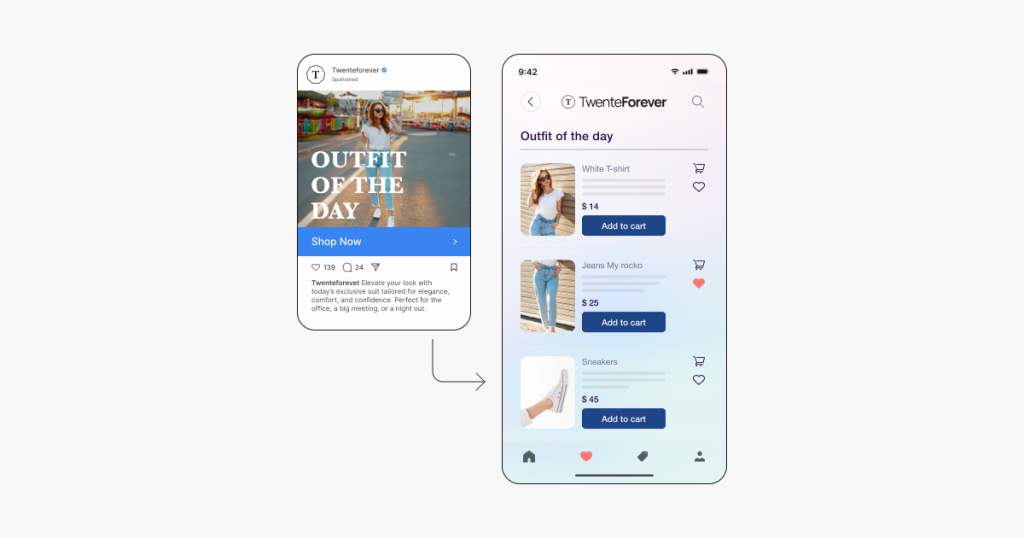
Why aren’t your Instagram links working? The walled garden explained
When running campaigns on social platforms like Instagram, growth teams frequently encounter the walled garden effect. Social apps often do not support standard deep linking and actively block or break links that attempt to route customers out of the platform. This creates a significant problem for any campaign that depends on a customer moving from a social post or bio into a mobile app.
For influencer, affiliate, and social media campaigns, the impact is direct. When a customer clicks a standard link in a social post or bio, the broken flow causes them to drop off. The conversion goes unattributed, leaving brands unable to measure the performance of their influencer or social spend at any meaningful level of granularity.
AppsFlyer OneLink technology resolves this by treating it as a social-to-app journey. Rather than relying on standard links that break at the platform boundary, AppsFlyer bridges the gap using a branded smart landing page. When a customer clicks an influencer’s unique deep link, the landing page detects their platform and app install state, routing them to the intended in-app content without drop-off. The journey context is preserved and every placement, from individual creator to specific channel, is measurable.
Which type of Instagram deep linking do you need?
Type 1: deep linking to Instagram (app-to-app linking)
You want customers from other apps, websites, emails, or QR codes to land directly inside the Instagram app on your profile, a specific post, a reel, a hashtag, or the story camera. Standard Instagram URLs open in the embedded browser, not the Instagram app. A deep link with app-to-app linking capability bypasses this and opens the app directly.
Who needs this: brands running cross-channel social campaigns, influencers promoting their Instagram content from other platforms, and growth teams using email or SMS to drive Instagram engagement.
How to create a deep link to Instagram content:
Per Instagram for Developers documentation, the native URL formats are:
- Profile: https://www.instagram.com/[username]/
- Post or reel: https://www.instagram.com/p/[shortcode]/
- Hashtag: https://www.instagram.com/explore/tags/[hashtag]/
- Instagram story camera deep link on iOS: instagram://story-camera
- Instagram story camera deep link on Android: intent://story-camera#Intent;package=com.instagram.android;scheme=instagram;end
A deep linking platform converts these into Instagram app deep links that open the app directly rather than the embedded browser, and adds fallback control and click measurement on top. It handles the app-to-app linking so the link opens Instagram directly, sets a fallback destination for customers without Instagram installed, provides click insights including device type and referring app, and can shorten and brand the link for cleaner sharing.
Step-by-step: How to create a deep link for Instagram
Step 1: Copy the full URL of the Instagram content you want to link to from a web browser.
Example: https://www.instagram.com/p/C123456789/
Step 2: Paste it into your deep linking platform. The platform detects it as an Instagram URL and pre-configures iOS and Android routing automatically.
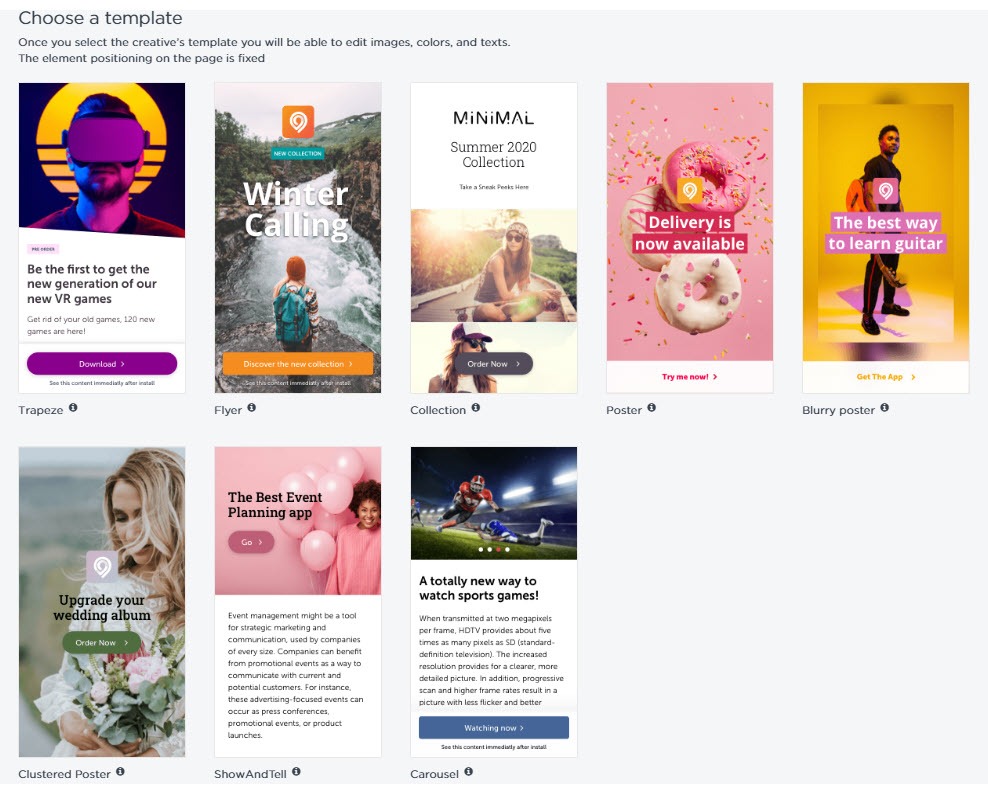
Step 3: Set your fallback URL. Decide what happens when a customer clicks but does not have Instagram installed. App Store, Play Store, the Instagram web page, or a custom landing page are all valid options.
Step 4: Brand or shorten the link for cleaner sharing across email, SMS, or other channels.
Step 5: Test on iOS with Instagram installed, on Android with Instagram installed, and on a device without Instagram to confirm fallback behavior.
Step 6: Deploy across your chosen channels: email, SMS, another social app bio, QR code, or paid ad.
A note on the Instagram story camera deep link: routing customers directly to the story camera lands them on the creation surface immediately, which is useful for UGC campaigns where you want customers to start creating content on arrival.
Type 2: deep linking from Instagram (into your own mobile app)
This is the URL shared via an Instagram bio, an influencer Stories link, or a DM that, when clicked, opens your own app directly to a specific product, offer, or onboarding screen. AppsFlyer categorizes this as a social-to-app or influencer-to-app journey. This is the primary use case for growth and performance teams running Instagram as an acquisition or re-engagement channel.
The bio link, Stories link sticker, and DMs are all high-intent placements, but a standard URL in any of them tells you nothing about what happens after the tap. You cannot see which placement drove an install, which audience converted, or whether any Instagram touchpoint contributed to a downstream purchase. Without proper instrumentation, Instagram as an acquisition or re-engagement channel is a black box regardless of how much is invested in it.
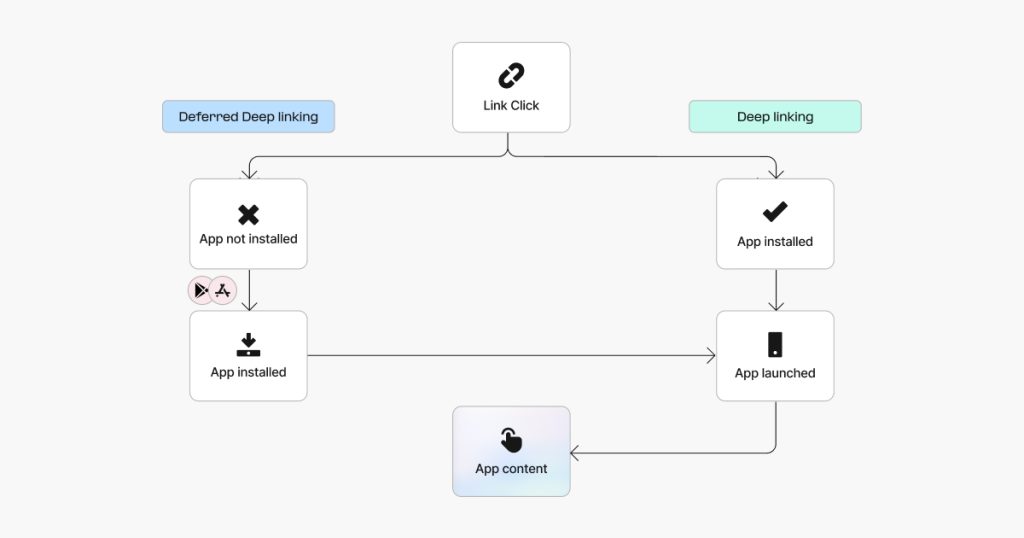
To fix the broken handoff from Instagram, AppsFlyer uses a branded smart landing page as a bridge between the tap in the social app and the final in-app destination. The landing page detects the customer’s platform and app install state, routes them to the intended in-app content without drop-off, and preserves full attribution throughout. Universal Links on Apple devices also shape how this routing behaves on iOS, making proper configuration essential. Every click, install, and downstream event is attributed back to the specific influencer or campaign that drove it. For a comparison of how this works across other channels, see how WhatsApp deep links and Facebook deep linking handle the same problem.
Instagram deep link use cases
Influencer campaigns (influencer-to-app)
Brands provide each individual influencer with a unique deep link to place in their Instagram bio, Stories, or DMs. When a customer taps the link, the branded smart landing page detects their platform and app install state, routing them directly to the specific product, category, or content the influencer was promoting rather than a generic home screen. This preserves the context of the campaign and gives every placement its own attribution, so teams can measure which creator and channel is actually driving installs and revenue.
Instagram bio link
The single clickable link in an Instagram bio is a permanently available, high-intent touchpoint. A properly configured instagram app deep link routes customers directly to a specific product, onboarding screen, or promotional offer in the app rather than a generic website homepage, with every click attributed back to the Instagram channel.
Instagram Stories link stickers
The link sticker in Stories is a time-limited, high-intent placement. A deep link with deferred deep linking support means customers who do not have the app installed are routed through the App Store and land at the right in-app destination on first open rather than the home screen, with every tap attributed back to the specific campaign and creator.
DM-shared links
Links shared in Instagram DMs route customers directly into the app to a specific product or offer. Without proper instrumentation, the referring context of a DM click is lost entirely and the channel contribution disappears from the measurement model. A properly configured deep link preserves that context and attributes every DM touchpoint back to the campaign that drove it.
Scaling influencer programs
One AppsFlyer ecommerce client provided customized deep links to over 1,000 influencers, generating and measuring a reach of close to 500 million customers across Instagram and YouTube. The infrastructure handled device detection and platform restrictions automatically, allowing the team to scale across creators and channels without broken links causing drop-off.
What do most guides miss about Instagram deep linking and attribution?
Most Instagram deep link guides treat this as a routing problem: get the customer to the right place. None of them asks what happens after the click, or how you connect that click to a business outcome.
For growth and performance teams, three attribution scenarios are specific to Instagram and worth understanding.
Bio link clicks: Customers who click the bio link and install the app: are these attributed to Instagram? Without a properly instrumented deep linking solution, no. The install registers as organic and the Instagram campaign receives no credit.
Stories link sticker clicks: Customers who tap the Stories link sticker and convert face the same problem. The link sticker is a high-intent placement that most brands leave completely unattributed.
DM-shared links: Links shared in Instagram DMs carry the same attribution gap. The referring context is lost without proper instrumentation, so the channel contribution disappears from your measurement model entirely.
Paid Instagram campaigns: Instagram paid campaigns follow Meta’s Self-Reporting Network (SRN) setup, not standard AppsFlyer link implementation. Deep linking in Instagram app install ads works the same way as Facebook: direct deep linking is supported for customers who already have the app, deferred deep linking requires eDDL via onConversionDataSuccess, and on iOS without AEM configured, Smart Script handles routing through the web. For the full paid setup, see the Instagram mobile app install ads configuration guide in the AppsFlyer Help Center.
AppsFlyer OneLink technology handles all three. A single link manages iOS and Android app links routing, deferred deep linking, fallback URLs, and full campaign attribution regardless of which Instagram surface the link appeared on. Bio, Stories, and DM performance can all be measured separately in the same dashboard, alongside every other channel in your attribution model.
Why use AppsFlyer for Instagram deep linking?

For growth and performance teams running Instagram across paid and organic, Stories and bio, iOS and Android, managing deep link routing, fallback handling, deferred deep linking, and attribution manually is not sustainable.
Branded smart landing pages: Without a smart landing page in the chain, standard links from Instagram bio or Stories drop customers into a browser login page or a generic home screen. The conversion opportunity disappears before the app is even opened.
Contextual routing: Without contextual routing, a customer on iOS who does not have your app installed hits a dead end. A customer who does have it installed lands on the home screen, not the offer the influencer was promoting. AppsFlyer detects platform and install state automatically and routes each customer to the right destination through the smart landing page.
Granular influencer measurement: Without per-creator attribution, every influencer’s traffic collapses into a single Instagram source in your dashboard. You know Instagram drove installs. You do not know which creator, which post, or which campaign. AppsFlyer generates unique deep links per influencer so every placement is measured individually.
Make Instagram a measurable growth channel
Instagram is one of the highest-intent channels in mobile marketing, but only if every link routes correctly and every click is attributed. AppsFlyer connects your Instagram campaigns to your full attribution stack, so whether customers click your bio link, a Stories sticker, or a DM, you always know what drove the install and what drove the conversion.
As influencer marketing grows and privacy frameworks continue to limit visibility across social channels, the gap between brands that instrument their Instagram links correctly and those that do not will only widen. Properly structured deep links with full attribution are no longer optional for teams running Instagram at scale.
Talk to our team to see how it works for your app.
FAQ
A URL that opens the Instagram app directly to a specific profile, post, reel, hashtag, or story camera, rather than routing the customer through a browser login page or the app’s home screen.
Copy the full URL of the Instagram content from a web browser, paste it into your deep linking platform, set your fallback destination for customers without Instagram installed, brand or shorten the link, and test across iOS and Android before deploying.
On iOS: instagram://story-camera. On Android: intent://story-camera#Intent;package=com.instagram.android;scheme=instagram;end. Both route customers directly to the story creation surface rather than the feed.
Instagram’s in-app browser keeps customers inside the host app environment rather than routing them to the Instagram app. Standard links open a browser login page instead of the app, breaking engagement for brands driving traffic to Instagram and breaking affiliate attribution for influencers linking out to shopping apps.
Open the post in a web browser and copy the URL from the address bar. Instagram posts follow the format https://www.instagram.com/p/[shortcode]/. The shortcode is the unique string of characters in the post URL.
A profile deep link: https://www.instagram.com/appsflyer/. A post deep link: https://www.instagram.com/p/ABC123xyz/. Both require a deep linking platform to open the Instagram app directly rather than the Instagram embedded browser.
Not natively. Routing customers from Instagram into your own app after install requires a third-party deep linking platform. AppsFlyer OneLink technology supports deferred deep linking for Instagram campaigns out of the box, delivering customers to the intended in-app screen on first open.
Use AppsFlyer OneLink technology to connect each click to campaign and attribution data. Without it, you can see clicks occurring but cannot connect them to installs, in-app events, or downstream conversions across bio, Stories, or DM placements.