
500 Million Streams a Month: Scaling PBS's Digital Impact
500 Million Streams a Month: Scaling PBS's Digital Impact
Featuring

Episode summary
What if the app you grew up watching PBS on is actually one of the most sophisticated digital platforms in media — serving 400 to 500 million streams a month on a fraction of the budget of its competitors? Ira Rubenstein, Chief Digital and Marketing Officer at PBS, pulls back the curtain on how a 50-year-old public media institution is navigating the AI era, fighting for its financial future, and rethinking what it means to reach audiences in a world where the app itself might soon disappear. In this episode, Ira explores how PBS built a federated digital infrastructure serving 300 local stations, pioneered frictionless giving with a 12% conversion rate, and is using generative AI to make content discovery smarter. He also gets candid about what terrifies him as a marketer and what excites him as a technologist.
This is a conversation about leading transformation inside a mission-driven organization, building for scale without losing the local, and why the future of public media might depend on getting the right content to the right person at the right moment — before someone else’s AI does it first.
Key highlights
On AI replacing the app entirely:
“This whole notion of an app, I can see a possibility where that goes away and now you’re just having conversations with your Gemini-powered television on what you might want to watch.”
On the marketer’s paradox with AI:
“As a marketer, that terrifies me, but also it excites me as a technology person of like, Okay, how can we leverage this more and bring our content more?”
On PBS being an underestimated digital giant:
“I do feel like we’re the biggest digital secret, we’re really a digital powerhouse. No different than anyone else, just on a much, much smaller budget.”
On the power of frictionless giving:
“The conversion rate when someone hits that donate page is 12%, and anyone who knows anything about e-commerce knows that 12% you would kill for.”
On leading transformation inside a complex organization:
“You have to be tenacious. You’re going to get ‘no’ a lot. You just have to keep pushing in a way where you can have small wins and demonstrate what you’re doing is actually helping and bring the data to back that up.”
Episode Timestamps:
* 00:36 Meet Ira Rubenstein — the man turning a 50-year-old broadcaster into a digital powerhouse
* 01:54 The defunding of public media and why PBS isn’t going anywhere
* 03:07 PBS’s best-kept secret: 400–500 million streams a month
* 05:06 Building a digital strategy from scratch, consumer-first at scale
* 06:37 Using AWS, Bedrock, and gen AI to power content discovery across * 300 stations
* 08:42 One Click giving: the 12% conversion rate that e-commerce would envy
* 11:14 Growing the brand in a fragmented media landscape
* 13:42 Accessibility as a core value: deaf advocacy and ASL on kids’ shows
* 15:47 What’s next: AI, tenacity, and advice for enterprise transformation leaders
Transcript
[00:00:00] Ira Rubenstein: This whole notion of an app, I can see a possibility where that goes away, and now you’re just having conversations with your Gemini-powered television on what you might wanna watch, and it’s going out to the apps for you with their agents and pulling based on what you have access to. And so as a marketer, that terrifies me, but also it excites me as a technology person of like, okay, how can we leverage this more and bring our content more?
[00:00:36] Brian Quinn: Welcome to Home Screen Advantage, where we showcase how omni-channel business leaders turn their mobile apps into measurable growth levers for their business. I’m Brian Quinn, president and general manager at AppsFlyer. Today, I sit down with Ira Rubenstein from PBS. Ira is the chief digital and marketing officer.
[00:00:57] Brian Quinn: We’re gonna discuss how he transformed a flip phone brand in an iPhone era to a real digital powerhouse. You think PBS is a legacy broadcaster solely reliant upon government funds? Well, you’re missing one of media’s biggest digital success stories. With five hundred million streams per month and a twelve percent conversion rate on their digital donation engine, Ira’s going to explain to us how they turned a fifty-year-old brand, modernized without losing its identity, his approach to staying ahead on AI without distracting his core team, and why trust is the most scalable growth metric there is.
[00:01:39] Brian Quinn: How are you, Ira?
[00:01:40] Ira Rubenstein: I’m good. Thank you.
[00:01:43] Brian Quinn: So let’s dive right in. Maybe you can explain a little bit about what you’re working on these days, elaborate a little bit on your role and anything that’s sort of top of mind for you at the moment.
[00:01:54] Ira Rubenstein: I’m sure people are aware of the defunding of public media. There is definitely some financial impacts across the system and across our local stations, but as a whole, PBS is here.
[00:02:07] Ira Rubenstein: So what do I do at PBS? So I oversee distribution and marketing for PBS. So on the distribution side, that’s all of our products, our apps, the website. It also includes our broadcast operations and all that technology, as well as our distribution for our local stations, our business intelligence team, creative brand, and marketing roles.
[00:02:36] Brian Quinn: I think, you know, one of the things that surprised me when I got to learn the business years back was the powerhouse that you are from a… You know, it’s almost like a digital secret, right? You know, I think a lot of people might think about PBS in traditional broadcast on our living room TV, but, but you’re streaming something like 400 million videos a month across lots and lots of different networks.
[00:03:01] Brian Quinn: So can you elaborate a little bit on the size and the scale of, of the program you’re running?
[00:03:07] Ira Rubenstein: I do feel like we’re the biggest digital secret, and I think part of that is a reflection of the brand because they think of PBS as this traditional broadcast entity. And in fact, we’re really a digital powerhouse, no different than anyone else, just on a much, much smaller budget.
[00:03:26] Ira Rubenstein: So we do anywhere from 400 to 500 million streams a month. We have about, I wanna say it’s- So four or five million members of Passport signed up, and Passport is a member benefit, so if you donate to your local stations, you get access to a very broad depth library of PBS content. We have… And there we have over a million active monthly users.
[00:03:54] Ira Rubenstein: And the platforms we’re on, we’re on all of them. So Roku, Apple, Android. We’re on connected TVs like Samsung, Vizio. We’re on the Comcast Xfinity box. And we’re not there just with one app, we’re actually there with two apps. So we have the general audience app, which has the older adult content, and then we have our kids app, which is designed and built specifically for kids in how the UX and the navigation work.
[00:04:27] Ira Rubenstein: They don’t see a lot of written words. It’s a lot of graphics.
[00:04:30] Brian Quinn: Mm-hmm.
[00:04:31] Ira Rubenstein: And a very, very dedicated group on that, and it’s quite a large audience.
[00:04:38] Brian Quinn: Take us back, Ira, to the beginning. You know, PBS has been around for a while. You’ve had a good run there. Take us back to sort of the beginning of this digital program and, you know, sort of y- w- was there a specific decision or, or project that took off that sort of grew organically?
[00:04:57] Brian Quinn: Or was this a very intentional strategy of becoming this l- you know, large in terms of scale? C- can you give us some insight there?
[00:05:06] Ira Rubenstein: PBS had been innovative. I, I wanna give them credit. There was a lot of little experiments here and there. It needed a more focus And kind of strategic direction. So part of what I, I, I tried to do and bring was, okay, how can we make our products more consumer-friendly and consumer-first?
[00:05:30] Ira Rubenstein: How can we build products at scale to serve the system? And we have some very complex technical requirements that we have to only build in-house.
[00:05:42] Brian Quinn: And, and tell me how, y- you know, you, you manage that level of complexity, right? I mean, I… providing a, a, a, an, an experience across multiple apps on all these different platforms, like you said, your own, where your customers are supporting, you know, 300 or so local stations, it, it seems like a lot of complexity.
[00:06:05] Brian Quinn: Give us some insight into how you manage that level of complexity.
[00:06:09] Ira Rubenstein: So what we have built on our backend is the ability for local stations to upload their local shows into a media manager that then we can put out onto the app that is customized to each local station. Gotcha. And each local station has the ability to customize one of the carousel pieces, one of the, and one of the lines to kind of curate some of their local content.
[00:06:37] Ira Rubenstein: We’re also, of course, you know, working with state-of-the-art recommendation engine. We did a project with AWS and Bedrock to power that recommendation engine. We just did another project with the AWS AI Innovation Lab, where we’re using, uh, gen AI to do metadata tagging of all this content that’s coming in ’cause you can imagine trying to think of all these stations doing their own metadata tagging, nothing’s gonna be consistent.
[00:07:04] Brian Quinn: Right.
[00:07:05] Ira Rubenstein: But if you have this AI agent, one, it can populate more fields than a human can, and that then in turn makes the recommendation engine more robust, and that engages consumers to watch more, and that’s what all of our numbers show. Our numbers keep going up
[00:07:22] Brian Quinn: E- elaborate a little bit more if you could around sort of the data and the technology that you’ve employed to sort of shift towards this, you know, digital transformation, complex digital, you know, environment that you’re operating in.
[00:07:35] Brian Quinn: Like, it- it, can you, can you give us a sense of how that evolved over time?
[00:07:39] Ira Rubenstein: We have a, a general data dashboard for stations on the Domo platform, which is probably people know. Again, each station gets access only to their data. Part of our complexity, we’re not just doing one, we’re doing 300. When you’re talking about AI and you’re talking about data, you’re starting to talk about having conversations with your data.
[00:08:02] Brian Quinn: Mm-hmm.
[00:08:03] Ira Rubenstein: And the GenAI spinning things back so you can ask complex questions without ne- the need of going to an analyst or, or a SQL programmer or anything, and getting those answers back. And so we’re getting set up for that. We’re not quite there yet.
[00:08:19] Brian Quinn: Yeah.
[00:08:20] Ira Rubenstein: But the tools that I’m seeing and things that I’m seeing out there, I think we’re very close to that.
[00:08:27] Brian Quinn: I, I wanted to ask you a little bit about how you apply that innovation to fundraising, right? You- you’re, you’re, you’re a nonprofit organization. You get donations from, from members. So maybe explain a little bit about how you fundraise and how the innovation and the technology you apply to that part of the business.
[00:08:42] Ira Rubenstein: Our fundraising’s all handled at the local station level, and so that’s been tra- the traditional way. What we try to do is on these digital platforms, how can we make it easier for them? And so, you know, one of the ways we’ve innovated in that area is a tool and technology that we built out that I call One Click or frictionless giving.
[00:09:10] Ira Rubenstein: So the concept was the app is on, say, Amazon Fire. Well, we know that Amazon has your credit card. Trying to make it easy for someone to donate via the app through their, on their credit card is what we power with called One Click.
[00:09:30] Brian Quinn: Mm-hmm.
[00:09:30] Ira Rubenstein: And so again, being as complicated as we are, the money has to go directly to the station.
[00:09:38] Brian Quinn: Mm-hmm.
[00:09:39] Ira Rubenstein: And the station has to get the data of who gave it to them, their contact information, e- et cetera, so they can roll them into their CRMs and their membership profile. And you can imagine some of these stations, there’s lots of different CRMs out there.
[00:09:55] Brian Quinn: Mm-hmm.
[00:09:56] Ira Rubenstein: And we built this, so we have it now up and running on Amazon Fire, the Xfinity platform, and also on Android.
[00:10:05] Ira Rubenstein: And I know that the conversion rate when someone hits that donate page is 12%, and anyone who knows anything about e-commerce knows that 12% you would kill for.
[00:10:19] Brian Quinn: That’s very high.
[00:10:20] Ira Rubenstein: I’m really optimistic that as we can continue to roll that out, as we can continue to get more sophisticated with our AI messaging on those platforms to get the right message to the right person at the right time and really personalize it, that there’s a future for fundraising for local stations at scale, but the money still goes to that local station and the data still goes to that local station.
[00:10:47] Brian Quinn: L- let, let’s shift the discussion a little bit more because you’re also chief marketing officer, right? You’re, you’re running growth, you’re running brand performance, you’re, you’re trying to grow, grow the business and, and grow the monthly active users and whatnot. Tell me a little bit about, you know, how, how you, how you approach this.
[00:11:05] Brian Quinn: What’s most important to you? What’s, what’s sort of top of mind when you think about measuring your, your team’s work, measuring the outcome for the business?
[00:11:14] Ira Rubenstein: YouTube being the largest platform, you wanna, you wanna be there. The challenge for us with all that is how do I tie that back to the local station?
[00:11:25] Ira Rubenstein: And that’s where the branding work comes in, because in today’s day and age, if you’re under 30, you cannot name a call sign of your station. It’s just that’s not how you were raised. You were raised on PBS Kids.
[00:11:39] Brian Quinn: Right.
[00:11:40] Ira Rubenstein: And you were probably raised on the, on the website and things like that. There’s about 80% of the system now that has some kind of co-brand.
[00:11:50] Ira Rubenstein: That is part of growing that audience so people can recognize who’s providing this content, how is it tied to PBS, a brand, as you mentioned, there’s such great love for and loyalty to, and then how does that translate to support?
[00:12:07] Brian Quinn: Is there a challenge with alignment along those lines within the organization?
[00:12:11] Brian Quinn: I mean, it seems like there could be conflict between sort of mission-driven impact goals and then harder digital growth KPIs.
[00:12:20] Ira Rubenstein: We have to Encourage our local stations to also embrace these digital platforms, make local content that they can put up on these other platforms as well as our platforms.
[00:12:34] Brian Quinn: Mm-hmm.
[00:12:34] Ira Rubenstein: And think about their audiences beyond just broadcast.
[00:12:38] Brian Quinn: Mm-hmm.
[00:12:38] Ira Rubenstein: And so, you know, I do it through a lot of sharing of data. I do it through a lot of sharing of trends that I’m seeing. I try to bring in outside speakers to our national convention to kind of have people understand how things are kind of evolving in real time.
[00:13:01] Ira Rubenstein: But it is very challenging if you’re a, a local broadcaster right now, as all local broadcasters are trying to wrestle with that.
[00:13:10] Brian Quinn: I wanna ask you one other question sort of around, you know, relating to the sort of mission-driven impact that you have. Accessibility of your content, of your services is, is really vital to you.
[00:13:24] Brian Quinn: On a personal level, you, you shared, you know, that you’re a real big advocate for hearing loss accessibility. From a business standpoint, you know, PBS is doing some really interesting things to make sure that the, the, the digital experience is very accessible. So I would love you to comment on this.
[00:13:42] Ira Rubenstein: I appreciate you bringing that up.
[00:13:43] Ira Rubenstein: I am a strong advocate for hearing loss. I am deaf with cochlear implants. What I have found is that by me speaking up and making people aware when I go to conferences and things that, you know, one in five Americans have some degree of hearing loss, and having captions available in the room is important.
[00:14:11] Ira Rubenstein: Having the ability, if you can put in a, a hearing loop or having people be able to tie in is important. Now, at PBS, of course, as you mentioned, we’re the pioneer of closed captioning for television. Of course, we have closed captioning everything. But what we’ve also done recently is we’ve now done American Sign Language on our kids’ shows.
[00:14:32] Ira Rubenstein: So as children with hearing loss learning to sign, by able to watching someone as the show is going, and it’s not just tucked in a corner with a little box, it’s actually dynamic there. We’ve gotten a lot of great feedback and h- and it’s helping people learn ASL.
[00:14:54] Brian Quinn: That’s really great. Listen, we- we’re, we’re, we’re wrapping up here in a minute.
[00:14:58] Brian Quinn: I, I wanted to pose a couple of last questions to you. One question I have is, what are you most excited for next? And the second question I’ll just ask them at the same time is, it’s… Many of our listeners are, are enterprise leaders, and they’re trying to transform legacy brands, companies that have been around a long time to compete with, with, with newer, agile startup industries.
[00:15:25] Brian Quinn: You- Yeah … seem to be doing this very well and, and maybe as a surprise to a lot of folks. So in addition to what you’re excited about, I’d love you to just leave us with some wisdom of what can other enterprise leaders do, and how can they think to sort of achieve some of the successes that you guys have and, and, and, you know, plan to continue to have?
[00:15:47] Ira Rubenstein: Honestly, I know this sound- this is gonna sound cliché, but I’m super excited about AI. What it reminds me of is it reminds me of the early days of the web. It’s gonna transform how people discover content. This whole notion of an app, I can see a possibility where that goes away and now you’re just having conversations with your Gemini-powered television on what you might wanna watch, and it’s going out to the apps for you with their agents and pulling based on what you have access to.
[00:16:21] Ira Rubenstein: And so as a marketer, that terrifies me, but also it excites me as a technology person of like, okay, how can we leverage this more and bring our content more? You know, my advice is for anyone leading or trying to lead transformation, one, you have to be tenacious. You’re gonna get “no” a lot, and you just have to keep pushing and pushing in a way where you can have small wins and demonstrate what you’re doing is actually helping and bring the data to back that up.
[00:16:57] Brian Quinn: I wanna thank you very much. It’s been an awesome conversation. I could keep talking to you for hours, but we gotta wrap it here. So I appreciate your time, and I wanna thank the audience for listening and watching another episode of AppsFlyer’s Home Screen Advantage.
[00:17:13] Ira Rubenstein: Thank you for having me, Brian.
[00:17:15] Producer: Home Screen Advantage is brought to you by AppsFlyer, the modern marketing cloud for mobile-led omni-channel growth. AppsFlyer unifies performance across paid media, owned channels, and in-store experiences, helping you understand and optimize which campaign investments drive real revenue. See beyond attribution to understand customer lifetime value, optimize journeys from discovery to loyalty, and prove mobile’s growing impact on your entire business. When every touchpoint connects to your app, you transform fragmented data into confident decisions. AppsFlyer gives you the clarity to accelerate growth. Learn more at appsflyer.com.
Meet our host
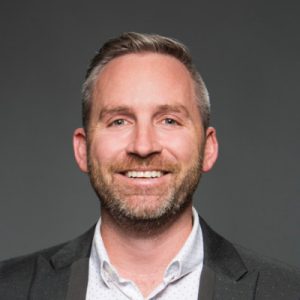
As President, Brian helps shape AppsFlyer’s global strategy, corporate development, partnerships, and market positioning. He also serves as part of the company’s global executive leadership team – connecting regional execution with global strategy.
Explore more resources
Uncover AppFlyer’s wealth of expertise and in-depth resources, to empower your growth and success in today’s dynamic market.


