
Alignment Is a Lie: How High-Performing Leadership Teams Are Actually Built
From Startup Operator to Climate Investor: Djoann Fal on Funding the Technologies That Actually Move the Needle
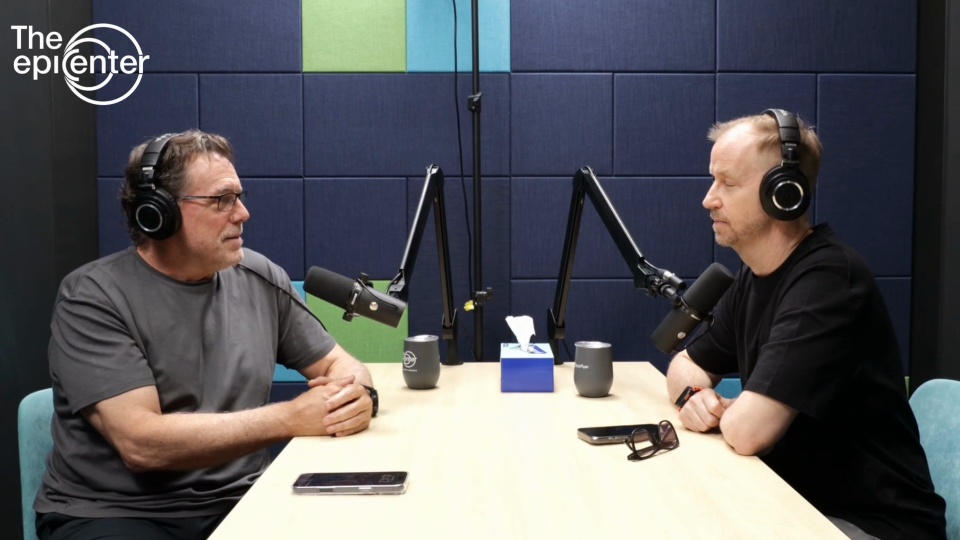
Bill Randal
0:00
0:00
Featuring

Bill Randall
Senior Partner, Korn Ferry

Episode summary
Most leadership problems don’t start with bad strategy or wrong hires. Bill Randall, Senior Partner at Korn Ferry with decades of experience coaching CEOs and executive teams, opens with a provocation: alignment is a lie. Not because the word is useless, but because most leaders misuse it. They confuse agreement with alignment, call a head nod in a room full of nodding heads “aligned,” and then wonder why execution falls apart. Real alignment, Bill argues, is healthy disagreement around a shared set of outcomes — and it only works when teams have built the trust to actually have those debates.
The conversation goes deep on what breaks that trust quietly: a missed budget promise, an avoided conversation, a leader who thinks their team is clear on the priorities when really that clarity only exists in their own head. Bill walks through two practical frameworks — the building blocks of trust (capability, intent, intimacy, integrity) and what he calls the maintenance cycle, the automatic behavior that keeps people avoiding hard conversations to stay safe. Until a team can interrupt that cycle, they will keep producing the illusion of alignment rather than the real thing.
The second half covers performance — specifically how results are always lagging indicators, and how great teams focus on the quality of their decisions rather than the end-of-quarter number. Bill also shares what he learned at Amazon about building repeatable, scalable processes through disciplined experimentation, and how leaders set the cultural ceiling for whether teams thrive or just survive.
Key highlights
On what alignment actually means:
“Alignment is healthy disagreement and a little bit of chaos around a common set of goals. It is not agreement. The moment we confuse alignment with agreement, that’s where we get into trouble.”
On the purpose behind the work:
On why performance falls off quietly:
Episode Timestamps:
*(00:00): What alignment actually means — and why it’s not agreement
*(04:07): The alignment test: ask your team to write down the top 3 priorities and see what happens
*(07:00): Building trust before you can build alignment
*(08:30): The four building blocks of trust: capability, intent, intimacy, integrity
*(11:00): The maintenance cycle — why people avoid hard conversations to stay safe
*(17:00): When performance falls off, the mirror goes up first: the leader owns the conditions
*(19:55): Performance as behavior vs. performance as outcomes — which one actually matters
*(21:15): What Bill learned at Amazon about scalable, repeatable processes and a culture that celebrates failed experiments
*(26:00): Why results are lagging indicators and what teams should be measuring instead
*(28:00): Feedback is a discipline, not a casual conversation — and most leaders are doing it wrong
*(30:00): Ego vs. confidence: where does confidence become blind?
*(41:00): Collection of leaders vs. an actual team — what’s the real difference
*(44:00): What’s not being said in your leadership team is more important than what is
*(48:00): Football, PSG, Liverpool, and what leadership transitions in sport teach us about performance dips
*(53:00): The 4 P’s framework: People, Purpose, Partnership, Process
*(57:00): Quickfire — the most direct feedback Bill’s ever given, what he’d want leaders to say about him, and the book Die With Zero
Transcript
[00:00:00]
[00:00:03]
[00:00:07] Ronen-Raw: Alignment is a lie. How high performing leadership teams are actually built today with Bill Randall? [00:00:15] Look, most leadership failures don’t start with bad strategy or weak talent. They start quietly in a small shifts in behavior, avoided conversations, and leaders believing they’re helping while they’re actually
[00:00:29] [00:00:30] getting in the way. This episode of Epicenter is a pause, a reset, a chance to look honestly at how your behavior shapes your team’s performance, especially under pressure. My guest today, oh yeah, is [00:00:45] Bill Randall, a senior partner at Korn Ferry, and he spent decades coaching, working with CEOs, founders and leadership teams at critical moments.
[00:00:56] When performance is slipping, trust is [00:01:00] strained, and of course, leaders need to change how they show up before things fall apart. If you are someone who leads people and want your team to perform at a high level, this conversation will help you see what’s really happening, what role you’re playing in it, [00:01:15] and what needs to change before the cracks become failures.
[00:01:19] Bill. Welcome to Epicenter.
[00:01:21] Bill-Raw: Ronan, what a great introduction. I,
[00:01:23] Ronen-Raw: You like
[00:01:23] that?
[00:01:23] Bill-Raw: I felt it was, I felt it was, I was, I was sitting there watching a Netflix introduction to a horror film, right? [00:01:30] So
[00:01:30] Ronen-Raw: this is gonna be a horror podcast, right? We’re gonna scare the shit out of people. That’s what we plan to do.
[00:01:35] Bill-Raw: let’s see what we can do. We’ll try our best.
[00:01:36] Ronen-Raw: So thank you for, uh, coming onto podcast.
[00:01:38] I’m really excited to have you here and, and, uh, obviously you’re, you’re someone that has been coaching leaders and, and getting [00:01:45] people, you know, to work together. But I, I just want to come out with a, a, a big question. What is alignment?
[00:01:53] Bill-Raw: Mm, the question of the day, because according to alignment is a
[00:01:55] Ronen-Raw: Alignment is a lie.
[00:01:57] Bill-Raw: Yeah. Uh, before I even get to that question first, thanks for having [00:02:00] me here. So delighted to be here, Ronan. You It’s my honor. I, I, always appreciate your insights into everything as well, so looking forward to this conversation, it’ll be a, a lively debate.
[00:02:08] So. um, What is alignment? Alignment is a lie. I, I think that frankly, most leaders, I mean [00:02:15] they, they are consistently talking about, well, here are my priorities and we need to be aligned behind these priorities, and we need to be, you know, alignment sometimes is considered we agree to things, but I mean, but frankly, that is the furthest thing from the truth, right?
[00:02:27] We, we talk about what is alignment? Alignment [00:02:30] is a, is healthy disagreement and it is a little bit of chaos that is around a common set of goals or outcomes. And it’s really what happens when we’re on our own and when we’re, you know, once we’ve, [00:02:45] once we’ve set out to the set of behaviors that we want to align to.
[00:02:49] As opposed to necessarily being in agreement that everything goes on. And so it is really, um, when I step back, are we all align behind creating the same success and the same goal that’s there? Mm-hmm. The how, the what, [00:03:00] you know, the how I should say more so than the what, the, the what is pretty
[00:03:02] Ronen-Raw: and the why, and
[00:03:03] Bill-Raw: well then, well, the why is we
[00:03:04] Ronen-Raw: we, that’s, that’s at the core,
[00:03:05] right? Well, that’s at the core. And what happens is that I, I was sharing with you a little bit earlier. I, I was just on a, um, uh, in a discussion with a leader in the region from a, a multinational [00:03:15] hotel group. And, and the, the conversation was just constantly around the priorities, the priorities, the priorities, and, and people don’t even know why those priorities are the right ones,
[00:03:24] Why did they exist?
[00:03:26] Bill-Raw: is their role within this, in this, uh, this outcome, right? And [00:03:30] so there’s a lot of work to be done before that. And so one of the things that we need to really think about is what happens, you know, before, what’s the foundational things that we need to do, how we need to be before we, uh, before we call this thing called alignment.
[00:03:42] But yeah, I think the word is fine, you know, but at the end of the day, [00:03:45] make sure that we don’t misuse the word, you know, that that alignment does not mean agreement because that’s dangerous. That’s where we could get into to some trouble, right? So
[00:03:52] Ronen-Raw: that, that it’s, it’s actually typically what happens after you say, are we aligned that
[00:03:59] [00:04:00] Really the, the, the, the work starts to get done. Right. Because a lot of times people say, are we aligned? And they ha uhhuh, and when they really don’t mean
[00:04:07] Bill-Raw: well, absolutely not the, the best way. If we talk about the, the leader’s role here, I mean, if a great test that you can run mm-hmm. I mean, ask your [00:04:15] teams, right? So, you know, one of the, one of the problems that we have as leaders, right? Mm-hmm. We think our team is clear on what’s in our head.
[00:04:21] Mm-hmm. And most of the time it’s clear in our
[00:04:23] Ronen-Raw: head. Yeah.
[00:04:24] Bill-Raw: But it is far from clear in their head. Right? So one of the greatest tests, very simple, you can go and say, right, so what are, you [00:04:30] know, what are our, you know, three clearest priorities. What are we willing to sacrifice to create success? And what will success look like?
[00:04:37] And if we put it in the customer context, what would a customer say that success looks
[00:04:41] Ronen-Raw: here? Mm-hmm.
[00:04:42] Bill-Raw: Mm-hmm. And you can ask the team that, write it down on a piece of paper and [00:04:45] let’s see how, and I, I, let’s see how aligned they really are.
[00:04:48] Ronen-Raw: how often does customer success equal team success too?
[00:04:52] Bill-Raw: Yeah, that’s a, we’d like
[00:04:53] Ronen-Raw: to
[00:04:54] Yeah.
[00:04:54] Bill-Raw: but, uh, but, but so often is that what shows up on those pieces of paper are far from, far [00:05:00] from something that’s aligned. But that’s a, a fantastic test that you can give yourself. It’s a little mechanism you can use to be able to just very quickly see where you are in that alignment and what discussions come outta that.
[00:05:08] Ronen-Raw: And is that typically like, one of the biggest challenges that you see is that when [00:05:15] trying to get alignment, you see that they’re so far apart from where the leader is and where the team is,
[00:05:21] Bill-Raw: Yes and no. I, I, I, I’d like to step back a little bit because I think you have to, you, you have to start with where can [00:05:30] we allow the disagreement? Forget about what the, the end piece is there. How can we, as a team get to.
[00:05:38] Ronen-Raw: that? Mm-hmm.
[00:05:39] Bill-Raw: And one of the things that we, we need to do is create that space in, in the space for courage to be able to [00:05:45] speak up.
[00:05:45] You just, you know, that nodding head that we all have in the room when everyone is, you know, kind of going, yeah, yeah, boss. That’s, that’s, that’s what I think. And you know, something. And then what happens is, is that, you know, most of the conversation then runs off in the hallway, or you’re down by the pantry or you’re down by the coffee machine.
[00:05:59] And that’s [00:06:00] where problems really can get, you know, begin to fester there. But, but the first thing we really want to do is have the space and the ability to have these teams, to have the courage, to have the debate. And until you can have that debate, because really good leaders, particularly leaders that are coming from a lot of times as a [00:06:15] leader, you, there’s lots of different scenarios we have.
[00:06:16] I mean, there are times that I have a team.
[00:06:18] and
[00:06:19] The, we have to pivot because there’s just a different direction the overall company or organization’s gonna go. Right? I could have an M&A situation where I have two brand new leadership teams that are coming together for the first time from completely [00:06:30] different backgrounds.
[00:06:30] I could be a team leader and I’ve had to rehire an entire set of people that are coming from all different companies and everyone is gonna be basing their view of what the right way to approach this is based on some other piece of history. Right. So, so the [00:06:45] thing I I say is that, is that, are, are we creating that space for that debate to come up where we can actually have a heartfelt mm-hmm.
[00:06:52] You know, disagreement around where we should go, how we should go, and the it is the what, the how, and the why is it all needs to [00:07:00] be, uh, be settled
[00:07:00] Ronen-Raw: what needs to happen before you can create that space.
[00:07:03] Bill-Raw: I think there’s the, the, the foundation of any of that’s gonna be a level of trust because, and, and, and understanding with each other that, you know, understanding from each other that should I. Take the stand. Should I be able [00:07:15] to communicate something that is sensitive to other people? I mean, the whole idea is we’re all stakeholders, right?
[00:07:20] We have stakeholders in different things. And then the moment that, you know, that I have, and I put out my passion about something that is meaningful to me, which may be meaningless to the person across the way, [00:07:30] you know, where, where does that space and the trust exists that I can actually say it. Just merely be able to bring it up and have that conversation, right?
[00:07:37] But that, that trust, you know, there’s always the question about where that trust comes from, right?
[00:07:42] Ronen-Raw: I, um, I had a [00:07:45] leader actually ask me about, about why people are not aligned or why they don’t, uh, um, uh, get on board. And, and I went to, well, it, it starts at the foundation and that’s trust. And then they ask, well, [00:08:00] how do I create that trust? Yeah.
[00:08:02] Bill-Raw: No, so it’s interesting. Um.
[00:08:07] Whenever I’m working with a leadership team, we have, we have quite a number of, a number of processes that, that we use to, to think about what drives trust. [00:08:15] So if I asked you right, so, and you and I have had this conversation a little bit before, why would you not trust someone, let’s say human beings by default.
[00:08:26] There’s always a little doubt in our mind. Right? Right. There’s gonna be a little bit of doubt somewhere. Right. [00:08:30] And I’ll come to, there’s a trust formula that each of us has, right? We, we either, we either build our trust formula because I believe that the core to trust is a person’s capability. Mm-hmm.
[00:08:42] They actually can, they have the [00:08:45] skillset to be able to deliver on what I would do. And when I give them that ownership to do it, it’ll, the outcome will be there. That’s one. Another one is where it is the, the, uh. The, uh, intention. Mm-hmm. I may have the positive intent to get it [00:09:00] done, and as long as I’ve given it my all, even though I don’t hit the outcome, that’s good enough for some people.
[00:09:04] Right. Part of it’s all about the personal relationship. Right. You know, the, the idea is do, do we, you know, the, the intimacy in that. Um, and another one is around, um, [00:09:15] the, the, uh, so we have the capability, the intimacy, the credibility, and then the integrity around that. Right? Do I actually do what I say I’m going to do,
[00:09:23] Ronen-Raw: But just because you’re the leader doesn’t mean that you should be trusted. Right.
[00:09:28] absolutely not. Yeah. Yeah. There, there, there, you [00:09:30] have no right to that. Yeah. But you, you have no idea what the other person’s formula is and how do you understand what’s important to them. Right. But let’s come back to why the trust isn’t there. So if I asked you right, so. We have this doubt in our mind call that a little bit of [00:09:45] resistance, just a slight bit of resistance to trusting someone else, right?
[00:09:48] Bill-Raw: And it could be driven from any one of those four things I just gave you. So then let me ask you, um, what, you know, what’s the belief that you would have around this person that might have you not trust [00:10:00] them? So you have one of your team members and you’ve gimme an example of a time that you’ve had a little gap in the trust with someone.
[00:10:06] Ronen-Raw: teammates. Um, they expected that they were gonna get, uh, some budget and, uh, that budget wasn’t, uh, delivered to them. [00:10:15] And, uh, they said like, oh, how can I trust you? If you said you were gonna deliver that budget and, and you didn’t,
[00:10:20] Bill-Raw: is that the person that’s gonna give you the budget? No. that’s me. Supposed to give that person the budget.
[00:10:25] means they don’t trust you.
[00:10:26] Ronen-Raw: Yeah, they don’t trust me.
[00:10:27] Bill-Raw: Okay, so then let’s talk about that person rather than you. Right? So then what’s [00:10:30] in their mind, right?
[00:10:30] So the belief, this belief that they have, what might I be saying about Ronan?
[00:10:35] Ronen-Raw: he, he is someone who doesn’t stand by his
[00:10:37] Bill-Raw: And not only, not only that, so I just had the experience with you. You didn’t stand by it. And probably unlike, not unlike a lot of [00:10:45] companies, how often do we go out and ask for budget? When, when are we never asking for additional
[00:10:48] Ronen-Raw: Always, always, always, always.
[00:10:50] Bill-Raw: always, always. So
[00:10:51] Ronen-Raw: open Hands
[00:10:53] Bill-Raw: on your
[00:10:53] Ronen-Raw: knees. Right? Open hands.
[00:10:55] Bill-Raw: So, so when we think about it, so I, I resist, but what is it that I’m resisting? I have this [00:11:00] belief about this person that I have formed based on what, where do I, where do I create these beliefs?
[00:11:07] Ronen-Raw: in your mind?
[00:11:07] Bill-Raw: Well, they created in my mind, but they come from somewhere I can’t.
[00:11:09] Ronen-Raw: your experiences, right?
[00:11:11] Bill-Raw: from some experience it was you just telling me, yet again, one more time in my [00:11:15] life that you promised it to me and then you said, oh, something has happened headquarters, this, or, you know, that person, that change, we’ve had to do something different, blah, blah, blah.
[00:11:24] And all of a sudden your team member is in their mind, based on a new experience, they’re able to say, you know what [00:11:30] Ronan is? I can’t rely on that guy’s budget conversation. So why am I even bothering doing that? So rather than even challenging you in that conversation, and this is a real situation that we face.
[00:11:39] Oh yeah. Do we need to, it is, is it critical for us to engage and challenge budget discussions? [00:11:45] Absolutely. If we’re not up there asking, you will never get. Right. And so at the end of the day though, what happens to me as a human being is I’ve lost that trust and automatically I avoid the conversation.
[00:11:55] Mm-hmm. I don’t go and ask you and my automatic behavior then [00:12:00] will be something else.
[00:12:02] Ronen-Raw: It’ll be resist. And,
[00:12:03] Well, I,
[00:12:03] I resist even having the conversation. Because, or I even resist pushing the conversation as far as I should be pushing it to truly have that debate because I feel, you know, that could, you know, what’s, [00:12:15] what’s the, what’s the outcome if I push it too far?
[00:12:18] outcome is that you might not get the budget or you might get the
[00:12:21] budget. But there’s something below that as well, because we’re talking about trust, which is a very personal thing. Right? And so, so if I’ve, if I feel that I’m in, I’m in danger of [00:12:30] even breaking trust the other way, then what will happen? I could say to myself, well, I might be damaging this relationship. Yeah.
[00:12:36] Bill-Raw: So what do I do automatically if anytime my brain says I could be damaging a relationship and something human beings are, you know, they’re designed to connect with each other. And so then [00:12:45] theoretically I would just avoid that altogether. So I go into resistance, right? And so all it does is it reinforces that, but my behavior.
[00:12:52] Avoiding the hard conversation. ’cause this is where we, we, we started with is where are we creating the space to have the hard conversation? Because I say to [00:13:00] myself, I have a belief if I have a hard conversation with you, if we take a top level then based on some previous experiences where the end of those conversations didn’t, at least in my view, didn’t turn out so well, automatically I say to myself, better not have those conversations.
[00:13:14] And so this [00:13:15] little circle goes around and around and around. And then that then is a, is a major impact to that trust and to the ability for these teams to be able to do that. So then you ask the question, well what do we, that foundationally, what do we have to do differently? Well, one thing is we need to [00:13:30] have a different conversation and start to create some new beliefs.
[00:13:34] One is we, as a leader, I need to start to understand what is important to that person. What is, where are they at? What’s in their mind? What are the beliefs they’re holding around this situation? And how do I, you know, create an openness and [00:13:45] a space for us to have that discussion where there’s no threat, right?
[00:13:48] And so that’s, that’s where that, that basis starts to come. And until a team can start to really, you know, understand that they can experiment with each other and have those discussions, that’s a foundational component to really [00:14:00] building a high performing team. And sometimes it gets rushed through, I think it gets rushed quickly by a lot of leaders, because what are most leaders, the number one thing that’s on their mind, oh, bottom line.
[00:14:09] Gotta gotta get the result. And, you know, what comes first? Chicken or the egg here, right?
[00:14:14] Ronen-Raw: there. Yeah. [00:14:15] The, these, you, you, you just described like two different cycles, right? What
[00:14:21] Bill-Raw: well, the, the, the first two different frameworks, right?
[00:14:23] Ronen-Raw: different frameworks.
[00:14:23] Bill-Raw: frameworks. Yeah. One is around trust or like what are, what are the, what are the building blocks of trust, right? The other [00:14:30] one is what I call the maintenance cycle. And you ask yourself, well, you know, the maintenance cycle is what drives my automatic behavior, particularly in areas where I’m uncomfortable.
[00:14:41] Mm-hmm. I’m res and when I say that, when we say resistance, yeah. [00:14:45] It’s anytime you’re uncomfortable. Yeah. Anytime. It’s a hard conversation. Anytime we’re gonna engage in something that, you know, could potentially in, you know, the, the, uh, the career limiting discussions, you know, those type of things I would call
[00:14:57] Ronen-Raw: Career title, compensation, you [00:15:00] know, like no budget. All these things that keep popping up, popping up, repeated conversations and, and people think that they happen because, you know, because you don’t wanna give it to them, but they don’t, they’re not aware of the.
[00:15:12] Other circumstances that are coming into [00:15:15] play.
[00:15:15] Bill-Raw: lots of things. Yeah. Yeah. But, but remember this is still in their, their mind has already decided
[00:15:19] Ronen-Raw: that they don’t trust you.
[00:15:20] Bill-Raw: they don’t trust you. And I can’t have this conversation because it’ll actually be more. It’ll actually end up in even a worse situation. And so our automatic, this, this maintenance cycle is the [00:15:30] automatic behavior of where do I avoid engaging or where do I avoid speaking up?
[00:15:35] Where do I avoid challenging? And we said the, the real core of alignment is great disagreement.
[00:15:42] Ronen-Raw: Great disagreement.
[00:15:43] Bill-Raw: And if you that, you know, that’s a,
[00:15:44] Ronen-Raw: I agree.
[00:15:44] Bill-Raw: [00:15:45] about I agree. So there you go. So how, how, how else can we disagree on
[00:15:47] Ronen-Raw: I don’t know. We
[00:15:48] can, you’re saying yes too much Ronan right now.
[00:15:49] really? Well, it’s not, I don’t think it’s, it, it’s my job to disagree with you in this podcast. I think it’s to like get you to keep on speaking. Right.
[00:15:57] Bill-Raw: fine. So, but uh, the only, uh, just add one [00:16:00] other thing to that because I think it’s, um. You have to understand why people do it though. And every time I go through this maintenance, this automatic behavior, at the end of the day, I didn’t break the relationship.
[00:16:13] I didn’t piss you off. I [00:16:15] didn’t end up in the career limiting discussion. So my brain tells me, bill, you were right. Great way to do that. You stayed safe, you survived one more time. And that’s what creates the survival mode. And you have to ask yourself in a [00:16:30] high performing team, are you there to survive or are you there to thrive?
[00:16:33] You know, one of the two things, whichever it is. So
[00:16:34] Ronen-Raw: five or thrive. Whoa. So I, I guess this kind of relates to, to, you know, like a, a question I had, like [00:16:45] a leader comes to you and says, bill, my team isn’t performing right. And what, what is happening more often than not on, on why that leader is seeing that and, and that they are. Is that leader seeing that it’s [00:17:00] everyone else or is it them?
[00:17:04] Bill-Raw: interesting on that because at the end of the day, most leaders that I, you kind of ask, well, where’s the core problem? Is it with the team or is it with the leader? Right. And so most leaders [00:17:15] that you engage with, um, many of them have gone, gone through and have been successful for so long in what they do.
[00:17:23] Their ability to be self-critical is really limited.
[00:17:28] Ronen-Raw: Mm-hmm.
[00:17:28] Bill-Raw: And the ones that [00:17:30] really create amazing teams. Are the ones that can pause and then hold up the mirror to themselves and say, what am I cr, what am I creating here? In an absolute, we talked about, you know, radical candor or radical ownership, radical, you know, this idea of radical ownsership Right. [00:17:45] And if I can sit there and hold that mirror up and take a hundred percent ownership around what’s there, what am I doing to create the situation that’s happening? Right. The easiest thing, we could come up with excuses after that. Mm-hmm. Yeah. And that’s [00:18:00] not, that’s not the game. The game is what is it about my behavior, my communication, my lack of communication, what I’m not willing to risk with these people or what I’m not willing to, this is, this is a me thing that at that point, so the at, at the, [00:18:15] at the beginning part of this foundationally, the, the CEO or the leader of whatever team it is, is absolute, absolutely owns.
[00:18:23] The, the call it the alignment, right? You, you are the, the or orchestrator, the architect of that alignment, and it [00:18:30] is the team that then theoretically needs to execute that. But if there’s any gap in the understanding of what those same things are that we’re talking about, that’s, that’s where things can really fall down in performance.
[00:18:40] And so we can say that, you know, if, if at the edge, if at the edge performance is, is [00:18:45] waning, and we can talk about what, what looks like per performance is an interesting thing to look at as well, what does that mean? Does that mean my team behavior? Does that mean my, my team’s outcomes, their Yeah. Do you get results.
[00:18:56] Come to that in a second. But at the end of the day, what I need to do is I need to [00:19:00] then say, you know, where, where’s the missing gap of what I haven’t done with this team? If at the edge it’s kind of falling apart a little bit, okay, we can take a look at some of the team dynamics, right? But if it’s at the, if there’s at the center, if there’s really, you know, there’s really a lack of, you know, of [00:19:15] anything, it means you never had alignments in the first place.
[00:19:16] You never centered it, and you had an architect around it. Right. But
[00:19:20] Ronen-Raw: that, so, so if I read that correctly, I mean the, the, the first action is hold a mirror to yourself before, you know, looking at why everyone else is not doing their [00:19:30] job. Yeah. I mean, you gotta make sure that first, like, what am I doing to set the conditions? For success. Yeah. Right. Have I laid it out properly?
[00:19:37] Have I started, and this goes back to what you said earlier with why, right? A lot of times we go into the how or the what, forgetting [00:19:45] that it starts with why and, and, and why people line up every morning and, and, you know, to, to, to, to go and do that job that they need to do.
[00:19:53] Bill-Raw: Yeah, I mean, let’s talk performance for a second because I mean, you, you, you mentioned that, and I, I think it’s, it’s also an interesting dilemma of a [00:20:00] word is performance the way we behave or is performance the results we create?
[00:20:04] Ronen-Raw: great question. Bill,
[00:20:05] Bill-Raw: Would you like me to answer that as well?
[00:20:06] Ronen-Raw: Sure.
[00:20:07] bill.
[00:20:08] Bill-Raw: I don’t have a perfect answer for it, but, but most leaders will look at it based on the outcomes and the results, and I come back straight [00:20:15] to what are the behaviors.
[00:20:16] Now, a lot of successful leaders, you know, they’ve had a success because they’ve had a few, you know, they have a set of behaviors that they go. But if we, if we look about what, then, if we look at what having performance fall off and [00:20:30] remember that the outcomes or the results are lagging indicators. The core thing that we would be looking at is, you know, how are we making decisions?
[00:20:38] Are we actually, you know, how are we, you know, how are we having these debates and these discussions? How do we go about [00:20:45] engaging with each other? So all of the fundamental architecture of our team, way of working, our team chart of the processes behind it. You know, if you look at great teams, you know, if, if you average teams will be chasing [00:21:00] my, my metrics, my KPI, my, my, my end of year sales, these things, great teams will be figuring out how do, how quickly can we make decisions?
[00:21:07] How do we analyze our decisions? How do we actually figure out what, you know, the, the, the, the process behind it? And when we think about sustaining and [00:21:15] maintaining that type of performance, uh, you know, I, I spent some time working for Amazon. I
[00:21:19] Ronen-Raw: Mm-hmm.
[00:21:20] Bill-Raw: Everything that we did, everything was about how do we build scaled success.
[00:21:26] Ronen-Raw: about. Mm-hmm.
[00:21:26] Bill-Raw: Nothing there. There’s nothing bespoke. You couldn’t, the [00:21:30] company was over a million people. Large, unless you could create a process to be able to scale that.
[00:21:35] Ronen-Raw: Mm-hmm.
[00:21:36] Bill-Raw: Um, that, that, that you are risking the ability to be able to have sustainable performance. Right. How do
[00:21:42] Ronen-Raw: how do you break that bound then to build that [00:21:45] process of repeatable success at that scale?
[00:21:48] Bill-Raw: I think the, the big thing was I can share just from
[00:21:51] Ronen-Raw: experience Yes.
[00:21:51] Bill-Raw: did. Right.
[00:21:52] The thing that they did so well is that whenever a, a process or someone was going to experiment or build an approach to [00:22:00] something, it was built into our operating model that every year we needed to experiment with three or four new processes that we were going to, and we were, we were absolutely ruthless around measuring the [00:22:15] outcomes of the process.
[00:22:16] Ronen-Raw: Mm-hmm. Right? So that we could see is this process working? Could it be better? Could, is it whatever that is. And these processes are not like, I’m not talking about big, systematic new SAP type of things. I’m talking about some of the simple things about maybe the way our teams work, the way we’re [00:22:30] organized, the way that we go to market, the way that we engage with customers, whatever those things are.
[00:22:33] Bill-Raw: Some of them were more humanly created. And then from there, how could they then be systematized potentially into something that would be more digitally oriented? Right? But, but nonetheless, what was never. Done was [00:22:45] you had the process, you took your experiment at it, and it didn’t work out, and you spent some money on it.
[00:22:49] It was an absolute failure. People, the only thing they ever said to you was, congratulations, I’m glad that you took the shot at that. Um, what’s next? What’s the next one you’re gonna do? that mindset was something I’d never, ever [00:23:00] seen in a company to the level that they do it there. And it is, it, it is a phenomenal, um, learning loop cycle that they have that they, they live by it.
[00:23:08] And I, I congratulate, uh, AWS and Amazon on, on that aspect of what they do. But it, it, it takes the [00:23:15] willingness of the team to sit with each other and say, you know, I trust the fact you’re gonna do, you’re certainly not gonna put a process in that you think is not gonna work. Who does that? Right? So give it a shot, make sure we have a measurement around it, and then build upon that.
[00:23:28] And then obviously, [00:23:30] designing them for that, they can be rolled out and easily replicated among different people. Right. So
[00:23:34] Ronen-Raw: This is interesting because I think like probably viewers take note, that’s actually also the same way that you need to be looking at AI and how AI [00:23:45] is, you have to break down the process. A lot of times people are like, oh, well this is what I’m trying to do, but don’t understand the steps in the process of what they’re trying to solve.
[00:23:52] Mm-hmm. And the key to that is mapping out that whole process the journey and seeing what parts [00:24:00] are repeatable that actually, like, here’s where we need AI and here’s where we need human in the loop and here’s where we really need human. Right. Yeah. So I think it, it, it’s interesting. I saw it was like a little bit of a segue because it it’s for, for me and, and, and I think for everybody it’s important to [00:24:15] understand like, we’re facing a new way of solving.
[00:24:18] Right. And while in Amazon you still solved with like technology and, and, and things like that. The way that technology is used today to solve is, is very much different than. It was before because it’s so much more capable.
[00:24:29] Bill-Raw: For [00:24:30] sure. But what, what I think, and I love the topic of ai, because when we look at, there are so many companies that are out there today. I mean, we’re, we’re in the human, Korn Ferry is a human capital company. I mean, we, we are there to potentially build the best teams that can execute in [00:24:45] whatever way that looks like, right?
[00:24:46] So many companies come to us and say, how can we become more productive? I mean, that’s, you know, who doesn’t, right? Right. And, you know, AI is the, the golden,
[00:24:54] Ronen-Raw: that’s the golden ticket. Golden
[00:24:55] Bill-Raw: ticket to that. Right. But the way that you described it, no one’s willing, AI [00:25:00] doesn’t magically solve your problems for you.
[00:25:02] Right? You need to put some brain power and human power behind the thought process of what is repeatable and, and scaled activity that we can do something about. AI is the thing that can actually, you know, eventually [00:25:15] become the, the solution to it. But you need the
[00:25:19] Ronens and the bills of the world to come up and say, well, what comes before that To be able to make sure that we can apply the,
[00:25:24] Ronen-Raw: Well, you need that skill to break it down. Exactly right. And, and breaking down problems or, or into, [00:25:30] and processes in, into the steps. And actually, like most people don’t know how to identify the steps.
[00:25:34] So, so that goes back to what you said, it’s like, you know, look at the processes that you have in place and challenge them, right? Yeah. See if you can build a new process Right. And, and apply that. That’s, you know, you can apply that in so many [00:25:45] different ways. And in this context is applying that process to performance and, and performance results.
[00:25:49] Bill-Raw: absolutely. And if we, you know, sticking on performance and, and performance results is when we see, when we see performance waning, it means that we probably never had a good process in the first place that [00:26:00] people could rely on to basically make sure that they’re focused on what those, how that drives the outcomes that you’re looking for.
[00:26:05] So, I mean, a lot of leadership teams are missing, you know, we know that there’s the people component.
[00:26:11] Ronen-Raw: Mm-hmm.
[00:26:12] Bill-Raw: There is the, there is the purpose [00:26:15] component. That’s what we talked about. The why we know that there is the partnership or the way that we engage that way of working just from a human side. And then there’s the process side.
[00:26:25] Those are the four real components that will drive performance in a high, you know, in a high performing team. [00:26:30] A little bit of a redundancy there, but the, the idea is we need to have a balance between all of those. And when process, you know, processes is doubled down on without any of the others ain’t gonna work.
[00:26:41] Mm-hmm. And if we don’t have any purpose in there, we’re building process for no, [00:26:45] no understanding of why. Right. So there needs to be each one of those components that are critical to the, to the formula for, for us to be able to do something like that. And then, um, you know, again, I just say that a lot of leadership teams, uh, you know, fail or they start to see performances that leaders are [00:27:00] not looking at the change in their behavior.
[00:27:02] A lot of times, you know, we, we have a great success and we said that’s the way we do it. And then what do we do is that we, we, we rely on our success and the intensity and the discipline that we had can, can wane off Right. From a behavioral point of view. And can we [00:27:15] get that feedback to ourselves? Are we still driving and engaging the same way that we did?
[00:27:19] Ronen-Raw: well, how does a leader identify that? Because there are slight changes in behavior until they’re not so slight that they become obvious. Right? Yeah. And, and those slight, those changes, um, [00:27:30] in how outcomes are achieved, how decisions are made, how people start to take ownership, and how do they stop taking ownership on things.
[00:27:38] How do you, how do you detect those early signs as a leader on when things are starting to tear at the [00:27:45] seams?
[00:27:45] Bill-Raw: Where, where are you as a leader willing to be vulnerable? Because one thing that we have as leaders, we have an ego. Right? Right. And too many of longstanding leaders and. What they’ve done. That ego is a sensitive thing to them. It’s a hard thing [00:28:00] to, to, to, to, to, to let go of for a moment. But the, the answer, believe it or not, is not as complicated as you think.
[00:28:07] It’s where can I be honest and vulnerable, and if, if I’m even not aware, where I willing to allow the people [00:28:15] around me to share, you know, proactively that, um, that what are the behavioral changes that they’re seeing Building in, like one of the things that we do at a lot of leadership teams is one of the things that, that leadership teams are horrible at is feedback.
[00:28:28] They, they, they [00:28:30] do it very, I’d say casually. It is not, it is not done in with intent or with a discipline that allows people to have the kind of data or information that will help them do it. And it comes off much more informal. Right. Ah, [00:28:45] let’s go have a drink or a beer or something like this. And, you know, and we share a couple things and it’s, and we beat around the bush a little bit and things like this.
[00:28:51] And the question to ask yourself is, as a, as a leader, if this is for everyone that’s, that, that’s in these core critical leadership roles, have you set up a mechanism, [00:29:00] like a true mechanism to be able to get into a feedback loop for yourself? And that would mean that, you know, is it a, a once a month making sure that you’re engaging?
[00:29:09] Not when we do one-on-ones, it’s not about me giving you the feedback or what it is. Maybe I need to have the one-on-one [00:29:15] where this whole thing is about you giving me the feedback and making sure that that’s the, the largest part of what we do and feedback does not need to take. The other belief is, is that people think, oh, just too much work.
[00:29:24] I mean, if I have to go with eight people and get feedback from eight people, feedback can take five minutes, it can take three minutes [00:29:30] if it’s purposeful. Mm-hmm. It does not need to be. And you can even preempt what the feedback that you’re looking for to get it even more precise. But it’s all about your, your own purpose and clarity that that’s critical to your leadership development, right?
[00:29:41] So
[00:29:43] Ronen-Raw: feedback and ego. It’s [00:29:45] kind of like two contrasting. Like, uh, positions, right? Because if you have ego, you don’t want to hear what you’re doing wrong. But if you’re receptive to feedback, it could be deemed that, you know, you don’t have an ego, but you can have both at the same time. Well,
[00:29:59] Bill-Raw: let’s [00:30:00] differentiate between ego and confidence.
[00:30:02] Ronen-Raw: Yes. Okay. Because
[00:30:03] Bill-Raw: if you ask me, you’re, you’re kind of dancing into this place. Can we have both of them? Everyone will have some level of ego somewhere. I mean, that’s just part of who we are, right? But the question is, is where does my confidence become blind?
[00:30:14] Ronen-Raw: [00:30:15] mm-hmm.
[00:30:15] Bill-Raw: And where does that confidence then just roll into the, a blind, unaware place of my behaviors are just being driven by something beyond my awareness of what’s going on around me, right? And that creating that awareness. And the other thing that leaders sometimes do is they, they’re [00:30:30] so focused on there.
[00:30:31] Their end game number that they had, they forget to look at the people around and what’s the, the climate, you know, when we talk about coaching, right. You know, one of the things is as we think about if, if I’m that great leader and I’ve, you know, and I, something happens to me and what happens with the [00:30:45] team afterwards, right?
[00:30:45] So if the team, you know, is unable to do as well and performance falls off, have you done a great job as a leader? You’re such a great leader that you did all the work to do that? Well, frankly, no. I mean, we were told, all of us know this. This is, this is 1 0 1. If, if we’re not around and our people can’t do [00:31:00] the work, that, and to create the success that we had, we’ve done something dramatically wrong as a leader.
[00:31:03] Right? And so in this context, we have to say to ourselves, you know, where, where did I make sure that I was aware? Of the people around me and, um, and, and understanding what, what was going on beyond [00:31:15] the end number outcome, right? So while we want to look at outcomes, we wanna look at the results, but the predecessor to results is great operations, great discipline, great.
[00:31:22] These, those create the result that you’re looking for, right? So, but this too often is we skip over that and we start to chase the end game before we start to figure out the middle.[00:31:30]
[00:31:30] Ronen-Raw: so, so basically what you’re saying is that the process. Eachs outcome all the time.
[00:31:37] Bill-Raw: Oh, I would, I would say yes,
[00:31:41] Ronen-Raw: Okay.
[00:31:41] Bill-Raw: that Because I, I would say process, process [00:31:45] people and the, the four P’s that I gave you before, great people, clear purpose, clear partnership, clear, uh, process. Mm-hmm. If I have those in place, then the, the outcome is, you know, I can [00:32:00] define what it is, but my, my end game is focused on these four things.
[00:32:04] These will drive that. So if I’m just looking, you know, if I’m, let me ask you what, what would create better results? What, what would create a higher performing team? A team that reviews their, their, [00:32:15] their results at the end of the month, their outcomes that they have at the end of the month as a, as a monthly review of outcomes, or a team that reviews weekly how they’re making decisions.
[00:32:23] Ronen-Raw: I think the team that reviews weekly, how they make decisions.
[00:32:25] Bill-Raw: Because I’m able to, there’s no question to that, but, but again, we fall [00:32:30] into, we fall into the, the urgent reliance and need on how are my bosses and everyone gonna be looking at me because my number doesn’t hit what the number’s supposed to be. You know, what’s that last $2 million I need to get in, in a, in a thing before the end of the year? Mm-hmm.
[00:32:44] Ronen-Raw: You, you sort of [00:32:45] earlier about results being a lagging indicator. Um, how do we, if it’s a lagging indicator and you’re performing really well, then [00:33:00] how do you know that’s lagging? Because essentially, like if, if you’re get, so maybe you don’t know how you’re doing it, but you’re getting the results, right. Would that be lagging or would that be leading [00:33:15] because you’re still getting the results?
[00:33:17] Bill-Raw: It’s interesting because I, I would argue to say it’s still lagging because if I had, good, so think about it. It’s like anything, you know, you know, garbage in, garbage out, right? Mm-hmm. So if we are, our results [00:33:30] are the outcomes of the work that we’ve done here, and we will have a good result.
[00:33:34] And then it’s kind of like, it’s kinda like inflation, right? Inflation doesn’t happen to come up or come down in one day. It happens because of the policies or the processes or whatever it was that happened over the previous [00:33:45] mm-hmm. in terms of, you know, monetary supply debt or whatever, whatever the decisions that are made here will create that.
[00:33:50] And so I would still say that a great result is still a lagging indicator of, you know, uh, and let’s take ownership of this. And rather we could say there was a windfall because [00:34:00] of a, an external activity or an external event that created that. Very possible, totally possible. But in pure leadership and the mindset, I do not want to go there because that puts me into a lax position.
[00:34:12] And all of a sudden I can expect those kind of things to happen in the future. [00:34:15] But the work that I did to create the process, the discipline, the capability, the, the way that we engage the trust, the, the, that that lead those leadership disciplines is what will have created that positive result. And it’s only, it’s, and this is where the danger [00:34:30] is, is that we’re not gonna know.
[00:34:32] Because that lagging indicator, the results are the lagging. We won’t know, sadly, until it happens. Right? Right? And so the challenge to leaders is, is to keep your eyes open and not to allow it happen. And that’s again, where I come to, you know, who’s responsible there, who owns that [00:34:45] leaders or the team members.
[00:34:46] And remember, you know, as conversation, like, you know, your team members, when we think about what happens to them, we get aligned. We talked about alignment, right? We, we’ve had our discussions and disagreements and we we’re going, and then all of a sudden, what does, what does some of [00:35:00] the core behavior changes go to?
[00:35:01] We, we become less curious. Mm-hmm. We, we become reliant on, you know, we just reliant on status quo. Mm-hmm. We’re not willing to challenge meetings become too fast and too productive. Do you know what I mean? These are some of the, the core, the tangible little things. Look at your [00:35:15] meetings if you are in and outta meetings and you’re feeling that, you know?
[00:35:17] Yep. Great. We’ve, we’ve kind of aligned and we’re all good. And, you know, five minutes later we’re, we’re out the door. Maybe something’s wrong. Maybe something’s not right because you’re not having the kind of discussions that need to be had to make sure that you’re still challenging, you’re still dis [00:35:30] and doing that.
[00:35:31] Uh, the one downs, what do you notice some of them doing? Right? They sometimes then go into, um, they go into, let me protect my team mode. Mm-hmm. As opposed to, let me cha, am I really as a leader making the hard choices? [00:35:45] You know, this, this is something that gets missing as well. Are we, do we notice that we’re not having to make a hard choice, a trade off?
[00:35:52] If, if it becomes too easy? Mm-hmm. We are then potentially in a mode where somewhere moving forward we might see some fall off in performance. [00:36:00] The one downs are they unwilling to make those hard decisions with their team and they go into defense mode. And rather than, than being, you know, the challenging the system, challenging their teams and that, are they into a survival mode of just kind of chasing the number?
[00:36:14] Ronen-Raw: Right.
[00:36:14] Bill-Raw: opposed [00:36:15] to making those hard decisions and those hard trade offs. So those are kind of real signals of behaviors that you would see, uh, in those lagging. So I would still absolutely argue to say that your, your results are a lagging indicator.
[00:36:26] Ronen-Raw: And, and what you described, uh, as, is that the, the [00:36:30] so-called, uh, victim mode or is that something else?
[00:36:32] Bill-Raw: Uh, it can be. It, it’s, it’s sometimes people the be being in, as in an organization, when we’re kind of in the, the, the mindset of a victim. There’s, there’s a little of blame going on. There’s [00:36:45] a little bit of, there’s a little, remember, it’s, it’s, it’s whenever I’m having a negative feeling that’s going on there, there’s gonna be something.
[00:36:50] ’cause I’m, my brain is telling me if I’m feeling frustrated, I’m feeling, I’m feeling angry, I’m feeling disappointed in my leader, I’m feeling disappointed in the company. [00:37:00] That all is that victim mindset. The idea of. The idea of can a one down leader be just protecting their team and feel okay with it?
[00:37:08] That’s fine. They’re not necessarily in a victim mindset, but they’re not necessarily in the best space of where they’re, where they’re operating with the best [00:37:15] challenge. They may be a little bit in the automatic avoidance component, but they may be unaware of it. Mm-hmm. And, and this is, a lot of this has to do with self-awareness, right?
[00:37:24] And how do we, and that’s where feedback becomes so critical, not only between leaders in the one downs, but the people around and, and [00:37:30] creating that dynamic and that, that feedback loop of, um, that, that learning loop of feedback. But, uh, the victim mode is one where, um, really I am in the blame game and I’m pointing fingers.
[00:37:40] And if we rewind to the beginning of our conversation, we talked about, you know, um, [00:37:45] radical ownership, right? How do I, how can I, in any moment in time. Same way. I challenge the leader to look around what’s the impact they’re having on their team. If we have the one downs, right, this is my team, where can they hold the mirror up to see what’s [00:38:00] the impact that they’re having on the culture and the conversation and the, uh, and the performance of their own teams as well.
[00:38:04] And that then becomes that, that shift from a victim mentality where I’m blaming the company for what they didn’t do, didn’t get the budget. Mm-hmm. Ronan, you didn’t gimme the budget again,
[00:38:13] Ronen-Raw: Sorry.
[00:38:13] Bill-Raw: No money. But [00:38:15] let me go down and have a conversation with my team and it’s a neutral conversation.
[00:38:18] And to be able to say, let, but let me get honest with the team, you know, and let me be transparent enough. We can’t tell everyone everything. I’m not a believer in that. I’m not a believer. There’s, there’s, remember the, I, you know, I can’t remember the guy that wrote the book on Radical [00:38:30] Candor.
[00:38:30] Ronen-Raw: guy I know the book. I don’t know the author.
[00:38:32] Bill-Raw: Yeah. I don’t know. Do I don’t know. Do you, what do you think of it? What, what’s your, what’s your feeling on radical candor? 100% of everything is shared with 100% of the people.
[00:38:41] Ronen-Raw: well, I I there’s that famous saying, uh, that you’re on a need to know basis and that you [00:38:45] don’t need to know. Right. So, I mean, I think that, I think if you communicate there, there some level of detail that you really don’t need to go into, maybe it’s, it’s not really important, you know, like going into, well, because this person [00:39:00] took that budget and then, then we didn’t end up with it, right?
[00:39:02] Mm-hmm. But actually, like we, we didn’t get the budget. We tried for it, we represented and, and the outcome is that it wasn’t approved. And I think that that much is okay. Yeah. Right.
[00:39:12] Bill-Raw: What I find in, in leaders and uh, there, there’s, [00:39:15] I was with a, I was with an organization not too long ago, and they had a, they had a, a team meeting and then the, there’s a lot of changes going on in the company. Mm-hmm. Right? A lot of changes. And, uh, they had some of the people from headquarters come in.
[00:39:26] Right. And so, but, and the team is wondering the, you [00:39:30] know, it’s, it’s basically these changes are just getting flushed down into the, to the lower levels. And they’re being told. These are the changes. And when we talk about radical candor, I, I’m not saying that we, it’s only on need to know, but what leaders sometimes forget is they think that these teams know enough to even understand the why, [00:39:45] but they’re not even being told the why.
[00:39:46] So there’s a, a level and amount of information that is absolutely required by leadership to make sure that the team understands. And so, and so when, you know, merely having an open and honest discussion. Now, was the leader sitting there going through every little financial [00:40:00] detail of why that, no, of course not.
[00:40:01] But was there enough to give the team that they felt confident enough to understand, okay, I get it right. And as a leader, that’s in our judgment then to say, okay, you know, how far do we go with radical candor? How far do we go with that? That level of [00:40:15] communication. But I think most leaders tend to, um, fail on the conservative side.
[00:40:20] Of what they share with their teams and a, a taking a little bit more of a risk and trust with your teams. And I think that also helps build trust. And hopefully we’ve got mature enough, we’ve [00:40:30] brought in the right kind of leaders that are mature enough and build that, that open con dialogue that we can be mature enough to build, able to deal with, you know, the, the, the corporate stuff.
[00:40:39] You know, the corporate, you know, we all, I, I, I love it. You know, every company has its shit. Every company does, you know, and anyone thinks [00:40:45] Oh yes, like, then you’re, then you’re in a la la land, right? Then go, go, go, go watch the movies. Go go to Hollywood.
[00:40:50] Ronen-Raw: that’s true. Go to Hollywood if it still exists. Um, you, you mentioned teams a few times. Yeah. What’s the difference between a collection [00:41:00] of leaders and actually a team? Because the. For me, it could, there’s some difference there, right? Sometimes you think that’s a team, but really it’s a collection of leaders and sometimes like, yeah, really it’s a team.
[00:41:13] These are the people that see each [00:41:15] other every day and, and, and go to bat, you know, every day for like, is there a distinction in, in, when you call a team, a team?
[00:41:21] Bill-Raw: I, I would, I mean, for me, because I think there’s nothing wrong, there’s no right or wrong between those two. It just depends on what your, your objective is and what you’re [00:41:30] looking to create. And what is the purpose of that collection of leaders? Is it, is it a, a decision making body?
[00:41:35] Is it a it is a, uh, an information gathering so that we can have better information to be able to make better decisions? There’s nothing, you know, and we, the, the world today, there’s, I [00:41:45] mean, the matrix organization today is, is a given. I mean, I, there’s very few organizations that are completely functionally driven, especially when we’re talking about global companies.
[00:41:56] I mean, that, that doesn’t, you know, that doesn’t work in that world. Um, [00:42:00] and so it’s, it goes back to the number one thing around purpose. You know, when we talked at the very beginning around what’s, what’s our purpose of, of this team? It’s okay for me to say that we are a collection of leaders and what is the purpose of when we do meet?
[00:42:13] What is the outcome of that? If you want to [00:42:15] use the word team, that’s okay, but define what it means to you. Right. In my world, if I, if I ask, I often ask leadership teams, and this is a great question to ask, ask your, ask your, ask your, you know, your one downs, are we a team? See the answer you get, [00:42:30]
[00:42:30] Ronen-Raw: and
[00:42:31] Bill-Raw: for a moment.
[00:42:31] Don’t jump in, but you’d be interesting to see what some, some kind of responses
[00:42:34] Ronen-Raw: mm.
[00:42:35] Bill-Raw: And I’d say more often than not, more than 50% of the time, even with teams that have been together, or I should say individuals that are in leadership roles that have been [00:42:45] together as part of a an ELT, ACL T, whatever LT that you’re on,
[00:42:49] Ronen-Raw: What’s an lt? Leadership team. Leadership team.
[00:42:50] Okay.
[00:42:51] Bill-Raw: Yeah. So those, I think making sure we, the act
[00:42:53] Ronen-Raw: Making sure, you know, you
[00:42:53] Bill-Raw: don’t over acronym. Let’s not
[00:42:54] Ronen-Raw: make
[00:42:54] some people English as a second language here, you know?
[00:42:57] Bill-Raw: oh, give me a break. So, um, but yeah, but [00:43:00] more than 50% of the time they will say, no, we’re not a team. And I value that more than people coming in and saying, yeah, truly we are a team.
[00:43:07] Because if that’s the case, then there’s, you know, then where’s the work and where’s our, where’s the, the honesty that we have to ourselves around that? I think that there’s, [00:43:15] we, we remember the time that we stop trying to improve or continue to work on our team, that’s when we’ve really failed. Because your team will never be, it’s striving for excellence and every day [00:43:30] is a new strive, and every day is a new learning journey, and whatever that is, because the world around us changes, we’ve gotta be changing all the time.
[00:43:35] And if we’re not, I mean, this is one on one as well. You guys know this as well. This is kind of, you know, parroting what we all read and see and everything else. But I see it, you know, I, I’m, I’m doing top teamwork probably [00:43:45] 50% of my time, right? So I, in, in the work that I do with Korn Ferry and, um. It is a never ending thing where I have amazing, amazing individual talent.
[00:43:54] Ronen-Raw: Mm-hmm.
[00:43:55] Bill-Raw: I mean, it is just like through the roof capability,
[00:43:59] Ronen-Raw: but
[00:43:59] Bill-Raw: [00:44:00] that even though it’s so easy to default and say, I’ve got a great team. These people are amazing. In fact, the, the the, the, the story I was telling you earlier about the, the, uh, the, the, I think I said a hotel chain, right? Yeah. Uh, it was the first thing that came outta his mouth.
[00:44:13] We have an incredibly high performing [00:44:15] team, and then I go and do one-on-ones with each one of ’em, because, you know, often enough is they’re not actually able to share what their frustrations are. But then about three minutes later, he was going on and he’s saying, you know what? And they’re quite frustrated because the way that, the way that it was done in their previous company or the way that it was done in their [00:44:30] previous region, it was different than what it is here, da, da, da.
[00:44:33] And the moment that frustration is being shared, well then obviously there’s some gaps that we’ve gotta work on. And the conversation. That we have as a leadership team there. ’cause then something’s not being said. Right. And so [00:44:45] the, the, the, the, the number one thing we need to bring out in teams, you know, when we really want to become a team, it’s being able to be aware and allow what’s not being said to be said more so than anything else.
[00:44:57] There’s most of what is on your leader’s [00:45:00] minds is not being shared at any
[00:45:01] Ronen-Raw: that goes down to trust,
[00:45:02] Bill-Raw: It goes down
[00:45:03] Ronen-Raw: once again, the foundation of all good teams, right?
[00:45:05] Bill-Raw: It’s, I had a leader, I had a leader that said that when we were, when we were setting up a some time for them to do, he goes, he goes, you know, I, we we’re all great at what [00:45:15] we do.
[00:45:15] And he goes, but what I, and what happens is we get into our monthly cadences. We’re on the, the monthly meeting or whatever it is, and we spend that, those typically end up being operational. Mm-hmm. Right there. They end up being, and nothing wrong with end. Right. because what I need to do [00:45:30] is just to make sure that I’m creating the space.
[00:45:33] That our teams can step away from that from a moment and to be able to have the different conversation. And I love that. And just that, that that whole awareness that he realizes that people get so busy, [00:45:45] you know, we get busy as a another way to avoid what’s really important, right? How often are we spending our time on the thousand priorities, right?
[00:45:53] Rather than the one or two things that will have the impact. And what are the 10 things that we will not do, you know? [00:46:00] And, you know, continue to ask yourself, list out the 10 things as a team that we agree that we will not focus our time on or we will just say no to. And that becomes really hard.
[00:46:09] Ronen-Raw: Oh. That’s the hardest thing is, is deciding what not to do, not to do. And, and I like that example because I think it’s [00:46:15] very much like a lot of times teams are meeting. And they are in solutioning. This is a problem. Solution, problem, solution.
[00:46:21] Yeah. And, and don’t take a step back to actually have those, let’s start thinking bigger. Like what’s, what’s the bigger core reason why we’re [00:46:30] here? Yeah. What we’re trying to solve as, as a, as a company and, and what this team is tasked to do.
[00:46:34] Bill-Raw: doing. Yeah. And, you know, and, and it shows up, it shows up sometimes even when we’re with customers. Right. When you think about, and I don’t know, you know, when we talk about customers, you know, we, we can’t serve, like everyone’s thinking about, well, what’s my, [00:46:45] what’s my Tam, Samsung, what’s my, you know, you Yeah. You know, total addressable market in something.
[00:46:49] Right? And at the end of the day, that’s a fallacy as well, because at the end of the day, you’re never going to want to be able to address every single customer, right. That’s out there. Right. There’s gonna be you, [00:47:00] you, we segment, we do different things that are gonna allow us to do it, but we, you know, by default in our business knowledge, we know we should do it.
[00:47:05] But how often don’t we do that with our own internal peers? ’cause a lot of the times our team is dealing more so with an internal stakeholder than an external stakeholder. Our internal customer right now is [00:47:15] the one that we have to say no to, and that’s harder. Sometimes way harder than even saying no to a customer.
[00:47:21] Customer. We, you know, we have some prospect, some things and we, you know, and we have ways of engaging and ways of managing those things, but we haven’t figured out when a priority of someone else [00:47:30] in my organization and another division department or is relying or wants to do something that asks of us to do this, how do we have the engagement to say no to that and to be able to build the why with that same person?
[00:47:42] Right. So,
[00:47:44] Ronen-Raw: So [00:47:45] very interesting stuff here.
[00:47:47] Bill-Raw: so I, I will, well ho hopefully we’ll get into the tens of thousands of viewers.
[00:47:52] Ronen-Raw: tens of millions. tens of Tens of I’ve, I’ve, I’ve, I’ve upped the ante.
[00:47:55] Bill-Raw: small was I
[00:47:56] Ronen-Raw: here? You were thinking way too small, bill and, and thinking of, [00:48:00] uh, uh, uh, you know, like. I don’t know. There was something on my mind about, you know, teams and, and unfortunately, uh, uh, the thought of football came to mind and our, our soccer as, uh, people know it.
[00:48:13] And, um, I, [00:48:15] I’ve seen, I guess we’ve both seen our, our teams collapse at some point in time when a leader leaves.
[00:48:20] Bill-Raw: Yes.
[00:48:22] Ronen-Raw: And what, what, what’s, what’s really behind that, that, is it that the leader, like [00:48:30] was it just such a fragile system that they had put in place? Or what is it that causes teams that as soon as the leader leaves, everything falls apart?
[00:48:40] Bill-Raw: Yeah. Not, and it depends on it, it depends on what, there’s often a dip in [00:48:45] performance because anytime we’re in a learning, I mean, let’s, let’s just think about innovation and, and anything that we’re doing a, a new team manager in Premier League, there’s going to be, you know, member, he has a history or I think we don’t have any, she’s out there in the, in that world, but he has a [00:49:00] history in, um, in his previous club.
[00:49:02] Ronen-Raw: Mm-hmm.
[00:49:03] Bill-Raw: Or his experiences that he’s gonna, and he’s got, he thinks about his players that are there and he’s got a full, he’s got a, a hypothesis of what that’s gonna look like. And whenever we think about change management, right, the idea of change is that we [00:49:15] always need to be prepared for a drop off before we get back into a, a performing, you know, thing when we, let’s think about coaching in general, right?
[00:49:23] Like, let’s, let’s take a, ’cause I think you’re talking more about how badly Manchester United has done in the last place. But, but [00:49:30] I am a Liverpool fan, so we can talk about the, the, uh, the, the clo the CLO slot, uh, transition.
[00:49:35] Ronen-Raw: that was okay
[00:49:36] Bill-Raw: well,
[00:49:37] Ronen-Raw: for year one,
[00:49:38] Bill-Raw: think about it though. We talked about lagging indicators, right?
[00:49:40] Exactly. And, and, and that in year one, maybe a little bit of a lagging indicator that was there, right? [00:49:45] And then all of a sudden, you see what’s happened now is that even, even the first half of the season, and apologies for all of you who are not football fans, because this is a, you know, a little bit of Yeah. It’s a bit personal now. It a
[00:49:54] personal now, but even in the beginning half of the season, most of the wins that they were having, they were scraping out in overtime or the [00:50:00] last two minutes of the game. Do you know what I Yeah, yeah, Yeah, yeah. And but, but what, what we notice is that the club is going through a, a, a period of relearning and re reestablishing whatever it is.
[00:50:10] And that’s not uncommon in anything when we’re learn learning a new discipline, right. So that [00:50:15] it’s, it’s a, it’s a natural fact. I think fans, some fans are patient enough to say, we realize this is part of the process. And some fans are just, you know, relentless and that, and that goes when we put the fan context into our businesses, when we think about, you know, let’s, let’s talk about [00:50:30] performance coaching from a, from a, from a, an individual coaching context, right?
[00:50:34] I need to, I realize in my leadership disciplines, I need to start having a new behavior. I need to either have more, I need to be able to be more empathetic. I need to be more. Uh, understanding I need to be more [00:50:45] partnering and, and be more proactive rather than reactive to what, whatever that that behavioral discipline is, right?
[00:50:51] Whenever I’m looking to begin a new behavior, a new leadership muscle, right? Maybe be more open listening, more, right? [00:51:00] Listening, believe it or not, can be, you know, that can be very uncomfortable for some leaders because they’re in such a rush to get things done, listening in their mind maybe saying, I’m wasting my time because I already know what I need to do.
[00:51:14] [00:51:15] What is their of value coming from this third party or outside piece of data? And that can become a, a different behavior. And what happens is, like, you know, like we just talked about in the football world, is that whenever I’m starting a [00:51:30] new building, a new muscle, right? If I am a, you know, I. Love to play a lot of golf.
[00:51:35] And whenever the coach is telling me to start off with a new swing, my game will go down at the beginning for a while until I start to replicate. Every single pro athlete has [00:51:45] realized that as well. It will take them time to rebuild a new muscle. And so when we think about that leadership journey, when when a leader gets aware that they need to build a, you know, when we’re putting in a new process or we’re gonna put something in new, it will take our team time as well to [00:52:00] adapt and to be able to go through that.
[00:52:01] Now how do we go and make sure that we’re doing the best that we can as we, you know, in, in coaching we do short, small wins. Mm-hmm.
[00:52:09] Ronen-Raw: Mm-hmm.
[00:52:10] Bill-Raw: So when I’m out there kind of thinking about my team alignment, right, that some of the, some of the leaders are out there, [00:52:15] we want to conquer the world by next week. Well, if I’m a new leader with a new team and I just had an m and a situation where a brand new team starting to learn each other, well, let’s start off with some, you know, we want to think big, but before, you know, we do have big goals, but tactically we need to have some small.
[00:52:28] Little changes that we can [00:52:30] adapt and be able to, to build the muscle
[00:52:31] Ronen-Raw: small wins,
[00:52:32] Bill-Raw: wins, celebrate small wins, have have those all, you know, being great achievements. And then the faster and the more that we get into the habit of winning. And that’s where I think some leaders, they, [00:52:45] they want to have that big bastion goal at the end, but the, the daunting view out there for the, the team, oh, now I’ve got a new
[00:52:54] Ronen-Raw: oh, new camera. Yeah. There we go.
[00:52:55] Bill-Raw: The daunting view for the team. All right. Uh, that they feel it’s impossible to get. [00:53:00] So how do we make sure that we provide a pathway for them to do that, you know? So it’s like, you know, anything we’re coaching our kids, coaching ourselves, building, building a new process or a new, a new way of work for your team.
[00:53:11] It is, it is. That process is, is [00:53:15] invariable football. Yeah. I think that, uh, when we think about just the football context, we have the. People, do we have the right teams? Do we have the right compliment? Having 20 of the absolute superstars on a team, how often have we seen that not work? You guys have never had that [00:53:30] situation, so I, I understand that’s
[00:53:31] Ronen-Raw: conversation that was PSG until they got rid of the superstars and then they
[00:53:34] won. know, but we, but you know, in any team 20 or a team full of absolute superstars is not necessarily gonna create the best results, right? So how is the complimentary capability of [00:53:45] that, the people on that team, and you hear me going through this framework, right? People purpose, uh, partnership process, right?
[00:53:52] Bill-Raw: And, you know, we, we all talk about then, you know, do, does the team really, are they or do they have that common purpose? And are they passionate around what they [00:54:00] are? And then how are they gonna be that work? And then, you know, the tactical elements of what happens is that process that a, a great coach will put into place, but it’s gonna take all those players time to figure that shit out.
[00:54:10] So.
[00:54:11] Ronen-Raw: Bill, you’ve, you’ve coached, I, I imagine [00:54:15] hundreds of leaders, CEOs, founders, um, and as what do you want them to say about what you helped enable them [00:54:30] to do? It’s kind of like a little bit of a reflection. Like, what was, what was a thing that you did to make them, what do you wanna be known for?
[00:54:38] Bill-Raw: Oh, it’s a good, I haven’t really, this was a little curve ball for me
[00:54:41] Ronen-Raw: Oh, of course.
[00:54:43] Bill-Raw: Um, I don’t know. [00:54:45] I, I, I, I, I think there’s two things. Yeah. One is that I care mm-hmm. You know, that, that I was there in a place of true care for the person that it was there. So my intent, I absolutely, whenever I’m coaching someone, I, I have to, I have to [00:55:00] feel that, that, um, not only did they, I don’t that.
[00:55:04] They need to want it in the first place, but they, they know I, I care enough that I will say what I need to say, do what I need to do. And sometimes it’s not always the nicest things in their mind, in [00:55:15] my world, it’s caring, it’s tough love. Right? And so that they can see that, that, that, that makes the difference for them.
[00:55:21] And then the, the final thing is, is that I want people to have one aspect of their life that they truly felt made a [00:55:30] difference, and even less so in their professional life, but that they could apply it somewhere in their personal life. ’cause I believe that all of the professional life is just a reflection of what we have in our personal life.
[00:55:41] And the same poor performance we have as a leader in our professional life is the [00:55:45] same shit that we bring home to our personal life. And I, you know, at, at this point in my life, I’m, I’m in a different stage of life with family and things like this. And I, and I kind of go, I go, there’s nothing more important to me in terms of what’s, what’s the results I can create.
[00:55:57] In that personal part of my life. And if, if [00:56:00] a leader, a professional leader, can come back and say, bill, I could see that you absolutely cared. And this was, you were that committed to making the change in me. And for me, I made that change. And this change has made something dramatically impactful in my personal life in some part of it.
[00:56:14] [00:56:15] And if I could have those two things, that’s all it is. And it doesn’t even, it could be, it could be an intangible result. It doesn’t have to be a money result. It doesn’t have to be what it could be. I have a brand new, renewed relationship with my son or daughter. It is with my, my mother or father, my husband, wife, my sister, whatever that is, [00:56:30] to me that’s, uh, that’s meaningful or to build, have built a new, a new stage or something that has been that meaningful to, uh, to where I’m trying to get to.
[00:56:38] Ronen-Raw: that’s almost a tear jerker.
[00:56:40] Bill-Raw: Uh, you know, I’ve, I I, I’ve been known to do that.
[00:56:43] Ronen-Raw: Wow. Bill, uh, [00:56:45] I, I, I’m, I’m actually looking forward to, uh, to listening to this podcast a few times because there’s so much gold in here and so much to take away. But, um, I think as we kind of wrap these things up, I want do a quick fire round [00:57:00] with you. Are you down?
[00:57:00] Bill-Raw: I’m down. right. Are you down? let’s see how I do here. Yeah,
[00:57:03] Ronen-Raw: Yeah. I’m sure you’ll do.
[00:57:04] Bill-Raw: not sure what the fire round looks like. I, I haven’t watched the fire round of your other podcast, so this is absolutely
[00:57:09] Ronen-Raw: don’t worry. They’re all different questions most of the time. I can hear that. So what is the most direct [00:57:15] feedback you’ve ever had to give a leader you were coaching?
[00:57:19] Bill-Raw: um,
[00:57:23] I, I would, I, I would argue to say that you’re being absolutely selfish, just like, you know, th you are, you are [00:57:30] absolutely not thinking about anyone around you. And this is all about you.
[00:57:34] Ronen-Raw: What book do you recommend to people that you are coaching that they must read? Okay,
[00:57:39] Bill-Raw: Um, lemme come back to that [00:57:45] one. Go to the next one. I’ll come back
[00:57:45] Ronen-Raw: If you could choose anyone to coach you, who would that be? It could be a leader, a, you know, I know like, uh, someone alive or dead, doesn’t matter. I
[00:57:56] Bill-Raw: I, I would love,
[00:57:59] I would [00:58:00] love it to be a pro athlete and it frankly would be a golfer because I think the psychological discipline that’s required in the game, and I would choose, I would choose, um, [00:58:15] Scotty Scheffler number one world golfer right now.
[00:58:18] Ronen-Raw: nice. Bill, if you didn’t support Liverpool, who would you support?
[00:58:27] Bill-Raw: I would support, uh, Newcastle.[00:58:30]
[00:58:30] Ronen-Raw: support Newcastle. Nice.
[00:58:31] What was one leadership behavior you believed was helping your team, but actually you later realized that it was holding them back?
[00:58:42] Bill-Raw: um, [00:58:45]
[00:58:49] Ronen-Raw: you remember
[00:58:49] Bill-Raw: how, this is an interesting one. Remember how I said as an example, sometimes leaders listen too much. I think that, um, while I would typically index on [00:59:00] leaders. Doing that. They sometimes forego decision making. And I think sometimes there’s a value to, uh, taking a risk in, in rapid decision making in the context of an experiment.
[00:59:10] So, uh, stop, stop sitting on the fence. But, but my [00:59:15] framing of it was, listen more,
[00:59:16] Ronen-Raw: Mm-hmm.
[00:59:18] Bill-Raw: but sometimes they needed to just get on with it.
[00:59:20] Ronen-Raw: Cool. Do you wanna go back to that previous one or you wanna wrap?
[00:59:22] Bill-Raw: No, the book, uh, what book would I say? Uh, there’s been so many things I’ve been reading recently in my, you know, I’m like a goldfish. So in terms of and, and things, um, [00:59:30] what have I, what have I read recently that has been, uh, right now I have been reading Die With Zero, which I think is a very personal, uh, a personal book around thinking about life experiences and how do we, how do we just make [00:59:45] sure that we’re, and it’s not so much about how much money we spend in there, but for me, the one thing that I thought was really valuable was how.
[00:59:52] We emphasize on the value of purposeful experiences in life. And to me that was a really, that was a really touching [01:00:00] component of that book. More so than the mechanics of, you know, what’s the, the, you know, the cost and the, you know, what’s in my bank account at the end of life. But I think just the component of how do I make sure that I’m absolutely purposeful in the, in the, the experiences I create for myself and create for the people around me.
[01:00:14] Ronen-Raw: That’s [01:00:15] awesome. Bill Randall, thank you.
[01:00:17] Bill-Raw: Ronan Men. Thank you. Sure.
Meet our host

Ronen Mense
President & Managing Director, APAC @AppsFlyer
Ronen Mense is a growth strategist and host known for thoughtful conversations at the intersection of technology, business, and human potential.
Explore more resources
Uncover AppFlyer’s wealth of expertise and in-depth resources, to empower your growth and success in today’s dynamic market.


