
Oren Kaniel on Building AppsFlyer in the Age of Privacy, AI, and Identifier-Free Marketing
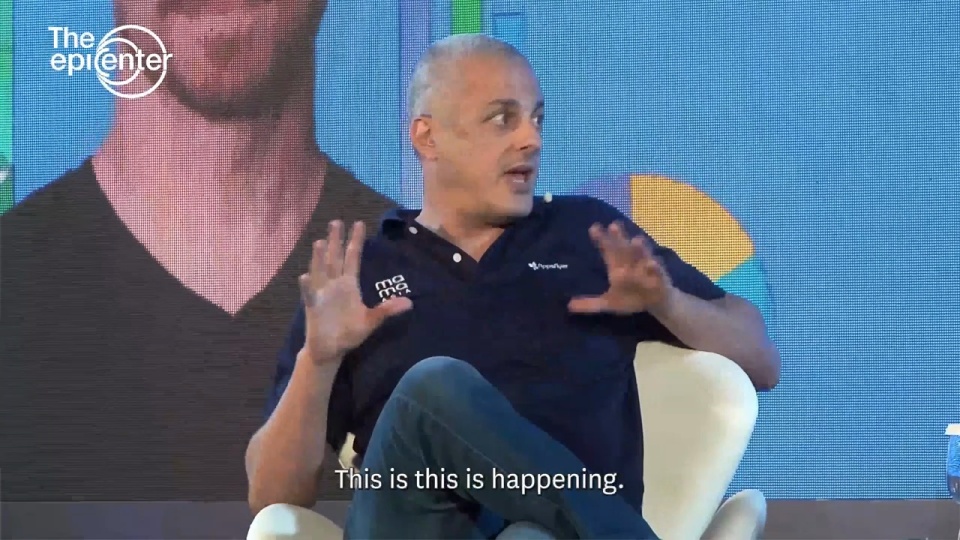
Oren Kaniel
0:00
0:00
Featuring
Oren Kaniel
Co-Founder & CEO, AppsFlyer

Episode summary
AppsFlyer’s co-founder Oren Kaniel joins Ronen Mense at the company’s Asia customer event in Bangkok to reflect on a decade of building in mobile — and what comes next. Kaniel traces how AppsFlyer started not with a product vision but with a simple observation: companies were spending serious money on apps without any way to measure what was working. From there, the company built its measurement infrastructure by staying close to customers, maintaining what Kaniel calls a “beginner’s mind” — remaining open to being wrong even after becoming an expert.
The conversation moves quickly from origin story to existential threats. Kaniel is candid about iOS 14: it was a genuine crisis. The removal of identifiers forced AppsFlyer to rethink core infrastructure that had been built over a decade. His response was to tell the team to mentally set aside everything they’d built and ask what the ecosystem actually needed — not what would protect their existing product. That same framing shapes how he approaches AI: he tells employees to think about how to replace their own jobs with AI, not as a threat but as the only path to staying relevant.
Kaniel also touches on the bigger picture behind privacy, advertising, and access to information. He argues that advertising is one of the best business models ever built for enabling global access to education and information — and that conflating privacy regulation with the death of advertising misses what privacy actually protects. His view: protecting user data and running a healthy ad ecosystem are not in conflict, and the companies that treat them as a zero-sum tradeoff will lose.
Key highlights
On the beginner’s mind and product reinvention:
“In beginner’s mind there are many possibilities. In expert mind, you have few possibilities. We told the team: put your baby aside for a minute. Let’s focus on what’s right for the ecosystem.”
On AI as an urgency, not a future trend:
“If you are not going to apply AI into what you do right now — it’s not in the future, it’s right now. I walk around the office and tell people: think about how you replace yourself with AI so you can do something else. If you’re not going to do it, someone else is going to do that instead of you.”
Episode Timestamps:
*(00:00): Introduction — Oren’s viral home improvement video and the fame of a CEO with power tools
*(01:45): How AppsFlyer started: two engineers who knew nothing about marketing, learning from customers
*(05:30): The beginner’s mind framework and why expertise can be a liability in fast-moving markets
*(08:30): AppsFlyer’s origin story — the App Store, conflicting interests, and the ‘gold rush’ analogy
*(11:00): Building ecosystem responsibility: from measurement tool to market-shaping infrastructure
*(13:45): Privacy changes — iOS 14, 15, 17, Privacy Sandbox, and the removal of the internet’s basic building blocks
*(18:30): Macro conditions and AI — why the economic slowdown makes AI adoption more urgent, not less
*(20:45): Two types of AI: improving existing processes vs. building products that weren’t possible before
*(24:00): AI as a new access channel — ChatGPT plugins, attribution without an app, and what that means for measurement
*(26:00): Oren’s three ‘aha’ moments: his first line of code, discovering Google in 1999, and the iPhone
*(33:45): What AppsFlyer is building: privacy cloud, data clean rooms, organic traffic attribution, and AI-powered analytics
*(41:30): On privacy, advertising, and why open access to information is one of the most important forces in the world
Transcript
[00:00:00] Ronen Mense: I brought someone special up here. [00:00:15] Hi Aaron. Hello, that, that’s my boss. Here’s my boss. We have this debate. We always have this debate every time we meet. Alright, I’d like you to sit down for a moment. Thank you. And um. [00:00:30] As, as we’re about to start this session, I just wanted to, um, play a video. I.
[00:00:42] Do we have a video?[00:00:45]
[00:00:50] Is here in action.[00:01:00] [00:01:15] [00:01:30]
[00:01:36] Oren: Oh, I haven’t got the ear.
[00:01:37] Ronen Mense: How,
[00:01:38] Oren: how many hits did
[00:01:39] Ronen Mense: that video
[00:01:39] Oren: get? Um, tens of millions of views. Uh, probably even [00:01:45] more. Uh, it’s kind of funny because, uh, 30 seconds of drilling the world made me even more famous, much more famous than. Building this company for the last 10, 12 years. Uh, people tell me, Hey, I think that you need to get back to your [00:02:00] day job.
[00:02:00] And I’m like, whoa. I think that I need to go back to this, uh, home improvement because I’m all famous over there. Uh. Yeah, so, you know, and, and TV stage. This is really amazing. What hap uh, this, this, this kind of video. It’s really, really, [00:02:15] really interesting. You know, only now I, I, I, I just realized that my daughter is also screaming, Hey, close the water in the call mom.
[00:02:22] So I’m like, yeah, I didn’t hear that before She was on screaming, and now she is. Helping her [00:02:30] dad scream.
[00:02:33] Ronen Mense: So are, are you happier to be a, a handyman or a CEO of a big company? Look, I, I always want
[00:02:41] Oren: to, like, to do stuff with my hands. So whether it’s [00:02:45] home improvement or I don’t know, taking care of stuff. And I like to do that with the kids.
[00:02:51] Um, so I like to do both. And also in the office, uh, you know. I’m the IT manager. Why? Because there’s some physical work involved, [00:03:00] so
[00:03:00] Ronen Mense: that that is correct. You’re the IT manager. I remember meeting you the first, well, not meeting you the first time, but coming into the office the first time you were doing barbecue, right?
[00:03:08] And uh, uh, I guess you burned some of the food, but, uh,
[00:03:14] Oren: [00:03:15] so you came to the burning start at the part when the, the thing was kind of too big for my barbecue skills, so I burned my hand. Right. That was the case.
[00:03:25] Ronen Mense: You burned your hand. I think we had some burned hot dogs, but, uh, [00:03:30] it was, it was more than hot dogs.
[00:03:32] It was a little bit more, it was more than hot dogs. Yeah. Yeah. Or I mean, you’re, you’re sitting here and, um, I wonder how it makes you feel to see such a [00:03:45] tremendous group of people from all around Asia converging here in Bangkok. What, what feeling does it give you? Because you, you started this company, you know, 10, 12 years ago, which I mean, you didn’t even know [00:04:00] what you were starting
[00:04:09] Oren: Makes me feel alive. Um, it makes me feel [00:04:15] like, uh, the start, uh, when we started the company. Both, uh, s chef here and myself, we, we didn’t know much about marketing or advertising or, or the internet. Um, [00:04:30] so we learned everything that we know from customers and from the market. So we were really attentive and listening through their problems and the challenges, what they’re trying to achieve.
[00:04:43] Um, and then we go back [00:04:45] and, and thought, okay, what kind of software can we build? Uh, to improve their lives, to make them successful. Um, so being very close to our customers and market is, is critical [00:05:00] component of this company. This is how it started, this is what made it successful. And, um, as we go along and, and, and, and, and we become much more experts in what we do.
[00:05:13] This is the drawback. [00:05:15] This is, this is the challenge. This is the problem, basically, because we always need to keep our empty mind. Uh, so we can absorb, uh, ideas and change the way we’re thinking about things. I recently read a [00:05:30] book, uh, Zazen, which is Zen, uh, beginner’s Mind. And what it says, basically, uh, that in beginner’s mind there are many possibilities in expert mind.
[00:05:40] You have few possibilities, which is a, kind of a [00:05:45] counterintuitive, but if you really think about it, it’s, it’s true because we get in. Into an established market, but we found this market without measurement. [00:06:00] We found the market that companies been spraying and praying. We found the market with a lot of conflicting interests in it.
[00:06:11] We found that companies make significant decisions [00:06:15] without data, without measurement. It just didn’t make any sense. But what really happened that, um, companies that been successful, this is their achilles, this is what kind [00:06:30] of draw drives them to their own solutions. And this is why, back to your question, why it’s super important for us to be very close to our customers and the market and, um, [00:06:45] learn, adapt, challenge, the, the status quo.
[00:06:50] Uh, use common sense, uh, and, and what we like to say in the company that common sense is not that common. It’s very uncommon to have common sense. And this is [00:07:00] Martin would agree with you. I agree with him. So we have kind of a,
[00:07:05] Ronen Mense: yeah. So I think you, you talk about. The beginner’s mind. And I, I, I think this is something really [00:07:15] interesting because, uh, as you mentioned, I mean, I, I don’t know how many of you know Oren and, and their background is their engineers, and not only normal engineers that graduated from the top of their class in university, but we won’t go onto that.[00:07:30]
[00:07:30] Um, but as or was saying, one of the things that, uh. You had to do was to listen to the customer. And today we are here 10 years later, [00:07:45] um, and the customer’s voice is, is stronger than it’s ever been as we help build the future of apps flyer. Mm-hmm. And I think we’ll all agree that [00:08:00] Apps Flyer has had a, uh, significant impact on the ecosystem that we operate in.
[00:08:07] Yes. Talk to us about how you view Apps Flyer and [00:08:15] what it’s done over the past 10 years, um, towards building this, uh, ecosystem to where it is today. So maybe,
[00:08:23] Oren: maybe I’ll, uh, I’ll start from really the beginning of, of of Apps Flyer, [00:08:30] um, which is technically the introduction of the App store. Um, and then you had the new form factor.
[00:08:38] It was only web sites through browser, and then you have a mobile application. Many [00:08:45] companies thought that application is just, you know, fleshlight and all that kind of stupid apps that existed before. Um, I met many VCs trying to raise money for this company. Said that, uh, application is [00:09:00] not a vc.
[00:09:01] Business like really. VCs said that, uh, uh, even good ones. Um, so what we’ve seen, um, that this is a massive change in mobile and we thought that mobile is gonna grow like crazy. [00:09:15] Uh, the second thing is the conflicting interest that I, I was talking about. I mean, if you are representing the customer and you’re representing also the other side of the equation and there is kind of.[00:09:30]
[00:09:30] Conflicting interest. And who do you represent? Who’s the referee
[00:09:34] Ronen Mense: there?
[00:09:34] Oren: Who’s the referee? So the referee belongs to one, uh, uh, group or one team on the other team. Um, that’s, uh, and it also felt [00:09:45] like, uh, kind of the wide West, um, and specifically the Levi story and, uh, gold, uh, the gold rush in 19th century in California.
[00:09:57] Um, and Levis [00:10:00] was providing, you know, tools and closing, uh, and we thought that we, we wanna build software to allow all these applications to, to be successful in this market. [00:10:15] Um, and I think that in the past. We’ve been looking at the market as constant. This is the market. We have zero influence on the market.
[00:10:26] So we got into this crack of measurement [00:10:30] and we’ve built a really unique technology and, and built an ecosystem around it. Um, and slowly and steadily, uh, uh, we had more and more and more influence in how the [00:10:45] market. It’s shaping, um, to the level that we really feel big responsibility for the ecosystem, for the customers, for the partners, also [00:11:00] for the platforms, and eventually, or first of all, for the consumers in the end of the day.
[00:11:07] Um, and we thought, okay, so if we want to be customer obsessed, if we really care about our customers, we need to think about their consumers. [00:11:15] Um, and this is kind of the mindset that we had. So really focusing on the customer, the consumer in the end, um, and really leveraging these kind of changes because the company was established based on a significant [00:11:30] change.
[00:11:31] And then we evolved on significant change changes in the digital ecosystem, and in the last couple of years, were transformational in how, uh, uh, or the magnitude of [00:11:45] change that is happening. Specifically we’re talking about privacy changes, regulations, privacy, uh, changes in the platforms. iOS 14, iOS 15 right now, this week in WW DC iOS, 17, uh, new [00:12:00] changes, privacy, uh, Google, uh, uh, privacy Sandbox.
[00:12:03] Um, and just to name a few. Um, and back to your question, we [00:12:15] really take this, these changes, um, and, and we are looking. Into these changes and challenges in their face and say, okay, what can we do? To benefit the ecosystem [00:12:30] as opposed to benefit supplier. And the way we’ve been handling that internally, I, I tell the team, uh, let’s forget everything that we’ve built in the last 10 years.
[00:12:41] Just put that aside. It’s not important. Let’s focus on [00:12:45] the ecosystem. Let’s focus on what’s right for the ecosystem. And this is kind of the beginner’s mining it, right? Right. So you, you don’t take all this weight. That you built in the last 10 years, which is basically your baby. And I’m not, I was talking with people that been building these [00:13:00] products and telling them, Hey, put your baby aside for a minute.
[00:13:04] Let’s focus on what’s right for the ecosystem and then maybe we can leverage that. Maybe we cannot. Maybe we can evolve that. Maybe we cannot. Maybe we need to build something new, maybe we cannot. [00:13:15] So that’s, that’s one aspect. And this is how we managed to build like really. Uh, I would say really big innovations, um, in, in this market and specifically for privacy, privacy, preserving measurement, top of the funnel measurement, whether it’s incrementality [00:13:30] or creative analytics or, or conversion modeling or, or FK networking innovation or whatnot.
[00:13:36] Um, privacy, cloud data, clean. Um, and through these innovations we actually have a [00:13:45] significant impact. On the market directly and indirectly, uh, on the platforms and how platforms are thinking about different things. Um, again, just maybe just [00:14:00] to, to make everybody think about the, the magnitude of changes that happening.
[00:14:06] If you think about the digital ecosystem, you think about the internet, it’s built on very basic elements. It built on, uh, cookies, built [00:14:15] on URLs. Yep. Uh, it builds on mobile identifiers. That’s about it. And all these are gonna go away. So the whole backbone in the, in the process of going of, of [00:14:30] completely removing the most basic elementary building blocks of what you use every day, all day.
[00:14:41] And the question is how the future is going to form. [00:14:45] Because I can tell you one thing for sure that it’s changing in a meaningful way. And if we just fast forward five years from today, it’s gonna be very different. It means that in all of you will have to throw away. [00:15:00] Chunks of things that you built and you fell in love with because it’s your baby, it’s your product, it’s your technology, and all of a sudden you need to let it go and build something [00:15:15] new and challenge this status quo.
[00:15:17] And this is basically what we try to enable our customers, but we also work in a limited piece in, in your. Software stack, but I believe that you have [00:15:30] much more than Slyer and the marketplace around it. So, um,
[00:15:40] we, we try to work with, uh, all the major platforms. [00:15:45] Um, work with Meta, worked with also Apple, Google, um, TikTok, Snapchat, uh, Foco. Our partners, um, [00:16:00] in dozens and dozens of projects. Um, and we are really happy with the collaboration that we have, uh, with these company. So, for example, meta, it’s a very close, [00:16:15] uh, partnership that we have with them for, for now getting to two 11 years.
[00:16:20] Since Facebook went mobile and they established the MMP program, um, some of the things I can [00:16:30] mention, some of the things I cannot mention, some of the things will be really big part of the future. Some are not gonna work and we are gonna say goodbye to them. But these are, I think that it was also, uh, mentioned the experiments.
[00:16:43] So we experiment a lot, [00:16:45] uh, with these partners. Um, and thankfully and specifically, uh, for the last couple of years, uh, we are very happy that we found some really meaningful, uh, [00:17:00] solutions, uh, for these challenges and how to enable basically, companies to work with each other, collaborate with each other, uh, without cookies, without identifiers.
[00:17:12] Uh, um, et cetera, so [00:17:15] they can really get the benefit of it and not, um, expose, uh, data that they don’t want to expose. By the way, it’s not only privacy. This is also good for business. I mean, do you want to give away your customer [00:17:30] data to another company that can learn about your business and maybe take your businesses away?
[00:17:35] Probably not. So this is a good thing. I mean, some companies, some companies really care about that, some less. But I’m saying you, you know, this is first of all about your business. You wanna protect your [00:17:45] data, protect your data. You wanna make sure that your data is not working against you. Make sure that the data is not working against you.
[00:17:50] And this, pay attention to it.
[00:17:53] Ronen Mense: So you, you mentioned this word a lot challenge, and [00:18:00] I think that, um. Everyone in here faces challenges, uh, in their business every day. But you, you, you seem to have a very optimistic approach to challenge because [00:18:15] challenge for you as a, as a CEO, but as a leader of a company also means opportunity and.
[00:18:25] I want to touch on three areas that probably are on, uh, people’s mind. [00:18:30] One you talked about, uh, uh, quite a bit already about privacy. The second I wanna talk about, uh, anyone want to hear about ai, probably, um, maybe we need to wake them up. Uh, and, [00:18:45] and, and third, I want to talk a little bit, uh, with you about the, uh, macros.
[00:18:51] Macro condition. The macro condition. Yeah. Yeah. What about it? What are your views on the, that It’s gonna go [00:19:00] away. Great. Okay. Let’s move on to next. Sooner and
[00:19:02] Oren: probably than later. It’s gonna go away. These are cycles. Um, so this is, this is how the economy works. Few years downturn, few years downturn. [00:19:15] And I think that, uh, what we are seeing, um, is basically major, major changes that going to impact each and every company on the planet.
[00:19:26] Privacy changes, data changes, ai. [00:19:30] And, and, and it’s becoming much more challenging because you have this economic slowdown. So, so companies been trying to think how they can become more effective, more efficient, uh, but it’s really easy [00:19:45] to make, to make mistakes in that way, uh, because if you continue to do what you do right now, just with, let’s say, less people.
[00:19:54] You gotta go out of business because if you are not going to apply AI into what you do [00:20:00] right now, it’s not in the future. It’s right now. Um, because it also takes time for people to think differently. You know, how much, how many years it took for companies to understand that mobile is a, is a thing. You know, how many companies went out of business [00:20:15] because they didn’t realize fast enough that mobile is the thing.
[00:20:19] Do you understand that some, that many people in companies think, okay, AI is coming. They’re probably gonna, I gonna hear about it. If there is gonna be news that I need to [00:20:30] read or adapt, someone is gonna come to me and I don’t know, pitch it to me. This is not good enough. This is, this is not good enough.
[00:20:39] Um, you know, I, I’m walking around in the office and I’m telling people, you [00:20:45] should think how you replace yourself with ai.
[00:20:51] At the beginning of the here. Oh wow. This is, uh, you know, uh, job security. And I’m telling them, job security, your best job [00:21:00] security is to find a way to replace what you do with AI so you can do something else. So you can do something else. You can evolve and guess what? If you’re not gonna do it, someone else is gonna do that instead of you, and you’re gonna be really jobless.
[00:21:14] Ronen Mense: I mean, they, they [00:21:15] say there’s two types of people, right? People. Who use AI and people who don’t. Yeah, right. It’s like the elephant. Mm-hmm. And the mammoth. Mm-hmm.
[00:21:26] Oren: Yeah. Definitely. And what do you think that these people are doing when [00:21:30] they’re getting back to the office? Sitting in front of their laptop?
[00:21:33] After I told that to them, probably they didn’t do They’re same. They’re doing the same. Yeah, they’re doing the same. Second time I tell them, maybe they do the same third time. I tell them, now they start to think [00:21:45] differently. Yeah. Debbie, you need to think differently maybe. For sure. For sure, for sure.
[00:21:53] Because habits, you, you need to, all of us have habits. Changing habits is [00:22:00] probably one of the most difficult thing to do. You get used to do something and you do that over and over again. You feel comfortable in it. And, uh, you need to have these kind of challenges sometimes in the challenges. Um. [00:22:15] Okay. Two things.
[00:22:18] One challenge that it’s in front of you. You see it? Let’s say there is a fire out out there. Yeah. It’s very visible. I don’t need to tell you, Hey, there is a fire. You see it and you, and you, you know what [00:22:30] you need to do. Mm-hmm. COVID-19. It’s visible. It’s in the news alignment. Okay? Don’t, don’t leave your house, whatever it is, okay?
[00:22:39] You know what to do. Some things happening under the [00:22:45] surface that you don’t really see it and it’s easy to ignore. Also, iOS uh, 14 was something that is visible. But AI change is not something that is very visible. It’s not a device that [00:23:00] you can see, like the smartphone invention or stuff like that. Uh, also privacy.
[00:23:05] It’s like, in some extent this is under the surface. Um, and, and when it’s under the surface without a due date. [00:23:15] So in COVID it was due date. I 14, there were several due dates. Mm-hmm. Uh, and cookies application. Also several due dates. So sometimes it was mentioned today to create some [00:23:30] artificial due date for certain things, because if you’re not gonna do it, no one is gonna give you the due date and you’re gonna go out of business before you realize it.
[00:23:39] So. I don’t know. What’s the question? What the que
[00:23:44] Ronen Mense: I [00:23:45] forgot the question. I forgot the question. Yeah, so I, I, I think you, you, you, uh, you know, we wanted to talk about macro. Oh, we talked, we talked, we talked
[00:23:52] Oren: about ai. Hold on. Hold on. So, in, in ai? Yeah, in ai, basically the way we look at it and the way AI look at it.[00:24:00]
[00:24:00] You have AI to improve the ser, the, the processes that you already have to improve the products that you already have to improve, improve the services, customer service and all that kind of stuff. This is, this is happening, this is right now, uh, this is. This is one Second thing is [00:24:15] building new products and specifically building new products that you couldn’t build without ai.
[00:24:20] Uh, so we, we are practicing in different areas like predictive analytics for fraud protection, uh, uh, creative analytics, bunch of things that [00:24:30] we couldn’t do with like standard software building. So this is, uh, ai. Another aspect of AI is, is, is, is really, i, I believe in this. That it’ll create a new, completely new form [00:24:45] factor in how to access the digital word.
[00:24:48] So you’re gonna have websites in, in, in the browser, you’re gonna have apps and Google Play or uh, app store, and you’re gonna have ChatGPT and others. So you can access digital word [00:25:00] through chat. So you can book the hotel or the trip entirely in the platform. Um, and without installing app, without having the app, why do you need to have the app?
[00:25:14] So, um, [00:25:15] um, and this is what we announced a couple of weeks ago to support analytics, attribution, analytics and measurement. Uh, for chat, GPT specifically, uh, uh, plugins. Uh, so this is again, another platform. This is really early days, but I [00:25:30] believe that it’ll be evolved very rapidly. I, you know, just. I hate to make predictions.
[00:25:37] Mm-hmm. Um, I’m thinking about what’s never gonna change. But, um, and this is, this is really a prediction, but I think that in two, [00:25:45] three years, um, which is really fast, uh,
[00:25:51] Ronen Mense: you’re gonna have something like that. Maybe I, I just ask, uh, a side [00:26:00] question. What is bigger ai. Or the invent, invent of the, uh, iPhone.
[00:26:10] And now we define what is bigger. I think that the
[00:26:12] Oren: ai, what will have more impact [00:26:15] on, on the world, but without, without the smartphone, you’re not gonna have a ai and there is no impact. But the incremental change that AI is going to bring is probably much bigger than the iPhone. And, and I think that, [00:26:30] that I, in my life.
[00:26:33] Um, there were very few aha moments that I said, okay, this is the word before, and the word after is going to be completely different. [00:26:45] One is my first line of code, and that was when I was a kid. Uh, like really programming something and seeing that on screen, that, that was magical. Um, and I’m talking about the eighties, early eighties.
[00:26:58] Mm-hmm. And, and the [00:27:00] second thing was, uh, uh, in my school, in university, I was, I, we had to build something, SF and I, and I said, why, why, why are we building it? Let’s, let’s, I’ll, I’ll find the code for it. [00:27:15] Um. And I was searching, and there was no Google really. So it was 99, uh, and I found Google search. It was powered by Yahoo.
[00:27:27] I searched for it, [00:27:30] and I was shocked. When I discovered Google, I really didn’t go to sleep that day. I was searching and finding, and reading and searching and finding, and I, I really, it was in the morning and I was like, wow, this is incredible. How can you [00:27:45] search? The entire web. It, it just, as a technological person, it just didn’t make sense how you can index entire word.
[00:27:53] That, that was magical moment. And then the, the third magical moment was, uh, [00:28:00] my first iPhone, which was, uh, in 2010. It was a secondhand iPhone, right? It was a secondhand, I got it on Craigslist, I paid for it 200 bucks. Um, it was my second, it was my play. I had Blackberry, so I, I [00:28:15] was sure that Blackberry is the thing and Apple don’t have even a chance.
[00:28:19] It was, uh, impossible to buy it in Israel. Back then, the iPhone reached Israel only in 2011 or so, 1112 or whatever. Um, so I, I really bought it [00:28:30] to, to, to, to learn. Um, I, I was shocked, really. I was shocked. And this, this is the third, uh, uh, night that I didn’t go to sleep and play with it. And I, this is why I, I really fell in love and I wanted to build something that relates to this thing because I [00:28:45] was sure that it, our lives gonna be completely different.
[00:28:50] And I was also sure that in my lifetime, probably I’m not gonna see more things, uh, in that magnitude. [00:29:00] That are going to change our lives completely. And it happened, uh, a couple of months ago with ai. Really, this is the forthcoming, it’s uh, yeah, uh, uh, really I thought that we’re [00:29:15] not gonna see such, uh, transformative, uh, thing or technology that will transform our lives, and that’s.
[00:29:24] And here it
[00:29:25] Ronen Mense: is. Yeah. And how,
[00:29:27] Oren: as
[00:29:27] Ronen Mense: a company and, and I’m sure. [00:29:30]
[00:29:30] Oren: Look, I, I really, this is something that I, uh, also, I was playing with it, um, the fir when they, uh, released Cha GPT two or whatever, the one in November, um, I played with [00:29:45] it and we’re like, wow, this is amazing. This is amazing. And I, I had this, uh, I have this, uh, tasks and notes about things that my thoughts and, and I have a lot of thoughts, but I, I, I write bullet points and then I’m getting lazy to not to write [00:30:00] it down and stuff like that.
[00:30:01] I talked, I took the bullet points. I gave it to charge pt. I told I and asked it to write a blog post. I was mind blowing. I was mind blowing. And then we, we iterated [00:30:15] a little bit. Two, three hours, boom. Done, released something that I have on my shelf and, and I have support, I have editors, I have, uh, people that can write for me.
[00:30:28] Uh, it was on my shelf [00:30:30] and to-do list for one year and two hours of work. More than that. The charge GPT, uh, plugin support that we announced two, two weeks ago. Do you, uh, three weeks ago. Do you know who made that idea?[00:30:45]
[00:30:45] Cha g pt. Right. And who wrote the pr cha? GPT? No, me, with the, the cha, GPT, and then the marketing, everything I want to give credit. Uh, but really it was [00:31:00] the, the, the, the, the, the, the fact that you can have something, someone listen to you with 100% attentive. Like me,[00:31:15]
[00:31:16] like you, but I’m sure that you’re also thinking about so many other things. Our mind are, you know, uh, we were to Bruno Mars concert, uh, two weeks ago. We had the MAU, the mobile app unlock in Vegas. [00:31:30] So we went to Bruno Mars, uh, concert and it was amazing concert. You know why, besides the fact he’s a amazing performer.
[00:31:37] You know why? PD? No, because our minds are fact. I tell you why [00:31:45] at the beginning, when you enter the cons, uh, they take your phone away, they put it in a pouch, they lock it. Here you go. You cannot use it. So imagine like, I don’t know, it was 10,000 people or 5,000 people, whatever. No [00:32:00] phones at all. That’s a good idea for a conference, by the way.
[00:32:05] It is a good idea. You know why? Because your mind is not distracted. You are right there in the [00:32:15] moment. You appreciate the moment your mind is focused.
[00:32:21] Ronen Mense: Do you know who? The only person in the room who doesn’t have a phone is who doesn’t have a phone? Yes. [00:32:30]
[00:32:30] Oren: I don’t know. Chat, pt.
[00:32:33] Ronen Mense: I’m not sure if he’s still here, by the
[00:32:34] Oren: way.
[00:32:35] It’s not good for business. Uh, so you should use your phones
[00:32:39] Ronen Mense: just not here. By the way, Martin Lindstrom does, doesn’t, does not own [00:32:45] a phone period.
[00:32:50] Oren: So we still have some growth in the business. Huh? We need to get Martin. Where is it?
[00:32:55] Ronen Mense: We have one more, uh, customer. Yeah. To download, uh, someone’s game or, uh, travel lab.
[00:32:59] Oren: [00:33:00] Think about the loss. No, no, no, seriously. I have phone, but my phone is the 99% of the time is completely silent. No interruptions, [00:33:15] no messages. Nothing. Nothing. No one can. Call me or anything. It’s, I, I, I completely disable all the notifications and I recommend that all of you, [00:33:30] I won’t call you now, try to call, no one can call, not even my kids.
[00:33:38] You know, I have this piece of mind so I can focus. I’m not, I don’t have this cortisol or whatever you call it that, [00:33:45] uh, you
[00:33:46] Ronen Mense: does. Does anyone have a question for Oren? I’ll give you a few moments to think about it if, uh, someone wants to ask a question. But, uh, maybe the question, uh, if, if you are Cat [00:34:00] GPT and I am a customer, what is Apps flyer building to help me become more efficient?
[00:34:12] Enter.[00:34:15]
[00:34:17] You are ChatGPT am a customer. Okay,
[00:34:24] what are we building? What will you build? How will you make my life [00:34:30] simpler?
[00:34:32] Oren: So it’s a very complex one. I mean, uh, first of all, uh, measurement, which is becoming much more complex just to achieve what we, what the industry had. Uh, just [00:34:45] not too long ago, specifically on, on, on iOS, and it’s, it’s coming to Android, um, is how to enable companies to, to get the data that they need in order to make decisions.
[00:34:57] Uh, as a measurement company, I’m, [00:35:00] I’m really afraid of measurement because if you measure the wrong things, and I think that also what was measured in few of the panels today, um, it’s, it’s very hard to con to. To argue with data. So if someone is [00:35:15] bringing, Hey, bring me data, and you have the data and you’re not arguing with, with the data and you’re not having some doubt, the data, you probably will make some wrong decisions.
[00:35:26] So I think that, uh. We really [00:35:30] work hard to make sure that our customers have the right data so they can make decisions. Um, specifically the downturn. Uh, we wanna make sure that our, our customers do not have to have like 10 analysts and bi and expensive [00:35:45] processes just to understand the data. Uh, we also thinking how can we enable companies and our customers and partners, uh.
[00:35:53] To commingle data, uh, without exposing data, without, uh, sharing user [00:36:00] level data with each other so they can get the insights, uh, that they used to have, uh, before various restrictions and data restrictions. Uh, we are thinking about how can we enable companies. To leverage, uh, organic traffic. [00:36:15] Organic, not organic.
[00:36:16] Uh, nothing is organic. Okay. We had this conversation. Nothing is organic. Organic, actually. This is something that we’ve been thinking and, uh, I, I was also challenged, uh, during lunch someone told me that, uh, what is organic? And say, yeah, [00:36:30] organic is something that we actually don’t know and, and, and don’t know where the users come from.
[00:36:35] And, and this is something that we want to unfold. Um. Um,
[00:36:44] so [00:36:45] when, when I’m saying AI is, is, is, is, is, is, is how can we, uh, charge our platform with AI so our customers don’t have to take care of it themselves so we can [00:37:00] solve it for the entire market? Again, specifically for what we do, and I’m not, we cannot do everything obviously. Um, also thinking about how can we enable innovation for our customers, but, but in [00:37:15] a broader sense, how can we enable innovation for the entire ecosystem?
[00:37:20] So we’re thinking about Sly as a platform, and this is the basis of the privacy cloud and data clear. How can we expose, [00:37:30] uh, more APIs and data that other companies. Third party companies can build stuff on top of it. And also just to, to connect the [00:37:45] dots. Um, how can privacy and data minimization and AI data maximization can live together?
[00:37:52] And this is basically. Uh, the basis of, of the privacy cloud and how you can bring the [00:38:00] services, you can bring the software, you can bring the AI models into the data and into the privacy cloud. So the data is not exposed, but you can still enjoy, uh, uh, the benefit of it. Um, again, instead of [00:38:15] sending the data to Oliver.
[00:38:17] The place with, uh, all these services and data mapping is impossible also. Uh,
[00:38:28] well, the list is long. The [00:38:30] list is very long. It’s always long. Yeah. So let’s make it short. Um, our, our goal is to really make our customers and partners lives easier. Um. We leverage all these challenges and changes, uh, to push ourselves, [00:38:45] uh, to, to do better. I also can tell you, um, that um, IO 14, which was, uh, really major change and shift in the ecosystem, even if you, your major [00:39:00] customers are not on iOS, uh, now we are gonna see it for Android.
[00:39:04] Um. In, in that period of time, uh, it was really existential threat to us and many other companies, and honestly to [00:39:15] the entire digital world. Um, and, and, and that period of time moving back to challenges, our opportunities, uh, we really had the calling. Uh, our customers, you’ve been calling us and [00:39:30] ask us, Hey, what we gonna do?
[00:39:31] What are we gonna do with a TT? What are we gonna do with SK network? What are we gonna do with all these new things? Um, and we, we received hundreds and thousands of really companies that were afraid [00:39:45] of the future. Um, and this is how we kind of evolved also our vision for really for better and safer digital experience to everybody.
[00:39:54] So this is kind of, uh, things that guides us. So even if we see stuff that are not [00:40:00] related to what we do, or maybe even a competitor is doing something that is great for the ecosystem, we cherish that we ha we are happy about it because it’s will promote the entire ecosystem towards our vision and this is what we wanna do basically.
[00:40:12] Um, [00:40:15]
[00:40:15] Ronen Mense: yeah. This is great. I think, um, do I see any hands up there? There’s a big, bright lights here. Uh, before we, uh, before [00:40:30] we go into the, uh, closing.
[00:40:33] Oren: Oh, we have, uh, uh, uh, the, they’re shy. They’re shy. Yeah. They’re not asking questions. Anyone wanna ask a question? [00:40:45] Maybe transmit that, uh, question in
[00:40:47] six sense.
[00:40:48] Okay.
[00:40:49] Ah,
[00:40:54] yeah, it works, works works.
[00:40:58] Speaker 4: Yeah. Great. [00:41:00] So, um, I mean, uh, I was very amazed with the way you played with Google when it came, uh, you first time kind of got introduced to it and the we experimenting with chat, GPT. So tell me if, uh, mobile is not a device. Okay. And that could be a reality, you know, [00:41:15] in, in coming future a lot of things are happening.
[00:41:17] You know, it’s some other format, maybe something embedded in your body and something of that sort. And if privacy is such a, you know, my, I’m mean gate gatekeeper and all of that, right? Then, uh, what will be the future of [00:41:30] advertising according to you?
[00:41:39] Oren: First of all,
[00:41:41] I think that privacy is misunderstood. I think that privacy [00:41:45] is much more than cookies and identifiers. I think that privacy is what you think about privacy, but just remove everything that you know about privacy and think about what is privacy for you. Privacy [00:42:00] for you is basically, and I just take a guess, the things that you perceive as private, let’s say sending a message to your life partner or having a phone call or having a zoom call with someone, or [00:42:15] getting into a meeting room and closing the door.
[00:42:17] You perceive that as private, right? Or your photos that you take on your phone and, and all that kind of emails messages. Okay. Are the things that you perceive as private now the question is, is there [00:42:30] someone reading it or having access to it? Or even worse to have a computer that is reading it, analyzing it.
[00:42:35] And I think that, you know, only in only two years ago, apple made this indication that the camera is on because we all work around here with cameras on us and [00:42:45] microphones on us, and Slack microphones and cameras all over the place. Now the question is, what happening with that? Um, and I think that, um. Um, uh, to some extent we’re missing what is really privacy and what is important for us [00:43:00] because when you go online, you go online, you decide to go online.
[00:43:03] Obviously there’s a lot to do, uh, on that aspect, but I, I’m really happy that Apple’s also taking, uh, measure and I think that in I 17, that taking different, different aspects of data. Okay, so if the [00:43:15] application have access to. Photos, what do you do with the photos or stuff like that. And this is the PRI privacy manifest.
[00:43:21] I don’t know how many of you, uh, read the these news? Uh, um. Also, uh, apple made the syndication if the microphone is on. [00:43:30] Oh, thank you very much. Up until now, I didn’t know if the microphone is on or not. So this is kind of, uh, uh, privacy and then advertising. I think that advertising is critical for all of us.
[00:43:40] I think that, uh, advertising is making sure that all of us, uh, [00:43:45] uh, uh, have access to information, to education. Uh, um. You know, for, for quality. So people have opportunities. You know, if you think about innovation, if you’re probably thinking about, [00:44:00] uh, Silicon Valley and California and how come so many companies get out of there because they have access to information, they have access to, to, uh, to education, and with the internet, uh, it’s becoming something that is widely [00:44:15] accessible.
[00:44:16] And I think that this is so critical and this is some something that I played with my mind. So you had. If Bill Gates was playing with computers in the mid fifties, uh, in his university because the university had access to this [00:44:30] computer, uh, but it was only in the US and only very, very few universities.
[00:44:35] Just think about how the world’s gonna look like and how many bill Gates would have in the world if this kind of accessibility to information and education will be accessible globally. [00:44:45] All right. And I think that this has kind of evolved over the years and you see more and more and more innovation, more technology companies everywhere on the planet.
[00:44:54] And this is thanks to the accessibility of. Of education and information [00:45:00] and basically access to the internet. So access to the internet, obviously, you know, in India it’s got tremendous, uh, change, uh, since it makes it more affordable in terms of, uh, the cost. Um, and, uh. And the, and the publisher [00:45:15] is basically being funded and monetized through advertising.
[00:45:18] So I think that advertising is one of the most amazing, uh, business models ever created on the planet for the benefit of, uh, [00:45:30] equality and really access to information and education. And I think that. Martin mentioned the YouTube, uh, videos. I learned so much from YouTube. And I think when people tell me, oh, well, should I go to the university or not?
[00:45:43] So I said, tell them, uh, [00:45:45] first of all, if you look for information, everything is is online. And again, you don’t need to pay for it. And, and you know, if, if, just think about that everything was subscription, you just deny, uh, access to information and education for so many [00:46:00] from so many people. And I think that.
[00:46:02] R really looking into Asia and we are in my Asia, think about so much informa innovation that can be created in this, uh, uh, region and countries. With so many people in the population, you just need to make sure that they have access [00:46:15] to, to information and education and, and advertising and financing it.
[00:46:22] So I think it’s great and I think that we need to continue to support that and privacy.[00:46:30]
[00:46:34] Ronen Mense: Orrin, this has been a pleasure. Yeah. Thank you. Thank you so much, everybody. Thank you, Orrin. Danielle? Yeah. Uh,
[00:46:44] Oren: I also want to [00:46:45] take the opportunity to thank you, uh, thank to our customers and partners. Thank you for the trust and the support. We don’t take that for granted. Thank you for helping us building up flyer, because I, I, I think [00:47:00] I, I mentioned that I didn’t mention that.
[00:47:02] We actually, after I started in Asia, after he started in Israel, but really started in Asia. Um, and I think that we are very thankful. All the feedback that you told [00:47:15] us, Hey, it doesn’t work, uh, demanding customers, why you go to the us They’re not so demanding. If something is broken, they don’t even notice.
[00:47:25] Here you are killing us. And that’s a good [00:47:30] thing. You make our lives hard and this is a good thing. So I want to thank you, uh, for pushing us to become better and better and better. Uh, thank you for the challenges that you’re introducing to us,
[00:47:43] Ronen Mense: uh, and to the team. By the way, do [00:47:45] you know that there is someone in this room who has been using App Flyer since 2013?
[00:47:54] Oren: We have quite a few, uh, but I dunno, who is that specifically?
[00:47:58] Ronen Mense: Emma, are you here?[00:48:00]
[00:48:02] Hi Emma. Thank you.[00:48:15]
[00:48:15] And thank you Ronald. Thank you. Yeah.
Meet our host

Ronen Mense
President & Managing Director, APAC @AppsFlyer
Ronen Mense is a growth strategist and host known for thoughtful conversations at the intersection of technology, business, and human potential.
Explore more resources
Uncover AppFlyer’s wealth of expertise and in-depth resources, to empower your growth and success in today’s dynamic market.


