
From Textile Designer to Pakistan's Mobile Gaming Pioneer: Saad Hameed on Building the Game District Ecosystem
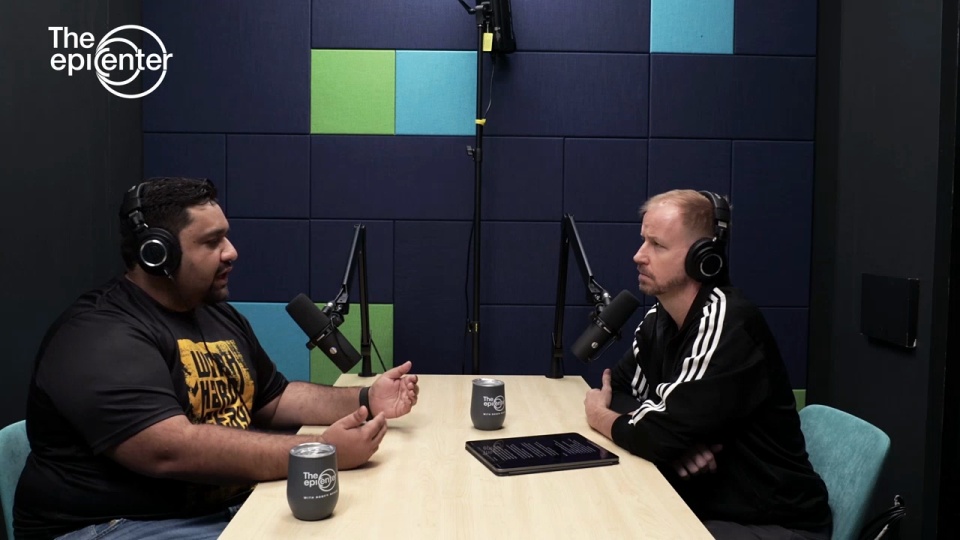
Saad Hameed
0:00
0:00
Featuring
Saad Hameed
CEO & Co-Founder, Game District

Episode summary
Saad Hameed did not set out to build a gaming company. He was a textile design student in Pakistan who stumbled into mobile games when he needed money for his thesis. By 2009, after seeing the iPhone for the first time, he was hooked. By 2016, he had co-founded Game District with a childhood friend and a clear thesis: developing games was not the real problem in Pakistan — the problem was that developers had no infrastructure to support them.
Game District operates as an incubator, accelerator, and soon a fund. Developers come in with ideas, and the company provides HR, legal, operations, data, and growth support so studios can focus entirely on building. By 2022, Game District had surpassed 1.5 billion total downloads and 450 team members, making it one of the largest mobile game ecosystems in the MENA region. The episode unpacks how that model works, what makes Pakistani game developers distinct, and where the industry needs to go to close a 4x monetization gap relative to global peers.
Saad is candid about the gap between Pakistan’s raw creative output and its monetization sophistication. Pakistani studios dominate simulation game downloads globally, but where a comparable Vietnamese studio earns $4 per ARPU, Pakistan earns $1. His prescription: industry collaboration, foreign expert inflows, mastery of analytics platforms, and a deliberate pivot from chasing downloads to owning retention. He also makes a clear case against Web3 gaming — not because it will never work, but because Pakistani studios have not yet earned the right to experiment with it.
Key highlights
On building ecosystems, not just games:
“In Pakistan, developing games is not the biggest problem. The biggest problem is how to make an environment for developers where they can just focus on making games — and the rest of the things would be taken care of by a company.”
On Web3 and when to innovate:
“We don’t have any mobile game in Pakistan that makes a million dollars a month. We’ve never had a studio that makes a hundred million dollars a month. So why do we want to jump into something new that the world hasn’t figured out yet?”
Episode Timestamps:
*(00:00): Introduction — Saad’s background and how he joined the show
*(01:45): Pakistan’s gaming industry size and its $5 billion potential by 2025
*(03:12): From textile design student to mobile game developer — the founding story
*(05:30): The Y Combinator inspiration and the vision behind Game District
*(07:00): How the Game District name was born in New York’s Garment District
*(09:42): What Game District actually does — incubation, acceleration, and investing
*(12:18): The story of Junaid — a 16-year-old in a school uniform who became a top developer
*(14:45): Why Pakistani game developers build differently — the ‘Brazilian style’ analogy
*(17:58): The 4x monetization gap: Pakistani studios earn $1 where others earn $4
*(19:45): Steps to close the gap — industry collaboration, analytics, and foreign expertise
*(25:00): Pakistan as second in global simulation game downloads
*(26:45): Design thinking as a core skill — how the King/Candy Crush persona model applies
*(32:43): Forecast for 2023–24 — post-COVID transformation and what ‘evolve or become a dinosaur’ means
*(34:45): On Web3 gaming — why Pakistan should stay in web2 for now
*(38:45): Quickfire round — favorite game, biggest misconception about Pakistan, dinner guests
Transcript
[00:00:00] Ronen Mense: Welcome to Epicenter where we feature. Business leaders, [00:00:15] entrepreneurs, and innovators from around the world, especially here in Asia, who have something to share. And today I’m with, uh, Saad. Hamid, did I say it right? Yeah. You, you say it really right. Saad Hamid, who is the CEO and co-founder of Game District.
[00:00:29] Yeah. Which is [00:00:30] probably one of Pakistan’s leading gaming companies, if not the, uh, uh, the, the most leading one. You talk about being a design thinking advocate, um, a gaming industry trailblazer. Um, I’m so excited to have you here today. [00:00:45]
[00:00:45] Saad Hameed: I’m really excited to be here. The atmosphere is really cool. The people here in Thailand and in the.
[00:00:51] Epicenter is really cool. I love the vibe and you know, I wanted to be here for a while now.
[00:00:56] Ronen Mense: Yeah. Well we’re, we’re, we’re very lucky to have you, you’re here on your personal [00:01:00] holiday.
[00:01:00] Saad Hameed: Yeah, I’m here for the personal holidays, but you know, when, when I see this opportunity to meet you and the team, I would wanted to come here and wanted to see the vibe and I love it.
[00:01:08] Ronen Mense: Yeah. Well. You know, it’s kind of, uh, it’s, we’re all in the holiday spirit, and, uh, so I think, um, you [00:01:15] know, when, when people, uh, hear this episode, it should be probably in January sometime, but, uh, anyways, so we’re gonna talk a little bit about, um, first of all, the, the thing that, uh, you, you’ve built, uh, your business on, um.
[00:01:29] I I [00:01:30] just wanna start with a question because I was reading an article about the future of, of the Pakistani gaming industry and, you know, there was a number out there of like something like three, $400 million and, and. You know, what is the Pakistan gaming industry potential right now? [00:01:45]
[00:01:45] Saad Hameed: I think, I think, I think it’s, it’s, it’s crazy to say that, you know, the industry is 3-400 million.
[00:01:49] Um, it could be a $300-$400 million industry. I would really know. Um, I, I think right now the industry is more than, you know, $500 million industry [00:02:00] already. I think it has the potential to be a $5 billion industry by 2025 if everything. Will be aligned, uh, by together. Uh, when I say like, you know, everything will be aligned together, it’s like, you know, the government, um, the working, uh, like, you know, companies [00:02:15] and everything.
[00:02:15] The banking system. Yeah. I think if everything like, you know, comes aligned together, it could be. At least like, you know, a $5 billion industry. And it is, it is the next weight nam in the Turkey for the worlds. So when I say like, you know, weight NAMS in Turkey, [00:02:30] um, we are already going out there in, in, in a slow speed because we see that, you know, we have a lot of challenges.
[00:02:35] The banking challenges is the biggest one right there in Pakistan. But I think we are trying to solve it by altogether, and I think it would be, it would be great to [00:02:45] see Pakistani companies emerging to the biggest companies in the world. By 2025.
[00:02:50] Ronen Mense: Well, I mean, the potential is there, right? It’s the fifth most populous country in the world.
[00:02:56] Saad Hameed: Yeah. It’s, it’s the fifth, uh, most popular country in the world. And, you know, it is the [00:03:00] second largest southeast Asian market in the world after Vietnams in terms of like, you know, developing and, you know, uh, exporting the games around the world. So it’s, it’s really, really amazing. It’s really amazing.
[00:03:12] Ronen Mense: Sad.
[00:03:12] Let’s rewind now. ’cause [00:03:15] you’re, you, you’re from the gaming industry now, but you weren’t always from the gaming industry. Tell us your story. How did you get from wherever you were? To hear.
[00:03:25] Saad Hameed: I think, uh, my story’s been like, you know, really, really phenomenal When I, when I [00:03:30] rewind myself and I see my stories, I, I’ve just seen like, you know, the dots have been connected really well, and where I’m together, it’s, it’s been like, you know, with people, a lot of people’s help and everyone like, you know, who helps me to like, you know, uh, craft out my career.
[00:03:44] So [00:03:45] I was a textile designer. Like, you know, I was just like university, like, you know, having a textile degree and, you know, when I, uh, wanted to get. To my thesis, I see that, you know, I don’t have any money for my thesis because in textile designing, you need a lot of money to build a [00:04:00] thesis. So I joined a company where they are just trying to develop some games for the mobile.
[00:04:05] And you know, the mobile is, it’s for, for me, like, you know, the mobile is Nokia out at that time. Mm-hmm. This was
[00:04:12] Ronen Mense: what, 2000? It’s 2009. Nine.
[00:04:14] Saad Hameed: So I would just like, [00:04:15] you know, see iPhone for the first time. Mm-hmm. And like, you know. And there was an app where I see that, you know, you have this like, you know, rain on, on your, on your screen and you just like, you know, scrub it and you know, it just like, you know, take the rains, drop off from that.[00:04:30]
[00:04:30] That’s actually like, you know, made me think about this, that, you know, how cool is this device? And you know, from that. Period on, I would just like, you know, start working on the games and everything. I just love drawing and everything, making cool buttons. Cool. UIs. So it [00:04:45] started out there, uh, with my first company and then like, you know, in 2000, in 14 I went to us, which changed the whole narrative for me.
[00:04:54] And you know, things I’ve seen that, you know, how people are working out there and you know, I met. Couple [00:05:00] of cool people like, you know, who were working in the industry at that time, Trey Smith, uh, pack, and, you know, all these guys, like, you know, were, were really, really enjoying this mobile, uh, persona. Yeah.
[00:05:12] And enjoying their like, you know, featuring, uh, [00:05:15] like, you know, companies out there. So. At that time, I, I believe that, you know, there’s a lot of things to do seriously in the mobile game industry in Pakistan, and I just like, you know, call my, my, my best friend who’s just like, you know, with me from class four, he was into the indu, uh, you know, [00:05:30] game industry too.
[00:05:31] And like, you know, I’ve told him like, you know, let’s build something really amazing for the Pakistan. Uh, the thing which, which hits me. You know, inspired me the most. It’s yc, it’s Y Combinator in US in San Francisco. [00:05:45] So this Y Combinator is the biggest incubation center in the world. And I see that, you know, how people working out there helping each other and, you know, building a lot of like, you know, cool companies out there.
[00:05:55] So I, he, I just, when I just like, you know, call my friend, he told what you want to do. [00:06:00] I told him that, you know, I wanted to build a yc. Around gaming in Pakistan. So he tell like, you know, and what you think it would be. So I told him that, you know, in Pakistan developing games is not the biggest problem.[00:06:15]
[00:06:15] The biggest problem in Pakistan right now is how to make, make a environment for the developers where they can like, you know, just focusing on making games and you know, the rest of the things would be taken geared by a company. Mm-hmm. So it would [00:06:30] be hr. A space, legal, finances, uh, operations and growth.
[00:06:36] These are the things, you can’t go and jump into something if you go like, you know, go and jump into something like this. It would be really [00:06:45] hard to go and, you know, develop. Cool games. Mm-hmm. So I said like, you know, we will like, you know, create a ecosystem where, we’ll, where we, we provide all these things like the
[00:06:52] Ronen Mense: centralized structure.
[00:06:53] The centralized
[00:06:54] Saad Hameed: structure. Yes. You know, everyone like, you know, create their own games with their own freedom and, and like you [00:07:00] experimentation and then we all do that. He loved this idea. He is always be on my side, like, you know. Mm-hmm. And he’s like, you know, let’s do that. And we started that in 2016.
[00:07:10] Mm-hmm. And at, at the start of 2017. By 2022, [00:07:15] we are one of the largest, uh, mobile game development, uh, ecosystem in the Mear region.
[00:07:20] Ronen Mense: Mm-hmm.
[00:07:20] Saad Hameed: And we are the fastest growing in the Mear region. We have like, you know, over 1.5 billion downloads in total. Wow. Uh, 450 team members. And [00:07:30] we are growing day by day and we love it.
[00:07:32] Uh, so that’s, that’s the whole idea that, you know, from where I’ve started and where we are, where I’m, and, and, and the one interesting story. About the name. So I was just like, you know, sitting in the garment district New [00:07:45] York, and you know, my friend asked me, have you thought about any names? I told him.
[00:07:50] And I’m using the Garmin district’s internet. Yes, right. It was, it was like in 2016, free Internets and other spaces, and I was just [00:08:00] using garments, district internet. I would say like, you know, it would be really cool if we call it game districts because we will have like really different districts around the world with, with, with this like, you know, name and it would be under game districts.
[00:08:12] So that’s how we started with the game district [00:08:15] name. Rest is history.
[00:08:16] Ronen Mense: You know, we have two things in common now.
[00:08:19] Saad Hameed: What is that?
[00:08:20] Ronen Mense: One is the, uh, the gaming and mobile industry. Yeah. The other is garments.
[00:08:24] Saad Hameed: Really? Yes. Wow.
[00:08:25] Ronen Mense: Yeah. I was in the garment industry as well.
[00:08:27] Saad Hameed: Wow. Don’t,
[00:08:28] Ronen Mense: no one repeat that though. [00:08:30]
[00:08:30] Saad Hameed: It’s a good industry to, in
[00:08:31] Ronen Mense: No, the worst possible.
[00:08:33] The worst possible. But that was the family business. Wow. Yeah. Um, so when you talk about being a, a, a garment designer. You know, I’m, I’m, I’m familiar with the terms of like, plotters [00:08:45] and, uh, yeah. You know, cut, cut and sew and screen
[00:08:47] Saad Hameed: printing, screen printing. I just doing that for, for the whole of my life.
[00:08:51] Like, you know, doing the t-shirt, screen printing, and, you know, when I talk about the Thailand in Indonesia, the first thing comes in my mind is the bik.
[00:08:58] Ronen Mense: Yeah. Because
[00:08:59] Saad Hameed: I was just like, you know, [00:09:00] there, there’s a fancy technique of like, you know, this textile with a vax, it’s called bik. Yes. Like, you know, famous in Thailand and Indonesia.
[00:09:07] Ronen Mense: Yes, yes. So there we go. Two things that we have in common. And then, so you be, you, you basically found your way into the gaming [00:09:15] industry. Yes. And you, you’ve talked about 2022 now that you guys, uh, are, are basically the biggest, uh, one of the biggest players in, in the, uh, SCA, uh, what is it? Minna MENA app, uh, region.
[00:09:28] What, what, what, what exactly? So [00:09:30] Game Game District is basically a company that. Builds games that it publishes or it also, uh, outsources, uh. Companies can go to a game district to outsource their game
[00:09:42] Saad Hameed: development. So we, we have [00:09:45] started over company as a game development company. Mm-hmm. But as I said, like, you know, over the period of time, I believe that, you know, that is the, no, not the most important thing for me.
[00:09:54] I think enabling people is, is the most fascinating thing to do. Mm-hmm. Like, you know, by [00:10:00] making games, I think I love it.
[00:10:01] Ronen Mense: Mm-hmm.
[00:10:01] Saad Hameed: But, you know, enabling a lot of people out there who just like, have a lot of potential, but they are, they are not like, you know. Grown up up to their full potential. Mm-hmm.
[00:10:10] That’s something like, you know, I love and, you know, working in a, in, in a growing economy, I think that’s [00:10:15] the most challenging and the most fun part is that, you know, people are really talented out there. They’re really like, you know, en energetic and everything, but, you know, at the same time, they don’t have the right support system to like, you know, grow on.
[00:10:28] So that’s like, you know, I [00:10:30] believed in that, you know, if we, if we help, like, you know, that. Um, like, you know, the sports system we built and they just like, you know, step by step, like, you know, uh, bridge their self on that. Mm-hmm. It would be amazing because they are, uh, starting from nowhere and now they are like, you know, [00:10:45] showing their, uh, games to the whole world.
[00:10:47] I think that’s very, very fascinating. It’s, it’s really inspired me. So
[00:10:50] Ronen Mense: you’ve created this
[00:10:51] Saad Hameed: platform basically? Yes. We have created this platform. Now, every year we like, you know, in, in like, you know, incubated more people, so. [00:11:00] Every, you know, new people come into our, A company, they come up with an idea or something.
[00:11:05] We invest in them, we help them to grow, tell them the right ideas, what to do, what to do, what not to do. Mm-hmm. And the data we have is really like, you know, big. Mm-hmm. So [00:11:15] we exactly tell them what, how you can be a really successful So you
[00:11:18] Ronen Mense: like incubate, accelerate. Exactly. And invest also.
[00:11:21] Saad Hameed: Staff even.
[00:11:22] Exactly. So the whole, uh, like, you know, idea, like, you know, down the line also, we wanted to in like, you know, start our own [00:11:30] investment. Mm-hmm. Uh, like, you know, fund also where we like, you know, investing only, uh, to, to the bigger studios. And then we have like, you know, this, uh, so we want to do everything what, what, whatever, like, you know, it takes.
[00:11:41] To become, um, like, you know, big mobile, uh, [00:11:45] giant kind of a company, right? So we are like, you know, going on on our way. That’s, that’s the, that’s the thing what we have in mind.
[00:11:51] Ronen Mense: So how, how does a game creator approach you? I mean, you’re such a big, uh, a big popular figure. I see your LinkedIn is always exploding, you know, you’re [00:12:00] very humble there.
[00:12:00] Yeah. Um, but you know, is it. If, if there’s a game developer out there in Pakistan that wants to, uh, to, to talk to you, is that possible even?
[00:12:09] Saad Hameed: Yeah, it’s, it’s, it’s really easy. It’s really easy. Just like, you know, send me a message on LinkedIn. I think that’s, that’s the [00:12:15] best thing. Uh, I tell you a very funny story.
[00:12:18] So I was in holidays with my family in 2019. A young boy, like, you know, 16, 17 years old boy just send me a message and he send me like, you know, he, he got, uh, he [00:12:30] got to know me from a friend circle. I, I had a picture with him. He’s like, you know, really influential in the mobile game industry. He, uh, he’s the guy who actually developed a software called Build Box.
[00:12:40] Mm-hmm. His name is Trey Smith. So that young boy follows Trey [00:12:45] Smith and, you know, Trey upload a picture with me on his LinkedIn, uh, on his Instagram. Yeah. So that guy is from Pakistan. He sent me a message and you know, he said like, you know, I have been a big follower of like, you know, trace Smith, uh, you [00:13:00] seems like a Pakistani, so are you a Pakistani?
[00:13:02] Mm-hmm. And you are in Pakistani? I’ve told him, yeah, I’m a Pakistani. He said like, you know, I’ve developed some of the games. He showed me some of his games. And for me, like, you know, developing those games as a 16, 17-year-old, it feels like, you know, he’s. [00:13:15] He’s not the, he’s probably like, you know, messing up with me or something.
[00:13:19] Uhhuh, he’s just like, you know, showing someone else games. So I just told him that, you know, come to my office and the first day he came to my office, he was in a school uniform,
[00:13:27] Ronen Mense: Uhhuh. Wow.
[00:13:28] Saad Hameed: And I was just like, okay. This [00:13:30] young kid, he, he actually have this potential to develop a mobile game developer Today.
[00:13:35] That guy is 20, 21 years old. Three years or in, in the game district. He is one of the most dedicated guy and understandable guy. Into [00:13:45] the game industry. I have seen in the Pakistan, he have developed some phenomenal hits. His name is Junaid. And at that time I understand that, you know, we are really old right now.
[00:13:56] Mm-hmm. And now we only need to invest in the young kids because [00:14:00] the young kids are actually coming up with a really, really high ambitions. And at the same time, their knowledge factories really, really. Uh, like, you know, burned it up. So we need to like, you know, utilize them and train them into the right path, and then we [00:14:15] will, we, we can grow, like, you know, from anywhere from there.
[00:14:18] So that’s, that’s a, that’s the thing, you know, I have learned from him and, you know, for any of the young developers out there in Pakistan, they can like, you know, call me. From LinkedIn or they can, you know, message me on Instagram, [00:14:30] LinkedIn everywhere. So they can just like, you know, reach you, reach out to me and, you know, we’ll, we’ll sit, talk and see that, you know, how we can do together.
[00:14:37] Ronen Mense: That’s awesome. So let, let’s get a little, a little bit into some details because I, I think one of the, the things that we notice is that the. Actually, the [00:14:45] way that games are built in Pakistan are a little bit different than the way they’re built outside, specifically on the engagement, the gameplay style.
[00:14:52] Talk to us a little bit about like how Pakistan got to that kind of level of, of creativity or, [00:15:00] or, or even like, uh, engagement genius, if you wanna call it.
[00:15:03] Saad Hameed: Oh my God. I think, I think that’s, that could be a one thing where I can talk for, for hours. We
[00:15:08] Ronen Mense: got hours.
[00:15:09] Saad Hameed: Go for it. So Pakistan is, has been really phenomenal and has been really, really [00:15:15] advanced in terms of like, you know, user engagement and actually developing games.
[00:15:18] So we are a very different market. I think we, I, I call it like, you know, we played the Brazilian way.
[00:15:24] Ronen Mense: Mm-hmm.
[00:15:24] Saad Hameed: That, you know, we are not like, you know, very European style, very like, you know. Uh, we are very [00:15:30] freestyle game developers, so we developer whatever we wanted to
[00:15:32] Ronen Mense: do. So you got some ne Mars and Cas there.
[00:15:34] Yeah, we like,
[00:15:35] Saad Hameed: we, we, I think we have like, you know, pales and every, every everything. Yeah. Everyone has Palella and everyone. So the thing is like, you know, we, we have our own style of developing game, [00:15:45] so we just. Take inspiration from the bigger games, from the PC and you know, the, all these sector games.
[00:15:50] And we just develop those games in our own style. And the thing is, those games has been really, really popular in the tier two and tier three countries. We have been. Millions [00:16:00] of millions of downloads. Mm-hmm. People love over games. So if you wanted to be a pilot and you know, you wanted to have a really, really small devices experience, the Pakistani developers must have like, you know, hundreds of games out there in that, uh, category.
[00:16:13] And it is really, really working [00:16:15] for the industry, I think. Um. Most of the industry has started by their own. They are self-taught. There is no big studios in Pakistan.
[00:16:23] Ronen Mense: Mm-hmm.
[00:16:24] Saad Hameed: Everything they have learned by themself. Mm-hmm. So all these years they have been like, you know, learning [00:16:30] and developing their cores to the, uh, core to, to the highest of their skills.
[00:16:35] So we have really, really. Great, uh, developers who are developing small games, but at the same time, we feel that, you know, we have some problems [00:16:45] because we are a little bit cut, uh, down from the world in terms of like, you know, there is no studios. So we have to, uh, reinvent everything by ourself.
[00:16:54] Ronen Mense: Mm-hmm.
[00:16:54] Saad Hameed: So sometime like, you know, we are, uh, doing, uh.
[00:16:58] Not the right moves and not [00:17:00] doing, uh, going in the right direction. But now after the COVID, the world is opening up, there are people are going into the conferences, they learn a lot of things. Now we are developing that, uh, expertise we have of developing really, uh, smart [00:17:15] games. And now we are converting them into making smart games into very.
[00:17:19] Profitable world-class games, that that’s, that’s the transformation periods is going on right now in the industry.
[00:17:25] Ronen Mense: Mm-hmm. And, and like when we talk about engagement, like [00:17:30] what, what, give us an example of like what a Pakistani gaming. A developer, uh, a producer might do in, in terms of gameplay versus what you would see outside of Pakistan.
[00:17:41] Saad Hameed: So it’s, it’s very funny. I was, I was in a, a Google, uh, yes. Like, you know, [00:17:45] meetup in, in Singapore, there’s a lot of Vietnamese companies out there in the Pakistani with companies. So I was just like, you know, talking with a Google monetization expert, he told me one, uh, inside, which is, uh, data driven. Mm-hmm.
[00:17:58] And he, he can see that actually, [00:18:00] he told me, sa. Uh, where a Pakistani developers making $1 AAMI studio is developing $4. Mm-hmm. So that is the gap we need to fill off. Mm-hmm. So in terms of like, you know, monetization in terms of user, [00:18:15] user, um, like, you know, acquisition, Pakistani are a bit behind in the rest of the world, but you know.
[00:18:21] We are trying to get out there and you know, I think it’s just a matter of like, you know, a couple of more years we would be out there. Mm-hmm. Because everyone is [00:18:30] trying really hard to be out there. So that’s, that’s what we are doing. And I think, I think if we able to do that, the industry will, will, will explode like anything.
[00:18:39] Ronen Mense: So that must mean when you hear that, that the, the monetization, [00:18:45] it, it, it’s almost a fourex difference, right? Yes. It’s a fourex difference. $1 to $4. Yes. That means there’s huge potential. It’s a huge potential. It’s, and, and there’s huge mon monetization potential in what you what, yes. What this, the industry that you’re in.
[00:18:59] Yes. [00:19:00] How do you, how do you, how, what are the steps that, you know, you think the industry or, or you guys need to take to, to close that gap? Or, or to get, you know, moving in the direction of the $4?
[00:19:11] Saad Hameed: Yes. I think first of all, is. Um, [00:19:15] engagement with each other. Mm-hmm. Mm-hmm. Uh, the thing is, the Pakistani game industry, uh, was one of the industry which has not engaged with each other.
[00:19:23] Mm-hmm. And now we actually stepping up.
[00:19:25] Ronen Mense: Mm-hmm.
[00:19:25] Saad Hameed: Uh, last month we had like, you know, the first Pakistani, uh, a, a [00:19:30] developer meetup mm-hmm. Where there was like, you know, 70 companies out there. Wow. It was phenomenal. We were just out there having dinner, and it was really good to see all of, all of us together and, you know.
[00:19:40] Mm-hmm. Talking with each other. Now we understand, uh, with the, over the period of time that, you [00:19:45] know, we are not actually the competition of each other. Mm-hmm. We are here to help each other and we can, like, can actually build a really, really cool ecosystem. Mm-hmm. I, when I talk about the ecosystem, I really wanted to mention the Finlands ecosystem of Right.
[00:19:58] Like, you know, gaming. [00:20:00] So. If you are even a clash of clan, they just come to rescue you to help you. Like anything I have when I’ve seen that, it’s, it’s phenomenal. Everyone, like, you know, talking with each other. They are like, you know, um, giving you [00:20:15] references of each other’s and, you know, giving you the context that, you know, they have.
[00:20:18] I think that’s how they develop and that’s, we call it the Vatican of like, you know, mobile game.
[00:20:23] Ronen Mense: Mm-hmm.
[00:20:24] Saad Hameed: Um, uh, mobile game itself, Helsinki. Yes, and I think everyone is really helping, and that’s how [00:20:30] they build a really, really beautiful ecosystem. So I think. Pakistan is going in that direction also. They should everyone start, uh, talking to each other now.
[00:20:39] We wanted to help like, you know, people with the more trainings.
[00:20:43] Ronen Mense: Mm-hmm.
[00:20:43] Saad Hameed: So, because I think in the [00:20:45] monetization and the user acquisition is something which needs to be, have master classes. Mm-hmm. And you know, the small. Scale trainings and the high scale trainings. Then we have like, you know, technical trainings.
[00:20:55] I think for the tech, tech technical trainings and all these trainings part, we have [00:21:00] couple of companies mm-hmm Who started like, you know, jumping up into the ecosystem and, you know, providing talent to everyone. The Game Train is an amazing example, uh, which have started in couple of years back. Uh, and you know, now they are training people and you know, um, [00:21:15] those training people and they are just like, you know, getting into the industry because there’s a huge gap.
[00:21:20] Between the industry mm-hmm. And the academy academia. So game train and all these other like, you know, mentions like M Labs are actually filling that gaps. So I think more [00:21:30] people train, uh, within the industry people. And with the help of industry people, I think the gap will be there. And then we wanted to create some master classes.
[00:21:38] Ronen Mense: Mm-hmm.
[00:21:38] Saad Hameed: Hiring resources from the bigger companies into the Pakistan. I think if we do that, the [00:21:45] gaps will be starting slowly, slowly, uh, like, you know, goes down and from $1 to $4, we will we’ll get there. That’s,
[00:21:53] Ronen Mense: do you, do you see that, um, in, in order to get there, that you need to actually bring in, [00:22:00] um, for experts into Pakistan to help bridge those gaps and, and share those learnings?
[00:22:04] Saad Hameed: Yes. I think, I think that that would be the ideal case scenario. If we, if we have like, you know, foreigner, uh, like, you know. Uh, developers, engineers, um, [00:22:15] ad monetization experts, user mm-hmm. Acquisition expert. I think if they come there, they’ll just like, you know, come a very different perspective. I think they would be really, really surprised also.
[00:22:25] Mm-hmm. They just like, you know, take you one step back because whatever we are doing [00:22:30] for them, it’s very unusual. It’s very new. Uh, so just example for, for giving you an example, if you see you are having 1 million downloads a month mm-hmm. But you are not like, you know, monetize them well. Because you don’t have a lot of [00:22:45] navigations to see that.
[00:22:45] Yes. They probably take you one step back. Right. They want you to have a couple of more tools inside your game so they can see what the navigation it’s look like for your game. Yeah. So once you have that, you probably have, uh, like, you [00:23:00] know, less downloads. Mm-hmm. But you know that one step back is the cheetahs one step back for before a big jump.
[00:23:07] Yes. So once you have all these navigation system, your jump would be really, really high, and that’s what we have been doing. Also, we have like an [00:23:15] experts coming from outside of Pakistan and they have been telling us a lot of great way arounds to develop great games. And how to navigate them best. I think that’s the best way forward to, to, to go.
[00:23:29] Ronen Mense: Yeah. They, well, they [00:23:30] say that you can’t, uh, uh, you can’t optimize what you can’t measure. Right? Exactly. Exactly. And so I think that’s, uh, that’s something very important, right? It’s not only on the analytics side, but even like, uh, game crashes and things like that, the [00:23:45] basics. Right? And, and maybe, maybe. The creativity is there.
[00:23:50] Yeah. Right. When it comes to the gameplay. Yeah. Um, but it might be too creative that it skips the, uh, the monetization, uh, element. I [00:24:00] agree. That is, I agree, is very critical. And, and this is something that Vietnamese companies are extremely good at. They are, they’re really good
[00:24:05] Saad Hameed: acquisition and, and monetization.
[00:24:07] They’re really good. They’re really good actually. And they are really good in terms of like, you know. I think actually in [00:24:15] making games we are, we are really near up about that. But you know, the categories of making games are really different. Mm-hmm. They’re different. Like, you know, in Pakistan we have like, you know, all these, uh, studios are doing simulation games
[00:24:27] Ronen Mense: mm-hmm.
[00:24:27] Saad Hameed: Which is like, you know, really high in terms of the whole [00:24:30] Google play, uh, simulation category, games. Pakistan is like, you know. Second or third in terms of strategy. We are the first, uh, company who get, uh, like, you know, we are, we got the first country who get the most downloads. Mm-hmm. But, you know, Vietnams are more in [00:24:45] towards puzzles and hyper casual
[00:24:46] Ronen Mense: games.
[00:24:46] Saad Hameed: Mm-hmm. So they are also advanced their self into developing games.
[00:24:50] Ronen Mense: Mm-hmm.
[00:24:51] Saad Hameed: Because the, there’s like, you know, hyper casual and puzzle games are more retention, so they don’t want it to churn out their users. Right. They wanted to take their user and, you [00:25:00] know, their user retentions are far better because of the games.
[00:25:03] Choices they are doing. So that’s one thing we, we need to learn also.
[00:25:07] Ronen Mense: Nice. Um. So, so, so we’ve talked about, um, you know, the, the engagement [00:25:15] side, the competitiveness of, of the market. And, and I, I, I think that, uh, it’s pretty clear that you, you kind of gave a rally cry there to say, Hey, Pakistan gaming industry, yeah, let’s get together, let, let’s share the knowledge.
[00:25:28] And, uh, because the industry [00:25:30] is growing, right? It’s not a, uh, a zero sum game winner takes all right? I mean, how many games do you have on your phone that you’re playing concurrently?
[00:25:39] Saad Hameed: I think, I think I, I have, uh, at least like, you know, a hundred games. A hundred games. So, so the [00:25:45] fun part is that, you know, whenever, like, you know, my daughters take my phone, yes.
[00:25:48] There would be like, you know, 15 more games in my phone, and then I start like, you know, downloading games. There will be another 15 on my phone. Yeah. So it’s, it’s a, it’s a, it’s a, it’s a lot of games always. And, you know, I [00:26:00] play a lot of games. You’re, you’re a
[00:26:01] Ronen Mense: designer by background, right? Um, but you’ve also kind of become.
[00:26:08] I would say a, a user behavior expert, uh, to some way when it comes to a gameplay,
[00:26:14] Saad Hameed: I think, I think [00:26:15] I, I would say myself a design thinker, Uhhuh, because I think that is, that is one thing which, which helps me really, really well to understand users. So design thinking is something have been phenomenal in my life.
[00:26:27] Mm-hmm. In all of the problems I [00:26:30] see. So I think, I think that’s really, really helped me off. And, you know, when I say design thinking, it’s all there. Excuse me.
[00:26:38] Ronen Mense: Yeah, it’s, yeah. I, I, can you talk a little bit more about this design [00:26:45] thinking? It, it’s, it’s very interesting how, how you, you take your background, you know, it seems like.
[00:26:53] I mean, the garment industry is not too technical, but it can be extremely technical at the same time. Right. Because it’s [00:27:00] so detail oriented. Yes,
[00:27:01] Saad Hameed: it is. It is.
[00:27:02] Ronen Mense: How does that, that attention to detail carry over to this?
[00:27:06] Saad Hameed: I think, I think, uh, whenever either, either you are into a garment industry in the textile or, or, or any industry, at the end of the day, [00:27:15] if you understand your user mm-hmm.
[00:27:16] It’s the best thing.
[00:27:17] Ronen Mense: Mm-hmm.
[00:27:17] Saad Hameed: Like, you know, I, I was in, in London and there was like, you know, a. Uh, creative producers of kings who just actually building their user acquisition techniques and everything he told, uh, he, he just like, you know, [00:27:30] said one thing. He said like, you know, we developed Candy Crush and, you know, the Candy Crush is something we have developed around.
[00:27:36] 35 to 45 years old female.
[00:27:39] Ronen Mense: Mm-hmm.
[00:27:39] Saad Hameed: Because he thinks, he said like, you know, why we have developed that? Because we have [00:27:45] user patterns and whole, uh, user’s, persona of these, uh, audience. And we think that, you know, at the end of the day, a woman with a glass of wine is the best spender.
[00:27:54] Ronen Mense: Mm-hmm.
[00:27:54] Saad Hameed: So he said like, you know, that’s, that’s the persona we have developed.
[00:27:58] So when we, when they develop this [00:28:00] like, you know, persona through design thinking. they Do everything like, you know, the empathy and all these stuff. They mere everything that, you know, how they want to do that and why a user wanted to play their their game. What, what is the reason? And when they are like, you [00:28:15] know, digging all around these thing, they have a clear map.
[00:28:18] Clear map that you know what their user wants. Mm-hmm. And when you have this like, you know, highlighted. Thing that, you know, why you user want this game, you start developing that game around that. So that’s, that’s the [00:28:30] best way to like, you know, start your research and, you know, develop games around that.
[00:28:34] So what, what is the typical
[00:28:36] Ronen Mense: Pakistani gaming persona?
[00:28:38] Saad Hameed: So I think, I think for the, for, for the Pakistani typical gaming persona is for. Kids. Mm-hmm. [00:28:45] Uh, who can’t play, uh, games, who have like, you know, more 13 plus mm-hmm. Uh, content. So we just like, you know, take those contents and, you know, make them for, for, for, for kids f mm-hmm.
[00:28:58] You know, friendly games. [00:29:00] So now a nine year. Uh, or, or a 10 year or 11-year-old guy or, or, or girl can play that game into a simpler version without getting into too much ui ux and they can just, uh, like, you know, play really simply and [00:29:15] feel themself to be something like, you know, if there is a policeman game.
[00:29:19] Mm-hmm. So you just like, you know, click and, you know, you get into the game and you know, now you are a policeman for the next mm-hmm. 15, 20 minutes. And that’s the persona Pakistani. Developers [00:29:30] has been grasping really, really well.
[00:29:33] Ronen Mense: Pakistan, probably similar to many other places in Southeast Asia, uh, maybe even India.
[00:29:39] Um, it’s not a, uh, it’s not a, a gaming culture. [00:29:45] Right. Um, you didn’t grow up with console gaming. You didn’t grow up probably with Nintendo and, and things like that. When, when did this gaming like. Movement or kind of erupted. I mean it. [00:30:00] I’m, my assumption is that it happened with the mobile phone and people understand gaming is, is on the mobile device and, and it doesn’t exist anywhere else.
[00:30:08] Right?
[00:30:08] Saad Hameed: Yeah. I think, I think it’s, it’s very funny that, you know, Pakistani gaming is, is, has been there for, [00:30:15] for a whole. Whole years. So when I was just young mm-hmm. Uh, there used to be like, you know, small orchid station in nearby our houses. Mm-hmm. And they were like, you know, not one, it’s hundreds in, in the city.
[00:30:26] And we go there, we just buy these tokens and, you know, [00:30:30] start playing the snow bras, um, contra Yeah. Street fighters and everything. And it was started out there. The, it was our first like, you know. At first, like, you know, a personal experience with the gaming and from there it was [00:30:45] never, because once you start playing these games, there would be no comeback.
[00:30:48] And then, you know, all the brothers and sister and the cousin actually start like, you know, collecting their pocket money to buy their Atari or Nintendo. Yeah. And it was like that in, in back of, back of [00:31:00] the back of the days.
[00:31:01] Ronen Mense: Yeah.
[00:31:01] Saad Hameed: Now it starts emerging. Like, you know, you see, like, you know, a lot of people are on the mobile and some people have their like, you know, consoles and everything.
[00:31:08] But, you know, back, back then, like, you know, 15, 20, 30 years back, it was all the small a station, which give us the [00:31:15] first vibe. And in terms of like, you know. We still have that a station in, in, in every area of, uh, like, you know, uh, Pakistan, and people are still enjoying that. So the fun part is Pakistan, where there is [00:31:30] no, like, you know, um, exposure to the gaming.
[00:31:33] There is no like, you know, support from the parents for the gaming. We still have the world’s like, you know, top players in Taken seven. Mm-hmm. Taken the, the, the, the guy who’s like, you [00:31:45] know, uh, uh, won the. Um, champ World Championship is, uh, is Pakistani. Wow. Cool. Cool. I’m just like, you know, forgetting his name is like Ash something, Uhhuh Lan, Ash Lan, Ash’s name.
[00:31:56] He was like, you know, and then we have like, you know, pub G uh, [00:32:00] and, and then like, you know, this tota Dota players all, all from like, you know, Pakistan and they like, you know, even, even I, I remember that, you know, there was a. Small Pakistani, uh, like, you know, clash of clan, uh, tournament. And that guy, actually, the, the guy who [00:32:15] won that, he actually runs a small, uh, fruit cart.
[00:32:19] Wow. Who, who won that? Like, in a tournament. Wow. So just, just, I just wanted to give you an example from this that, you know, we are really, really, uh, loving games. Games like, you know, uh, [00:32:30] country, we, we love it. That’s
[00:32:31] Ronen Mense: excellent. Yeah. So if, if you have to give, uh, uh, kind of your, your forecast for 2023, um, for, for Pakistan gaming industry, you know.
[00:32:43] Uh, uh, gimme two or three [00:32:45] things that, uh, you see as, as a catalyst to, uh, to what 2023 or even 2024 is gonna look like.
[00:32:53] Saad Hameed: I think, I think for 20, 23, 24 is very critical for Pakistan game [00:33:00] development companies because the thing is. They have seen a lot of growth in the COVID times. Mm-hmm. And the COVID growth for the gaming industry is not the real, real growth.
[00:33:09] Right. It was the high peaks. They have seen, they’re enjoying the profits and everything [00:33:15] and they think probably, they think everything would be the same, but it’s not. That’s not steady state. It’s not steady state. Now they have to evolve. Mm-hmm. It needs to transform otherwise. They would be, could be the dinosaurs mm-hmm.
[00:33:29] Of the [00:33:30] modern tech. So I think, but, but from, from my perspective, what I can see, uh, all of the companies I know in Pakistan, they are, start working there. They have like, you know, start working with the MMPs, they start working [00:33:45] with the analytics. Mm-hmm. They start working how they want it to evolve. I think this is where they are going into the right direction because before that, they’re enjoying the profits or like, you know, they’re on the cloud nine with this organic downloads and everything.
[00:33:58] Now they are going forward. [00:34:00] And probably like, you know, doing some publishing, also helping smaller studio to grow bigger also. So all of these things has been doing there and all the big companies, all the companies are actually see Pakistan as a big potential also. [00:34:15] So they’re coming there to help Pakistani ecosystem.
[00:34:18] Like Google’s is coming there, unity is coming there. Really soon a flyer would be out there. Yes, yes. So I think, I think all of these things are actually helping developers to build their self [00:34:30] in terms of like, you know, from user engagement to monetize them better in 2023 and 24. And I think now they were like, you know.
[00:34:39] Surpass that would be most evolving years for, for the game industry in Pakistan [00:34:45]
[00:34:45] Ronen Mense: out there. Question, and you can say you, if you wanna answer it or not. What do you think about blockchain gaming?
[00:34:50] Saad Hameed: I think, I think it’s, it’s, it’s all messed up.
[00:34:52] Ronen Mense: It’s all messed. It’s all messed
[00:34:53] Saad Hameed: up. And I, I, I’m a, I’m a big advocate of, uh, not doing Web3 blockchain gaming at this [00:35:00] moment in Pakistan at this moment.
[00:35:01] The reason is, the reason is not that, you know, this, it’s, it’s not something like, you know, clear. The reason is that, you know, the Pakistan game, uh, ecosystem has not actually, um. [00:35:15] Get there with, with the mobile games out there. Mm-hmm. We, we, we don’t have any mobile game in Pakistan. Mm-hmm. Who makes a million dollar a month.
[00:35:22] Right. We have never a studio who makes like, you know, a hundred million dollars a month. So we are not actually grown up to the [00:35:30] full potential of our own. So why we want to jump into something, something, uh, new, which mm-hmm. Which world has not figured it out yet.
[00:35:38] Ronen Mense: Right.
[00:35:38] Saad Hameed: So that’s my perspective, I think. I think once we have, like, you know.
[00:35:41] 15, 20 companies who are like, you know, a hundred million dollar plus [00:35:45] company or, or maybe $200 million companies. That’s when they wanted to get into this Web3. And I think right now, right now, from my perspective, is the Web3 is really rated. Mm-hmm. Um, it’s, I’m not saying that, you know, it’s not [00:36:00] going to work.
[00:36:01] Mm-hmm. I think right now it’s really overrated. Mm-hmm. Because the thing is, all these VCs, before they have this money, they just put too much money, which. I’m sure they never get back. Mm-hmm. And all of the money, which is, which is getting there. [00:36:15] Just because they think it’s going to change the world.
[00:36:18] Ronen Mense: Mm-hmm.
[00:36:19] Saad Hameed: Um, they have invested too much money and all the people, when they see this like an invested money, they just get into this. Mm-hmm. And they just like, you know, make whole their company [00:36:30] structure into that and no one has delivered it yet.
[00:36:32] Ronen Mense: Kind of too much fuel on the fire. It’s
[00:36:34] Saad Hameed: too much fuel on the fire, and it’s, it’s, it’s going to be really, really hard for like, you know, taking that, uh, like, you know, money back.
[00:36:41] Ronen Mense: Yeah. And I, I, I would, I would agree that you can’t. [00:36:45] Skip, um, like web two gaming or, or web 2.5 gaming and jump to Web3 gaming. Um, the pandemic, uh, economy of, of Web3 gaming was [00:37:00] really about, it was about monetization, right. Play to earn. And that’s exactly, that was it. And, and we’ve seen where Play to Earn is.
[00:37:07] Today in terms of, of just, you know, looking at the, the incumbents in that space. Even if you look at Google Trends on on play tour and it’s, uh, [00:37:15] back down to, uh, where it was before it was there.
[00:37:18] Saad Hameed: I think, I think, I think there are. The only thing is, the first thing is that, you know, people don’t understand the complicated things.
[00:37:25] Mm-hmm. When it’s come to the growing economies. So Web3 and all these [00:37:30] cryptos is really a complex thing. Till now it’s only one 2% of the technical people or the elites who understand and wanted to make money out of it. But the rest of the people don’t understand these complex things. Right. So the mobile gaming is really simple.
[00:37:44] Everyone [00:37:45] play can, yes. Can download and play that from the stores and everything. And our user behavior is about that. Now. You wanted to change it, it definitely would be changed.
[00:37:54] Ronen Mense: Mm-hmm.
[00:37:55] Saad Hameed: But you know, I think the right idea for the Pakistani developers and everyone’s [00:38:00] who just like, you know, getting into there.
[00:38:01] It’s web two gaming. Right. I think it has the real potential right now. Right? Because all the r and d we have done for the last 10 years. Mm-hmm. Now it’s the time to like, you know, juice it out. Yeah. And then we, so one of my friends, he’s like, you know, a [00:38:15] mentor to me. He told me that, you know, all the people who had never made money from the games, now they’re into Web3.
[00:38:23] So he’s just like, you know, anyone you know who’s made good money from Web two. Just tell [00:38:30] one name. Yeah. And I was like, shocked. Yes. And he said like, you know, it’s, it’s one thing I’ve just discovered that, you know, the people who never made any money, now they’re in Web3.
[00:38:39] Ronen Mense: Yeah. It’s, well, I, I think the, uh, if you look at, uh, what Peter Drucker, uh, [00:38:45] very famous economist is innovate for today, right?
[00:38:48] Yeah. Awesome. So, um. I like to wrap up these, uh, these, uh, episodes with, um, a quickfire around. Are you down? I’m [00:39:00] good. I, let’s do that. You good for that? Let’s do that. All right, so here we go. Ah, what is your most favorite mobile game or video game in history?
[00:39:11] Saad Hameed: That’s a really tough one, I think. I think I love playing [00:39:15] every game.
[00:39:15] Uhhuh. I’m not sure if, if you had to pick one, uh, I think there would be a really, really tough one between a Mario and Contra Uhhuh. Um, but I would, I would go with Mario.
[00:39:25] Ronen Mense: Mario? Mario? Yeah. We all love Mario. Super Mario. Um. [00:39:30] Which person has had the most significant impact on you growing
[00:39:33] Saad Hameed: up? I think all of my brothers and cousins.
[00:39:37] Mm-hmm. Because they’re really hardworking, uh, and they’re like really, really, uh, they’re, they’re really like, you know, beyond in terms of like, you know, steady, [00:39:45] I’ve always like, you know, looking at them and see that, you know, how I can become like them. So I think they had really, really huge impact while, while I was just growing up.
[00:39:54] What is the biggest misconception about Pakistan? There, there is not like, you know, one [00:40:00] misconception, there’s thousands of misconception. Like, you know, the first thing I think we, uh, the biggest would be that Pakistan is not safe. Mm-hmm. It is safe as hell. Mm-hmm. But, you know, is hell safe?
[00:40:11] Ronen Mense: Hell, I don’t know.
[00:40:12] I’ve
[00:40:12] Saad Hameed: never been there. You know, it’s, it’s a, it’s a, it’s a [00:40:15] wrong phrase to say that right now. Right. So it’s, it’s a safe as heavens. Safe as heaven. Yeah. Saving safe as heaven. I think it’s very safe. People are really friendly out there. Mm-hmm. If you go out, it’s, it’s very different. You love the vibe and I think, [00:40:30] I think everyone should come visit Pakistan once time.
[00:40:33] It’s,
[00:40:33] Ronen Mense: I, I think everyone who goes to Pakistan comes back and saying, what an amazing. Trip. What an amazing place. Such amazing people there.
[00:40:42] Saad Hameed: The biggest miscon, uh, misconception would be [00:40:45] that you come back,
[00:40:48] Ronen Mense: that, that you don’t come back. And, and what would you say like, uh, is the best thing about Pakistan? I know there’s probably another thousand thing.
[00:40:56] I,
[00:40:57] Saad Hameed: I, I think, I think the food and the people food and the people, the [00:41:00] people are really, really like, you know, it’s really hospitable
[00:41:03] Ronen Mense: uhhuh
[00:41:03] Saad Hameed: people. You, you love it. You, you go in into the street and you know. Uh, you meet, um, all these people. You, you, you’ll get the vibe. It’s very different. Mm-hmm. It’s people like, you know, uh, mix it with a [00:41:15] Afghanistan in India.
[00:41:15] Mm-hmm. But it’s not, it has like their, their own vibe. What is the last app that you downloaded? I think I’ve, I have downloaded couple of, it’s, it’s football. Football, uh, football related, yeah.
[00:41:26] Ronen Mense: Related game. You’re a football fan?
[00:41:28] Saad Hameed: No, I’m not a big fan, but you know, [00:41:30] all these like, you know, craziness around, around like, you know, this World Cup with messy and everything.
[00:41:34] So I, I’ve just like, you know, tried a couple of them and you know, it’s really engaging.
[00:41:38] Ronen Mense: You, you, you actually come across, uh, very, as a very empathetic leader. Right? Uh, [00:41:45] some of the stuff that you write on LinkedIn really is, um, is very touching. And, and you, you, you wrote about Ronaldo recently. Yeah. You know, I, I thought that was, um.
[00:41:55] That was very kind of you, right. Uh, to, to show because you, [00:42:00] you posted a picture of him crying. Yes. And you said that. Yes. I mean, even It’s okay. It’s okay. Even if you are, you know, the, one of the greatest in the world that you, you can cry in your, your moment of, uh, exactly. Exactly. Feet
[00:42:12] Saad Hameed: right. Because everyone sees you as a leader [00:42:15] or something like, you know, people rate or develop, your persona is so high that you can’t cry.
[00:42:21] And it’s, it’s okay. At the end of the day, you are a human being. It’s, it’s okay to cry. And, you know, the second thing I, I loved about it, it’s a like, you know, messy. [00:42:30] Mm-hmm. Lost the World Cup and now he wants, like, you know, these two pictures I’ve seen and I see that, you know, how a person can grow and there’s always a.
[00:42:37] Chance Yes. For, for, for him that, you know, he utilized. So it’s amazing either on, on your down days. Mm-hmm. It’s great [00:42:45] to see that, you know, you can, you can conquer whatever you wanted to do. And I think, I think we, we all need to learn from these sports, uh, personalities and all these, uh, like, you know, the big leaders that how they like you.
[00:42:57] Go yourself for, for the [00:43:00] difficult times and come out of like, you know, more stronger
[00:43:03] Ronen Mense: sports. Teaches us a lot of lessons about life, right? It is, it is. And sometimes in a very condensed format,
[00:43:09] Saad Hameed: I think. I think sports is the best thing. Everyone should play at least one. Team sport. [00:43:15] Yes. Yeah.
[00:43:15] Ronen Mense: And I’m, I’m guessing you must love, uh, another sport besides football.
[00:43:20] You’re guessing it. Right. What is your favorite cricket team?
[00:43:22] Saad Hameed: Uh, my favorite cricket team is of, of course, Pakistan cricket team, uh, which was playing in the 99 World Cup Uhhuh. It’s my all time [00:43:30] favorite. That’s, uh, what was the, the. Was it Imran Khan? No, no. It was, it was, it was, uh, lead by REM Uhhuh. They lost by the Australians in the final
[00:43:41] Ronen Mense: Uhhuh,
[00:43:41] Saad Hameed: but it is the best team for me.
[00:43:43] Mm-hmm. Because in [00:43:45] 92, they won the World Cup and you always cherish the people who won. But you know, on the days, the people who need you the most, your team needs you the most when they lost really closely mm-hmm. Into the finals. Mm-hmm. So the [00:44:00] team was really phenomenal. We have the best players in that team and but, but unfortunately they have never been cherished as much as the 92 team.
[00:44:09] Ronen Mense: Mm-hmm.
[00:44:09] Saad Hameed: Almost like, you know, similar to the 92 team, because they were young and now they were like, you know, pretty mature. [00:44:15] It was almost like, you know. Ronaldo not having the World Cup. Mm-hmm. Uh, trophy. Yeah.
[00:44:21] Ronen Mense: Since we’re talking about people, if there’s three people that you could invite to dinner Wow.
[00:44:27] Who would they be? Wow. I, [00:44:30] anyone, anyone in the world? Uh, uh, live or live dead, whatever.
[00:44:35] Saad Hameed: Wow. Wow. Three people. I think, I think it’s, it’s a easier one for me, please. So it would be Steve Jobs? Yes. [00:44:45] Nelson Mandela. Yes. And Bob Dylan. Wow, what a conversation. I think. I think in, in that room, everyone would be a fan of everyone.
[00:44:56] Nelson Mandela. Yes. The Steve Jobs would be a huge fan of [00:45:00] Nelson Mandela and Bob Dylan. Yes. Bob Dylan would probably on a site not talking to each other. So I think, I think that would be a very, it, it’s, for me, it would be, it would be amazing to have all of these three in one room.
[00:45:12] Ronen Mense: And, and I think they’d be a fan of you for [00:45:15] bringing the three together.
[00:45:15] Oh, wow. I, that would be a, that moment
[00:45:19] Saad Hameed: of silent
[00:45:19] Ronen Mense: sadd, this has been amazing. Thank you so much. Thanks you so much. Thank you so much. Thank you for joining the Epicenter today.
[00:45:24] Saad Hameed: Yeah, thank you so much. It’s been great. I’m here, I’m having the vibe and you know, I, I don’t want to stop. I [00:45:30] just wanted to talk myself.
[00:45:31] It’s feels so good about myself. Yeah.
[00:45:33] Ronen Mense: You’ve been doing excellent here. Right? Come on, crowd. Let, let’s side know how, uh, how much you enjoyed this conversation. Thank you guys. Thank you so much. Have a great [00:45:45] day.
Meet our host

Ronen Mense
President & Managing Director, APAC @AppsFlyer
Ronen Mense is a growth strategist and host known for thoughtful conversations at the intersection of technology, business, and human potential.
Explore more resources
Uncover AppFlyer’s wealth of expertise and in-depth resources, to empower your growth and success in today’s dynamic market.


