
6 reasons why mobile apps set the gold standard for omni-channel measurement


Most brands think they have one measurement problem: connecting the dots between channels. It’s the problem everyone talks about and rightfully so, as that’s how we all interact with brands — hopping from channel to channel.
But it’s not the whole picture. Web, CTV, DOOH, PC, console, and retail media each carry their own unresolved measurement gaps too, and most brands are running several of these channels in parallel. The single channel problems sitting underneath the omnichannel one rarely get named. If the shortcomings aren’t addressed, omni-channel measurement will fail as well. So how can marketers overcome these challenges?
This blog will show why mobile (specifically mobile apps, not the mobile web) is the answer. Mobile isn’t just the most measurable channel, it also adapted to and solved strict privacy constraints, rampant fraud, and significant fragmentation. Every channel now hitting these same walls is, in effect, relearning lessons the mobile app ecosystem already paid for.
The market is already voting with its roadmap. An EMARKETER/AppsFlyer survey of 157 brand and agency leaders found 93% are either implementing mobile-grade measurement in other channels or planning to. Here’s what they’re borrowing, and why it works.
TL;DR
- Omnichannel measurement is broken at two levels: inside each channel and between them. Mobile apps solved both problems first.
- Mobile survived IDFA deprecation, rampant fraud, and two incompatible OS ecosystems and built durable measurement infrastructure in response.
- Independent attribution, signal governance, and multi-method attribution aren’t mobile-specific best practices anymore. They’re the standard every channel now needs.
- Getting to mobile-grade rigor per channel is the prerequisite. A cross-platform framework (CUID, unified attribution logic, real-time data) connects the dots from there.
How mobile earned its measurement credibility
Six constraints forced mobile measurement to solve problems no other channel has had to face. Here’s what they were.
1. Independent attribution is the only way to drive trust
Meta reports one number. Google reports another. Add them up and the total can be completely off, as each platform is reporting what it can see, crediting itself generously, and ignoring everything happening outside its own walls. There’s no referee in that system. Each platform is also the scorekeeper.
Mobile solved this with independent measurement over a decade ago. A neutral third party — not the platform running the ad — verifies what actually happened. CTV, DOOH, retail media, and large parts of web advertising still don’t have an equivalent at scale and run on self-reporting.
No wonder that 60–75% of buy-side users of advanced measurement say current approaches still fall short on rigor, timeliness, trust, or efficiency (IAB State of Data 2026). That’s the cost of not having a neutral arbiter: marketers lack trust in the numbers and it shows.
Independent measurement is more important than ever in the AI era. When the bottleneck is shifting from development to attention, reaching the right people and knowing what actually works is what separates winners from losers. That puts marketing, and the trusted attribution and measurement beneath it, at the center of how companies grow.

2. Mobile survived the iOS 14.5 shock
Apple’s App Tracking Transparency, enforced with iOS 14.5 in April 2021, did something earlier compliance shifts didn’t: it removed the default. Suddenly, IDFA — the identifier the entire Apple mobile ad ecosystem had been built on — required explicit opt-in, and most users said no.
The predictions at the time were grim. Attribution would collapse. iOS spend would dry up. Mobile marketing would never recover its precision. None of that happened.
iOS ad spend kept growing even as opt-in rates were low, because the infrastructure adapted. Probabilistic modeling, aggregated postbacks, SKAdNetwork solutions, Single Source of Truth (SSOT) — an entire measurement layer got rebuilt to work without the identifier everyone assumed was non-negotiable.
That’s the pattern other channels are starting to feel too. Growing consent friction, tightening privacy regulation, and rising scrutiny of how user data gets collected are pushing every digital surface toward the same reckoning mobile already went through. The path won’t look identical as Chrome walked back its plan to force out third-party cookies entirely, but the direction is the same.
3. Signal governance became the infrastructure AI now needs everywhere
Signal governance brings together three principals: provenance, chain of custody, and governance itself. Provenance is knowing where a signal came from: a verified postback, not a platform’s self-reported number. Chain of custody is knowing what happened to it on the way to your dashboard: validated, deduplicated, checked against fraud filters.
Governance is the rules layer on top: who can access it, under what consent, retained how long, auditable by whom. This is the part that turns “we have data” into “we have data we can defend in front of a regulator, an auditor, or a CFO asking why the numbers don’t match.”
Mobile built all three as core infrastructure. Fraud and privacy pressure made ungoverned signals dangerous — gameable by fraudsters, or a consent violation waiting to surface. That forced provenance, custody, and governance into product features well before most channels treated them as more than a policy document.
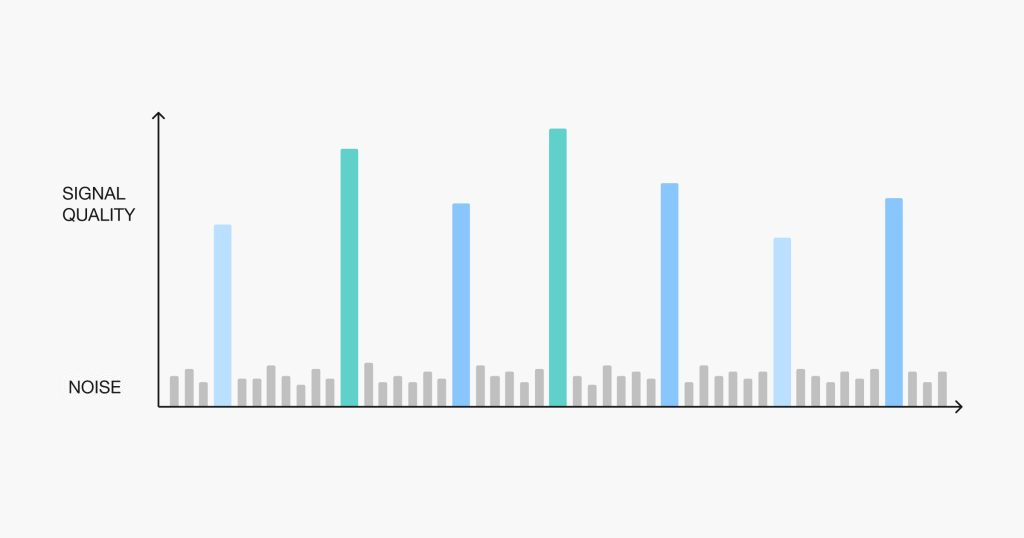
“That groundwork matters more now. As marketing teams push AI into bidding, budget allocation, and creative selection, the underlying signal’s quality decides whether AI compounds advantage or compounds error. Bad data fed into an algorithm doesn’t average out, it scales. It’s already showing up as a bottleneck: 36.3% of marketers cite siloed, disconnected data as their top barrier to using AI effectively, and another 34.4% point to inconsistent measurement definitions across channels (EMARKETER/AppsFlyer, May 2026). AI can replicate a feature in a quarter. It can’t replicate a decade of chain-of-custody discipline or audit trails. As functionality gets much easier to copy, governance becomes the part that’s structurally hard to displace.”
4. Fraud forced signal verification into core infrastructure
Mobile attracted serious fraud early, and at a significant scale. Click flooding, SDK spoofing, and install farms weren’t edge cases. They were common enough that fraud detection stopped being optional and became infrastructure.
The scale of what mobile has had to detect and filter is striking. According to AppsFlyer’s State of Fraud report, about 15% of installs are fraudulent. Spoofing (fabricating devices, users, and in-app events from scratch) was the fastest-rising fraud technique of 2025. For one full quarter in 2025, Social Media iOS installs showed a 275% Real Users Lift (measures fake installs as a ratio of real ones). In other words, three in four installs in that channel were fake. Finance Android has held at just 50–53% Real Users Lift for five straight quarters running.
Store validation fraud accounted for 67–73% of all detected iOS fraud throughout 2025. That’s not a minor leak, that’s the majority of fraud on the platform hiding in a single technique, and mobile measurement still caught it.
5. Attribution complexity raised the engineering floor
Some of mobile’s advantages aren’t visible in a stat. They’re structural. Connecting a single user’s path from an ad click, through a store download, to the first app open across three separate environments, with no persistent identifier holding it together, required engineering that web attribution never had to build. The web mostly measured one continuous session. Mobile had to stitch together a fragmented one.
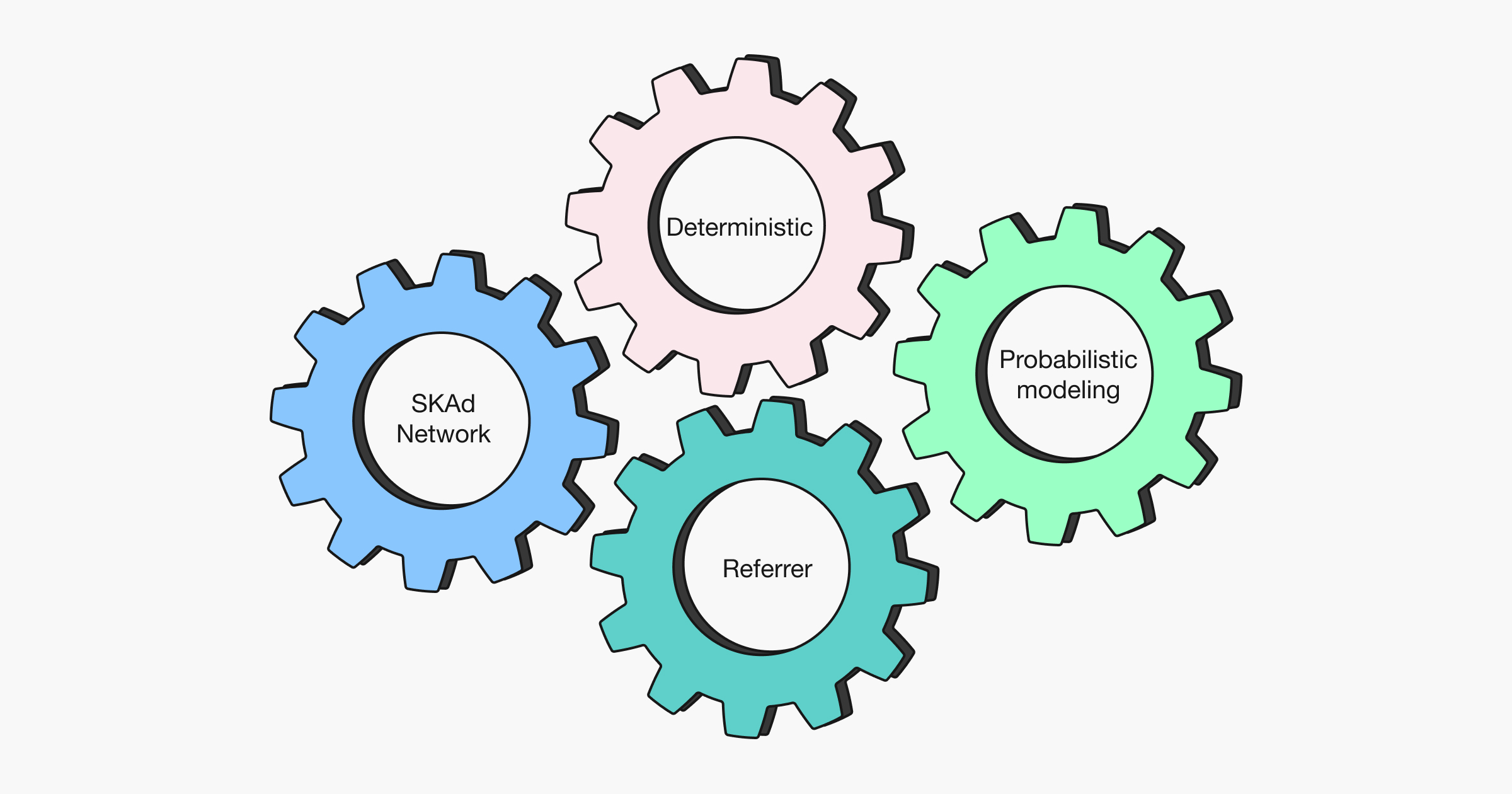
That engineering problem compounds because mobile doesn’t run one attribution method, it runs several at once. Deterministic attribution for the signals that support it. Probabilistic modeling where device-level data isn’t available. Referrer-based methods for specific platforms. SKAdNetwork’s aggregated, Apple-controlled signals layered on top of all of it.
Each method has different latency, different confidence levels, and different blind spots. Mobile measurement platforms had to build the logic to decide, signal by signal, which method to trust and when and do it fast enough that marketers could still make same-day budget decisions. That kind of signal hierarchy doesn’t exist in most other channels, because most other channels have never needed it.
6. Two fragmented platforms, one coherent measurement output
Mobile is built with inherent fragmentation. iOS and Android don’t just have different app stores — they have different privacy frameworks, different attribution APIs, and different identifier systems entirely. SKAdNetwork and Google’s approach to privacy-preserving attribution diverge in fundamental ways: what data is available, when it arrives, how it can be used. Mobile measurement had to make both ecosystems produce one coherent, comparable view of performance.
No web analytics tool faces that structural split. A browser is a browser, largely consistent across the open web. Mobile measurement had to reconcile two platforms that don’t just differ in implementation, they differ in philosophy about what marketers are even allowed to know.
Mobile-grade measurement is the foundation. Connecting the dots is the next step.
Getting each channel to mobile-grade rigor solves the single-channel problems. It doesn’t automatically solve the cross-channel one. That’s where a cross-platform measurement framework comes in. A complete one has five components:
- Customer Unique ID (CUID): A persistent identifier, usually a hashed email or login ID, that stitches customer activity across surfaces.
- Product line grouping: Groups multiple apps and digital assets under one reporting umbrella, so you see the complete customer funnel regardless of which device or surface your customer engaged with.
- Unified attribution logic: Applies consistent attribution windows and event definitions across all channels.
- Real-time data access: Makes stitched data available in dashboards, BI systems, and AI tools.
- AI-ready data: governed, structured, clean, verified, deduplicated, context aware, with consent mechanisms in place
The cross-channel layer doesn’t replace mobile-grade rigor. It depends on it.
The final word
The final word
None of this happened because mobile marketers were smarter or more forward-thinking. Privacy regulation hit mobile first and hardest. Fraud found mobile early and stayed. Two incompatible platforms forced mobile measurement to solve problems no other channel had to touch. The constraints came first. The standard got built in response.
Every channel now facing its own version of these problems is walking a path mobile already mapped. AppsFlyer has been part of building that mobile standard from early on, helping marketers turn a fragmented, privacy-constrained, fraud-prone environment into one of the most rigorously measured channels in the industry.
As that same rigor becomes table stakes everywhere else, the infrastructure built for mobile is exactly what the rest of the omnichannel world is reaching for now.