
From Corporate Banking to Web3 Gaming: Irene Umar on Building YGG Southeast Asia
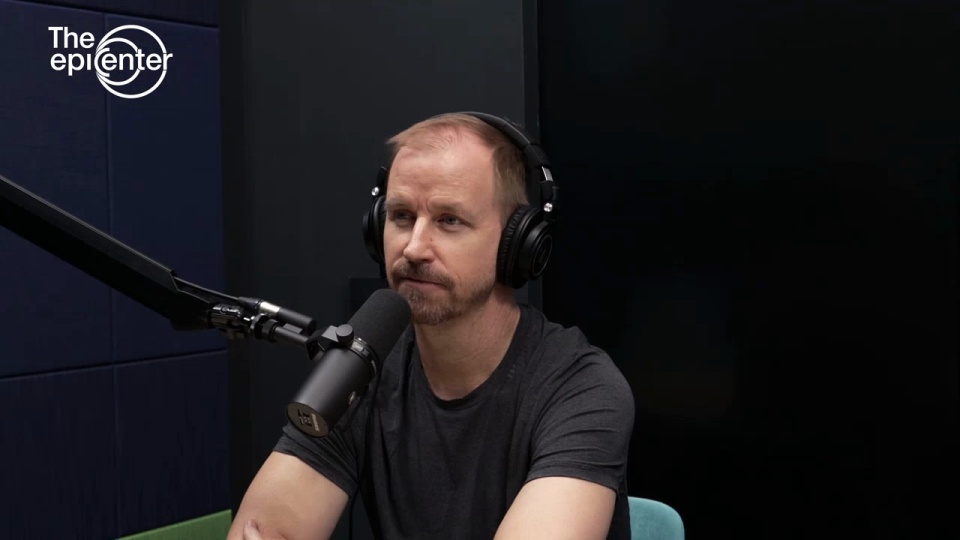
Irene Umar
0:00
0:00
Featuring

Irene Umar
Co-Founder, YGG Southeast Asia (YGGC)

Episode summary
Irene Umar spent seven years in corporate banking across Singapore, Dubai, and India before realizing she was chasing the wrong metric. Promotions, bonuses, and a stable title had left her hollow. She quit, spent a year in Jakarta working in education management, and stumbled into blockchain gaming almost by accident — at a hotpot dinner with Chinese investors who would go on to back her first gaming fund. That fund eventually connected her with Gabby Dizon of YGG, and she co-founded YGG Southeast Asia to build a gaming guild specifically rooted in the region’s communities.
YGGC operates as a bridge between Web2 and Web3. The guild lends NFT game assets to scholars — players who otherwise couldn’t afford entry — and splits earnings with them, with YGGC’s minimum take being 30%. But the model isn’t purely economic. Irene describes onboarding scholars who had never held a bank account, tracking one early scholar — a former staff member nobody else wanted to hire — who went from unemployment to a full university scholarship in under a year. The guild now has approximately 20,000 active daily scholars and is actively trying to reach stateless refugee communities who could use blockchain wallets as a form of financial identity.
Irene’s philosophy is built around a concept she calls “oneness” — the idea that technology, when applied correctly, can dissolve the nationality, race, and class barriers that Web2 has only sharpened. She sees Web3 gaming as a rare space where people connect over shared interest rather than credentials. YGGC’s longer-term goal is to expand beyond gaming scholarships into a full ecosystem of community-generated income streams, including event representation, cosplay roles, and bounty-based engagement tools — all developed to keep game partners from having to fly in, which she frames explicitly as both a cost and carbon-reduction strategy.
Key highlights
On why fundamentals beat hype in Web3 investing:
“Founders are very important. Speak to the founders. Understand what is their vision, what is the why of what they’re doing — because why they do certain things will be the ones that hold them to stay in the business and to do whatever it takes to make it successful.”
On why she left banking:
“I get promoted, I get all the bonuses, all the nice things. And I look at myself in the mirror — why am I not feeling anything? I felt like I was ungrateful, but there was something missing. So I attended the resignation.”
Episode Timestamps:
*(01:18): Irene introduces herself as co-founder of YGG Southeast Asia
*(02:22): Transition from corporate banker to entrepreneur — seven years in banking, Dubai, India, Singapore
*(06:32): How the banking career drove her to depression and led to meditation and wellness
*(08:00): Returning to Jakarta, working in education management, and meeting her first investors at a hotpot dinner
*(09:01): Starting a gaming investment fund and connecting with Gabby Dizon of YGG
*(10:00): Why Web3 gaming mirrors the free-to-play transition — “nobody says free-to-play anymore”
*(11:01): What a gaming guild actually is — historical roots, medieval guilds, modern apprenticeship model
*(12:00): The scholarship model explained: lending NFTs, revenue splits, and the controversy around “digital slavery”
*(14:15): Educating scholars to buy their own assets and eventually graduate to running their own guilds
*(16:00): Post-pandemic shift to offline events — representing game partners at NFT festivals in Indonesia, Thailand, Malaysia
*(20:11): Start with Why — what’s driving Irene’s work across YGGC, coaching, and sustainability
*(21:34): The concept of oneness: how blockchain and gaming dissolve racial, national, and class divides
*(27:09): The moment YGGC clicked — being thrown into YGG’s community anonymously to learn from the ground up
*(27:30): First scholar story: a fired employee who went on to earn a full university scholarship in under a year
*(28:45): Refugee communities as next frontier — how blockchain wallets could create financial identity for stateless people
*(29:43): Current size: ~160,000 total batch members, ~20,000 active daily scholars
*(30:02): How game developers can partner with YGGC via ygc.io — bounty hunter tool, community events, tournament representation
*(33:00): Rapid fire — if not an entrepreneur; message for female founders; favorite poem; investment philosophy for 2023
Transcript
[00:00:00] Ronen Mense: Epicenter. Here we go. Welcome to another exciting episode of. [00:00:15] Epicenter. Um, this is an in-depth series of interviews with renowned, uh, business leaders and industry influencers who are of course shaping today’s digital economy. Um, to check out previous episodes, go to [00:00:30] www number one epicenter.co. Today’s guest is Irene Umar.
[00:00:37] Um, you were a corporate banker. You turned. Blockchain entrepreneur, [00:00:45] you’re a full on, uh, yoga. You have meditation instructor, a coach. Oh gosh. And I mean, we’re gonna find out more about you, but, but. Tell us, tell us a little bit about who is Irene Umar?
[00:00:59] Irene Umar: First of all, [00:01:00] she’s a human. Full stop.
[00:01:01] Ronen Mense: Full stop, period.
[00:01:03] End of podcast.
[00:01:05] Irene Umar: Yeah. So o of course, I always joke about this, right? Uh, that who am I, I’m a human first, and the rest of it, I just. Accolades and titles and it doesn’t really [00:01:15] define like who you are as a person ideally, right?
[00:01:18] Yeah.
[00:01:18] Uh, but I think people know me now as the co-founder of YGG Southeast Asia, a gaming guild that focus in Southeast Asia, and, um, we’ll talk about that later on.
[00:01:27] But it’s interesting. How did you get that part about. [00:01:30] Yoga, meditation. I don’t do yoga. I try to,
[00:01:33] Ronen Mense: I, I, I knew it was something to do with, uh, yoga or meditation. Actually. Uh, one of the co-producers, ANU Palm was like, you know, she’s also a meditation instructor, or
[00:01:42] Irene Umar: Oh my goodness. Yeah. Well, you need that to keep [00:01:45] yourself sane, especially in this industry.
[00:01:47] Right.
[00:01:47] Ronen Mense: So, so how often do you meditate?
[00:01:49] Irene Umar: Every day
[00:01:50] Ronen Mense: For how long?
[00:01:51] Irene Umar: At least 15 minutes in the morning and, uh, before you go to bed.
[00:01:55] Ronen Mense: Wow.
[00:01:56] Irene Umar: Yeah.
[00:01:56] Ronen Mense: I, uh, I’m, I just completed a 300. [00:02:00] They streak.
[00:02:01] Irene Umar: Wow. Streak.
[00:02:02] Ronen Mense: Yeah.
[00:02:03] Irene Umar: Wow. That’s fantastic. And I’m sure that you feel a lot better, right?
[00:02:06] Ronen Mense: I’m, I’m pretty sure I do.
[00:02:10] Irene Umar: I hope so. Yeah.
[00:02:11] We’ll find out after the podcast.
[00:02:12] Ronen Mense: We will, we will. So, um, [00:02:15] back to you, human, not, uh, not a chat bot or, uh, ai, right? Um,
[00:02:20] Irene Umar: I think so. The last time I checked,
[00:02:22] Ronen Mense: so. You, you, you like a bit about your history, you were a banker. Yep, I was. Um, tell us about, you know, how, how [00:02:30] you. Go from banking to blockchain to meditation.
[00:02:33] Irene Umar: Yeah. I, I started my career as a corporate banker. Right? ’cause that’s the cool thing to do. Mm-hmm. Back then. And all parents want you to have a stable job and a cool job. So get into [00:02:45] corporate finance. And so that was where I was. Um, that job took me to a couple of countries. It took me to Dubai. India. I lived there for a year.
[00:02:55] Wow. And Singapore as well. And um, it was a really nice [00:03:00] job, right? It’s comfortable. I learned a lot of things. I was doing shipping, finance, project financing, coal mining and whatnot, you, you name it. And also leveraged financing. But after seven or eight years. Sort of ask myself, is [00:03:15] this what I want to do for the rest of my life?
[00:03:17] Right? And ‘
[00:03:18] Ronen Mense: cause you’re human.
[00:03:19] Irene Umar: Because I’m a human and I live by the principle of, um, you know, sun. Is is business, right? Yes. In Chinese, yes. But if you look into, [00:03:30] uh, each word and literally translate it, certain e basically is business, but it literally translated meaning meanings of life. Life, yeah. So doing a business have always been something that I wanted to do since I was a kid.
[00:03:43] Heck, I gave my first business [00:03:45] proposal to my dad when I was in primary school. Clearly it was rejected, but I should remember clearly what it was. And, um, so I thought, what, what
[00:03:53] Ronen Mense: business was that
[00:03:54] Irene Umar: I wanted to create? A dog park, right? A place for dog that [00:04:00] is end to end, you know, from birth. You have the hospital, you have the gym, and the dogs could roam free.
[00:04:07] And also we, I want to have a hospital for them, even all the way to the funerals. Mm-hmm. Because as a kid, I have a lot of dogs.
[00:04:14] Ronen Mense: Mm-hmm.
[00:04:14] Irene Umar: [00:04:15] And when the, when they pass away, of course I was heartbroken.
[00:04:17] Ronen Mense: Right.
[00:04:18] Irene Umar: And growing up as a Buddhist, I always have something to pray to. My grandma and grandpa, aunts, whenever I have exams to do.
[00:04:24] But I have nothing to go to when it’s my pet. So I came up with that idea and show it to my [00:04:30] parents.
[00:04:30] Ronen Mense: Do you know that they do not euthanize pets here in Thailand?
[00:04:35] Irene Umar: Oh, that is gonna be a, a whole day of podcasts if we go this. That is a whole
[00:04:39] Ronen Mense: podcast in itself.
[00:04:40] Irene Umar: But why? Okay.
[00:04:42] Ronen Mense: Buddhist, you have [00:04:45] to complete life naturally.
[00:04:48] Irene Umar: Wow.
[00:04:48] Ronen Mense: Yeah. Okay. Uh, I euthanize my pet here. Oh yeah. He was pretty sick. Okay. But anyways, that’s another podcast. Yes. [00:05:00] Ba back to the show. I’m trying
[00:05:02] Irene Umar: my best.
[00:05:02] Ronen Mense: Yeah. To stay on track. Oh, a dog. A wellness park. Uh, wellness. It would probably be called a wellness center right now. For, for, yes. For a doc. For animal, yeah.
[00:05:12] Yeah. Okay.
[00:05:12] Irene Umar: It’s specific for docs for, because I love [00:05:15] docs, but I love Yes, of course. If we could extend it to other animals, that would be great. Right? I love dogs. Yeah, me too. They’re the best. Yes.
[00:05:22] Ronen Mense: Okay. So your first business proposal, your dad shot you down, um, probably on the basis that you needed [00:05:30] like a bunch of land and he’s like, where are we gonna get that?
[00:05:32] Irene Umar: No, it’s simply because I was too young and he was too busy. But to be fair to him, he sat me down in the evening and he gave me a whole bunch of feedback mm-hmm. Of feedback of uh, what to do and what not to look out for.
[00:05:43] Ronen Mense: Yeah.
[00:05:43] Irene Umar: And so. Um, [00:05:45] I felt that he gave me a lot throughout my life, right. Growing up. Uh, he gave me a lot of tools that somehow I use up until today.
[00:05:55] Ronen Mense: Mm-hmm.
[00:05:55] Irene Umar: Right. In life and in in business as well. And so when I was at [00:06:00] the, at the peak of my corporate life, sort of feel that. Uh, you know, I wanna give it a shot. Mm-hmm. I was young, right, right. A lot younger. This was 10 years ago. What’s the worst that could happen? I don’t want to be 80 or 70 or 60 years old wondering what if.
[00:06:14] [00:06:15] So I told myself, you know what, give yourself two, three years. Mm-hmm. Right. Try to do it. I didn’t know what to do. And if you fail or you feel miserable or if it’s not for you, you could always come back to the job market. Someone will take you for sure. So with that, [00:06:30] I, I quit. Quit the
[00:06:31] Ronen Mense: banking industry.
[00:06:32] Irene Umar: Quit the banking industry. And a lot of people question why. Right? Um, it, it drove, it drove me to depression without me knowing. And that was why I went into wellness. ’cause uh, I went into meditations [00:06:45] to find the meaning of life and the past of what I could explore. ’cause I wanna live life to the fullest.
[00:06:50] And I felt that I wasn’t, uh, it almost felt like, you know. You get promoted, you get, uh, all the bonuses, right? All the [00:07:00] nice things. And I look at myself in the mirror, why am I not feeling anything?
[00:07:03] Ronen Mense: Mm-hmm.
[00:07:04] Irene Umar: Right. And I, I felt like I was ungrateful, but there was something that’s missing. I didn’t know what, so I, I remember taking out my credit cards, going to Orchard Road and trying to [00:07:15] shock my way to happiness.
[00:07:16] Mm-hmm. It did not work. And so I’m like, you know what, it’s either I lose myself or. Uh, you know, like something needs to change. And so yeah. So I attended the resignation.
[00:07:29] Ronen Mense: Okay. [00:07:30] And I never, and you were in Singapore at that point?
[00:07:31] Irene Umar: I was in Singapore at that point. Okay.
[00:07:33] Ronen Mense: So you’ve left the banking industry.
[00:07:35] Irene Umar: Yep.
[00:07:36] Ronen Mense: And where did you land?
[00:07:38] Irene Umar: I did not do much for the next year or so. I did a whole bunch of random stuff, went back to Jakarta. [00:07:45]
[00:07:45] Ronen Mense: Mm-hmm.
[00:07:45] Irene Umar: Um,
[00:07:46] Ronen Mense: you are from Indonesia?
[00:07:47] Irene Umar: I’m from Indonesia, yes. Forgot to mention that.
[00:07:50] Ronen Mense: Small detail.
[00:07:51] Irene Umar: Yes. And, um, I went back to my university, uh, because I, I got a scholarship, uh, back then, right?
[00:07:59] Mm-hmm. And [00:08:00] so, uh, the owner of the university asked me like. Do you wanna do something for your alma mater? Mm-hmm. So I went back to the education world for a year, uh, and learned a lot of that side of the world of how education is run. Uh, I [00:08:15] was in the foundations and uh, we were running. Universities, but the foundation also have, um, primary school and secondary school.
[00:08:24] So that exposed me to the education part. That actually helps me in the management of Gus right [00:08:30] now. Um, for more or less a year, and then a whole bunch of friends get together for hotpot. I was in plant base at that time. It was difficult to find people who like hot pot in Indonesia. Yeah.
[00:08:40] Ronen Mense: Tofu, hot pot.
[00:08:41] Irene Umar: And No, this is the hot side. The real hot [00:08:45] pot, ma. Yes. And those bunch of people were from China. Right. And, uh, I didn’t wanna meet them, but because it’s hot pots, so I met them and those turn out to become my investors for a gaming [00:09:00] fund that I set up later that year.
[00:09:01] Ronen Mense: Mm-hmm.
[00:09:02] Irene Umar: And, um, since then I’ve been in gaming.
[00:09:05] And that’s how I get to meet, uh, Gabby, uh, from YGG. Mm-hmm. And whole bunch of cool people that have been in gaming space for almost a decade now. Really?
[00:09:14] Ronen Mense: Mm-hmm. Gabby [00:09:15] is, uh, yeah, he’s a, a gaming legend. He is an og. What’s up Gabby?
[00:09:22] Irene Umar: He is an OG indeed. And, um, yeah, we had a really, really good time back in web two.
[00:09:28] Yeah. And that’s why even [00:09:30] until today, uh, we always go back to the web two conferences and see how we could contribute and, you know, share our experiences with, uh. The game developers who are currently developing Web two games to see how we could help them to transition into [00:09:45] Web3 and also change the perspective of Web3 gaming.
[00:09:47] Mm-hmm. Because, uh, for us, we feel that we don’t want our, our, uh, fellow game developers, friends to miss out.
[00:09:53] Ronen Mense: Mm-hmm. Because
[00:09:54] Irene Umar: it’s the same, um, intersection as what it was when free to Play comes in. And so [00:10:00] in the end of the day, nobody says free to play anymore. Right. I feel that the same thing is gonna happen to, you know, play to earn games.
[00:10:06] It’s, it’s gonna be games in the end of the day. And the best people that I’ve known to create good games mm-hmm. Are those people who are in the web 2.0 space [00:10:15] now.
[00:10:15] Ronen Mense: That’s right. That’s why you gotta go from web 2.0 to 2.5 to Web 3.0 right?
[00:10:20] Irene Umar: Precisely. If I have to go to 2.1, I would,
[00:10:22] Ronen Mense: well, you need a bridge, right?
[00:10:23] I mean, it’s not the, it’s not such an easy, uh, transition.
[00:10:27] Irene Umar: Interesting that you mentioned that because every time I [00:10:30] meet people and they ask me, what is YGGC? ’cause not a lot of people know what Gill is. Mm-hmm. I’ll just say that we are a bridge from web two to Web3, bridge from the internet, H to the metaverse H, and we are that friendly face.
[00:10:41] Ronen Mense: So YGGC Yeah. [00:10:45] Became kind of like an overnight sensation in a pandemic. Right.
[00:10:48] Irene Umar: Oh really?
[00:10:49] Ronen Mense: Didn’t it?
[00:10:50] Irene Umar: I hope so.
[00:10:52] Ronen Mense: I mean, what were you guys doing? Because I mean this, this whole guild concept wasn’t really. It wasn’t really there. So what is a guild and, and how [00:11:00] did this take off?
[00:11:01] Irene Umar: Sure. So a guild concept is actually not something new, right?
[00:11:04] Mm-hmm. A lot of people hear about it because of the peak of pandemic, but if we look at the history of guild itself mm-hmm. It’s been in existence since pre medieval age, right? Where that’s how [00:11:15] the society is, that’s how society works, where you have, uh. The, the people who are good with wood, the people who are good with steels get together and perfect the skills.
[00:11:24] And they have what I call, they make an
[00:11:26] Ronen Mense: ax.
[00:11:27] Irene Umar: Yeah. They make an ax.
[00:11:28] Ronen Mense: Yeah.
[00:11:28] Irene Umar: And whatever that they [00:11:30] wanna make. Right. And, uh, there’s app apprentices, uh, system as well in that system, in that model, that was how the society works. And then come to the modern society. Uh, you, if you play certain. All games. Right, right.
[00:11:43] There’s also a guild [00:11:45] model that’s there where a whole bunch of communities get together and do a certain quest or certain craftings or certain acts together. Now coming to the Web3 space, it’s tweaked a little bit differently and a lot of people would know the Guild as scholarship model. Mm-hmm. And that’s it.
[00:11:59] [00:12:00] But, uh, for those who do not know what scholarship model is, uh, with the game, vibe, uh, or play to earn. People usually have to buy an NFT and NFTs are not cheap, especially at, at the bull market last year. Right? Right. NFTs are like, if you [00:12:15] play certain games, you have your certain characters. Those are the NFTs, the, the characters, the skins, those are NFTs.
[00:12:20] So. W com combine that with pandemics where a lot of people lose their jobs, right? We see that there’s, this is an opportunity to give people a way of [00:12:30] one earning and second, also learning about, uh, crypto. ’cause crypto and blockchain is not something new, but the adoption has been very slow. And so when gameify come to space, this is a gamified version of educating people about crypto.
[00:12:42] At least that’s how we see. So
[00:12:43] Ronen Mense: basically you’re, you’re [00:12:45] kind of like turning it into. Almost like a utility. Like this is the technology and this is how you use it.
[00:12:51] Irene Umar: Yep.
[00:12:51] Ronen Mense: This is how you can actually apply it and earn money and, and Right.
[00:12:56] Irene Umar: So we actually bring them through, through the, the phases, right?
[00:12:59] Because [00:13:00] 95% of community members are crypto virgins to start with. They
[00:13:03] Ronen Mense: crypto virgins. Yeah. Did you say virgins? I did. You’re gonna have to censor that on this podcast.
[00:13:09] Irene Umar: Beep, beep, beep. It’s a, a lot of, most of them are, they didn’t [00:13:15] know, they never heard about crypto at all. Right? Uhhuh especially. Even small portions of communities did not have a bank account running it.
[00:13:23] So we, we do have that small pockets of communities.
[00:13:26] Ronen Mense: Were they even old enough to have a bank account?
[00:13:28] Irene Umar: Of course they were. All of them [00:13:30] have a 17 and above.
[00:13:31] Ronen Mense: Okay.
[00:13:31] Irene Umar: We made sure of that. Okay. Yeah. So, um, back to the Guild models, right in the beginning it was scholarship where. We buy those assets. And we land it out to, to the communities that we call scholars, [00:13:45] and then we do a revenue split with them.
[00:13:47] Mm-hmm. And, uh, YGG is always very well known to become the generous guild because back then there was, there was a lot of controversies. Right? Right. If you remember, like, a lot of people say that this is [00:14:00] slavery because a lot of people just, you know, pay a hundred bucks. For players to play and then the earnings was a thousand bucks.
[00:14:06] For us, what we do is we do 70% split to the players at Axi Uh, the minimum split that we do even until today is 50%. Mm-hmm. Uh, on certain [00:14:15] games. Right. And so for the scholars, they continue to earn their, the, the money. But for us, we always tell them that guys, even at blue, uh, blue Market, yeah. Uh, try to see how you can save up.
[00:14:28] And use the first crypto [00:14:30] tokens that you earn to buy your own assets.
[00:14:32] Ronen Mense: Mm-hmm.
[00:14:32] Irene Umar: So that they could experience it without using their money that they don’t earn from crypto.
[00:14:37] Ronen Mense: Correct.
[00:14:38] Irene Umar: That’s one way of doing it because we see that this might not be very sustainable in the long run. Right, right. Uh, Guild [00:14:45] cannot dominate the owning the entire NFTs.
[00:14:47] They need players to own the NFTs. So we started educating that back in December last year. And so granted a few of our scholars graduated, they have their own, uh, NFTs and they even have their own guilds, uh, at that time. [00:15:00] Yeah.
[00:15:01] Ronen Mense: Why G-G-S-E-A is now a year plus old? Yeah. So you’ve just celebrated your first birthday.
[00:15:09] Yep. Congratulations. Thank you. Um. Where are you guys now?
[00:15:13] Irene Umar: Right now? I mean, the pandemic
[00:15:14] Ronen Mense: is [00:15:15] over. A lot of things have changed.
[00:15:16] Irene Umar: Is it really over?
[00:15:18] Ronen Mense: I don’t know. Well, uh, well, yeah, we could say that, that China has just opened up. So I think, uh, it, it’s fair to say that the, uh, the last, uh, kind of holdout is, [00:15:30] or the last.
[00:15:31] Country is now kind of on the open. So
[00:15:33] Irene Umar: True. True. We start to accept that and embrace it as part of our daily life. Right, right. Yeah. So, um, it’s, it’s been exciting for us. I think, um, with, with the pandemic or COVID [00:15:45] being over, we started. Seeing that in April, right? April of this year. And that was when we start to do our first offline events in the first NFT Festival in Indonesia.
[00:15:57] And, uh, the turnout was great and we [00:16:00] see that, uh, offline events is very much required. And so this year alone, we have done. If I’m not mistaken, four to five major events where we represent, uh, game companies to be in those, in those booths. Mm-hmm.
[00:16:12] Ronen Mense: But
[00:16:12] Irene Umar: what’s interesting is every time we do [00:16:15] events, uh, be it, uh, big scale or medium scale, it’s, we always involve our communities in it.
[00:16:20] Mm-hmm. Because for us, we want to be, we wanna be the one to give, you know, the first taste of a lot of things in the metaverse for our, our communities members. [00:16:30] First is the first taste of creating a wallet, uh, playing, uh, games. Right. That are. There are, uh, game five base, and right now with the pandemic being open, we wanna s we wanna see how we can give them other jobs.
[00:16:42] Ronen Mense: Mm-hmm.
[00:16:42] Irene Umar: So the other jobs that we’ve created are, [00:16:45] uh, that we give to the community leaders. Community helpers are, um, cosplay, for example, cos players Co
[00:16:53] Ronen Mense: COS,
[00:16:54] Irene Umar: uh, cos. Like C-O-S-P-L-A, like anime,
[00:16:57] Ronen Mense: like dress up and, yeah. Okay.
[00:16:59] Irene Umar: [00:17:00] So, uh, we, we did
[00:17:01] Ronen Mense: virgins and cosplay. This is
[00:17:03] Irene Umar: very interesting. Well, welcome to the world of gaming,
[00:17:07] Ronen Mense: right?
[00:17:08] Yes.
[00:17:08] Irene Umar: So, um, if, if you were there, you’ll be missing out, right? If you were not there. Last, I’ve been to
[00:17:13] Ronen Mense: Tokyo Game Show. I mean, [00:17:15] not, not
[00:17:15] Irene Umar: Tokyo, the one here.
[00:17:16] Ronen Mense: Oh really?
[00:17:17] Irene Umar: Yeah, we did it here in Thailand. Right here. Okay. Uh, so there was an event where we represented, uh. Two of Game Co. Two of our game partners, um, Geno Pads, no Geno Pads, didn’t have a cosplay, [00:17:30] um, mixed Mob and Galaxy Fight Club.
[00:17:33] Mm-hmm. In Thailand and in Malaysia, and they needed communities to dress up, obviously. Right. And we want people who dress up to also understand and play the games. So [00:17:45] we recruit from our community, uh, communities.
[00:17:48] Ronen Mense: Mm-hmm.
[00:17:48] Irene Umar: And even those people who manned the booze. Proud to say that every single one of them are community leaders or community helpers because they are the best people.
[00:17:56] Right. I’m useless. In Thailand, you might be more [00:18:00] useful because I don’t speak, I’m useless too. You speak the language. No, I don’t.
[00:18:03] Ronen Mense: You dunno. Not good enough to, to represent anything.
[00:18:07] Irene Umar: But at least you know, you could say hi and whatnot. I’m completely useless here. Right. I can’t even order my own food. So we see that a lot [00:18:15] of game developers, if they fly in.
[00:18:17] Uh, carbon footprints is number one. Mm-hmm. Second is cost.
[00:18:20] Mm-hmm.
[00:18:21] So all our game partners, in all the community events that we do, big scale, all small scales, they don’t come. Mm-hmm. We represent [00:18:30] them fully. So by doing so, they save up the cost and they help me to save the environment.
[00:18:35] Ronen Mense: You’re the first one that’s been in this room that said virgin and carbon footprint.
[00:18:41] Irene Umar: Isn’t that a good thing?
[00:18:42] Ronen Mense: I, I think the carbon footprint is an important one. [00:18:45] Why, why is that? Is it just to save money or, or, or there’s real, um, sustainability, uh, behind this?
[00:18:52] Irene Umar: Well, it’s a personal mission, right? For me to, uh, see. Of course I travel a lot. I haven’t been a good person in doing in, uh, [00:19:00] representing this.
[00:19:00] But as much as possible, I feel, uh, travels by plane is one of the bigger contributions to the carbon, uh, to the carbon emissions. And so if we could save up on that, right. It’s a lot more efficient [00:19:15] economically and also environmentally, so why not? Right? Because a lot of people feel that if we have to do something to save the environment, it’s something that’s extremely difficult and costly.
[00:19:25] But there are many ways on how we could do so, uh, efficiently [00:19:30] and. Well, like what we are doing here.
[00:19:32] Ronen Mense: Yeah,
[00:19:33] Irene Umar: yeah,
[00:19:33] Ronen Mense: yeah. Podcast room with, uh, some lights. A lot of tech surrounding us.
[00:19:39] Irene Umar: Well, this, this cup here is an example of how we save the environment. Right?
[00:19:43] Ronen Mense: Reusable.
[00:19:44] Irene Umar: Reusable. That’s [00:19:45] right. Cheers to that.
[00:19:45] Ronen Mense: Cheers.
[00:19:50] No, we’re not done.
[00:19:51] Irene Umar: It’s a good excuse to drink
[00:19:53] Ronen Mense: water. We’re not. So, so we talked about, um, the guilds. We talked about Y-G-G-S-E-A. We talked about where you guys are right [00:20:00] now. Right. And I think one of the things that we’ve come to know about you is, is you are a big, um, kind of proponent of the start with why.
[00:20:11] Irene Umar: Mm, yes,
[00:20:13] Ronen Mense: yes, yes. So. [00:20:15] Why, why are you doing this?
[00:20:18] Irene Umar: Why am I doing YGGC?
[00:20:20] Ronen Mense: Why are you doing YGGC? Why are you doing, uh, coaching? Why are you doing meditation? Uh, why are you, uh, why are you so conscious about carbon [00:20:30] footprint?
[00:20:30] Irene Umar: Well, I think it’s about consciousness, right? Mm-hmm. There is a t-shirt in Uniqlo that, um, I know I need to buy a couple of those that says, uh.
[00:20:39] Technology has evolved.
[00:20:41] Mm-hmm.
[00:20:41] Humanity needs to follow.
[00:20:44] Mm-hmm.
[00:20:44] [00:20:45] Uh, and I feel it’s very true in today’s context. Um, COVID, the pandemic has taught a lot of us to turn inward
[00:20:52] mm-hmm.
[00:20:53] Into ourself because we are forced to, we are being basically jailing our room. Right. And that I think gives a lot of, [00:21:00] um, perspective.
[00:21:01] To a lot of people, I hope at least. And so for me, I, I’m always thinking like, what can I do better for myself, people around me, and also for the environment. I don’t wanna be just be born coast [00:21:15] along and then. Buy, and that’s it, right? Mm-hmm. I, I want to do my part. Mm-hmm. At least that’s, that’s how much I want to do it now, one by one.
[00:21:23] Is that why I do, uh, Y-G-G-C-Y-G-G-C is basically a, a vehicle for me to get [00:21:30] closer to where I want to be. Mm-hmm. On my. What I stand for.
[00:21:34] Ronen Mense: Mm-hmm.
[00:21:34] Irene Umar: And what I stand for in life is, uh, oneness. Oneness. Meaning the world that we are at today is not oneness. Where people are divided by, you know, the race, [00:21:45] religions, countries, nationalities and all right.
[00:21:46] Everything. Yes. So I feel that blockchain is a, a shot. Blockchain is a, technology is a shot for humanities to come together because if you look at it, um, when you go into discord, right? In gaming, especially. [00:22:00] You don’t ask where you come from. Mm-hmm. You don’t ask, what do you do as a job? You ask, Hey, what games are you playing right now?
[00:22:07] Or you ask like, how do you get to that level?
[00:22:10] Mm-hmm.
[00:22:11] So it’s, it’s about genuine interest, right? Common interest [00:22:15] that people have, that people chat about in, in that, in that discord and that that purity and innocence and is, is what I, I feel very refreshing.
[00:22:27] Ronen Mense: So this is interesting because I, I, I think that [00:22:30] oneness is, is definitely, um, doesn’t exist in, in the current, let’s call it the web two world, right?
[00:22:38] Um, but when you look at Web3, there’s so much, [00:22:45] um, like the, there’s the Wag Me philosophy, right? Yeah. We’re all gonna make it together. For those of you hashtag A-G-M-I-T. No. Yeah. Yeah. [00:23:00] Um, and, and this really, this really, um. Resonates with you and, and your own philosophy of oneness. Right? And, and I think that’s, but why, why is that, that, you know, in, in web two, you have such a, a winner [00:23:15] takes all mentality.
[00:23:16] You have big tech fighting each other. I mean, you don’t need to look too far from, from what Apple and, and, uh, is doing with meta and, and and things like that. And, and almost like. In, in Web3, it’s, you know, how are we gonna [00:23:30] collaborate together? How are we gonna find a solution? How are we gonna solve this?
[00:23:33] Irene Umar: I, I feel in web two, this sort of oneness do exist, right? Mm-hmm. Um. Life, life needs to be about balance. You, you can’t take it to two [00:23:45] extremes. Mm-hmm. Right. So, um, in, in, what I find oneness in web two is again, in the gaming space, especially the indie game developers, the indie game developers, when you put them together, they talk for the love of games.
[00:23:59] Mm-hmm. And they [00:24:00] are so principled that there are certain things that they will not bend for profits.
[00:24:04] Ronen Mense: Do you have. Example of principles that, uh, indie gamers, uh, apply. Games have to be fun. Games have to be fun, and that that resonates in web two, Web3, web one, web, [00:24:15] whatever. Right? It should resonate in Web3.
[00:24:17] Yes. Yeah. It doesn’t yet. Right.
[00:24:19] Irene Umar: Not there yet.
[00:24:21] Ronen Mense: Not yet. At that
[00:24:21] Irene Umar: level that yes, not there. Not there
[00:24:23] Ronen Mense: comma yet.
[00:24:25] Irene Umar: Correct. And we, we, I think we’re gonna be there. And I see that a lot of people are, a lot of [00:24:30] the players in this space are at least putting in efforts to go there. But for me, I really hope to see a lot more game developers to come in because.
[00:24:39] They have had experience in designing game economics and I think, uh, this will be a [00:24:45] very good playground for them. And I feel that blockchain will be something that can help their, their, to solve their existing problems. Yeah. But other than oneness, another thing that’s big for me is impact, right? Mm-hmm.
[00:24:57] Uh, I was thrown into [00:25:00] this space, introduce right, uh, by Gabby. So when, when Gabby called me up and told me about how did you know him? I knew him from the gaming space. And so
[00:25:11] Ronen Mense: you’ve always been a gamer?
[00:25:12] Irene Umar: Uh, I’m not a gamer, but I invest in [00:25:15] gaming. Okay. So,
[00:25:16] Ronen Mense: so even in your banking days?
[00:25:17] Irene Umar: No, right after my banking days, so I started a fun investing in gaming.
[00:25:21] Okay. We were the first one who does it, and that’s how I, I know Gabby. And we usually escape from conferences so we could go and eat good food. So that’s how we got [00:25:30] close to each other.
[00:25:30] Ronen Mense: Does Gabby consider your food choices now? Good food.
[00:25:34] Irene Umar: Uh, if right now if he said this, I could, hi Gabby. If you are a vegetarian when I know you, I don’t think we’d be friends.[00:25:45]
[00:25:46] Ronen Mense: Mm.
[00:25:47] Irene Umar: But of course he meant it as a joke. Uh, even until now, we still hang out. We still have food together.
[00:25:51] Ronen Mense: I’d, I’d lose a lot of friends too if I started off as a vegetarian.
[00:25:55] Irene Umar: Well, you know what they say, right? Those friends who stick around no matter what are your real [00:26:00] friends.
[00:26:00] Ronen Mense: That’s right.
[00:26:00] Irene Umar: Yeah. And you don’t need a lot of those.
[00:26:03] Ronen Mense: That’s right. Yeah, so,
[00:26:06] Irene Umar: so, yeah, sorry. So when, when I was introduced to YGG and what they do, I knew nothing about it. So I experienced the, the first time I created my, uh, [00:26:15] Ronin wallet, I felt extremely stupid. Not me,
[00:26:18] Ronen Mense: not Ronin me.
[00:26:19] Irene Umar: Yeah. Not, not this one. This is friendly,
[00:26:21] Ronen Mense: friendly Ronin.
[00:26:22] Irene Umar: So, so that one, it was completely foreign, completely new to me and Gabby.
[00:26:27] Was trying his best to wrap it around my head. And [00:26:30] obviously I, I was trying to act smart and like, what is this, what is that? And ask 1,001 questions right In the end, I gave up a gap, just threw me into any part of your community where I could learn the most. You don’t have to say who I am, just, just, just put [00:26:45] me in and I’ll asked a lot of dumb questions and yeah.
[00:26:48] So he was like, okay, I’ll put you in as. Why did you, why did you use community leaders? Mm-hmm. And give you some accounts so you can play with it, and then, uh, we’ll go from there. I said, okay. That was [00:27:00] the beginning of how I, I understood how the entire Guil operates and, um, through my meditation.
[00:27:09] Ronen Mense: Mm-hmm.
[00:27:09] Irene Umar: I could somehow see how this tech.
[00:27:12] Change, uh, potentially bring a lot of changes and [00:27:15] impact in this world, especially to, to the people that could be involved. Right. And, uh, that opens it up for me, but the impact is so real, Ronan, because in the beginning I experimented with all walks of life, right? My first scholar I remember, he was my staff, uh, [00:27:30] in my, in the plant-based restaurants.
[00:27:32] Ronen Mense: Yes.
[00:27:32] Irene Umar: And um, that kid. Nobody can take take him at all because he try his best to understand how work works. But he’s a [00:27:45] gamer at heart. Mm-hmm. And he speaks like a gamer. He’s, yeah. He basically is a hot call gamer. Right. And his background was, he was OD DO, whatever labels that you could put on him, you can put on him.
[00:27:59] Ronen Mense: Mm-hmm. [00:28:00]
[00:28:01] Irene Umar: It was the last width, the, at the last end. Right. That I had to fire him because nobody wanted to work with him. Mm-hmm. But I knew that if I let this young man go, I don’t know what’s gonna happen to him. Mm-hmm. So when, uh, [00:28:15] we started YGGC, he was my first scholar and I saw the changes in him.
[00:28:19] Mm-hmm. And happy to say that in less than a year, he’s now back to university under full scholarship.
[00:28:24] Ronen Mense: Wow. So you’ve made an impact on someone’s life [00:28:30] that no one else could
[00:28:31] Irene Umar: not, no one else could. Anyone could do it, but it, it takes time off up
[00:28:35] Ronen Mense: with labels, right? I mean, it’s just like. Label this, label that, okay, just put that person in the shelf somewhere
[00:28:42] Irene Umar: and going back to it, it’s oneness, right?
[00:28:44] Ronen Mense: [00:28:45] Yeah.
[00:28:45] Irene Umar: So in YGGC we do, we do tackle into these groups, and I’m gonna say it here, if anyone out there can help me to tap into the refugees community mm-hmm. Please do get in touch, because I’ve been trying my very best to get in touch with them. [00:29:00] Because what blockchain tech offers, it will really help the refugees who are stateless right now.
[00:29:06] They could. Create a wallet and they could, you know, somehow quote unquote, be bank.
[00:29:13] Ronen Mense: How [00:29:15] did they get in touch with you or how did they, uh, come to you?
[00:29:17] Irene Umar: Find me In Lincoln or Twitter?
[00:29:19] Ronen Mense: LinkedIn or Twitter. Instagram. Discord.
[00:29:22] Irene Umar: Uh, no, not Discord. Discord. There’s so many messages. Ah, I think Lincoln would be the best.
[00:29:27] Ronen Mense: How big is this community right now? [00:29:30] Uh,
[00:29:31] Irene Umar: active community. I think, uh, we measure it in a couple of ways. They are scholarships and also they are community members, right? Mm-hmm. And, uh, in this court we have 40, 50,000.
[00:29:42] Ronen Mense: Whoa.
[00:29:43] Irene Umar: But, uh, our [00:29:45] batch, which is, uh, YGGC batch, which is Community batch, we have approximately 160, 170,000.
[00:29:51] But the active, uh, daily scholarships that we have is. If I’m not mistaken, as of last week, it should be [00:30:00] around close to 20,000. Yeah.
[00:30:02] Ronen Mense: So if I am a developer of a Web3 game and I wanna tap into that massive community, what, what do I do? Like, do I come and say, Hey, you know, [00:30:15] help, help me.
[00:30:16] Irene Umar: Go to ygc.io. There’s a contact for Contact us form.
[00:30:20] Uh. Interesting that you mentioned that because in ytc.io, we have, as you click enter into the universe, you’ll see a lot of games. When you click [00:30:30] into the games inside, you’ll have game informations, tutorials as well. Everything is in English right now.
[00:30:35] Ronen Mense: Mm-hmm.
[00:30:36] Irene Umar: Uh, as we polish it up, and I can tell you that it’s, it’s still buggy as of today.
[00:30:40] Uh, but we are working to polishing that up so that page will be [00:30:45] accessible to game partners. So they could come in and, uh. Put up their, their information and tutorials. And also we have a feature called as a bounty hunter.
[00:30:55] Ronen Mense: Mm-hmm. That
[00:30:55] Irene Umar: is an engagement features, right? So people could have their, what, whatever [00:31:00] activities that they wanna do, um, into using, using Bounty Hunter.
[00:31:04] And you could use, let’s say for example, you wanna distribute a price of 50 bucks, right? Mm-hmm. And. You post it there, you list out the activities that you want the communities to do, and in the end of the day we have smart [00:31:15] contract embedded into it and it’ll be distributed automatically. So that’s a tool there.
[00:31:18] There are many more tools that we are developing ’cause we understand that we can’t work, um, we can’t work on our own and we don’t not intend to. Speed is key. And so, and we want to collaborate with as many [00:31:30] people as possible to form an ecosystem. And one of them is obviously the game five projects. To give them access to communities, people who have a deeper collaborations with us.
[00:31:39] Uh, we represent them in a lot of, uh, community events. Mm-hmm. Students, events, [00:31:45] campuses, and ada. So next year, for example, we’ll be representing one of the games in a, in a couple of tournaments. Mm-hmm. I can’t, I, I can’t say this out loud now because we haven’t announced it, but Yeah.
[00:31:56] Ronen Mense: So it’s a public podcast.
[00:31:58] Irene Umar: Yes. I [00:32:00] realize that now
[00:32:01] Ronen Mense: this is, uh. This has been pretty cool. Um, I wanna go into a, just a rapid fire session.
[00:32:09] Sure.
[00:32:10] Bring it on, man. Bring it on. Feel the heat. So, uh, probably [00:32:15] an easy question for you, really. Yeah. If you weren’t an, if you were not an entrepreneur, what would you be doing? Now?
[00:32:22] Irene Umar: If I was not an, if I’m not an entrepreneur, I can’t think of anything.
[00:32:28] ’cause entrepreneurship [00:32:30] is in every fabrics of our life. Right. I a small business. Everything is, is business. That’s why the word business comes from the word busy, right?
[00:32:40] Ronen Mense: Mm.
[00:32:41] Irene Umar: So, um, every fabric of our lives, I feel is business. [00:32:45] Even if I, if I don’t do YGGC every single day, what do we do? We wake up, we go out, we go about our business, right?
[00:32:53] So, business is life.
[00:32:56] Ronen Mense: Do you have a message for female founders out there? [00:33:00]
[00:33:00] Irene Umar: Uh, especially
[00:33:01] Ronen Mense: the, the young aspiring ones,
[00:33:03] Irene Umar: do not let a gender to label you. Um, in the end of the day. We are human first before we are male or female. So be the bulldozer and do not let [00:33:15] anything it it. I mentioned about balances, right?
[00:33:17] There are two ways of looking at it. So there are people who feel that as a female I’m restricted, I can’t do a lot of things. There are another side, say at the family side who’s like, I’m a female and hence I need to do A, [00:33:30] B, C, D. Be that neutral balance and just remember that we are all humans and we can do anything that we want to do if we choose to.
[00:33:36] Ronen Mense: I’d love that. Which country was your favorite country to live in?
[00:33:42] Irene Umar: That’s interesting question because until [00:33:45] today I’m still trying to find a place called home. That’s why I travel so much.
[00:33:50] Ronen Mense: There’s carbon footprint there. We gotta watch out for that. Indeed. Um, do you have a big, a big learning from, uh, your investment career that, uh, you might [00:34:00] share to people as we head into 2023 and, uh, some rocky choppy waters ahead?
[00:34:06] Irene Umar: I am, I’m a, even before Web3. Mm-hmm. Uh, I’m a firm believer in fundamentals as a venture capital. I pride myself in not jumping into the [00:34:15] hype. So, uh, founders are very important. Speak to the founders, or if you don’t have the chance to speak to founders, listen to podcasts like what we have today, right?
[00:34:24] And understand what is their visions, what is the why of what they’re doing it, because why [00:34:30] they do certain things will be the ones that hold them to stay in the business and to do whatever it takes to make it a successful business. And hence, to secure your money as an investor. Mm, right. Entrepreneurs and businesses will go [00:34:45] through ups and downs.
[00:34:46] When they go through downs. Doesn’t mean that your money goes to waste as an investor, but it’s more of, yeah. Well, it depends on what kind of investor you wanna be, but for, for me, if you’re a fundamentalist, always try to find out the why of why it’s entrepreneurs. Does it [00:35:00] second, if you look at the business, does it resonate with what you, yourself believe in or is it just an opportunity?
[00:35:07] ’cause um, it, it does matter.
[00:35:11] Ronen Mense: Do you have a favorite book that you would recommend?
[00:35:14] Irene Umar: Can I change [00:35:15] that into a poem?
[00:35:16] Ronen Mense: Poem? Do you have a favorite poem that you would recommend?
[00:35:20] Irene Umar: This is nice. He’s indeed the friendly face. So, uh, I always go back to this poem called As If I Ask By Read Kipling.
[00:35:29] Ronen Mense: Mm-hmm.
[00:35:29] Irene Umar: So [00:35:30] whenever I feel down, whenever I’m in doubt of myself.
[00:35:32] ’cause sometimes you do like, heck am I doing the right thing? Mm-hmm. I always go back to that poem and just read through it and. Uh, find my balance.
[00:35:44] Ronen Mense: Would you rather [00:35:45] lose your phone or your wallet? Wallet.
[00:35:52] And if you had to be since you’re plant-based,
[00:35:54] Irene Umar: hang on. Which type of wallet is that? If it’s cold wallet, Uhuh. [00:36:00]
[00:36:00] Ronen Mense: Well phone or cold wallet.
[00:36:03] Irene Umar: Oh wow. That will be tough. A phone.
[00:36:07] Ronen Mense: Phone. Yeah. Yeah. Um. Since you’re a, a, a vegetarian plant-based diet, um, if you had to be a [00:36:15] vegetable, what would you be and why?
[00:36:16] Irene Umar: A broccoli.
[00:36:17] Ronen Mense: A broccoli? Yeah. Why? Because,
[00:36:19] Irene Umar: you know,
[00:36:20] Ronen Mense: it has nice hair. Something I don’t have much of, um, most inspiring living person. My dad to you, your [00:36:30] dad.
[00:36:31] Irene Umar: I don’t say this much and we don’t talk as much
[00:36:34] Ronen Mense: Uhhuh,
[00:36:35] Irene Umar: but. Uh, and my mom is gonna be jealous of this mm-hmm. If he listened to this. But, um, what I know of today, life philosophies and how to [00:36:45] live my life, I learned it from him.
[00:36:47] Hmm.
[00:36:47] In a very unconventional, very Asian manner, but yeah, I have to credit it to him.
[00:36:53] Ronen Mense: What’s your dad’s name?
[00:36:54] Irene Umar: It would be a ing
[00:36:56] Ronen Mense: ing, yeah. Ing your daughter. [00:37:00] Irene here. She’s an amazing woman. And, uh. She’s an amazing speaker and thank you so much for you being on Epicenter. I really enjoyed today’s episode.
[00:37:10] Thank [00:37:15] you.
Meet our host

Ronen Mense
President & Managing Director, APAC @AppsFlyer
Ronen Mense is a growth strategist and host known for thoughtful conversations at the intersection of technology, business, and human potential.
Explore more resources
Uncover AppFlyer’s wealth of expertise and in-depth resources, to empower your growth and success in today’s dynamic market.


