
From Tokyo to Taipei to Hollywood: Maki Hsieh on Building Identity, Surviving Poverty, and Creating the Asian Hall of Fame
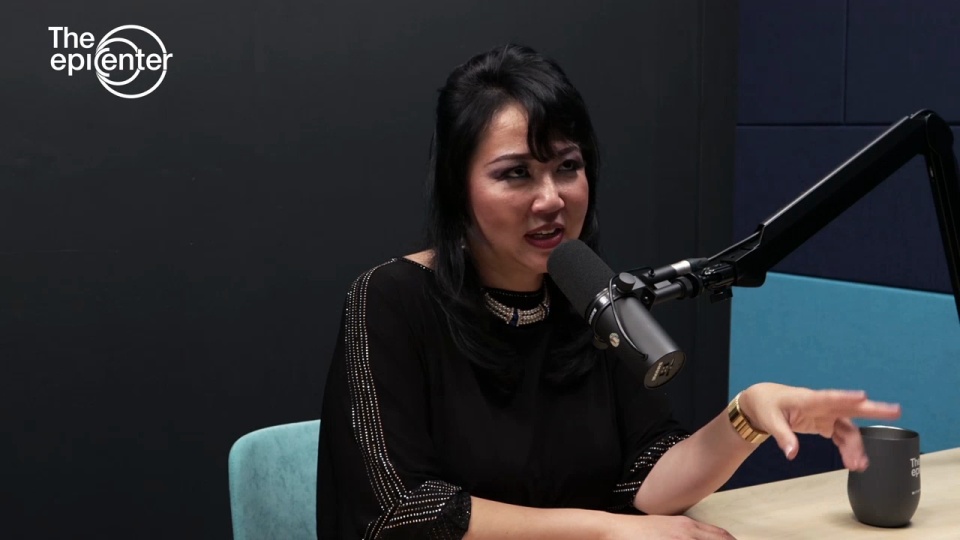
Maki Hsieh
0:00
0:00
Featuring

Maki Hsieh
Founder & CEO, Asian Hall of Fame; Grammy Governor; Former Executive Communications, The Walt Disney Company

Episode summary
Maki Hsieh’s life reads like a collision of dynasties — a mother descended from Korean royalty who fled to Japan, a Taiwanese father who built an import empire in Tokyo only to lose it to the Yakuza, and a childhood spent shifting between a mansion and government housing projects in Taipei while still attending an elite American school. This episode traces how those years of early scarcity, cultural dislocation, and family instability became the foundation for a distinctly cross-cultural worldview.
Her professional path is equally non-linear: from speechwriter for Al Gore to investment banking at Deutsche Bank (then Alex Brown & Sons), to executive communications at Disney under Bob Iger, to co-writing viral dubstep-violin music with Skrillex and performing at Burning Man — all while raising children as a single mother. What connects these chapters is a recurring instinct to go against the default. At Disney, she flagged the cultural mistake of distributing green caps in Hong Kong (where they signal infidelity) and pushed back on skipping floor four — the number that sounds like ‘death’ in Chinese — in Shanghai Disneyland. Her argument was simple: cultural literacy is not a soft skill; it is an operational requirement.
The Asian Hall of Fame, which Hsieh leads, is not a legacy institution. It runs three active pillars: a women-in-tech-and-entertainment incubation program for Asian founders (targeting the 0.2% of venture funding that currently reaches Asian women), an academy offering fellowships, laptops, and training grants — having distributed $419,000 to date — and a trauma recovery initiative addressing the multi-generational impact of colonialism, imperialism, and hate crimes on Asian communities. She speaks about all of it without sentimentality.
Key highlights
On generational capital vs. financial capital:
“When we don’t have financial capital, you have to focus on other things. We have generational capital, which we cannot let go because it’s a multi-generational legacy that we’re giving you during this time. You have to focus on your intellectual capital.”
On going against the default at Disney:
“Analyze everything very carefully, analyze your data, analyze the people, analyze the projects, and get it down to a message. And then do everything opposite of that.”
Episode Timestamps:
*(00:00): Maki and Ronen’s shared history at Taipei American School
*(02:30): Maki’s mother: Korean dynasty lineage, PhD in East Asian law, cultural ambassador
*(04:00): Her father’s import empire in Tokyo — and how debt to the Yakuza forced the family out
*(07:30): Living in the Taipei housing projects: one bologna sandwich, no dinner, pork bone soup
*(11:10): Her mother’s lesson on intellectual capital vs. financial capital during hardship
*(13:00): Political capital: her godfather’s connection to Taiwan’s former president
*(14:30): The Asian Hall of Fame — origin story and three active pillars
*(32:00): Women in Tech Entertainment and Arts Guild: the 0.2% VC stat for Asian women
*(33:30): $419,000 in fellowships and grants distributed through the Academy
*(36:45): How donors can fund the Asian Hall of Fame
*(37:00): Born with hearing loss, died twice as an infant — and how music became a lifeline
*(43:30): Turning down a Peabody opera scholarship to join Morgan Stanley
*(46:00): Breaking into investment banking at Alex Brown & Sons five days before graduation
*(59:00): Joining Disney: working under Bob Iger on executive communications
*(01:01:00): Green caps and floor four: why cultural literacy is an operational issue at Disney
Transcript
[00:00:00] Ronen Mense: Here we go. Another exciting episode of Epicenter. Yes, an in-depth series [00:00:15] featuring business leaders and influencers who are helping to shape tomorrow and today’s digital economy together. Um, if you wanna check out previous episodes, go to one epicenter.co. [00:00:30] God, I don’t know how to start. Ladies and gentlemen, this is Mac Shea.
[00:00:34] Alright. Um, I, I’m gonna let you introduce yourself because you’ve done so many different things around the world, but let’s [00:00:45] start, let’s start with adding a little bit of context about Mace and the giving back.
[00:00:52] Maki Hsieh: Oh, I love it. That sounds really,
[00:00:52] Ronen Mense: because sounds really good. Like you, you’re helping like. The community to highlight the Asian [00:01:00] experience in this world.
[00:01:03] What drove you to get into this passion of yours?
[00:01:09] Maki Hsieh: Well, it all started out growing up in Taiwan. I grew up in Taiwan. Are you my
[00:01:13] Ronen Mense: neighbor?
[00:01:14] Maki Hsieh: I [00:01:15] think so. For a period of time. Yeah. See Ronan and I, we, for context, we um, we grew up together in Taiwan and we went to the type American school. And I remember that, um, you and I sang at the Christmas show.
[00:01:29] Yes. And you had [00:01:30] corduroy pants. And I had a bull cut. I was famous for my bull cut.
[00:01:33] Ronen Mense: Yes. That bull cut was actually quite the Japanese, it was legendary Taiwanese style haircut. Yes. It
[00:01:38] Maki Hsieh: was a legendary bull cut.
[00:01:39] Ronen Mense: Yeah.
[00:01:39] Maki Hsieh: And then Ronin and I ran head to head against, uh, each other for the eighth grade [00:01:45] student council president.
[00:01:46] Ronen Mense: I lost
[00:01:47] Maki Hsieh: No, you won. No, I lost. I lost. You won
[00:01:50] Ronen Mense: then. Neither of us.
[00:01:51] Maki Hsieh: No. Wait. No. You won.
[00:01:52] Ronen Mense: I, I ran for vice president. You ran for president?
[00:01:55] Maki Hsieh: No, you, you ran for president. And I was so mad at you because you won. [00:02:00]
[00:02:00] Ronen Mense: I did not win. I was never president.
[00:02:02] Maki Hsieh: Oh, really?
[00:02:03] Ronen Mense: Really? So I’m not qualified to be a president. I
[00:02:05] Maki Hsieh: was mad at you for nothing.
[00:02:07] Ronen Mense: Yes.
[00:02:08] Maki Hsieh: See, let’s make
[00:02:09] Ronen Mense: up.
[00:02:09] Maki Hsieh: Yes. We’re good friends now. Good friends once again. And now you’re serving as a board of government. See, [00:02:15] 33 years you held
[00:02:15] Ronen Mense: a grudge against me. I
[00:02:17] Maki Hsieh: ate Ronan. No, but no, it was really great growing up with you and a lot of other Europeans and it was a global hub and type. American school was just such a magnet for families and companies and [00:02:30] ambassadors to come together.
[00:02:31] Mm-hmm. And the kids all went to the school and it started there. And my mother was a little bit of a fairytale story and my mother was always an ambassador of culture and she always said to us, uh, we always had to think of one word that described the family. Mm-hmm. [00:02:45] One word that describes what you are when people first.
[00:02:48] Experience you in a room, what do they experience? And for us, it was ambassadorship.
[00:02:52] Mm-hmm.
[00:02:53] She was very much into being a cultural ambassador. She had two masters and a PhD. She taught at tida, national Taiwan [00:03:00] University. Wow. She was this. Emissary of elegance. Right. So she, she came from Japan and her mother was a 51st generation of a Korean dynasty.
[00:03:12] Whoa. So the
[00:03:13] Silicon Kingdom, um, [00:03:15] fell in the last emperor of Korea, fell, lost his kingdom to two other warring kingdoms. And all the women in Georgian fled under the auspices of being textile garment, uh, experts to Japan. Mm-hmm. So she has this long legacy of sophistication and culture and all [00:03:30] her four sisters, they play all these Japanese instruments and they
[00:03:33] wear kimonos, wear
[00:03:34] kimonos, and they know the dancing and calligraphy.
[00:03:37] And actually our family emblem is on the back of the 500 yen coin and it’s official seal of the Prime Minister of Japan. So this, [00:03:45] so very classic, very elegant. Um, but my father is Taiwanese and he comes from a whole other side of the world, which is very entrepreneurial. [00:04:00] Um. All three of his brothers died, uh, in, um, Papua New Guine because Taiwan was colonized by Japan.
[00:04:07] Mm-hmm. And during the war, if you’re tiny, you were conscripted to the Japanese army. So they fought under a foreign flag wearing foreign [00:04:15] uniforms, uh, in a war that they really didn’t wanna be in. So, uh, his brothers all passed away.
[00:04:21] Ronen Mense: In Papua New Guinea, in
[00:04:21] Maki Hsieh: Papua New Guinea. And he was the only surviving.
[00:04:24] You know,
[00:04:24] Ronen Mense: there’s canals there, right?
[00:04:25] Maki Hsieh: There’s cannibals on all sorts of scary people in Papua New Gu. I’ve [00:04:30] never been to Papua New Guine. Never. I never been there. But, um, so then he decided to immigrate to Japan as a colonial citizen. And this, he was born in 1921, so it was about 20 years older than mom.
[00:04:42] When he went to Japan, he started out, [00:04:45] uh, trading textiles and peanuts, and he would sell something for a lower price higher. He would buy something for a lower price, sell it for a higher price, and he did this for a while. Then he went to WASA University and got his degree, and then he went into [00:05:00] sugar.
[00:05:00] Mm-hmm. He went into Hershey’s Chocolates, he became the sole distributor of Hershey’s.
[00:05:04] Whoa. Just to
[00:05:04] build this. Import in Japan, import in Japan. He built this import export empire over the years. Uh, and by the time they married, he was the seventh highest taxpayer in [00:05:15] Japan. And his company, Matsu Finance, was the first Chinese owned, uh, import expert in finance company in Tokyo.
[00:05:21] So, so the whole idea of, um, scholars and, um, business coming together of [00:05:30] intelligentsia and entrepreneurs converging of Taiwan and Japan, and. East and west because my mother went to America
[00:05:37] mm-hmm. In the
[00:05:37] sixties, and she became an American citizen. So the whole idea of east and west and that whole conversation of what does Asia mean [00:05:45] to the United States?
[00:05:46] And Rockefeller created the Asia Society in the late fifties. Mm-hmm. For, for the same reason of how do, how do Americans relate and how do Europeans and Caucasian executives relate to Asians? Mm-hmm. And how, how do we do business in Asia? How do we have [00:06:00] this cross-cultural, uh, collaboration? So that was very exciting and that was all starting when, when my mother and father were meeting.
[00:06:06] So that, that really played a large role in my growing up in mm-hmm. In thinking about what it meant to be an ambassador. But just like every fairytale in [00:06:15] tragedy struck. Yes. And I think this is important too, because a lot of times when you think about giving or corporate giving or personal giving, it really does have to start from a place where you had some tragedy happen, otherwise you wouldn’t understand why it’s important to give.
[00:06:29] So when [00:06:30] I was in kindergarten, I came home and my mother drove us around. We were living in Embassy Row, so it looked over ravine, it was a beautiful place, beautiful house. And she said, you know, we have to move out of this house Now Mommy got a place from the National [00:06:45] Town University where they give, um, these, uh, homes, apartments for free.
[00:06:50] Mm-hmm. It’s the projects for, for veterans and janitors who work at the university. And I said, well, mommy, why do we have to move out of the house? I like the swing and I like the [00:07:00] housekeepers and I liked everything here. She said, well, you know, your father made some really bad investments and just like all multimillionaires, they probably go bankrupt at least once in their life.
[00:07:09] And this is when he went really, really south. And he said, she said, you know, mommy has a job at the [00:07:15] university, but your dad really made some bad investments and things happen and he owes a lot of money to his number one client. Who is the yakuzas organized crime? Uh oh. So we have to move out and we have to, you know,
[00:07:27] do you have, uh, I have my
[00:07:29] big, [00:07:30] you know, so I have it.
[00:07:31] So she said, you know, this is serious. So, so we’re gonna just kind of hunker down and, and see, see what we can do. And I, I’m sure that he will come out of it. It’s, it’s, oh, he always does. It’s gonna be fine. So from kindergarten to fifth grade, we lived in the projects of [00:07:45] Taipei and she refused for us to go to the Taiwanese school.
[00:07:48] So we continued to go to the American school. Mm-hmm. She took on a second jobs for this. She took on a third full-time job to pay his debts to Japan. And we lived this way for a couple of years. And I [00:08:00] have to say that during this time, we. Were so poor, I didn’t know. Mm-hmm. Because I was just a kid.
[00:08:07] Yeah.
[00:08:07] But we had nothing, like, we had no breakfast and then for lunch it was one slice of bread with [00:08:15] butter and one bologna folded in half and shoved in a paper bag and there was no drink or fruit. So I would just drink from the water fountain at school. Um, we had no dinner when we went home. It was just a boiled water with salt and pork bone [00:08:30] because pork bone is free.
[00:08:31] Mm-hmm. So she could get pork bone for free. We had that Monday through Thursday, and then on Friday she would get paid from the university. Mm-hmm. So she would take us to the, uh, bento place and then like the buffet place for 10 NT. We could get a big, huge plate and my sister and I would [00:08:45] eat, we’re so hungry, and she would just wait until we finished and then she would eat.
[00:08:48] I mean, it was just really, really. R Horrible with like no air conditioning. We had to walk four flights of stairs, you know, to get to our apartment. My mother and my sister shared a [00:09:00] bedroom and I had my own room. It was a laundry room that we converted with a cot and it had a little red TV with a transistor.
[00:09:08] Mm-hmm. Antenna, you know, that I could watch American shows. And it was black and white. Yeah, it was black and white until [00:09:15] later. That had a, had, miss America came in, uh, in color and then the Academy Awards came in and in color. So we’re always watching like, wow, America’s so great. And then there’s a closet.
[00:09:24] And then there was a stupid apartment right next to my window. ’cause you know Taiwan, when you move [00:09:30] live in the projects, it’s pretty close. Yeah. And there was a stupid parrot and he’ll always say, well, hey Shaha, well hey Shaha, which means I can talk. And I would say, would you stop? I know you can talk.
[00:09:39] And then he would just say, well, hey Shaha. And I thought, oh my God, this is just [00:09:45] really difficult to live this kind of condition. And then go to his, a private school, the American school, which is filled with affluent people and, and amazing executives and everything is fine for them. And during this time, I noticed.[00:10:00]
[00:10:00] That all of the people who were really nice to my mother, when they knew that she had hundreds of millions of dollars, they slipped away and they started treating her differently. Mm-hmm. And I noticed that one day she took me to the back of her friend’s house. Mm-hmm. And they [00:10:15] forced us to go through the maid’s entrance and the friend just dumped like three bags filled with beautiful clothing, but it was all in like a garbage bag, like a black garbage bag.
[00:10:24] Mm-hmm. Just threw it there. And this was a friend who really respected my mother. They had a lot of [00:10:30] social activities together. They really respected each other. And as a young kid, I kind of sat back and I thought, well, even with these conditions, my mother still had. That second full-time job so we could go to the [00:10:45] American school.
[00:10:45] Mm-hmm. I came home and I told her I wanted to play violin. She paid for the violin lessons, she paid for the tennis lessons. We were part of the American Club, we were part of the American school system. We were part of the American Community Center. I told her I wanted to play Little League. I was in [00:11:00] little league and one day I asked her mom, why did you spend so much money
[00:11:04] mm-hmm.
[00:11:04] In
[00:11:04] our education? Well, we really didn’t have a lot. And she said, you know, because I knew one day your father would get out of this. Mm-hmm.
[00:11:10] And
[00:11:10] by that time, it would be too late when we don’t have financial [00:11:15] capital. Mm-hmm. You have to focus on other things. We have generational capital, which we cannot let go because it’s a multi-generational legacy that we’re giving you during this time.
[00:11:24] You have to focus on your, on your intellectual capital. Mm-hmm. When you are really down you, you [00:11:30] notice things that you don’t know when you’re really on top. Because when you’re really on top, people really are not as honest with you because they want to impress you maybe, or they’re kind of intimidated.
[00:11:39] But when you’re at the bottom, you, you notice everything. ’cause you’re down here at the bottom. And I think being there for [00:11:45] five years in elementary school, you know, it really showed me that little things really mattered. Like free education really mattered. And American school had integrated arts. Mm-hmm.
[00:11:56] That was so important. We had choir, we had orchestra, we had band, we had [00:12:00] musical theater, we had whatever we wanted because it was a private school system. And I was often thought, wow, equity was available to me then, but it’s not available to everybody. Mm-hmm. And it, and that’s really unfortunate. So during this time, I, I realized that when [00:12:15] teachers gave to us, or not out of pity, but they out of encouragement.
[00:12:19] Mm-hmm. And I think that’s the other thing is your heart of giving needs to not come from pity, but it needs to come from compassion and from being able to relate that, oh, this family’s going through some tough times. So it’s really important [00:12:30] for families and, you know, like, um, you know, compassion of you.
[00:12:34] Like there were so many classmates who were just so kind during that time.
[00:12:37] Mm-hmm.
[00:12:37] So it really affected me during that time when people were so kind, you know? And then one day my mom came home and she said, oh, we’re [00:12:45] moving. I said, where are we moving? She goes, okay. Your father transacted something called a reit.
[00:12:49] Mm-hmm.
[00:12:50] I said, oh, I don’t don’t know what that is. She goes, well, it’s, it’s a big transaction in Tokyo. So now we’re back on the hill. We’re back on the mansion again. So we’re moving out [00:13:00] of the projects from generational capital. You move to intellectual capital and social capital, kind of observing how social structures work.
[00:13:07] And now we’re moving into political capital. This is where she was doing a lot of translation work and she caught the attention of, of a really [00:13:15] interesting person who was and li’s wife’s brother. So wife’s brother is very, very passionate of former president. Former, yes. And I don’t speak about this too much, right, because he’s controversial.
[00:13:29] Yeah. [00:13:30]
[00:13:30] But former li president, Li’s foreign, his wife’s brother was my godfather. Mm-hmm. And he really needed my mother for translation. She was really, really great. With translating a Japanese, Chinese, Chinese English. She’s published [00:13:45] in four languages. You know, she has two masters and a PhD in East Asia law and cognitive linguistics.
[00:13:50] So she was really well sourced and needed for political conversations and a lot of folks from academia, sca to, would always ask her for her [00:14:00] advice. So she was a trans official translator for the, for Taiwan and the government when they went to Egypt and when they went to other places. Um, and seeing that also made me realize, um, that she really, despite our difficulties, she really had a heart [00:14:15] forgiving and building up political capital for the country, for the community, and for our international relations.
[00:14:20] She really used that and leveraged that to build Taiwan Japan relations.
[00:14:25] Ronen Mense: It it’s like you, you were describing how your family, one minute [00:14:30] you’re top of the hill and then yes. All of a sudden everything’s gone. People treat you differently. Yes. So you don’t have to be, maybe you’re, when you become financially handicapped now.
[00:14:41] You’re seen differently.
[00:14:43] Maki Hsieh: Isn’t that interesting? You’re seen [00:14:45] differently and power construct is different. Yes. And the societal values you differently and your family differently depending on what’s happening with your family at that time. Whether it’s financial or it’s a upheaval or political upheaval or maybe [00:15:00] a western invasion has occurred and suddenly you don’t have value person, but you’re the same person.
[00:15:05] We were just talking about that the other day. And
[00:15:07] Ronen Mense: people are defined not only by their beliefs Yes, but actually that they’re defined by their actions.
[00:15:13] Maki Hsieh: Yes.
[00:15:14] Ronen Mense: And as soon [00:15:15] as you know, they believe you’re one person, but they all of a sudden change. Yeah.
[00:15:21] Maki Hsieh: My father used to say, you are what you do, not what you say you’re gonna do.
[00:15:25] Yes. And it’s so important, uh, especially in the world of business, when you make a [00:15:30] promise and it’s a verbal social contract.
[00:15:32] Yes.
[00:15:32] And it’s also a way that you promise somebody in the way you wanna treat them equally, that you keep that promise and people will remember, you know, I am the same person, but depending on what construct [00:15:45] I find myself in, I have to address my narrative. And working for the Walt Disney Company was all about storytelling. So what aspects of the story do you wanna highlight? So for example, if I meet an executive who’s from Japan
[00:15:56] mm-hmm.
[00:15:56] Then I’ll say, oh, Haji, I’ll talk in Japanese. I’ll say [00:16:00] hi, you know, my, you know my mother’s, you know, my mother’s Japanese from Nagoya.
[00:16:03] Thank you so much. And when, if I meet an ambassador from Japan, that is what I’ll emphasize.
[00:16:07] Ronen Mense: You know what I tell people when, when I from Japan, when I meet them.
[00:16:10] Maki Hsieh: Well, what do you say?
[00:16:11] Ronen Mense: I was made in Japan.
[00:16:13] Maki Hsieh: That’s, you were, that’s true.
[00:16:14] Ronen Mense: I was born [00:16:15] in Taiwan. You were born in Taiwan.
[00:16:16] Maki Hsieh: Oh, that’s a
[00:16:17] Ronen Mense: lot of detail. A lot of detail.
[00:16:19] Yeah. Let’s
[00:16:20] Maki Hsieh: talk about Jacob now.
[00:16:24] Ronen Mense: Let’s go back to you.
[00:16:26] Maki Hsieh: You know, but I think that we, we make those adjustments and [00:16:30] highlights. Mm-hmm. And, and we are more complex than we think. I have this wonderful. Friend of mine, Holly Chang
[00:16:36] mm-hmm.
[00:16:37] Who also is helping me with, um, international relations. And we had a three hour sushi lunch the other day and she was talking, she [00:16:45] was a journalist, just amazing.
[00:16:46] She’s even interviewed Desmond Tutu. She’s super cool.
[00:16:49] Wow, cool. And
[00:16:50] she said, you know, Machi people are complex and executives are complex leaders who have to drive a p and l or drive a new product launcher go into a new [00:17:00] geography. They’re actually more complex than they want people to know. So it’s okay actually to show one facet.
[00:17:07] To one person and one facet to another person. It’s almost like these are different facets or pieces of the overall puzzle, and it’s okay to be [00:17:15] a little bit mysterious. And I thought that was a very interesting perspective from Holly. But definitely when I speak to somebody who’s from Korea, I, I don’t talk about the Japanese side.
[00:17:25] People from Taiwan don’t want to hear about the American side really? Because [00:17:30] it’s very far away. Yeah. People in America just wanna know that I’m an A, B, C American born Chinese, even, even though I was not born America, but I’m American, born in Asia. Yeah. So this is where it gets confusing.
[00:17:41] Ronen Mense: How about when I describe myself?
[00:17:43] Maki Hsieh: Huh? Well, you’re, you’re [00:17:45] a, um, Caucasian western guy who can succeed anywhere,
[00:17:50] Ronen Mense: but you can say you are American.
[00:17:54] Maki Hsieh: True,
[00:17:55] Ronen Mense: true. I, when I say I’m Chinese, people are like, no, no. Where are you really from? [00:18:00]
[00:18:00] Maki Hsieh: Yes.
[00:18:01] Ronen Mense: Oh,
[00:18:01] Maki Hsieh: yes, it’s true.
[00:18:03] Ronen Mense: Still today.
[00:18:04] Maki Hsieh: Still today.
[00:18:05] Ronen Mense: Even in this, when I identify as Chinese. Chinese, right? No, no, no.
[00:18:09] You’re not Chinese. Okay, fine. I identify as a cat. Oh, I identify [00:18:15] as
[00:18:15] Maki Hsieh: a cat. Asian Hall of Fame is very interesting because we had this entire discussion about race, and if you notice on our website, we have a list of criteria.
[00:18:23] Yes. And
[00:18:24] it says that, um, the inductee must source at least 25% of their [00:18:30] heritage or culture to one of these 30 countries.
[00:18:33] I don’t even say, I don’t even think we say countries. We say
[00:18:36] Ronen Mense: regions.
[00:18:36] Maki Hsieh: Yes. We don’t talk about only race because, for example, there’s a really famous [00:18:45] Korean radio show host. Mm-hmm. He’s super famous. He’s awesome. He grew up in Korea. He is Korean, his parents are Korean. He’s Korean, but he’s black.
[00:18:52] Mm-hmm.
[00:18:53] He does not think he’s black.
[00:18:55] He does not think he’s African American, does not identify as black. He does not identify as American. Mm-hmm. He was [00:19:00] adopted and he thinks he is Korean. Mm-hmm. And he’s famous. Everybody loves him. So is he Korean or is he black? We say that he’s, we accept him. He’s fine. Asian Hall of Fame, no problem. And I get a lot of heat for that.
[00:19:13] Renee. I get a lot of heat for [00:19:15] that. A lot of people are purists and they’re like, no, no, it’s gotta be Asians for Asians only for Asia only. And I said, well, if you do that, you’re missing out on an entire group who want to promote Asians and hire Asians and work with Asians and who want to be Asians. [00:19:30] And they marry Asians maybe, or they live in Asia.
[00:19:32] They, they like that.
[00:19:33] Ronen Mense: Do you know that I’m three generations Asian.
[00:19:40] Maki Hsieh: Asian? Yes. Your grand, your grandfather. My
[00:19:42] Ronen Mense: father born in China. In China. Chi? [00:19:45] Yes. And my grandmother.
[00:19:47] Maki Hsieh: Yeah. Oh, grandmother. Yeah.
[00:19:48] Ronen Mense: In Beda. In China as well.
[00:19:56] But this is three generations. Right? Yet,
[00:19:59] Maki Hsieh: yet, [00:20:00] yet. So, so it’s very interesting when you think about, if we think about acceptance, right? Acceptance and the heart of multi-generational legacy. Mm-hmm. Um, I mean, we [00:20:15] already now expanded to indigenous since Asia is home to 75% of the world’s indigenous. So we are Asians, national, international, and indigenous.
[00:20:24] So last year we inducted our first indigenous honoree, Virginia Cross of the Chu Indian tribe. Mm-hmm. She’s the [00:20:30] first, uh, Indian woman, tribal chief in the country. United States. And then this year we’re honoring, uh, the founding leader of the San Manuel Ban of Indians. So this whole conversation about indigenous and about [00:20:45] oppression, repression suppression, which continues to now is very interesting, and it’s part of a whole giving story of how we can give back and forth to each other.
[00:20:53] So
[00:20:54] Ronen Mense: this Asian Hall of Fame was basically, it was the [00:21:00] idea of, uh, Robert Chin, right? And being the philanthropist behind the founding of this organization. Philanthropy. P is, [00:21:15] is it about giving the money or is it about giving energy? Right, because I think it, it, it, it’s like we were talking and, and you mentioned that for some reason, like Jews in America and other races are very [00:21:30] keen on philanthropy.
[00:21:31] They believe in giving back.
[00:21:33] Maki Hsieh: Yes. Yes.
[00:21:34] Ronen Mense: But damn, Asians got money, but they don’t wanna give in philanthropy, right? Or, or do they like, tell us about, [00:21:45] tell us about the Asia Hall of Fame. Tell us about Robert Chin and tell us about philanthropy.
[00:21:49] Maki Hsieh: Asian Hall of Fame was established by Karen Wong. Okay. Karen Wong is a fourth generation of the Chin family.
[00:21:57] And, um, her [00:22:00] father,
[00:22:01] mm-hmm.
[00:22:01] Um, Robert Chin mm-hmm. Was a postal worker in Seattle. He’s the third generation, and his ancestors came from China to build a transcontinental railroad. Mm-hmm. And then they settled in the Pacific Northwest, they settled in Seattle.
[00:22:13] Mm-hmm.
[00:22:13] And he was delivering [00:22:15] mail. And he noticed there was a lot of rejection letters to Chinese families because back in the fifties and sixties, if he had a Chinese name, he were denied mortgages and loans.
[00:22:23] Mm-hmm.
[00:22:24] So he went to his wife, Ruth, and he told her that he wanted to build a book of business as an insurance agent. And that [00:22:30] what was the best way for him to build a business quickly and get to know a lot of people. So for many years he started building a book of business, going door to door, selling insurance, learning about the insurance companies and, and all of the structures and systems and becoming an agent and doing all of, he built a book of business, so cmo.[00:22:45]
[00:22:45] Right, right. He built the book of business this way. And then in 1960, he. Uh, opened America’s first Asian owned bank. It was US Savings and Loan in Seattle, and there was a line of people wrapped around the corner, uh, [00:23:00] to, to open their account because they wanted small business loans and they wanted mortgages that American banks at that time were not giving to either.
[00:23:06] Well, they were not giving to Jews either, which is why Jewish families also went and created Goldman Sachs, Lehman Brothers. And, you know, it’s a whole similar [00:23:15] story. Uh, when he passed, um, Karen Wong, Ruth Chin, his wife and Karen’s brother, uh, Derek decided to create the Robert Chin Foundation. Mm-hmm. It’s a private philanthropy that gives back to the community, uplifts the Asian [00:23:30] narratives, and helps underprivileged kids who, you don’t have to be Asian to get a grant, but they try to, uh, um, advance the betterment of the community.
[00:23:39] Karen is now the fourth generation. She’s gone to Berkeley, she’s got a law degree, [00:23:45] she’s a lawyer. Her husband is, owns a bank. They’re running a bank. She’s now financially secure and she’s still noticing that despite all of this, Asians are really not given a seat at the table.
[00:23:55] Mm-hmm. They’re
[00:23:55] really not invited to political discussions.
[00:23:57] They’re not seeing a lot of Asians in board [00:24:00] rooms or in hospitals in the leadership positions. And she thought, you know what? We ought to create something that really helps, um, give back to the community while also uplift Asian leaders and correct the undervaluation of Asian contributions to America.
[00:24:14] So she [00:24:15] created the Asian Hall of Fame. It was just a dinner party. Mm-hmm. And originally it was a fundraiser for the Asian Resource Center and it was a community center that she had built for the Robertson Foundation. And it was, uh, Gary Locke, you know, now the former US Ambassador to China. [00:24:30] You know, a couple of folks were inducted.
[00:24:32] Connie Chung, then Bruce Lee, Christian Gucci. Then it got bigger and bigger when this dinner party was getting a little bit bigger than they thought. So while she was giving back to the community, she really didn’t think that this was [00:24:45] gonna blow up to be this really amazing brand. ’cause it was just a, a dinner.
[00:24:49] And then suddenly Mo Hennessy heard about Asian Hall of Fame.
[00:24:53] Mm-hmm. And they
[00:24:53] were not pitched, they were not solicited. And they just called her and said, we wanna be part of this. We don’t know what it is, but we [00:25:00] wanna be part of it. Here’s a sponsorship. And that’s when she and the board set up. Mm-hmm.
[00:25:05] And they thought. We really need to think about Asian Hall of Fame as having a larger philanthropic impact. So having a dinner party in a gala of how agents tell each other how great we are, this [00:25:15] is not enough. It’s gotta maybe have a bigger footprint. So they conducted a national search and I was living in LA at that time.
[00:25:22] I had worked for a performing arts center before that. I worked for Disney. I was also involved in private equity for a while, so I have about 30 years of a corporate background [00:25:30] with some years of philanthropy. And she called and, and then the headhunter called. And I just thought that this was a really great opportunity to do something really significant and give it a shot.
[00:25:39] Yes, it had a 19 year name, but. It got a bit of a startup. [00:25:45] Mm-hmm. Because we had to rebrand, we had to transform it. Didn’t have a website, didn’t have an Instagram. It had no TikTok. No
[00:25:50] Ronen Mense: TikTok,
[00:25:51] Maki Hsieh: no. Facebook didn’t have any of that. There was no WeChat, you know, it was like, like nobody knew what it was. Well, we’re trying to get one.
[00:25:59] You know [00:26:00] how hard that is. It’s really difficult.
[00:26:01] Ronen Mense: Ah, let’s talk after. Let’s talk
[00:26:03] Maki Hsieh: about that. Could sure. Use your help. So, no, so it, it’s a bit of a startup. So it had this name and it had all of these inductees, but it had a startup feel because we were [00:26:15] not a non-profit yet. Mm-hmm. That was the first step, was to become a 5 0 1 C3 nonprofit so that we could expand a philanthropic footprint and start getting more grant money and federal support, local support, et cetera.
[00:26:26] Corporate sponsorships is a big one. That [00:26:30] happened just a few years ago. We opened Asian Hall of Fame savings account with a hundred dollars in 2020 and a $25,000 check from a very good F founder of mine, Lili Liu, who’s always supportive.
[00:26:42] Mm-hmm.
[00:26:43] We closed. [00:26:45] December 20, we closed a couple of months ago. We closed 2022 with $1.1 million of net sales and $111,000 in net profit were in the black, which is amazing.
[00:26:56] Wow.
[00:26:56] And that came from a hundred dollars. So it’s just keeps [00:27:00] growing and growing and, and I think that’s, um, people are hearing about us. We’re not soliciting them because we we’re just so busy getting the programming up and running. Uh, Caltech came in as, as a platinum sponsor. Disney heard about us.
[00:27:14] They’re [00:27:15] now one of our supporters, illumination entertainment. They gave us a sponsorship. They’re really involved. We love them. We’re just really grateful like Chanel and Prada and all these guys came in.
[00:27:28] Ronen Mense: So what they, I mean, what, what is the, the mandate of, [00:27:30] of Asian Hall of Fame? I mean, what are some of the things that it’s doing?
[00:27:33] Maki Hsieh: So, Asian Hall of Fame is a lot like rock and Roll Hall of Fame. Golf Hall of Fame, tennis Hall of Fame. There’s a lot of these Hall of Fames. There are about 1,100 of them worldwide. But it has a very [00:27:45] interesting perspective. It has a very interesting mandate, which is to galvanize all of the power that Asians and successful Asians have contributed and all of that, all the powerful voices.
[00:27:58] Mm-hmm. In order order to overcome [00:28:00] bias against Asians in order to overcome this ridiculous silo of Asians, that, that we are gonna pit Asians against each other in order to over achieve a certain message that, uh, another group might have or government might have. And I think that would stop [00:28:15] Asian hate.
[00:28:15] A lot of people saw. In Canada, France, and the United States in particular, that there’s a lot of animosity towards Asians. Even those Asians are successful, even though Asians are contributing, even though they want their kids to learn English and go to the best schools, they’re still seen as the [00:28:30] enemy.
[00:28:30] We see, we’re seeing a lot of political rhetoric right now in the United States, that Asians are seen as the enemy. They’re seen as a cause of COVID-19. They’re seen as a reason why the other Americans or the other westerners cannot get jobs. And it’s this ongoing rhetoric of how Asians are [00:28:45] communists and they’re all evil, and they’re all spies and all deceitful, and they’re not here to help us.
[00:28:51] Asian Hall of Fame is very important for that reason that we’re here to show that Asian contributions should not be feared. [00:29:00] It should be celebrated. Mm-hmm. And it should be respected and that Asian leaders should not be seen as the enemy. Asian leaders and companies who really care about the betterment of the community, they should be honored, they should be revered, and that the stature of Asian culture needs to [00:29:15] be elevated to a higher level.
[00:29:16] Now, we’re seeing a lot of times with the success recently in the Oscars, that although Asians have made strides in America and in the West, um, they’re really afraid to amplify the voices. And we’re hoping that Asian Hall of Fame [00:29:30] serves as that microphone.
[00:29:31] Mm-hmm. For
[00:29:31] people to step forward and to say, we’re here to help.
[00:29:34] We’re here to contribute. We’re here to be your friend, and we’re here to do whatever it takes, you know, to help collaborate and to help partner and launch products and create new companies and take things [00:29:45] to the next level. So I think it’s a really fun and important
[00:29:48] Ronen Mense: and, and it also has a arm that it helps, um.
[00:29:53] Yeah. Founders, right? Uh,
[00:29:56] Maki Hsieh: absolutely. Especially,
[00:29:56] Ronen Mense: uh, Asian female founders. Yes,
[00:29:58] Maki Hsieh: absolutely. This is in the
[00:29:59] Ronen Mense: tech [00:30:00] space.
[00:30:00] Maki Hsieh: Yes. This is really important for us.
[00:30:02] Ronen Mense: Yeah.
[00:30:02] Maki Hsieh: Uh, we sat back when I, my first a hundred days that I started Yes. We sat back and then we said, okay, we’re not in the justice space. A lot of people are doing great things in justice.
[00:30:13] Mm-hmm.
[00:30:14] We’re not [00:30:15] really in the marching and protesting and rallying and signing petition space because our inductees are very busy. Right. They will love to march, but they’re very busy running businesses and p and ls and, and they’re, this is really not their [00:30:30] focus. Mm-hmm. So. I said, you know what?
[00:30:32] Instead of trying to guess what our philanthropic impact is supposed to be, let’s just conduct a survey. So a survey went out to all of our existing inductees, right? This included Kevin Kwan of Crazy Rich Asians. This included a [00:30:45] lot of people you know who really respect, like Major General Tony Taguba, the Touba Report, very famous, uh, advocate of Filipino veterans rights.
[00:30:53] This included a lot of people who really want, had a lot to say. So I got back the survey, and the survey was simple. [00:31:00] If we know you’re very busy, we know you are advocating for other things like cancer. Mm-hmm. Diabetes, cystic fibrosis, your own community work. Mm-hmm. What would you like Asian Hall of Fame to advance?
[00:31:14] We have this [00:31:15] big microphone. We’re building this big global platform. If we eventually stream on HBO Max, no. And we’re making $20 million a year contract fees. HBO. Okay, HBO, what would you like [00:31:30] us to advance? And unanimously everyone said we really need to advance tech, entertainment and arts incubation, especially for women.
[00:31:41] Mm-hmm.
[00:31:41] Founders who are toggling multiple [00:31:45] things. They’re toggling family and parents and kids and founder. Obstacles and red tape and how to present the product, but also how to be the face of a launch. I mean, they’re [00:32:00] toggling multiple things and they’re not really getting the support that they need.
[00:32:04] Maybe from their family, maybe their family’s saying, well, it is kind of a crazy thing that you’re doing. You’re quitting your accounting job to do what? You know, like, why are you doing that? Me, in the US there was, they came out with a [00:32:15] study last year that out of all of the venture capital, uh, investments that went out last year, 0.2% went to.
[00:32:22] Asian women. There weren’t any Asian women that got those because there weren’t enough Asian women founders who said, okay, we really wanted to start this thing. Whether or [00:32:30] not it’s a tech startup or an entertainment idea or a documentary or a book, I mean, the tech, entertainment and arts incubation is huge for us.
[00:32:37] So this is an entire pillar, this initiative to, to fund women startup capital for them, scholarships, if they need advanced [00:32:45] degrees or certifications, whatever it takes to get them to that next level is really huge for us. The other pillar is the academy. Mm-hmm. Where we notice that folks who have an accent, who are neurodivergent, maybe they’re high functioning autism or Asperger’s, uh, [00:33:00] who are diversity, maybe they’re not Asian, but they really love.
[00:33:03] All things Asia, maybe they’re Hispanic, they’re not giving the opportunity they need to work, they need to provide for their families. They just want an opportunity and they just want to see what it is [00:33:15] that made Asian icons successful. Maybe I can learn and I can be successful too. So our academy is really huge To date, we’ve, uh, distributed $419,000 of fellowship prizes, free laptops, grants for folks to come in and learn and also help their [00:33:30] family and advance their career, make their college dreams come true.
[00:33:33] And then the third pillar, which I’m really excited about, is a whole initiative around trauma. What that means, multi-generational trauma. Not just trauma because he experienced a hate crime. But, um, [00:33:45] the chair of this, uh, major general Tony Taguba and his coach, Haran Hanami, are both inductees and they’re very passionate about the idea of making sure that the trauma of imperialism, colonialism, all of that does not get [00:34:00] forgotten.
[00:34:00] And that’s. Why we have the construct today of how Asians are seen as the enemy or they’re not seen as equal. So this piece is really important. We’re very big part of the reversal of the rescission Act where Filipino veterans mm-hmm who fought [00:34:15] for the Americans were then not given the, the, uh, full military benefits that they were promised by Congress.
[00:34:21] So we’re really a vocal advocate of this. But Hanami is also very excited about the whole idea of brain injury survivors, uh, [00:34:30] domestic violence survivors, trauma survivors and human trafficking survivors, making sure most of them are Asian women coming from Asia, that they are rescued, rehabilitated and they get the training they need to have full-time jobs.
[00:34:43] Ronen Mense: What about. [00:34:45] The Asian woman founder that is in Indonesia or Vietnam or here in Asia somewhere.
[00:34:52] Maki Hsieh: We would love to collaborate with somebody like Ronan Menz, who knows a lot of people.
[00:34:57] Ronen Mense: I have his email address. [00:35:00]
[00:35:00] Maki Hsieh: So this president of Apps, Florida, A-A-P-A-C, who, who could really direct us, because right now the Women in Tech Entertainment and Arts Guild is co-chaired by Sue Taylor.
[00:35:13] Mm-hmm. Who was a Chief Information [00:35:15] Officer of the Gates Foundation.
[00:35:16] Wow.
[00:35:16] And she sits on two boards and then Longow, who was a global head of Hewlett Packard, and she also sits on two tech boards. And they’re really excited about the idea of making sure that the right women hear about this opportunity to get [00:35:30] microgrants in terms of the incitement.
[00:35:32] What does that mean? You know, that’s an evolving thing. We have a lot to get your input and have that one sheet ready, but, you know, we’re ready to roll and we’re ready to make an impact and make sure that the, the great products that women founders have [00:35:45] in their minds and on their blueprints, you know, come to reality
[00:35:47] Ronen Mense: and, and can any crazy rich Asian.
[00:35:52] Who wants to support this foundation? Can they do that? A
[00:35:56] Maki Hsieh: hundred percent. I mean, for a hundred thousand dollars you [00:36:00] have four women who can actually go to college and can, we can pay for their fellowship. They can get free laptops. You’re impacting four lives in a very significant way, you know, for $500,000 and you’re impacting like 40 people [00:36:15] mm-hmm.
[00:36:15] Who are of all ages from college to MBA to grad schools. And guess what? With the current work shortage, they can actually become workers. So we’re doing some fantastic work and yes, if you have a million dollars, we can have an entire founders one dedicated [00:36:30] to you. One
[00:36:30] Ronen Mense: 1 million.
[00:36:31] Maki Hsieh: We million. Million. Yes.
[00:36:36] Ronen Mense: So Mackey, you, you also, uh, you also have, um.
[00:36:42] Accomplished a lot in your own career. [00:36:45] Uh, you spent a lot of time talking about others, but I think, uh, your humbleness is, uh, I think, I think we wanna talk a little bit about you. Um, talk to me about the violin. Talk to me about investment [00:37:00] banking and talk to me about green hats and fourth floors.
[00:37:05] Maki Hsieh: Well, the interesting thing about, um, music mm-hmm.
[00:37:08] Is that I was actually born dead on arrival. Mm-hmm. Um, the umbilical cord was wrapped around my neck and I was [00:37:15] born, it’s called a blue baby. So when I was born, I was already gone.
[00:37:19] Whoa.
[00:37:19] And they revived me, but six months later I died a second time crib death. So this is where Elon and I have a lot of connection.
[00:37:27] ’cause he had a baby died of Cryp death. So I died of [00:37:30] crypt death. It was a blanket over my face and I stopped breathing. I was, I was dead.
[00:37:34] Ronen Mense: Whoa.
[00:37:34] Maki Hsieh: So I got revived again. So it’s twice.
[00:37:37] Ronen Mense: Damn. You’re a cat.
[00:37:39] Maki Hsieh: I know, I know. I’m a cat. I’ve got several lives left. But the, the two incidents, what it [00:37:45] did was it really affected my hearing.
[00:37:46] So I couldn’t hear it on my right ear.
[00:37:48] Mm-hmm. At
[00:37:48] all. And I only had about 30 or 20% hearing in my left ear. And my mother didn’t know. None of us knew. And I just went through life as a toddler, not understanding the data [00:38:00] that was coming in, and I would just speak my own language. For two years. My mother was very concerned, you know, she, ’cause she’s taught teaching Japanese and English and Chinese, and I’m not catching onto the language.
[00:38:10] And everyone told her, okay, this child is definitely autistic, definitely needs, need to [00:38:15] send her a special school. Maybe she has down syndrome. Like there’s something very wrong with her and I don’t think that she can ever succeed at the American school.
[00:38:22] Mm-hmm. Because
[00:38:22] she’s not connecting with the world.
[00:38:25] So my mother, after going to everything [00:38:30] when I was four years old, she signed me up for piano and I hated it. I was like, mm-hmm. Helen Kel. I hated the piano. I hated the piano.
[00:38:37] Ronen Mense: Didn’t we all hate piano? No, but I hate, I
[00:38:39] Maki Hsieh: was mean. I was just a mean, and the, I had about four teachers and they would all cry.
[00:38:44] They would quit and cry [00:38:45] because I would hit them. I would take my book and like hit their face and I would take the pencil and stab them. I was just mean. Wow. And I had these hard shoes and I would kick the piano and I would kick them and they would all quit. So finally had a teacher who was pretty strict, and she [00:39:00] would hit my hand with a pencil.
[00:39:01] So like, listen, but I still didn’t like the piano. I didn’t understand what I was doing because I couldn’t hear it. So one day when I was seven, it suddenly dawned on me that this vibration and frequency [00:39:15] I was receiving from this instrument matched to some note on the page. And that created some kind of experience that my mother then smiled and everybody clapped.
[00:39:25] And I thought, this is my way of connecting to the world. [00:39:30] Then in second grade, you know that we had Miss Riano with the strings department. Oh yeah. John Solomon with a band and everything.
[00:39:41] Ronen Mense: I, I played violin for a little while too,
[00:39:43] Maki Hsieh: by the way. Right. In [00:39:45] choir. That was bad. God. But then I went home and I said, mom, I wanna play the violin.
[00:39:50] She said, you know, we, your father’s going through a lot right now. We’re like living in the projects. Um, that’s a very expensive instrument. Why don’t you just stick with the piano? We have a piano. I said, no, I want to play the violin because I can [00:40:00] hear it. Mm-hmm.
[00:40:00] I
[00:40:00] can hear high pitches. I can hear like birds, I can hear light bulbs.
[00:40:06] For some time, I actually couldn’t practice with lights on ’cause I can hear the frequency. I’m like, a dog can hear the frequency.
[00:40:14] Ronen Mense: But you are a [00:40:15] cat?
[00:40:15] Maki Hsieh: Well, I guess so. Like my, I guess
[00:40:17] Ronen Mense: cats here. Yeah, cat
[00:40:18] Maki Hsieh: is, so I’m very attuned to frequency, so anything about vibration and frequency, I’m all about it. Oh wow. I understand.
[00:40:24] Whole crystal sound therapy, all of that. Wow. Very into it because I can attest that [00:40:30] really does affect the way you connect with the world. So with violin, I could hear it, I could understand it. Then choir was a great community, right? Orchestra was fun. ’cause then I wasn’t a band, I was in jazz band. [00:40:45] But then around middle school, my mother started to unravel.
[00:40:49] So in public, she was a social butterfly, she was this professor. She did really well and we had a lot of political capital now. But when she came home, she started to unravel, I think this was when [00:41:00] she first started to have the, a little bit of the Alzheimer’s come. Mm-hmm. Because Alzheimer’s doesn’t just come right away.
[00:41:06] So usually starts pretty like early when you’re in your forties maybe, or thirties. So she started to unravel and I think this one time in eighth grade, [00:41:15] I said something. And she got really mad and she took the knife from the kitchen and she was screaming like, I’m gonna kill you. I’m gonna kill you and your sister.
[00:41:26] And she was chasing us. And then I closed my bedroom [00:41:30] door and Katie was really scared. I put Katie hide in the closet, hide in the closet, closed the closet door, and my mom was like banging on the door, banging. And then like the hinges were becoming, she’s like, I’m gonna kill you. I’m gonna kill you with this knife.
[00:41:41] I’m killing you right now. And it was just nothing. I don’t even know what I [00:41:45] said, but she was just set her off. ’cause she, which happens every day, she something sets her off and this suddenly got quiet and was like, I think she’s okay now. So I peeked out and she was kind of just more quiet. [00:42:00] So I took out the violin and I started to play and then she calmed her down.
[00:42:04] It’s kind of like in Harry Potter, there was that movie where there’s like three-headed monster and they got calmed with a harp. So I was like, okay, if I keep playing the violin. She’s gonna stay home. So I’m like, keep playing the violin. [00:42:15] And then when I stopped, she was like, wake up. She’d be like, why did she stop?
[00:42:18] You should, I was like, okay, we’ll keep playing. So I would play. I would play and play and play would play like hours. The violin, it was like Beethoven. He was like talking about, he. Couldn’t stop playing the piano because his dad was an alcoholic [00:42:30] and whenever he stopped playing the piano, his dad would beat him.
[00:42:32] So he kept playing. The piano was the same kind of trauma in America. Whenever I have say to people I play the violin, they automatically say, oh, are you like Lindsay Sterling that you play DOB step? And you’re like making a lot of money on television. They [00:42:45] always go to television, they always go to media.
[00:42:47] Their first question is distribution. Now how does this work? Like, can you distribute your music? If you can’t distribute your music, then you’re really not that exciting. So I think that the whole TikTok, Facebook, Spotify, [00:43:00] it to being an Instagram celebrity thing, you know, that’s all really important in terms of getting content out.
[00:43:05] And um, yeah, so I think with music it was a, a really critical thing because it, to me, it was more of a private diary. It was more of a personal journey. It was less of a, oh, I wanna be [00:43:15] famous and I wanna be rich and I wanna be on stage. And it really didn’t come to that point. It was more private.
[00:43:20] Ronen Mense: But you.
[00:43:21] Did all that.
[00:43:22] Maki Hsieh: I did, I did all do all that. When I went to Johns Hopkins, I went there originally because I wanted to cure my hearing. I wanted to go into neurosurgery, [00:43:30] right? And Johns Hopkins also had a sister school, Peabody. So I studied with Bros Sinofsky at Peabody Conservatory, studied violin, and I studied opera, but it was, again, classical was, uh, classics.
[00:43:40] Training was like technical analysis. It was very into the [00:43:45] westernization of music and just being in your silo, like, this is violin, this is opera, this is piano, this is what you do. So I really didn’t think too much about doing anything more than that. I, uh, got an offer for an opera scholarship at Peabody to get my master’s in opera.
[00:43:59] And of [00:44:00] course, like all, um. Uh, successful Asian families, you know, that was not an option for, for a girl from a good family would not go into the music unless you absolutely had to. Like you were God-given talent. So that caused a lot of consternation. And my [00:44:15] mother said, we’re gonna disown you. You’re not gonna inherit any properties.
[00:44:17] If you go into music, there’s no music in your future. And absolutely none. So at that time I thought, well. I really don’t wanna get a PhD in, in international development, which [00:44:30] is what my BA was. Um, I was already interning for Al Gore. I kind of knew what that was like. I was a speech writer for Al Gore and I thought, okay, kind of, I think this is a little bit, politics is a little bit political.
[00:44:42] Should have
[00:44:42] Ronen Mense: had you write my speech. [00:44:45] Great. Well, it
[00:44:45] Maki Hsieh: was a little political. Politics is a little political. And then I was working in the, in. Hopkins Hospital. I worked for the Human Human Genome Project. Um, and I was like, oh yeah, this is like something I have to do every day from 6:00 AM to [00:45:00] 9:00 PM I don’t know if that’s what I really want to do.
[00:45:04] So then Morgan Stanley came on campus and they said, okay, if you know how business works, if you know how cashflow works, especially if you are a woman, this will empower you to help your family, help [00:45:15] your country, help your company, help your future. And I thought, sold. I’m gonna learn how money works. This is it.
[00:45:21] I’m gonna work for Morgan Stanley, so I’m gonna work for money. And my mother goes, what are you doing? Why are you going into finance? Your father’s already in [00:45:30] finance. We don’t need two people in finance. It’s a very dangerous position. Profession. I said, mom, I’m my father’s daughter. I have to do this. I think investment banking is the future.
[00:45:38] I’m gonna do this, I’m gonna try it. I’m gonna learn what it takes to be a mogul. And she goes, oh no, good [00:45:45] luck. But you know what? Don’t give up on, on what you’re supposed to be doing, which is, you know, marry a multimillionaire and, uh, have properties and continue the family name. I said, okay, whatever. So he’s like, this is it.
[00:45:57] I’m gonna go into banking. So I told bro Sinofsky, I’m not gonna [00:46:00] do music for a little bit. And he was really mad. He said, you know, giving up your talent, you’re giving up your skills. There isn’t anybody like you who can do violin and opera and can sing the way you sing, so you really shouldn’t give this up.
[00:46:11] And I said, yeah, it’s just gonna be for a little bit. I just, just try this finance [00:46:15] thing to see what it’s all about. So I left music for a little bit and I went into finance. Mm-hmm. I went into investment banking and the way I did it was, um, I called a recruiter and she’s a temp staffing. President of this temp agency.[00:46:30]
[00:46:30] Mm-hmm. And I said, you know, attempt for you in, in the summers, uh, I missed the recruitment window for becoming an IB analyst. ’cause there’s a whole thing, you gotta go through the whole thing. I missed the window. She goes, okay, what are you looking for? I said, I would like to work for an [00:46:45] investment bank.
[00:46:46] She goes, okay, the only one in Baltimore is Alex Brown And Sons, which is the first investment bank in America, was open in 18 hundreds and it was going through a merger with, um, bankers Trust at that time became BT Alex Brown.
[00:46:58] Mm-hmm. And then
[00:46:58] two years later it was borrowed [00:47:00] by Deutsche Bank. So that’s why my resume says Deutsche Bank.
[00:47:02] But I started with Alex Brown. She said, okay, there is a position, but it’s not an analyst position. It’s a temp role for an executive assistant of the top bank, William Leg. [00:47:15] And David Banister very banking names, right?
[00:47:17] Mm-hmm. The
[00:47:18] transportation side. I said, you know, I’ll take, I’ll take whatever you’ve got.
[00:47:22] Because at this point, I’m five days before graduation, I have no job. My mom thinks I’m a complete doofus. Mm-hmm. And, [00:47:30] um, I’m not even going to graduate school. And I missed the window for IV recruiting. She goes, okay, okay, let, let me call them. Lemme call them. So I’m graduating, walking, I’m thinking, oh my God, I don’t know what to do ’cause I have no job.
[00:47:40] I’m like, I’m not quite sure how this is gonna end the story. And three days after I [00:47:45] graduated, she calls and she goes, I got you the job. You are gonna show up tomorrow. Investment banking assistant, executive assistant to William Lake and David Banister in the transportation group. You ready? I said, okay, okay.
[00:47:57] I’m gonna do this. This is gonna be great. [00:48:00] Oh, what do I wear? I have no idea what to wear. Like, ah, I dunno what to wear. I, I like, don’t briefcase. I don’t know. What do I bring? So I go there. And all of the analysts have already spent like three months, right. Learning about balance [00:48:15] sheets and income statements and ebitda, how to get to this, and ROIC and da da da.
[00:48:18] They’ve all had their crash course. They all came from Harvard and Dartmouth, Stanford and Princeton. And I’m here from Johns Hopkins. You know, like they’re just like, it’s not too shabby.
[00:48:27] Ronen Mense: Come on now.
[00:48:28] Maki Hsieh: Yeah. But Johns Hopkins is [00:48:30] not really known for iv, it’s more for medicine and research and technical data.
[00:48:35] Like I’m very technical, very data-driven.
[00:48:37] Mm-hmm.
[00:48:37] So I’m thinking, okay, I hope, I hope I’m going to be okay. So I’m like learning about executive assistant work, like travel [00:48:45] expenses and picking up the phones. This goes on for about a couple of weeks and then HR calls and I’m like, oh no, maybe I did something wrong.
[00:48:52] Like I wore the wrong colored shirt or something. They hate me. And she sits across from me. She goes, well, we have a position that [00:49:00] opened up in the international group. You’re gonna be working with Carter b Jr. Who is a former SEC commissioner and the head of the international group, the chairman. He is a Republican.
[00:49:10] Are you okay with that? I’m like, why would I not be okay? Of course. Yeah. Whatever. [00:49:15] I’m okay with it. Anyway, she goes, well, we noticed that you are a speech writer for Al Gore. I’m like, Hey, you know I am bipartisan. I swing any way you want me to say it was a job. What’s a JOP? She goes, and then you’re also going to be working with, [00:49:30] well, you have to call him Mr.
[00:49:32] Griswold, it’s name, Griswold the fourth. He’s also the chairman of the board of Johns Hopkins University and chairman of the board of the New York Stock Exchange, and he’s the fourth generation of Alex Brown and Sons. I said, great. Okay, [00:49:45] so what happened? They said, well. Analyst, you know, got a job with her father’s company.
[00:49:50] He’s opening a new private equity firm in DC So she has to go. And we have this opening and we noticed that you’re international, aren’t you international? I said, yes, I’m American. Born in Asia. Well, [00:50:00] you’re in inter international then. Okay. I’m international because I’m international. And it’s the same thing that happened in Andover.
[00:50:06] When I went to Andover. It was international, suddenly international. I’m like more American than anybody else, but I’m international. Like, okay, I’m international. She’s like, it’s the international [00:50:15] group. Aren’t you international? Yes, I’m international. I’m international.
[00:50:19] Ronen Mense: Me too.
[00:50:20] Maki Hsieh: So then I interview with Carter and he’s got like a DHD and he’s like very vibey and very cool.
[00:50:25] You know, he’s on, on the border of China Telecom. I’m China Internet. He’s Renaissance Hotel. He’s a [00:50:30] big guy. Da da. Wow. He’s gonna, you know, have a speech at Davos, speech at Asia Society. He’s in World Economic Forum and da da da. He’s gotta do this whole speech for, um, international monetary fund because, you know, the TBO collapsed and we gotta do all this stuff, dah da da.
[00:50:42] So can you write speeches? I say yes, [00:50:45] I can write speeches. Can you write press releases? Yes, I can write a papers. I don’t know how to write. I’ve never written a press release. I was in college, you know. Okay. Uh, you’re gonna have to learn these financials. I mean, you can learn it, you can get up this streets.
[00:50:55] I said Absolutely. Whatever you need, I’m happy to. Okay. Um, I wanna see your, uh, you know, I wanna [00:51:00] see your essay that you wrote in type American school in eighth grade. What was it? 10th grade? I said. 10th grade says, it says here that you won the VFW speech writing contest. Why? I am proud of America. Can I see that essay?
[00:51:13] I’m like, sure. I don’t know where it is. I [00:51:15] mean, type, it’s like we was this before email. You didn’t ask
[00:51:18] Ronen Mense: before computer.
[00:51:19] Maki Hsieh: It’s like, I don’t know where this is. Typed
[00:51:22] Ronen Mense: it on my word process. Yeah, it was
[00:51:23] Maki Hsieh: like pro, it was like typewritten and then the word processing and. Yes, absolutely, absolutely white
[00:51:28] Ronen Mense: out.
[00:51:28] Great splotches on [00:51:30] there.
[00:51:30] Maki Hsieh: This is great. VFW. That’s great. That’s very great. ’cause you know I’m a Republican. You, are you okay with that? You know, because you wrote for algo. I say absolute, no problem. I’m happy to support, like I just, you know, want, want an opportunity. He’s like, okay, I, this is great. Okay.
[00:51:43] Goodbye. And he leaves. I’m [00:51:45] just like, oh my God, I was working for a spa. But you know, it’s real important when you’re in finance, that you’re in the East coast. You need maybe two years, four years is good. You need a little bit of that East coast flavor. ’cause they’re different. They’re more [00:52:00] about establishment and legacy.
[00:52:02] They talk very openly about their father and their father. We don’t do that as much in Asia.
[00:52:06] Mm-hmm.
[00:52:07] But we really, they emphasize that like, oh, my father does this and my sister is this and my mother is, you know, they’re very into that. It’s different than [00:52:15] California is not as big into legacy. So East Coast is all about legacy.
[00:52:18] Hmm. Then they’re like, okay, well now you’re gonna meet Mr. Griswold. You’re gonna call him Mr. Griswold. He’s Mr. Griswold. I said, yes, yes, absolutely. Mr. Griswold. Okay. I’m 20 years old. Okay. I’m just like, okay, Mr. So I sit there [00:52:30] and he’s got his glasses and he looks at my resume. He just kind of, he goes, oh, you went to Johns Hopkins University?
[00:52:41] How did you like it?
[00:52:42] Hmm?
[00:52:43] I said, well, [00:52:45] it’s very difficult. It’s like bootcamp for geniuses. Are you a genius? No, sir, I am. I’m almost a genius. Not really a genius. Good. [00:53:00] Because I am the chairman of the board of the Johns Hopkins University and just donated $10 million to the Peabody Conservatory for their organ.
[00:53:07] You also are involved in music. I said, yes. Good, thank you. I said Okay. Thank you very [00:53:15] much. And that was my interview. I was so nervous. I was like, do I talk about any that about my GPA? But I said no. He just says No, no. Oh great. And out of all of those guys who went to [00:53:30] Wharton and Harvard and pri, he focused on Hopkins.
[00:53:32] ’cause that was his connection. And he focused on music because he loved music and his, turns out his wife, you know, she graduated from Peabody and piano, so he loves music. So there are things like that that kind of started to encourage me to [00:53:45] go into music a little bit more. Uh, when I got married and I had Camilla, I started working for Del Monte Foods.
[00:53:52] Mm-hmm. ‘
[00:53:53] cause after banking and moved to California and they didn’t have an ib, real strong IB arm out there. There was a lot of private equity [00:54:00] vc, but not as much ib. So I went into Wells Fargo and from there and then went into, on the client side, working for Del Monte. And that was very interesting because I was reporting to the treasurer and I was doing all this work for Texas Pacific Group, PTPG, since they had did [00:54:15] this takeover of Del Monte and.
[00:54:18] And I, and I thought that, um, what I learned there really merged all of my interests into one. [00:54:30] I didn’t have a really great marriage, so I didn’t wanna go home. And I think this is a very honest thing to say. Mm-hmm. A lot of times we don’t wanna go home if we really don’t want to go home, right? So I did everything possible to not go home.
[00:54:42] So I had a hundred hour work weeks. Anytime they had projects, [00:54:45] I said, yes, I wanna do,
[00:54:46] Ronen Mense: I’m not coming home for Thanksgiving.
[00:54:47] Maki Hsieh: I am very busy. I gotta go right know deal team, I’m on the deal team. I was on all these deal teams for m and a for restructuring. We’re refinancing. I think my total cumulative transactions closed was about 2.3 [00:55:00] billion because we had to reverse more trust for Heinz spinoffs.
[00:55:03] And I did all this work, but then after the work I was kind of, I was kind of tired and I didn’t wanna go home, so I thought, oh, maybe I should go to [00:55:15] the opera house. San Francisco Opera Houses is a trolley right up.
[00:55:18] Mm-hmm.
[00:55:19] And then I saw the Peabody Conservatory that my mentor at Burl Sinofsky had passed.
[00:55:24] And that kind of set me thinking, well, maybe I should do a little bit more music. So when Camilla, my oldest [00:55:30] was around three or four.
[00:55:31] Mm-hmm.
[00:55:32] I decided to go into the San Francisco Opera House and I found Sherry Greenwald and I started training and I started singing and I started competing. I was winning all these prizes in opera.
[00:55:41] I won the San Francisco Arts Song competition, was doing a lot of [00:55:45] work. I even got selected by the Queen Elizabeth Competition in Belgium and was one of the four. Four Americans, no one, yeah, four Americans out of 125 singers invited and they sang for the Queen and sang for Joan Sutherland and did all this work.
[00:55:58] It was really exciting, [00:56:00] and Del Monte did a little writeup. They said, oh, you know, did you know that this senior manager of finance who wears glasses during the day in his suit, this is actually an opera singer, they had this like little column, right? The Del Monte Times and whatnot, and I swear at [00:56:15] Ronan it was so funny because I think women have a disadvantage in the workplace. Not because they’re women, but because men don’t know how to interact with them. They wanna be appropriate, but they wanna be cool too. They wanna be friends, but they don’t wanna be inappropriate. Mm-hmm. So they [00:56:30] don’t really know what to talk about, you know, other than your job, what can you talk about?
[00:56:35] Can you talk about sports? Can you play poker? Can you talk about like other things? Now they had something to talk about. So one executive at a time, and [00:56:45] just to think, I, out of a deal, team of a hundred people, there were like two women. So I’m one of two, one at a time there was come, hey, hey, I didn’t know you like music.
[00:56:54] Hey, you know, did you go to that Rolling Stones concert and blah, like they were starting to talk about music because it could talk [00:57:00] about music. And we were starting to connect through music and I thought, I never thought that I could use music as a way to advance my visibility and. In a company. I just thought music was the side thing that I did to make mom stop crying.
[00:57:12] I thought, wait a minute. Mm-hmm. This could be something that [00:57:15] could actually be integrated in the corporate world. So I started doing more music and people started being more interested and they’ll say, Hey, did you wanna be on this deal team for this thing that we’re doing? And I say, we need another finance.
[00:57:25] Yeah, absolutely. Happy to do it. It’s like, Hey, you’re doing any concerts lately? You know? So there was [00:57:30] something to talk about other than your job. So I think a lot of times. Women would complain, well, I’m not really getting bumped up in my career. I’m not being promoted. A lot of it is because the social structure prevents that from happening.
[00:57:42] Mm-hmm. A lot of promotions and a lot of projects [00:57:45] happen because you’re just hanging out. You’re hanging out, or you’re having beers, or you’re in a thing in a concert and watching baseball, and then you’re talking and talking and then something happens. You have to have the opportunity to hang out. A lot of women also wanna rush home to take care of the [00:58:00] kids, or they’re rushing home ’cause they’re worried about what’s happening at home.
[00:58:03] So you don’t have a structure at home to take care of things at home. You’re not gonna wanna hang out. So here I am hanging out. I’m hanging out, I’m hanging out a lot, and I’m getting promoted. I’m getting retained, I’m getting [00:58:15] advancements. Mm-hmm. And I think that’s another thing that music has really helped me with my career and what I wanted to do.
[00:58:19] So
[00:58:20] Ronen Mense: it’s like you, you, you have effectively, you’re putting yourself in the right place at the right time. Yes. Right. And, and you know. [00:58:30] I, it’s, I don’t wanna relate it to luck because it’s not luck, but you make your, you, you make your luck, right? Um, by making yourself more accessible, right? Yes. In, in being in the [00:58:45] right place.
[00:58:45] Maki Hsieh: Yes.
[00:58:46] Ronen Mense: And creating this, um, commonality right between really effectively, I mean. People, people come together on, on [00:59:00] topics that they can relate to, right?
[00:59:02] Maki Hsieh: Yes.
[00:59:02] Ronen Mense: So I, I think you use music as, uh, as that thing to advance yourself,
[00:59:08] Maki Hsieh: right? But even when I was walking around the office and you introduced me as Mki, she’s an opera singer right away.
[00:59:13] Oh, you sing opera? Where are you sing? When [00:59:15] is your concert, would you perform around here? And it’s a nice commonality. I think there was a Japanese, um, prime minister who said once that if you’re a doctor, you help one person at a time. But if you’re a musician, you can help a hundred thousand people at a time or millions [00:59:30] of people because of your song.
[00:59:31] And even after you have passed that le lives on forever. So I thought that was a very interesting way to connect with people without making them feel inappropriate or uncomfortable because we’re talking about music in a very passionate way. Like if you wear a t-shirt [00:59:45] that says New Order or Duran Duran mm-hmm.
[00:59:47] People were like, I remember that elbow. Yeah. And it starts a whole conversation.
[00:59:51] Ronen Mense: Ac DC.
[00:59:54] Maki Hsieh: So while I was doing this and I got picked up by Disney. So after that I was doing some fundraising for the Gallo [01:00:00] family and then Disney called. Mm-hmm. And they said, listen, we have this, uh, executive communications position.
[01:00:04] You’re gonna be working for the Chairman of Parks. It’s Tom Staggs, J Ula, they report to Bob Iger. Would you be interested? We require you to relocate to la which we will fully comp and help your children relocate, da da da. [01:00:15] And I thought, yes, ’cause it’s entertainment. It’s a little bit closer to my interest in music.
[01:00:19] Yes,
[01:00:20] I should go and do this and think and, and see what it’s all about. And my mother said, no, you’re not going to la It’s filled with drug dealers, [01:00:30] hustlers, porn stars, they’re all fake. They’re all into fortune and fame. They’re all going broke, looking rich. I said, mom,
[01:00:39] Ronen Mense: that’s everything I want in life.
[01:00:42] Maki Hsieh: I said, mom, listen.
[01:00:43] She goes, just [01:00:45] as long as you keep your class and standards, I will not, I won’t not fund anything unless I said mom. Okay. You’re right. I’m never gonna win in the trends game. Okay, so let’s take a look at this from a business perspective. If [01:01:00] I’m gonna make it big in la, if I’m gonna have a voice in LA and LA’s got like 14 million people, what are some of the things that I can do differently to make my voice in Disney?
[01:01:10] ’cause Disney’s a big, it’s a very important company. And you know what she said? She [01:01:15] said, MKI, you’re very good at analysis. You’re very good at data, you’re very, you got the Hopkins and Andover training. So analyze everything very carefully, analyze your data, analyze the people, analyze the projects, and get it down to a [01:01:30] message.
[01:01:30] And then do everything opposite of that. Wow. I said, oh, right. She goes, right. So if all of the women are coming out with their on season [01:01:45] purses and shoes and this and that, and they’re spending all this money on this and that, and this and that, that stuff is gonna go outta season. Okay, do the opposite. Go for timeless.
[01:01:55] Go for elegant. It’s a cultural wasteland, so go for culture, go for [01:02:00] sophistication, and you will never lose. You’ll always win. You’ll always be in the top 10 at least, because there’s not enough people who are elegant, who have class, who have culture, who have violin and opera and languages. I mean, you sing in 13 languages.
[01:02:13] This is important. [01:02:15] S and I thought that’s very good advice because if you take a look at everything, for example, Bob, Bob Iger has done at Disney, he has looked at all of the landscapes and he’s done the opposite. He had Steve Jobs on the board and he said, he came out and I wrote the [01:02:30] speech. He came out and said, iPad is gonna be a game changer.
[01:02:32] Everyone was like, this is not a game changer. He is crazy. This is a stupid idea. It’s an expensive piece of equipment. It’s never gonna go anywhere. He said, no, this is a game changer. This whole touch screen thing is gonna be a game [01:02:45] changer. Because that was 2007. They were like, no, he is insane. But he went opposite of the trend.
[01:02:50] He went opposite of what people wanted to do. It’s the same thing with. With, when I was advising Disneyland on how we were opening our parks, because I was on the opening team for [01:03:00] Shanghai Disneyland.
[01:03:00] Mm-hmm.
[01:03:01] It was, it was a, a very big conversation. Um, they said, well, we don’t understand, you know, why these green caps are not doing well in Hong Kong.
[01:03:08] We’re getting like a, people are throwing them in the garbage. We’re giving out these green caps. ’cause it’s got like Donald Duck on it, you know, like, [01:03:15] and I said, well, in Hong Kong culture, wait, let’s talk about cultural literacy. Uh, you gotta have cultural literacy hand in hand with culprit, uh, expansion.
[01:03:27] Uh, green caps means that your husband is having an [01:03:30] affair with another woman. So you don’t wanna pass out green caps at Hong Kong, Disneyland A
[01:03:34] Ronen Mense: no-no
[01:03:35] Maki Hsieh: big, no-no,
[01:03:36] Ronen Mense: a cultural full pop.
[01:03:38] Maki Hsieh: Then they were like, well, we don’t understand. And I was like, why don’t you understand? Why are we having to spend millions of dollars reversing this [01:03:45] error?
[01:03:45] We don’t understand why the room, the level four rooms for never get booked. I said, okay, because four in the Chinese sculpture is synonymous with the word death. So no Chinese family in their right mind would have their mother in the [01:04:00] fourth floor, or somebody in the room number four or 44 or 14, nothing four.
[01:04:05] Hmm.
[01:04:07] So they said, what do you recommend? I said, well, you can’t delete the room four, so we’re just gonna have to replace it with five, skip [01:04:15] 4, 3, 3 A. So 1, 2, 1, 2, 3, 5. So we skip the four. But you know, that takes millions of dollars to reverse. All it takes is a cultural literacy conversation. And then they’ll say, [01:04:30] oh, this is not gonna work.
[01:04:31] Hmm. Because the trend and the corporate idea is this, but we gotta go against it sometimes. Not that we wanna go against regulation, but we gotta go against what the policy says. Another one is Paris. [01:04:45] Alright, so Disney never ever sells alcohol, right? Ever up until Paris and the Parisians, the executives, we had a conversation, they makki, it’s not gonna fly.
[01:04:54] We’re gonna have no attendance, especially during Christmas, et cetera. ’cause Parisians love to drink [01:05:00] wine. They drink wine like water. It’s very part of our culture. It’s part of our cultural intelligence. They wouldn’t do it. Burbank wouldn’t do it. They said, no, no, we’re not gonna do it. We’re not gonna, and then suddenly it started to drop.
[01:05:12] So finally we, we had to implement that. And I think that’s another [01:05:15] example of, of how, um, cultural literacy and intelligence is so important when making corporate decisions.
[01:05:21] Ronen Mense: So before we, uh, before we move to the final segment of, uh,
[01:05:26] Maki Hsieh: oh, I forgot to talk about Skrillex, but anyway, nevermind. Yes. What. [01:05:30]
[01:05:30] Ronen Mense: Talk about Skrillex, please.
[01:05:31] Hello?
[01:05:32] Maki Hsieh: So I’m at Disney and my daughter who is in fifth grade now is pretty upset that mommy is not cool, right? ’cause mommy is working at Disney and she’s wearing the same clothes all the time and she’s not really cool,
[01:05:43] Ronen Mense: right?
[01:05:44] Maki Hsieh: So she said, [01:05:45] okay, this is Kaela
[01:05:46] Ronen Mense: Timeless, classic, elegant, classic,
[01:05:47] Maki Hsieh: classic Saint Jo.
[01:05:48] She, she goes, you know what, mom, you’re not cool. And what you need to do is you need to take your opera and violin and do something cool with it. There’s this thing called America’s Got Talent.
[01:05:57] Mm-hmm. This
[01:05:58] guy just sang your song, OMI [01:06:00] Ba Ocado, and everybody clapped and cried and he went on to the semi-finals and now he has a contract, you know, with the label and you should do the same because you sing better than him and you’re beautiful and inspiring.
[01:06:10] And I said, what’s America’s Got Talent? She goes, well, it’s this TV show. I said, well, I’m not going on a TV [01:06:15] show. I’m not doing it. She goes, no, you need to do it and you need to do it with something interesting. I said, like, what? Like, uh, she goes like, this thing, it’s called Skrillex. Listen to this. And I said, this is terrible.
[01:06:24] This is like noise. What is it? She goes, it’s called Do Stepmom. Everybody’s listening to this right now. I [01:06:30] said, there’s, it’s, he’s not saying anything except like Bangerang be, and she’s like, this is really a
[01:06:36] Ronen Mense: bunch of chainsaws.
[01:06:37] Maki Hsieh: This is what’s going on here. I’m like, this, are you listening to this Kaela?
[01:06:42] She goes, yes, I’m listening to everybody else’s. They really [01:06:45] like it and it doesn’t have any lyrics, so you can put your lyrics on it. So I thought, okay, alright, just so I can be cool in front of my child. So I put Ura ura the the worst song. [01:07:00]
[01:07:00] Ronen Mense: This
[01:07:00] Maki Hsieh: one?
[01:07:01] Ronen Mense: Yeah. I
[01:07:01] Maki Hsieh: put that on Skrill’s Kto the song, and then I did a violin thing on it.
[01:07:06] Whoa.
[01:07:07] And then it went viral. And then I got on America’s Got Talent, and then I got picked up by management. So then Management then [01:07:15] calls Skrillex and then she go, they go, oh, you know what, uh, this is the, this is the artist who played to your, it is really cool. It’s like number one on Reverb Nation, you know, for five weeks in the US and global for electronic dance music.
[01:07:28] And we think that she should play with you [01:07:30] at Burning Man. They’re like, oh yeah, she should definitely come and fly in. And I said, okay. Here’s the thing though. I’m a single mother and I gotta be back by 6:00 PM or 6:00 AM so I can take my kids to school. And they’re like, what is this? What is this? Take your kids to [01:07:45] school.
[01:07:45] It’s Burning man. I was like, yeah, but okay, but you could, you’re doing this during like summer school and I gotta take them to school.
[01:07:51] Ronen Mense: I’m an Asian parent. Hello.
[01:07:54] Maki Hsieh: I said, okay. So we’ll fly you in private jet to BlackRock City. You’ll step off and then you’ll play. [01:08:00] Then you can do a couple little things and go on an art park, art barge, and then go back like.
[01:08:04] Pasquale Rotella has a art barge. Mm-hmm. So go on that one and then you’ll fly back and then you’ll be in time for the 6:00 AM drop off of your kids to summer school. I said, okay, that sounds great. So that’s what I did. So I went in, [01:08:15] played with Skrill and he was like, oh yeah, my buddy, my buddy over there, he could use some violin.
[01:08:19] Go play with him. I was like, who’s that? I said, Diplo, go play with Diplo. I’m like, all right. So I play with Diplo also, and it was a camp question mark and everyone was all excited and having fun and it was all this great [01:08:30] stuff. And then everyone was like, thank you so much. And then they’ll go on the, our car and the art barge had this guy on there and he was with Pasquale Rotella, and we were just kind of hanging out against this.
[01:08:40] Mm-hmm. The thing is hanging out. Right? And then Disney went, um, the fir, the [01:08:45] first week I started at Disney, they said, okay, the most important word you can say is absolutely, just say, absolutely nod, smile, and say, absolutely I’m gonna do it. No problem. And then figure out how to do it later. I said, okay.
[01:08:57] Absolutely. They’re like, can you go to the Oscar? [01:09:00] Absolutely happy to be the Yes. Happy. Absolutely. Yeah. Go talk. Go hang out over there. Okay. And then we’re gonna leave in about an hour. Okay? Sure. Absolutely. Whatever you say. So I’m just hanging out and just talking and then talking. And the guy’s standing next to me we’re [01:09:15] talking, he’s kind of stuttering a little bit, had a little bit of an accent.
[01:09:18] We were talking, he was like, yeah, you know this thing, you know, I’m great at this thing, this car. It’s on like a battery. So you created a car that’s on a battery. Really? Like electric [01:09:30] or battery? Like I don’t understand. How does it move? Well, it’s called Tesla kind of fun. I don’t know. I don’t, I don’t know if it’ll go very far.
[01:09:38] I said, oh, it sounds kind of nice. I’ll buy a, I’ll buy stock. I’ll buy a stock in Tesla. He’s like, you would, [01:09:45] he said, yeah, I’ll buy, I’ll buy one stock. I’ll buy one stock. He said, oh, okay. Well here’s my number. My name is Elon Musk, and here’s my email and let’s keep in touch. Let me know how it goes with your music.
[01:09:55] I said, okay, I gotta go. Bye. Thank you so much. And I like, go on the [01:10:00] plane and come. And we’ve been in touch every, sorry, my
[01:10:02] Ronen Mense: private jet is waiting for Yeah,
[01:10:04] Maki Hsieh: I did. I was like, oh, that I gotta go because I have to go and take my kids to school. I gotta go, I gotta get outta here. He’s, I’m like, I’m allergic to dust.
[01:10:11] It’s too much dust. He goes, yeah, man. Yeah, God. Yeah. Yeah. You [01:10:15] go, we’ll, we’ll connect. Uh, I have this other idea thing like spaceships and stuff. You wanna, you want a tour over there? I’m like, yeah, sure, I’ll happy because yeah, text me, um, email me and we’ll set up a tour. I say, okay. So that’s, [01:10:30] that’s how I met Elon.
[01:10:31] Ronen Mense: Damn. You know, everybody, I mean, that’s like an epic, epic.
[01:10:37] Maki Hsieh: I’m on this. Then I’m like, you know, like shower and changed to my mommy glasses. I’m like, okay, everybody okay breakfast, I need to go to school.
[01:10:44] Ronen Mense: I [01:10:45] mean
[01:10:45] Maki Hsieh: this Skrillex, Diplo, Diplo,
[01:10:48] Ronen Mense: Elon
[01:10:48] Maki Hsieh: Musk, la Musk. And then he did, he was good on his word. He did set up a whole tour of SpaceX and I got an inside tour of SpaceX and I got to see like the astronauts and sit in his like, [01:11:00] God, puff the magic dragon
[01:11:01] are lucky.
[01:11:03] And then, but then my, my daughters don’t believe me ’cause I have no photos, right? I don’t have photos of any of this. So they’re like. I, we don’t think you really know him. It’s, you’re just making up like, well, it’s
[01:11:14] Ronen Mense: like, who, who [01:11:15] needs the photo when you can tell the story? Like this Mackey like,
[01:11:17] Maki Hsieh: I was barred, I was barred from, from, um, shooting photos in SpaceX, but yes, I was there.
[01:11:24] Ronen Mense: All right, let, let’s do a quick, uh, rapid fire before [01:11:30] we wrap this up. Yeah. What do you say
[01:11:31] Maki Hsieh: That sounds, get run in.
[01:11:33] Ronen Mense: Okay. Mki, I have a very interesting question for you. Okay. Sushi or Shalom Pao.
[01:11:40] Maki Hsieh: Okay. Here’s the thing.
[01:11:41] Ronen Mense: Yes.
[01:11:42] Maki Hsieh: Shalom is only good if the dough is thin. [01:11:45] If it’s thick, it doesn’t taste good.
[01:11:47] Ronen Mense: Well, if we’re talking about real, it’s gotta be really good, shallow, authentic, it’s gotta be really good, the good stuff.
[01:11:53] Maki Hsieh: But see, sushi has a lot of nutrients. It’s got calcium. It’s really good for you. So [01:12:00] absolutely. My kids woulda say, I would say sushi.
[01:12:02] Ronen Mense: Sushi. Um. What is your favorite color to wear on stage?
[01:12:08] Maki Hsieh: So, my management pinnacle.
[01:12:11] Ronen Mense: Mm-hmm.
[01:12:12] Maki Hsieh: Who is co-owned by one of my best friends, [01:12:15] John Nicola will tell you that they always want me to wear something bright, right?
[01:12:19] Like reds, et cetera. But I can also attest that blues work very well on stage. Red is a little bit in your face, it’s very Christmasy. [01:12:30] Blues is a little more pleasing to the eye, and I can also coordinate it with silvers or golds. So I really love wearing blues on stage, although that’s not my favorite color.
[01:12:39] Ronen Mense: And your favorite color is?
[01:12:40] Maki Hsieh: My favorite color is plum
[01:12:42] Ronen Mense: plum
[01:12:42] Maki Hsieh: plum Purple
[01:12:43] Ronen Mense: plum. [01:12:45] Any book that you would recommend to a listener out there?
[01:12:48] Maki Hsieh: So I just had a really great tea with one of my favorite people, Kevin Kwan and his cousin Nancy Kwan, Hollywood icons, and they’re both inductees and re anami. We had tea at the Peninsula, and I have to tell you [01:13:00] that Kevin Kwan, it’s just so amazing, so talented.
[01:13:03] His whole series of Crazy Rich Asians is really fun. Now he’s coming out Sex and Vanity. Then we have the paperback, we have the hard copy. That would be really fun. And the movie’s coming out by Sony Pictures. [01:13:15] So I highly recommend that to anybody.
[01:13:18] Ronen Mense: That’s the book.
[01:13:20] Maki Hsieh: Yeah, I, I would say, you know, see, here’s the problem with me is, and you probably already caught onto it, mm-hmm.
[01:13:25] Is that I would answer one question with like 10 things. So I just [01:13:30] said like 10 things, which is crazy. The trilogy and the Sex on Family.
[01:13:37] Ronen Mense: Maggie, what’s your favorite place to go on holiday? I mean, I know this is your first time in Thailand.
[01:13:41] Maki Hsieh: It is my first time in Thailand. You’re
[01:13:42] Ronen Mense: missing out. But where [01:13:45] else?
[01:13:45] Maki Hsieh: I can’t believe it’s my first time here.
[01:13:46] Ronen Mense: Where would you go on holiday?
[01:13:48] Maki Hsieh: It’s my favorite place to go on holiday. As in what, where I wanna go or where I usually go.
[01:13:52] Ronen Mense: Where do you usually go? What’s, what’s the Mackey spot?
[01:13:55] Maki Hsieh: Well, you know, this is a very, very strange answer, and I hope that you don’t take [01:14:00] offense because it’s not some like romantic place someplace, but.
[01:14:03] I really love the recording studio. It sounds so dumb.
[01:14:10] Ronen Mense: Mackey’s on holiday.
[01:14:12] Maki Hsieh: I love the recording studio and the Asian [01:14:15] Hall of Fame is very fortunate that we are renting our office space, our headquarters. Mm-hmm. At the private studio. Robbie Krieger, he’s a founding member of The Doors. He has a private studio in Glendale and he’s so generous to let us rent his space and I just love going there.
[01:14:28] I love just [01:14:30] watching Marco, the GM and Riley NATO with Gear and Ed Roth, the music director, like yell about the sound and, and I love it when people come in and out and it’s just so fun to to be in the recording Studio. Asian Hall of Fame has this really [01:14:45] cool program where non-Asian artists, Grammy and Rock and Roll Hall of Fame artists are honored because they’re expanding our brand to a new audience.
[01:14:53] And being a Grammy governor, it’s important that we continue this collaboration. So we get a lot of Grammy [01:15:00] artists. Like Danny Serafin of Chicago, Chris Nova of Nirvana, hero, Yamamoto of Sound Garden, and now you know, you got Kim Thale, he’s also nominated for induction. Matt Cameron of Pro Jam. He’s gonna be a Goodwill ambassador this year.
[01:15:13] So it’s really [01:15:15] great just to have like a, a nice cohort and nice family in the recording studio. I can just spend days there like, like a, like a vampire, like a bat, like in the cave.
[01:15:25] Ronen Mense: We have some work to do here in this little studio of ours. [01:15:30] If you could invite three people, any three people alive or otherwise to dinner, who would they be?
[01:15:38] Maki Hsieh: You know what, I would love to invite my dad. He passed away. Six years ago.
[01:15:44] [01:15:45] Mm-hmm.
[01:15:45] And I didn’t know he was alive because 25 years ago, my mother told me before I got married that my dad had died in cardiac bypass surgery. She was so mad at him for all the things that he did to the family, that she didn’t want him to be alive.
[01:15:58] So I didn’t know he [01:16:00] was alive until about five days ago when I started helping my mother with some paperwork. And I’m talking to his, my cousin who’s 87, who I’ve never met and didn’t know was alive and discovered. My father actually passed the same [01:16:15] year my sister passed. So he passed in 2017. And I’ve just never had an, I mean he, we’ve never talked about my wedding photos or my career path. He doesn’t know about my kids. He’s never met them. Like [01:16:30] it would be really nice to have him come over for dinner and it would be really nice for my mother to be at dinner too. Mm-hmm. Because I mean, the, the whole relationship was him just sipping tea and her, her yelling at him. So I think that would be very interesting to enact, you know, just to see what that’s all [01:16:45] about.
[01:16:45] And I think that the third one, you know, you know, it’s an interesting question because I thought, would it be like an artist or would it be a politician or a businessman? Um, you know what, I have to say [01:17:00] that I have a real affinity for Steve Jobs. I would just love, and, you know, I want him to bring his daughter too, because I would just love to hear like his thought behind his company, how he built it, all of the things that he did.[01:17:15]
[01:17:15] And then his daughter and what that meant. Like what, what does that mean to have a daughter who you really didn’t connect with until later in life when you’re dying of pancreatic cancer? Does it have to go to that extent? So I, I can’t actually invited four [01:17:30] ’cause his daughter is with Steve Jobs. That’s okay.
[01:17:32] Plus, plus one. It’s plus one. Right. So, so yeah. That’s, that’s my answer.
[01:17:36] Ronen Mense: That’s amazing. Mackey, this has been such an epic discussion. You, you’re such a great [01:17:45] storyteller. I’m Oh,
[01:17:45] Maki Hsieh: so happy you
[01:17:46] Ronen Mense: have so much to say. And I think we could go on for another three hours, but I’m just so appreciative of you being on epicenter today and, and sharing so much of your.
[01:17:56] Life with, uh, with the audience, and there’s so much to learn from that.
[01:17:59] Maki Hsieh: [01:18:00] Well, thank you so much, Ronan and Epicenter Apps Flyer. This has been an amazing experience. My first time in Thailand, in Bangkok, in your amazing headquarters here, and it’s just been a delightful experience. And everything that I just said is gonna be in my book Made in [01:18:15] Taipei.
[01:18:15] So I hope that you, the next year that we get together, we will be talking about the book. So look forward to it.
[01:18:21] Ronen Mense: Awesome.
[01:18:22] Maki Hsieh: Thank you. Thank you, Mackey. Thank you, Ronan. Thank
[01:18:24] Ronen Mense: you. Thank you. And see you [01:18:30] all.
Meet our host

Ronen Mense
President & Managing Director, APAC @AppsFlyer
Ronen Mense is a growth strategist and host known for thoughtful conversations at the intersection of technology, business, and human potential.
Explore more resources
Uncover AppFlyer’s wealth of expertise and in-depth resources, to empower your growth and success in today’s dynamic market.


