
The Signal Economy Goes Live: Takeaways from MAU Vegas 2026


TL;DR
- MAU 2026 was the year the industry stopped debating whether attention is the bottleneck and started organizing around it. The sharpest takeaways came from the hallways, dinners, and cabanas as much as the main stage.
- Cross-platform attribution moved from “someday” to “this quarter” for a lot of brand teams. AppsFlyer’s announcement that mobile-grade measurement is extending to web answered a question practitioners had been raising for a long time.
- AI in marketing has crossed the line from demo to production. Square’s Sara San Antonio walked through six shipped workflows that are now part of how her team operates day to day.
- Web-to-app is quietly becoming perhaps the most efficient top of funnel for app businesses.
Intro
Ask anyone who spent three days at MGM Grand what they actually got out of MAU Vegas, and the answer usually starts the same way: the people. The dispersed teams who only see each other once a year. The partner who was finally a real conversation instead of an email thread. The competitor who turned into a coffee. The dinner table where a year of context got swapped in 90 minutes.
That is the part the agenda does not capture. Around 2,500 mobile growth practitioners, founders, product leaders, and platform partners again showed up to build new connections, strengthen relationships and exchange ideas in ways that make MAU truly unique. The main stage set the tone for what the industry will be working on through 2026. The cabanas, breakfasts, and after-hours rooms are where most of the actual work got done.
What follows is a synthesis of both: the announcements that mattered, the conversations that kept surfacing across rooms, and the threads worth pulling on now that everyone is back at their desks.

The big idea: attention is the bottleneck now
The thesis Brian Quinn and Barak Witkowski opened the show with rang true because it named something practitioners have been circling for months. AI has removed product development as the constraint in mobile growth. Creative supply is functionally infinite. Campaigns launch in minutes. What has not grown is human attention.
That shifts the question every growth leader is being asked. The question is no longer how fast a team can ship. It is how intelligently capital gets allocated across an increasingly fragmented landscape — mobile, web, CTV, retail media, walled gardens, and now answer engines and LLM interfaces — when distribution itself has become the single point of failure.
The argument lands cleanly. When AI is abundant and attention is scarce, the marketers who win will be the ones with the cleanest signal layer feeding their decisions, whether those decisions are made by humans or by agents. Several practitioners noted afterward that the framing matched the conversation they had already been having internally; the value was hearing it said plainly in a room of peers who were nodding along.
On stage: mobile-grade measurement, now for web
Cross-platform attribution has been the quiet anxiety of every brand team operating an app and a web business at the same time. The web side has never truly been held to the standard the mobile side built over the last decade, and the gap shows up most painfully when AI is making the optimization calls and the underlying data is uneven.
The headline from the AppsFlyer keynote spoke directly to that anxiety: mobile-grade measurement is extending to web as a first-class citizen of the same growth infrastructure mobile marketers have spent a decade building.
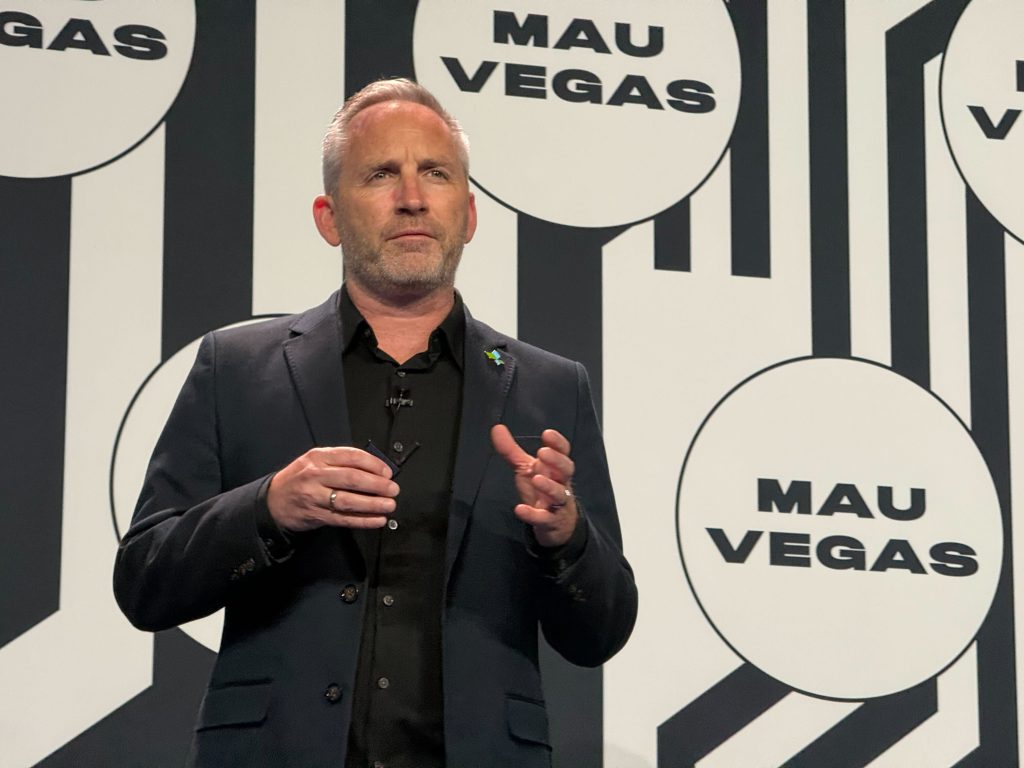
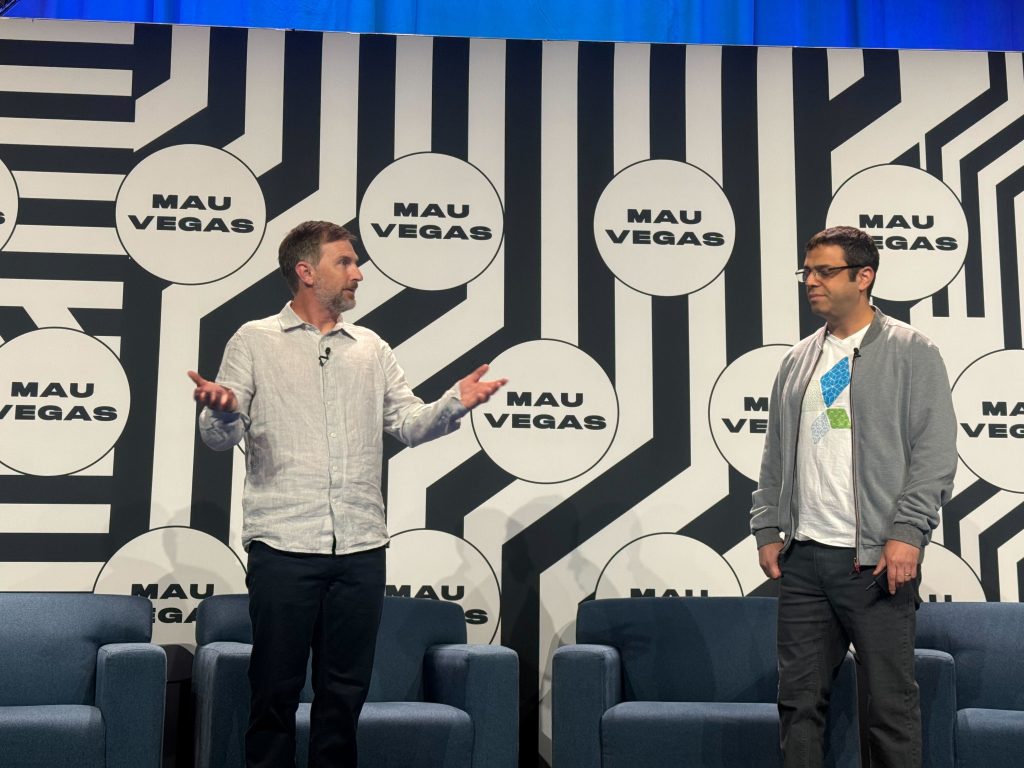
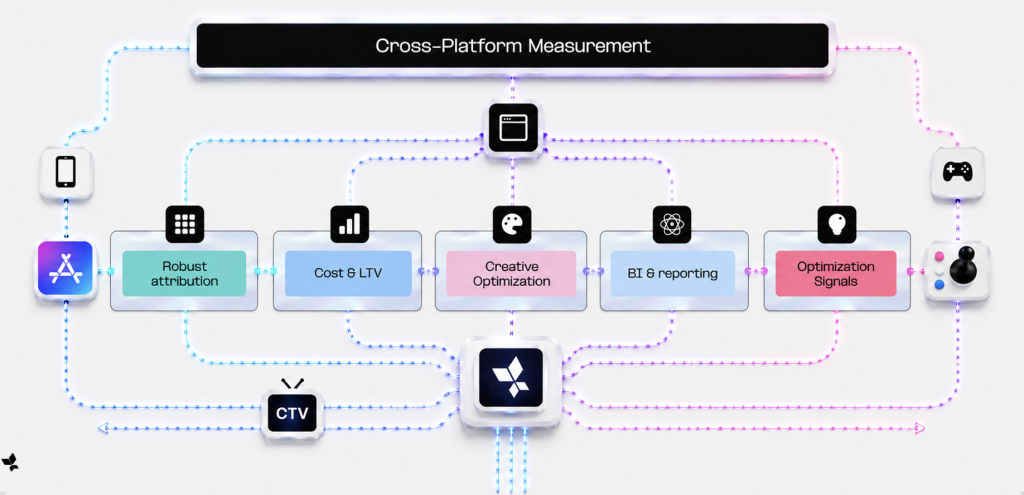
Barak said it plainly: the industry does not need yet another web attribution tool. It needs the proven mobile playbook applied to the rest of the business. The early pilot data points to meaningful ARPU lift because optimization finally has the complete journey to work with.
Toby Roessingh, Director, Product Management at Meta joined Barak on stage to make a related point worth sitting with. When AI agents are reallocating spend, adjusting bids, and rotating creative autonomously, the quality of the underlying measurement layer becomes existential. Agents optimize toward whatever truth they are given. If signals are fragmented, AI scales that fragmentation across the entire business.
From theory to practice: what one marketer at Square actually built
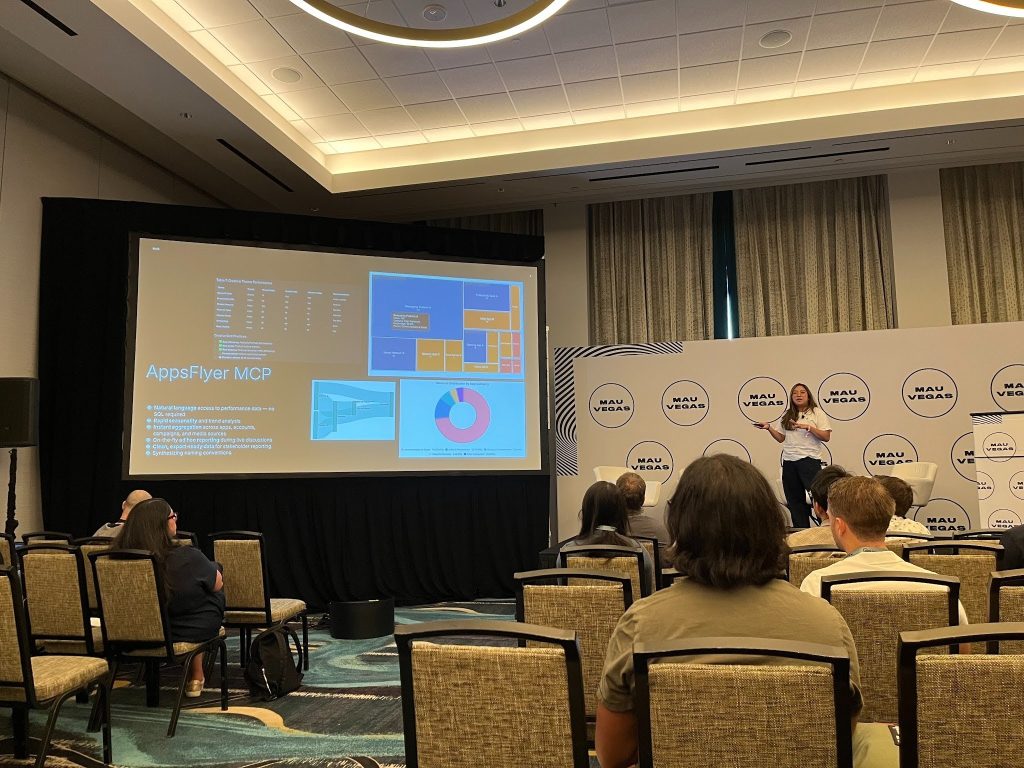
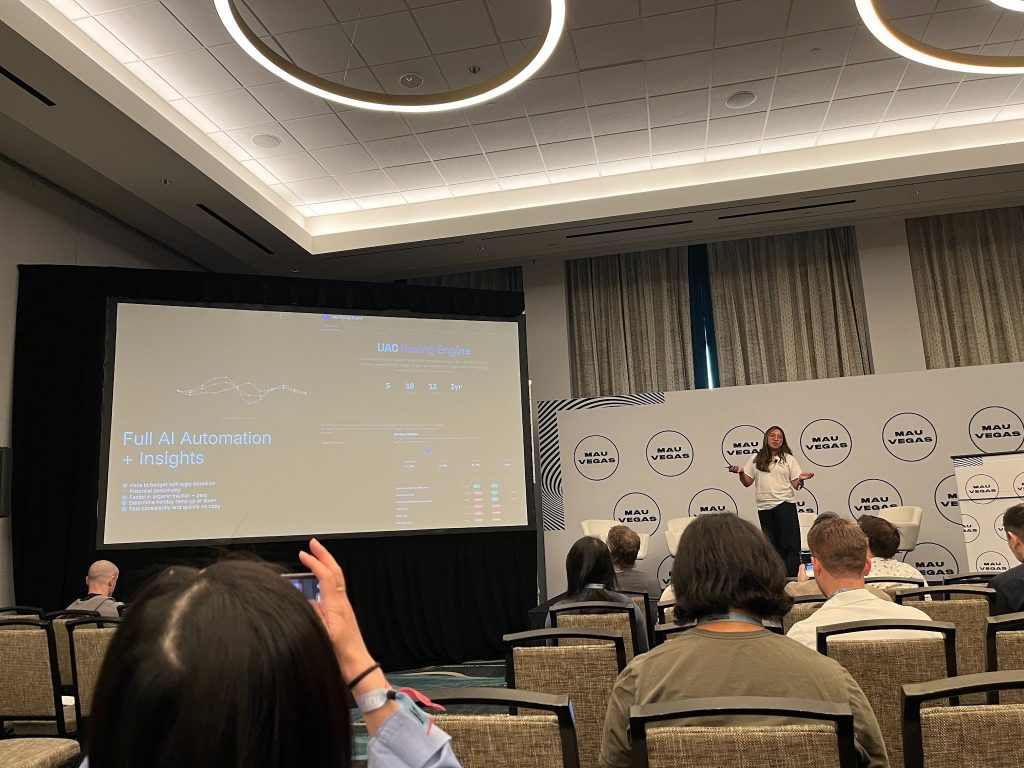
One of the sessions that came up most often in hallway conversations afterward: Sara San Antonio, who leads global mobile marketing at Square, walking through what AI looks like inside a real marketing org. The talk was honest about what works, what does not, and what the day-to-day looks like once a team commits to operating this way. It was the kind of practitioner-to-practitioner exchange a lot of attendees come to MAU hoping to find.
A short list of what Sara has shipped:
- An AppsFlyer MCP integration inside Claude and ChatGPT, used to answer stakeholder questions in real time with no SQL.
- A mobile screenshot QA tool that catches alpha-layer issues, typos, and dimension mistakes before any asset goes live to the App Store or Play Store.
- A creative QA tool that scans every asset across every channel for compliance and copy errors using OCR.
- A Slack-based broken-event monitoring system that alerts the team the moment a key in-app event drops below threshold.
- A copywriter persona (“MobiMuse”) trained on Square’s brand voice and historical performance data, used to spin up UAC, paid social, and display variants at scale.
- A UAC pacing engine that automates daily spend across five geos and ten campaigns using three years of seasonality data, with holiday ramp logic built in.
Retention is where the smart money is going
If web measurement and AI infrastructure were the macro stories, retention was a practical undercurrent running through almost every track. Streaming, gaming, fintech, and even low-frequency category apps (think rental, travel, utilities) all kept circling the same question in different rooms: how do you build a re-engagement program that does not depend on permanent paid pressure to keep customers active? Vincent Eterlet from Fubo walked through what creator-driven retention looks like in streaming when churn spikes around every tentpole sports moment.
Yansy Campos, Vertical Director, Media & Entertainment at TikTok, made a sharp version of the same argument. Her point: the brands winning on TikTok treat creators as strategic partners rather than inventory, run always-on evergreen programs instead of bursty campaigns, and use AI for creative iteration (animating statics, scaling variants) rather than as a substitute for taste. The most underrated creator category right now, in her view, is sports lifestyle. The thing that quietly separates high-performing ads from average ones is whether and how the brand is replying in the comments.
The takeaway worth stealing: scale an influencer program by asking creators to make content for their favorite teams or shows rather than product features, then route the right creator’s content to the right fan audience. The acquisition-to-retention math changes when fans recognize the voice making the case.
On stage: where attribution stops being the whole story
A main stage panel with Snap, AppsFlyer, Fanatics, and Product Madness made the case that the most sophisticated teams have moved past treating any single metric as the answer. Fanatics’ Andy Magnes summed up the operating philosophy: every measurement method has its blind spots, so the discipline is to know them and triangulate across signals rather than relying on one.
In practice that means combining methods: last-touch attribution as a fast starting point, incrementality testing to read causal contribution, and MMM or full-funnel views to widen the lens. Product Madness’ Stefana Pesko described layering last-touch, cohort evolution, predictive LTV, and incrementality to answer the only question that really matters. Which channels create durable long-term value, not just front-loaded installs.
AppsFlyer’s Brian Quinn put a number on the upside of doing this well. Incrementality data shows roughly 30% of campaigns are under-attributed when teams rely on one view in isolation, sometimes by as much as 10x. His practical recommendation: pair every high-spend channel with an incrementality test before scaling it or cutting it. Last-touch tells you what happened. Incrementality tells you what would not have happened. Only one of those should drive a budget decision.
Snap and AppsFlyer used the panel to introduce Unified Attribution, a shared view that brings platform metrics and AppsFlyer data into the same picture. Early adopters are seeing roughly a 20% performance lift.
A useful counterweight to all the AI talk
Some of the ecosystem leaders made the case that the industry is over-indexing on AI hype relative to its durable, structural impact, and that most of the AI tools being demoed at conferences will become redundant as capabilities are absorbed into cloud workflows and in-house tooling. The publishers actually moving the needle are building AI-powered creative, development, and design pipelines.
The signal underneath the noise this week was less about which AI tool to buy and more about how the underlying measurement and signal infrastructure has to evolve so that whatever a team (or its platforms) decides to automate on top of it actually optimizes toward the right thing.
Cross-industry signal worth tracking
Beyond the sessions, the dinner and cabana conversations were where the real intel surfaced. A few patterns that came up repeatedly:
- Brand teams across retail, QSR, banking, and travel are actively re-evaluating their measurement stacks heading into 2027 planning. The bar has moved.
- Practitioners are starting to use specific vocabulary around signal quality, neutrality, and incrementality in places where “attribution” used to live.
- AI agents have crossed the line from demos to production deployments at a real scale of advertisers, with the heaviest current usage skewing defensive (anomaly detection, configuration alerts) rather than offensive.
The nights
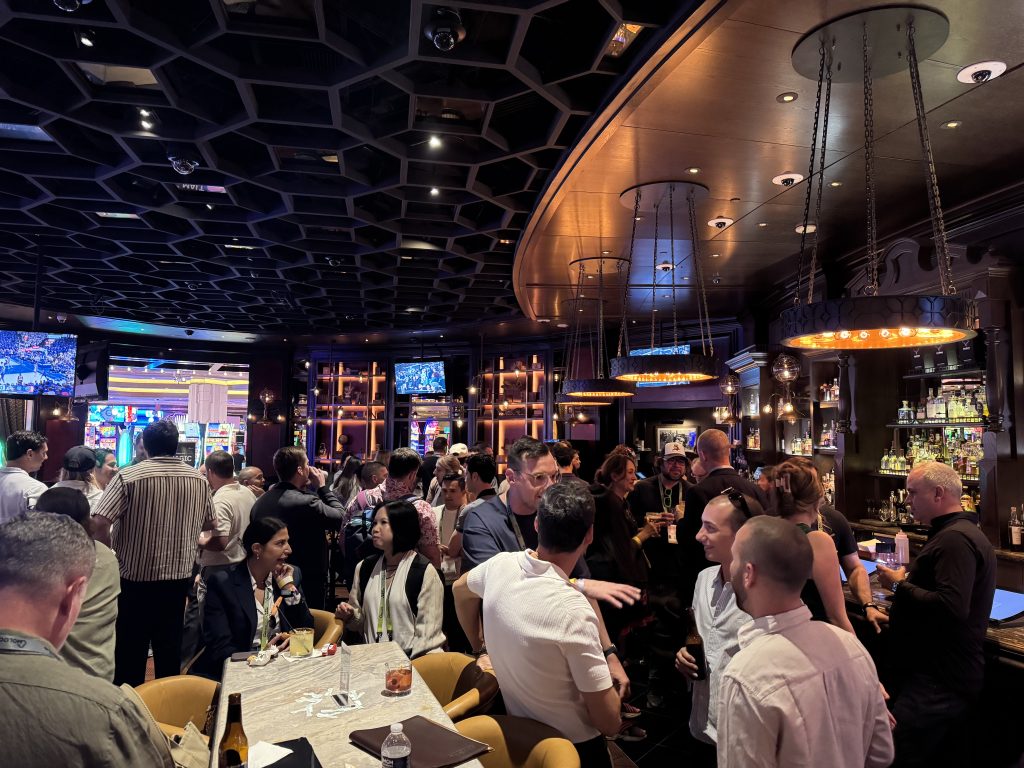
Anyone who has been to a few MAUs knows the agenda is half the value and the nights are the other half. For a lot of the people in the room, the nights are most of the value: the one moment in the year when dispersed teams, partners, and friends are reliably in the same place.
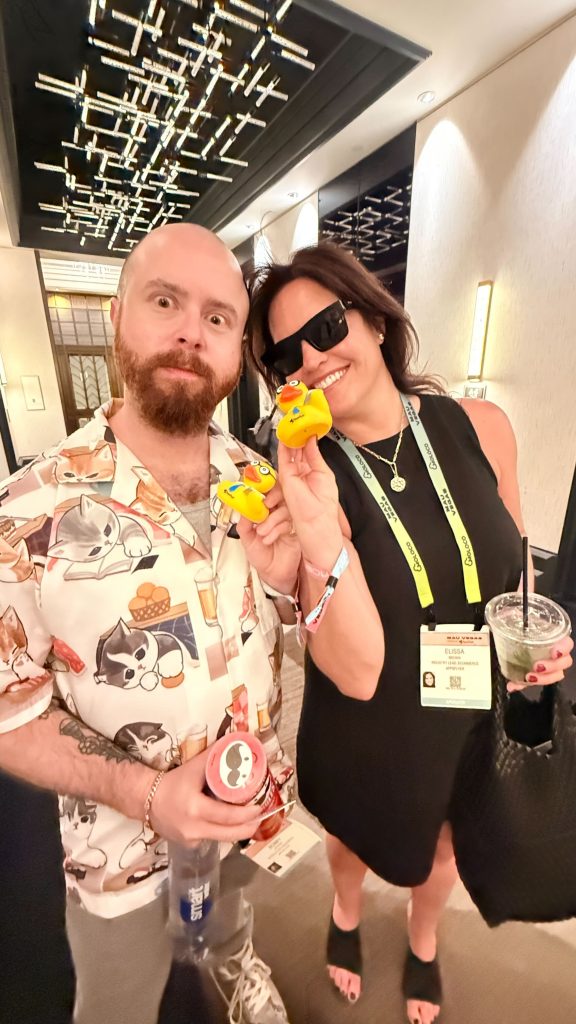
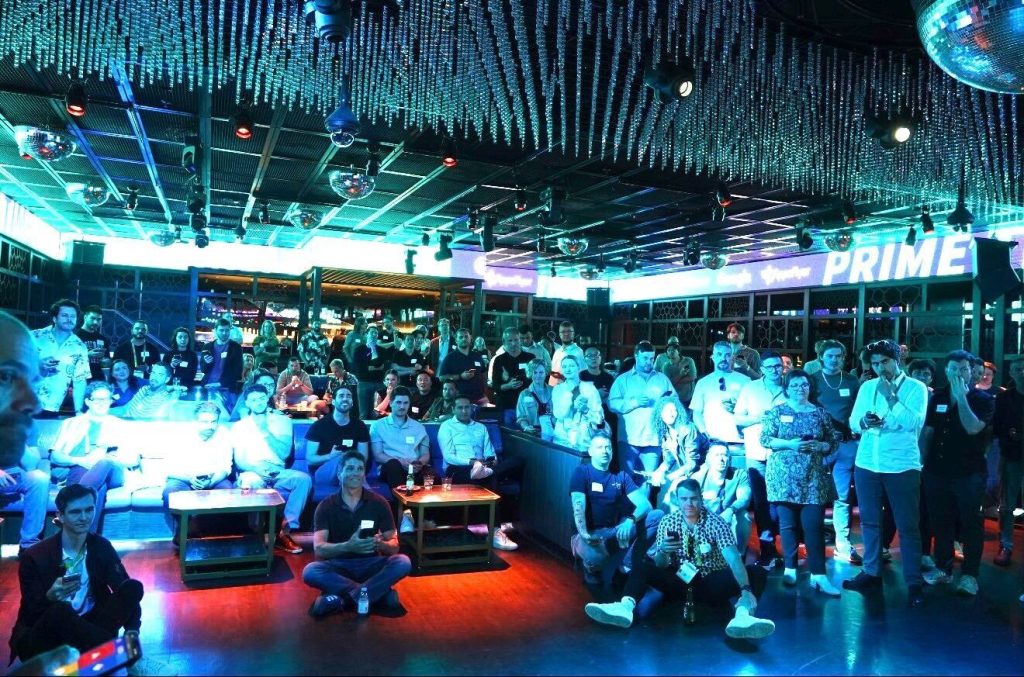
Prime Time at Hakkasan on Monday, co-hosted with Sensor Tower and Google, opened the week with a good crew of customers, partners, and friends. MAUrio Kart with Reddit on Tuesday produced one Nintendo Switch 2 winner and a couple hundred new connections. The AppsFlyer breakfast Wednesday morning was where most of the community caught up with the people they had missed all year. Magic & Malt with tvScientific by Pinterest on Wednesday evening delivered exactly what was advertised: drinks and a magician. The Thursday closing party sent everyone home with the right amount of energy.
Reunions with the people who built this industry. New introductions to the ones building what comes next. A lot of laughter in the cabana area. The show works because the community works.
Key takeaways
- Attention, not building, is now the constraint. AI removed the production bottleneck. Capital allocation across fragmented surfaces is the new competitive advantage.
- Measurement infrastructure is becoming the substrate everything else runs on. Mobile-grade measurement is moving beyond mobile to web, CTV, and PC, giving marketers one unified view of the customer journey rather than stitched-together fragments.
- AI is in production, not just demos. The marketers pulling ahead are the ones running real workflows on top of clean signal layers, not the ones buying the most tools.
- Retention has overtaken acquisition as the headline story. Creator-led, always-on, comment-engaged programs are the new shape of subscriber growth.
For many, web is becoming the most efficient top of funnel for app businesses. Teams treating web and app as one connected growth surface are the ones quietly leading their categories.