Missed conversions: What they cost you and how to fix them
Gil Bouhnick
Director of Product
If your dashboards say conversions are down but your revenue tells a completely different story, we get why your first instinct is to blame the campaigns. Nine times out of ten, though, that’s not actually what’s happening. What’s really going on is that your measurement stack simply can’t see everything.
Here’s the pattern we run into constantly: your marketing does exactly what it’s supposed to. It drives a real install, a sign-up, a purchase. But somewhere between the ad and the outcome, your measurement stack loses the thread and never traces that action back to the campaign that earned it. Nothing about the conversion disappears — it just gets miscounted as organic, so the spend behind it walks away with zero credit. We see this constantly across mobile, web, and Connected TV (CTV), and honestly, the gap is usually bigger than most teams expect.
TL;DR
Missed conversions are a structural problem, not a one-off glitch, caused by privacy rules and broken cross-platform journeys that make every platform lose signal.
iOS isn’t the biggest culprit, even though 35-45% of paid iOS installs already go missing or misattributed, since CTV and cross-platform gaps often add up to more.
The cost sneaks up on you through inflated cost metrics, misdirected budget, and AI bidding models starved of real signal.
Recovery is platform-specific, using server-side fixes for web, probabilistic modeling for mobile, and incrementality or Media Mix Modeling (MMM) for CTV.
Recovered signal makes your AI stack smarter, simply by giving it better inputs to work with.
What are missed conversions?
A missed conversion is a real, revenue-generating action, an install, a purchase, a sign-up, that your measurement tools never actually caught. That’s worth separating from two other things it gets lumped in with. A false positive is a conversion that got recorded but never really happened, usually fraud. Misattribution is a conversion that did happen and did get recorded, just credited to the wrong source. A missed conversion is neither of those. It’s real value your reporting flat-out missed, filed under “organic” instead of under whatever campaign actually earned it.
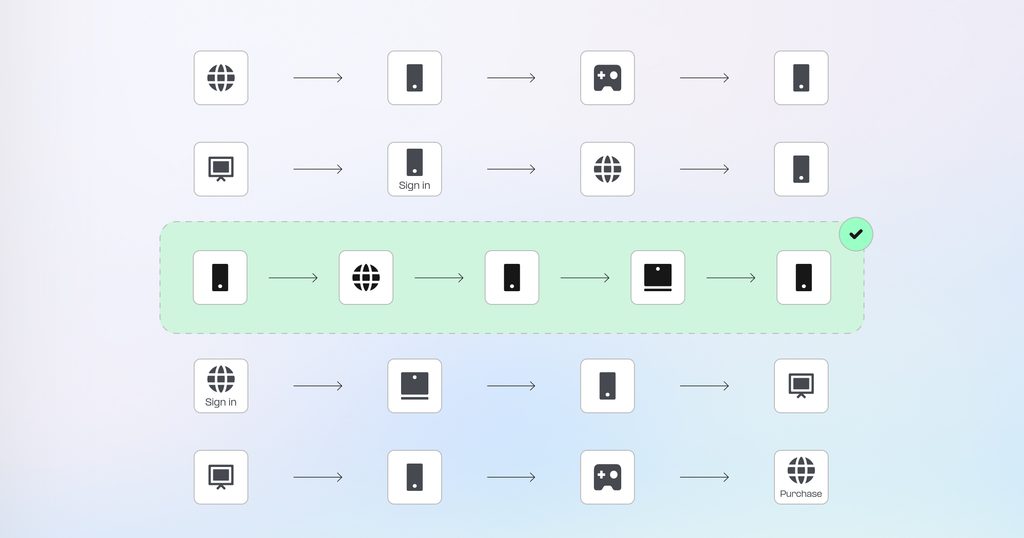
One journey, three disconnected touchpoints
Some teams call this a hidden conversion instead. Different name, same root cause: a gap between what actually happened and what your systems managed to measure.
And the stakes here go well past an annoying reporting quirk. Once conversions start slipping through the cracks, so does the accuracy of everything built on top of them: your return on ad spend (ROAS), your budget decisions, and increasingly, the automated systems making bidding calls in real time. ROAS, CPI (cost per install), eCPI (effective cost per install), and CPA (cost per acquisition) are basically all asking the same question from different angles: how much of what actually happened can your stack even see? Every conversion it misses is one less data point your optimization gets to learn from.
Apple’s App Tracking Transparency (ATT) tends to hog the spotlight here, but it’s really only part of the story. Picture someone who sees your ad on Connected TV, looks your product up on desktop, then finally converts on mobile. That’s a missed conversion even if all three platforms are measuring flawlessly, simply because none of them sees the whole path, which is exactly the gap cross-platform measurement is built to close. And these gaps are a growing problem in their own right, with nothing to do with privacy law at all.
Why do ad platforms miss conversions?
Four mechanisms are behind most of this, and the good news is each one is diagnosable, with its own fix.
Privacy frameworks: iOS ATT and SKAdNetwork
When someone taps “Ask App Not to Track” on Apple’s ATT prompt, identifier for advertisers (IDFA) gets withheld. And just like that, deterministic attribution, matching an ad impression to an install through a device ID, is off the table for that person.
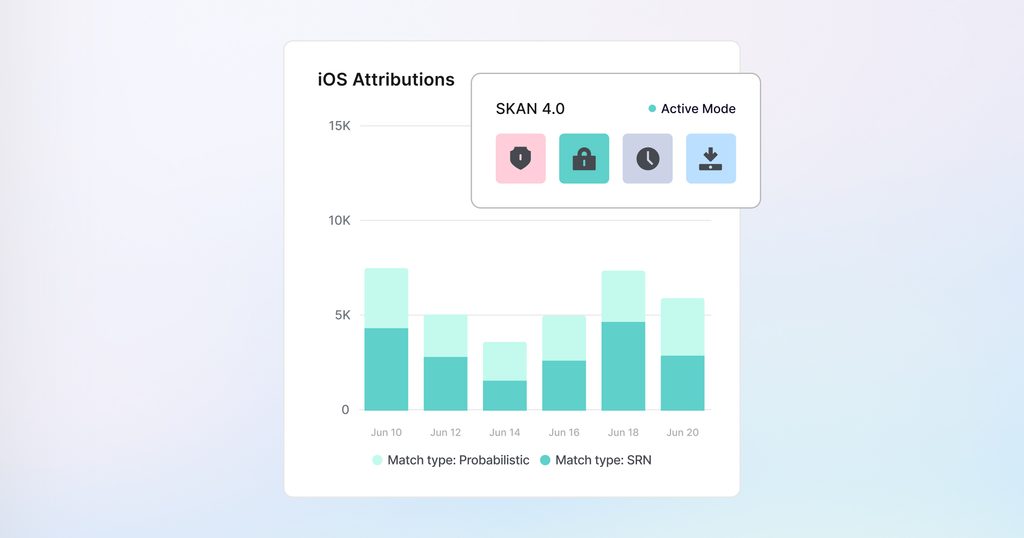
SKAdNetwork (SKAN), Apple’s privacy-preserving framework, steps in to fill part of the gap with aggregate campaign data instead of anything user-level. Helpful, but not without trade-offs: postbacks can show up days late, results get lumped together instead of tied to individuals, and conversion values are capped tightly enough to make lifetime value genuinely hard to read.
The scale of this is bigger than people expect: without a proper mobile measurement partner (MMP), 35-45% of paid iOS installs end up misattributed or missed outright, based on AppsFlyer’s own attribution data (The AppsFlyer Performance Index). Probabilistic modeling can close part of that gap, though it’s always an educated estimate, never a sure thing.
iOS gets most of the attention simply because it’s the best-documented cause, not necessarily the biggest one. Teams running campaigns across several platforms usually find that CTV and cross-platform journeys, which we’ll get to next, cost them more. So don’t stop your investigation at iOS.
Privacy-safe iOS attribution through SKAdNetwork
Cookie deprecation and pixel limits on web
Third-party cookies carried the entire weight of web conversion measurement for two decades. Safari and Firefox have already blocked them outright. Chrome, meanwhile, walked back its own plan to phase them out in 2024 and now runs a user-choice model instead (Ethyca, 2026), which still leaves a growing chunk of Chrome traffic cookieless.
Pixel-based measurement is under its own kind of pressure. Ad blockers stop it cold for roughly 30% of internet users globally, more in some markets (Statista), and Safari’s Intelligent Tracking Prevention (ITP) chips away at it further still.
Server-side tools like Google’s Enhanced Conversions and Meta’s Conversions API (CAPI) move measurement off the browser entirely, which helps. They take real implementation work and won’t restore everything you’ve lost, but they’re a genuinely solid first fix.
Cross-platform journeys that break single-platform measurement
Take that same CTV-to-desktop-to-mobile journey from earlier. Three touchpoints, three device IDs, three separate measurement systems, and not one of them sees the full picture.
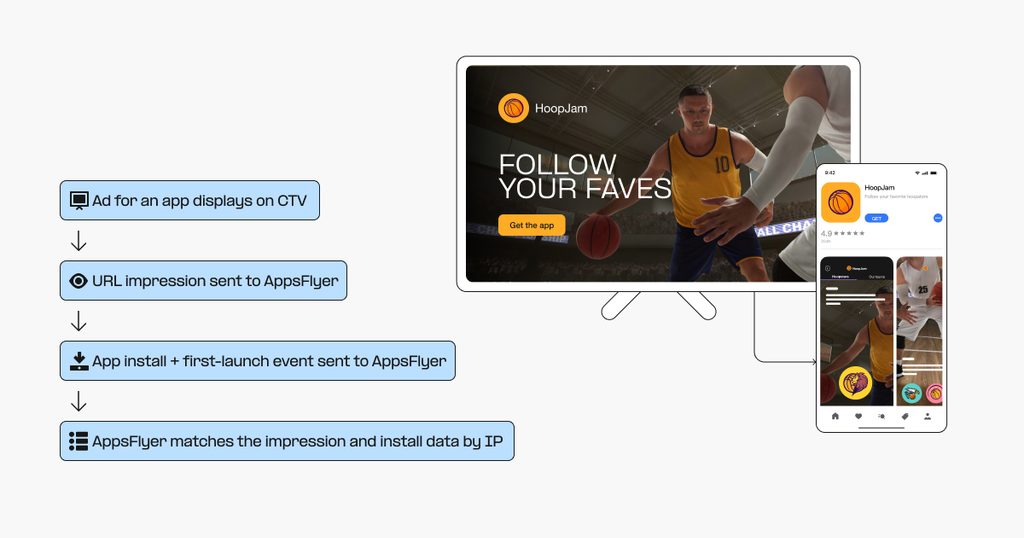
CTV and mobile matched by IP
Without a shared identity layer tying those moments together, the conversion either goes completely unrecorded or gets credited to whichever touchpoint happened to have monitoring in place, which usually isn’t the one that actually sealed the deal. One streaming service put it to us pretty bluntly: it’s hard to get lifetime value across platforms when stitching together a second device takes forever to do by hand.
And here’s the thing, this isn’t a privacy problem at all. Even in a world with perfect privacy compliance, cross-platform journeys would still break measurement, because no single platform is built to see across all of them. It’s the exact reason we built cross-platform measurement the way we did.
Worth naming one more failure mode while we’re here: purchases influenced by an AI assistant, where someone chats with a bot about a product before buying it, have zero measurement layer right now. That category is close to 100% invisible, and no, we don’t have a fix for it yet either. We’d rather tell you that straight than pretend otherwise.
Walled gardens that don’t share conversion data
Meta, Google, Amazon, and TikTok each run their own closed ecosystems. They measure conversions inside their own walls and hand you the results in their own dashboards, without ever sharing the underlying, user-level data.
The upshot: any outside measurement tool only sees what a network decides to expose through its API. Whatever happens inside the wall and never gets surfaced stays completely invisible from the outside.
Self-attributing networks make this messier still. They grade their own homework with no independent check, so the same conversion sometimes gets claimed by more than one network at once. That’s a double-counting problem rather than a missed-conversion one, but both trace back to the same root cause: there’s no neutral, cross-platform source of truth. No outside tool, us included, can fully see inside a walled garden without that network’s cooperation. Which is exactly why deduplication and a neutral view matter most right here.
What does missed conversions actually cost?
The damage doesn’t stop at a slightly wrong number on a dashboard. It ripples into every decision built on top of that number.
Cost metrics look worse than reality
A campaign that drove 100 real conversions but only reports 60 looks like it has a 67% higher cost-per-install than it actually does, which is exactly the kind of number that gets a perfectly good campaign paused.
Budget follows measurement, not performance
The channel that measures well looks like the smarter bet. The one you can’t measure as closely might be converting just as well. You just can’t prove it yet. CTV takes this hit constantly.
Upper-funnel channels get shortchanged
Organic search, direct traffic, CTV, and display rarely get credit for the influence they actually have, since last-touch and pixel-based models tend to miss contribution that happens earlier in the journey.
Teams end up paying twice for the same customer
Remarketing budgets frequently chase people who already converted, simply because the system never recorded it the first time. That’s a real, countable cost, not a theoretical one.
Automated systems end up making worse calls
Bidding algorithms allocate spend based on whatever signals reach them. Miss enough conversions, and these systems quietly shift budget toward channels that report well instead of channels that actually convert well. What starts as a small gap in the input becomes real waste at the output, and every downstream decision inherits that same blind spot.
Curious how this connects to attribution more broadly? Why attribution fails covers this same signal-loss problem from a different angle.
How do you recover lost conversion data?
There’s no single silver bullet here, just a stack of fixes, and the right one depends on the platform you’re dealing with. Here’s roughly the order we’d tackle them in.
Step 1: Move measurement from the browser to the server
Meta’s CAPI, Google’s Enhanced Conversions, and TikTok’s Events API all report conversions server-side, where blockers and ITP can’t get in the way. It recovers web conversions lost to browser restrictions, though it won’t do anything for cross-platform or CTV gaps.
Step 2: Bring in probabilistic modeling where deterministic matching just can’t work
With no device ID or cookie to match on, statistical signals like IP, device type, and timing can infer attribution at a defined confidence level. It closes part of the iOS ATT gap, though smaller apps tend to see less reliable results since accuracy improves with volume.
Step 3: Let the ad networks model what they genuinely can’t observe
Google and Meta both estimate conversions based on patterns in the data they can see. That buys you visibility at the aggregate level, but not user-level data, and the network stays in control of the model, not you.
Step 4: Run incrementality testing wherever measurement simply can’t reach
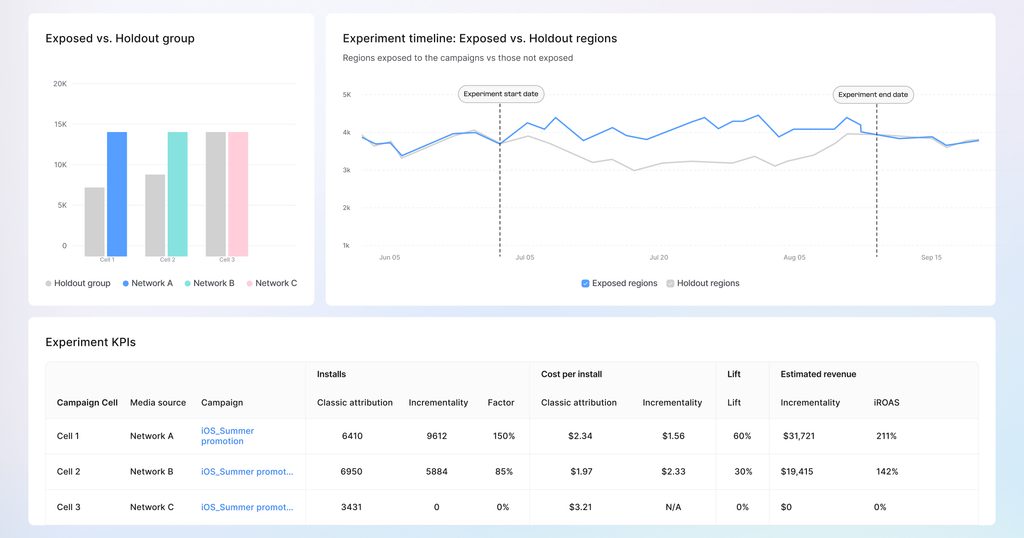
Rather than chasing individual conversions, it measures a campaign’s real causal lift using a holdout group, answering the question that actually matters: is this campaign working, even when you can’t see individual conversions? It’s the strongest option for CTV and other channels that are structurally hard to measure.
Step 5: Use marketing mix modeling (MMM) for the top-down view
It estimates channel contribution from aggregate spend and outcomes, with zero user-level measurement required. Especially handy for CTV and offline, though it’s slower and usually needs weeks of data. Still, it’s the most privacy-resilient option out there.
Step 6: Connect the customer across every platform with a persistent ID
Append a Customer User ID (CUID), think login or account ID, to the event data you’re already sending AppsFlyer, and it automatically links a CTV exposure, a web session, and an app conversion into one journey. It’s the only method on this list that recovers cross-platform conversions at the individual level, and the lift required is minimal since it just appends to data already flowing in rather than demanding new implementation work.
Different platforms call for different tools from this list. Server-side measurement handles web. Probabilistic modeling and SKAN optimization take care of most of mobile. CTV needs incrementality testing and MMM. AI-influenced purchases genuinely don’t have a fix yet.
A measurement platform shouldn’t stop once the report looks right. It should hand those recovered signals straight back to your automated tools, because every recovered conversion is one more data point your bidding and budget decisions can actually trust, and that trust is really what marketing attribution comes down to in the first place.
How do you recover missed conversions with AppsFlyer?
AppsFlyer was built to recover missed conversions across mobile, web, and CTV from one place, mapped directly to the four causes above.
On iOS, AppsFlyer’s probabilistic model runs at 90-93% accuracy, thanks to visibility into more than 65% of global devices and more training data than smaller competitors can access (AppsFlyer Performance Index). Its Single Source of Truth (SSOT) deduplicates attribution across networks, so installs stop getting miscounted as organic or double-claimed by more than one network.
Apps using SSOT see a 62% lift in measured revenue and a 40% drop in eCPI, simply because more of what actually happened becomes visible. On the SKAN side, AppsFlyer’s modeling handles null conversion values, delayed postbacks, and aggregation limits using machine learning trained on observable patterns, recovering a solid chunk of that 35-45% iOS gap.
Channel contribution and ROAS, unified
For cross-platform journeys, AppsFlyer stitches events across iOS, Android, web, and CTV into one customer-level view using a Customer User ID, closing a gap no single-platform tool can see on its own. And because that data is unified across every platform, it feeds straight into the AppsFlyer Agentic AI Suite: automated bidding calibrated to true conversion volume, re-engagement built on real customer behavior, and budget shifting toward what’s actually converting, not just what happens to look good on paper.
Real results, across industries
Finance – Visa
Visa‘s Visa Pay launch in the Democratic Republic of Congo had no reliable way to tell which paid installs were driving genuine account activations, so budget calls were made on volume alone, not quality. AppsFlyer’s SKAN attribution gave Visa iOS measurement that didn’t depend on platform-reported installs alone, and full-funnel event measurement followed the install all the way through to wallet creation. Install volume grew 155%, cost per acquisition dropped 85%, and registration conversion rate improved 114% over a 12-week campaign.
“AppsFlyer helped us integrate our media platforms and shift from awareness without attribution to conversion-led growth. By optimizing to in-app events like installs and registration, we improved targeting, measurement, and acquisition efficiency across channels.”
Tarek Abdalla
SVP & CMO, CEMEA, Visa
AppsFlyer’s global measurement scale, numbers
Entertainment – fuboTV
As a streaming platform where the same person might watch on mobile during their commute and convert on a laptop that same evening, fuboTV had no way to connect those dots, so cross-device conversions kept getting lost or misattributed. AppsFlyer’s People-Based Attribution joined mobile, web, and CRM data into one view, letting the team shift budget toward the channels genuinely driving loyal, cross-device users. CPI dropped 15% and budget allocation efficiency rose 20%.
“It’s all about data at the end of the day. There’s no other tool that aggregates and measures the data the way AppsFlyer does. Consolidating, comparing, and being creative with the data helped our marketing teams come together to learn and rethink our marketing strategy across all channels and devices.”
Vincent Eterlet
Head of Mobile Growth Marketing, fuboTV
eCommerce – eBay
As eBay scaled its mobile marketing across a growing list of ad partners, fragmented integrations made it genuinely hard to trust any single number as ground truth. AppsFlyer gave eBay one attribution layer across its entire media mix.
“AppsFlyer is our source of truth when it comes to attribution. We have gained full 360-degree insight to our user acquisition activity, while lowering our costs. No marketing tech stack is complete without AppsFlyer.”
Sadie Daryan
Global Head of Display and App Marketing, eBay
More than 15,000 brands globally trust AppsFlyer as their measurement layer.
What changes once you recover missed conversions?
Here’s the short version of what shifts, side by side.
Metric / Capability
Without conversion recovery
With AppsFlyer recovery
iOS conversion visibility
35-45% of paid installs missed or misattributed
Probabilistic modeling + SKAN optimization recovers a significant share
Web conversion measurement
Blocked by ad blockers and cookie deprecation
Server-side signals + CAPI integration fill the gap
Cross-platform conversions
Invisible: each platform measured separately
Customer User ID connects the journey across mobile, web, and CTV
CTV conversion measurement
Near-total blind spot
Incrementality testing + MMM measure true lift
AI-influenced purchases
100% unmeasured
Flagged as an emerging gap, no full solution yet
Revenue measurement accuracy
Systematically understated
62% increase in measured revenue (SSOT)
eCPI accuracy
Inflated by missed conversions
40% decrease in eCPI (SSOT)
AI optimization signal
Starved: weak inputs, weak automated decisions
Clean, unified signals feed the Agentic AI Suite
What’s the bottom line on missed conversions?
Missed conversions aren’t some reporting glitch you can patch with a dashboard filter. They’re structural, baked into how measurement works today. Every platform you run campaigns on carries its own version of this gap, and if you’re running mobile, web, and CTV together, the total is usually bigger than any single metric will show you.
So if your conversion numbers just don’t line up with your actual business results, trust that instinct. The gap is real, and thankfully, it’s fixable. Closing it doesn’t just tidy up your dashboards, it hands every automated system you run, from bidding to re-engagement, a genuinely more accurate picture to work from. And as AI-influenced purchases become more common, closing that particular gap is only going to matter more.
Frequently Asked Questions
A real install, sign-up, or purchase that your marketing drove, but that your measurement stack never traced back to its source campaign. It usually gets filed as organic instead, so the spend behind it gets no credit at all.
One was never recorded, full stop. The other was recorded, just credited to the wrong campaign or channel. Both throw off ROAS, but you fix them in completely different ways.
On iOS alone, without a proper MMP, it’s 35-45% of paid installs missed or misattributed. Add in cross-platform journeys and CTV, and the real total usually runs higher than that headline number suggests.
Apple’s ATT lets people opt out of device-level measuring, which removes the identifier deterministic attribution relies on. SKAdNetwork covers part of the gap, with delays, aggregation, and limited conversion-value data as the trade-off.
Safari and Firefox already block third-party cookies by default. Chrome runs a user-choice model instead of blocking them outright. Either way, a growing share of web traffic can’t be followed from click to conversion with pixels alone.
No single fix does it all. Server-side monitoring handles web, probabilistic modeling and SKAN optimization help mobile, and incrementality testing or MMM cover CTV and other hard-to-measure platforms.
CTV is impression-only, no cookie, no click to measure. Incrementality testing and MMM estimate the real lift using control groups and aggregate data instead of chasing individual conversions.
We currently offer demos only to businesses evaluating AppsFlyer for their own apps. However, there’s always tomorrow - and we’d be happy to help you build your AppsFlyer expertise to better support your future clients.
To learn more about our Agencies program or for general inquiries, feel free to reach out to us at [email protected].
Are you already an integrated partner with AppsFlyer?
For any question, please sign in to your existing AppsFlyer account and go to Help → Contact our team
We appreciate your interest in becoming an AppsFlyer partner. In order to begin the integration process, you must be referred by an existing AppsFlyer customer via our platform. If you'd like to start the process, please reach out to your customer and kindly request to receive an invite link. You can find additional resources in our Help Center.
This site is protected by reCAPTCHA and the Google Privacy Policy and Terms of Service apply.
3/3
Meet your AppsFlyer expert
Based on your needs, we've matched you with the right AppsFlyer expert. Book a 15-minute discovery call to discuss your goals and schedule your personalized demo
Thanks for reaching out! 🎉
We can't wait to show you around and learn more about your goals and challenges.
In the meantime, here are two great ways to learn more about AppsFlyer: